The VR Paradox: Why Critical Success No Longer Guarantees Commercial Survival for Independent Developers
The virtual reality (VR) industry, once hailed as the "final frontier" of immersive entertainment, is currently navigating a period of profound structural realignment. For small, independent studios, the dream of creating high-fidelity, VR-exclusive content is increasingly colliding with the harsh realities of a fragmented market and shifting consumer habits. The latest developer to find itself at this crossroads is Xlab Digital, the creators of the acclaimed Iron Guard series.
Despite receiving "excellent reviews" across all major VR platforms, Xlab Digital recently revealed a sobering statistic: their latest VR-exclusive sequel, Iron Guard: Salvation, has generated only one-fifth of the sales of the 2021 original. This commercial shortfall has forced the studio to pivot toward a "flatscreen-first" strategy, beginning with the release of Iron Guard: Day Zero for the PlayStation 5. This move is not merely a localized business decision but a symptom of a broader industry-wide retreat from VR exclusivity as developers fight for financial sustainability.
Main Facts: The Pivot to Flatscreen and Strategic Consolidation
Xlab Digital’s recent announcements signal a fundamental shift in how the studio intends to interface with its audience. The core of this transition involves the upcoming launch of Iron Guard: Day Zero, a non-VR (flatscreen) title scheduled for release on the PlayStation 5 on June 18, 2024.
This decision was not made in a vacuum. It was a direct response to two primary factors: the underwhelming commercial performance of Iron Guard: Salvation and persistent feedback from the PlayStation community requesting a traditional gaming experience. By bringing the franchise to the PS5’s massive install base without the barrier of a VR headset, Xlab hopes to generate the "awareness" and revenue necessary to keep their VR ambitions alive.
As part of this strategic pivot, Xlab has also restructured its existing catalog on Steam. The original flatscreen version of Iron Guard has been "retired" as a standalone purchase. Instead, it is now included as a free bonus for all existing and future owners of either Iron Guard or Iron Guard: Salvation in VR. This move serves a dual purpose: it rewards the loyal VR community while simplifying the studio’s digital storefront as they prepare to eventually bring Day Zero to PC players.
Chronology: From 2021 Success to the 2024 Survival Pivot
To understand the gravity of Xlab Digital’s current position, one must look at the timeline of the Iron Guard franchise, which serves as a microcosm of the VR market’s volatility over the last three years.
2021: The Launch of the Original Iron Guard
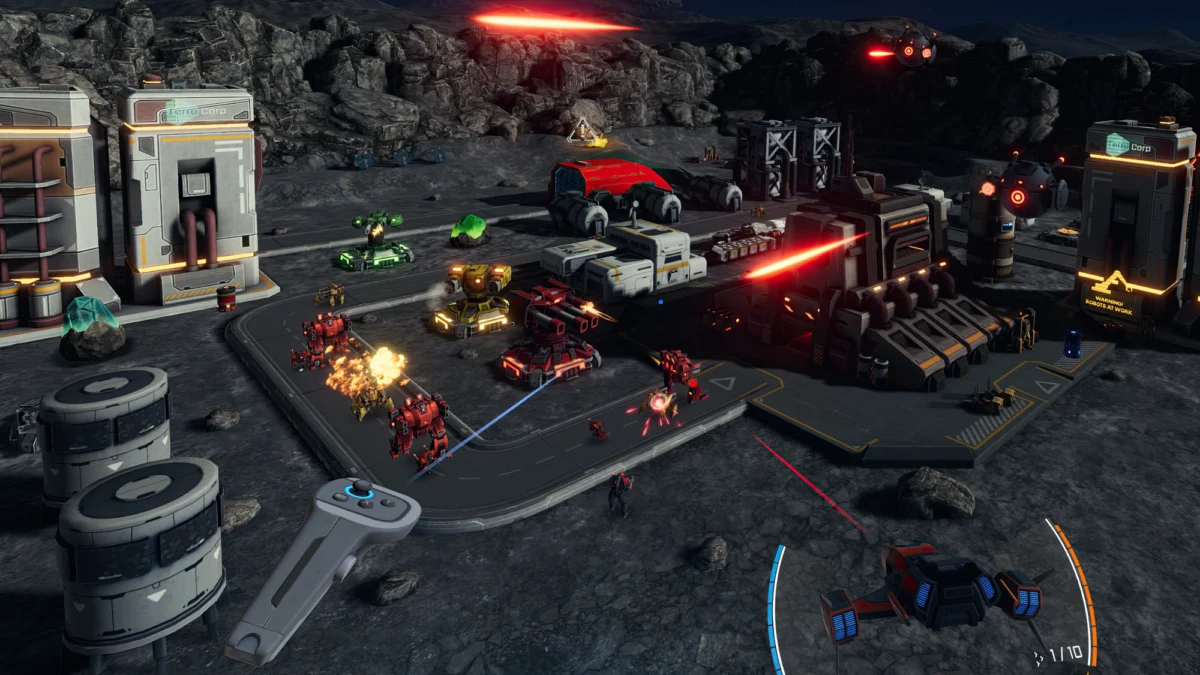
When the first Iron Guard was released in 2021, the VR market was experiencing a post-pandemic surge. The game, a sci-fi tower defense title, found a receptive audience on SteamVR and Meta Quest. It was praised for its "god-scale" perspective, allowing players to oversee a battlefield with a level of tactical depth that traditional screens struggle to replicate. The game was a genuine commercial success for a small team, generating enough profit to fully fund a more ambitious sequel.
2022–2023: The Development of Salvation
Buoyed by the success of the first title, Xlab Digital invested their earnings into Iron Guard: Salvation. The goal was to create a "bigger game" with "higher fidelity" and more complex gameplay features. The studio aimed to push the boundaries of what a VR tower defense game could be, assuming that the growing VR market would naturally support an upgraded experience.
Late 2023–Early 2024: The Reality Check
Upon release, Iron Guard: Salvation was met with critical acclaim. However, the sales figures told a different story. Despite being technically superior and more content-rich than its predecessor, it struggled to gain traction. The discovery that the sequel had achieved only 20% of the original’s sales sent a clear message: the VR-only audience was either not growing at the expected rate or was becoming increasingly difficult to reach.
June 2024: The Strategic Shift
Faced with a "rough patch," Xlab Digital announced Iron Guard: Day Zero. By transitioning to a flatscreen model for the PS5, the studio is effectively "taking a pause" from VR-exclusive development to focus on building a broader brand presence and securing the capital required for future projects.
Supporting Data: The 1/5th Sales Slump and Market Trends
The most striking piece of data provided by Xlab Digital is the "1/5th" sales ratio. In the world of software development, a sequel is typically expected to match or exceed the original’s performance, especially if the original was a success. For Salvation to perform at only 20% of the original’s volume indicates a massive contraction in the "middle-market" for VR games.
Several factors contribute to this data point:
- Market Saturation: In 2021, the number of high-quality tower defense games in VR was limited. By 2024, the Meta Quest and PSVR2 stores are crowded, making it harder for indie titles to stand out without massive marketing budgets.
- Hardware Friction: While VR enthusiasts are dedicated, the broader gaming public still views the act of "strapping on a headset" as a significant barrier to entry compared to the ease of picking up a DualSense controller.
- The "Good Enough" Problem: Many VR users who purchased the first Iron Guard may have felt their "tower defense itch" was scratched, leading to lower conversion rates for a sequel in a niche genre.
Xlab’s experience is mirrored by hardware data. While Meta has sold millions of Quest headsets, active user retention and software attach rates for non-AAA titles remain a challenge for the industry at large.
Official Responses: Insights from Xlab Digital
In a series of candid responses on Reddit, Xlab Digital provided a rare, unvarnished look at the struggles of a modern indie VR developer. Their comments highlight a mix of passion for the medium and the pragmatism required to stay afloat.
"Not done with VR for sure," the developer stated, "but taking a pause as it has been a rough patch trying to find enough players to continue, even after excellent reviews across all VR platforms." This sentiment captures the frustration of many developers who find that critical quality no longer correlates with financial security in the VR space.
The developer elaborated on the logic behind the flatscreen pivot: "I’m hoping flat-screen might create some more awareness, especially because we are heavily discounting the price and hopefully players can try the VR version ultimately." This suggests that Xlab views the PS5 version not just as a product, but as a marketing tool to funnel players back into their VR ecosystem.
Perhaps most poignantly, Xlab addressed their modest ambitions: "As a small team we are not expecting to retire/own islands, just continue pushing our skills and do more bigger VR titles… but even that seems to be a challenge over the last year." The developer noted the "funny/sad" irony that the first game funded the sequel, yet the sequel—despite being better in every measurable way—failed to sustain the studio. They concluded that this "says something about the VR trend over the last 2-3 years."
Implications: The Rise of the Hybrid Model and the "VR Winter"
The story of Xlab Digital is part of a much larger, more concerning trend within the XR (Extended Reality) industry. Over the past twelve months, a "flight to flatscreen" has become the dominant survival strategy for VR-centric studios.
The Hybrid Model as a Lifeboat
Xlab is joining the ranks of several high-profile studios that are diversifying their output.
- Polyarc Games: The developer of the iconic Moss series—widely considered one of VR’s "killer apps"—recently laid off two-thirds of its staff. Simultaneously, they announced that Moss would be ported to flatscreen platforms to reach a wider audience.
- Vertigo Games: A titan in the VR space, Vertigo Games recently shuttered its Amsterdam studio. Despite the success of the Arizona Sunshine franchise, the company is now focusing on flatscreen ports of Arizona Sunshine and The 7th Guest VR.
This shift suggests that the "VR-exclusive" business model is currently unsustainable for all but the largest, platform-funded studios (such as those owned by Meta or Sony). For independent teams, the "Hybrid Model"—developing a game that works in both VR and on a traditional screen—is becoming the industry standard.
The Impact on Innovation
While the pivot to flatscreen ensures the survival of these studios, it raises questions about the future of VR innovation. Games designed to work on both a TV and a headset often have to make compromises in mechanics. The "god-scale" perspective of Iron Guard is a native fit for VR; translating that to a 2D screen may dilute the very magic that made the original special. If developers are forced to design for flatscreen first to ensure sales, the unique, VR-only mechanics that define the medium may begin to stagnate.
Conclusion: A Season of Realignment
Xlab Digital’s struggle with Iron Guard: Salvation is a cautionary tale for the industry. It proves that even with a proven IP and high-quality execution, the VR market remains a precarious environment. The release of Iron Guard: Day Zero on June 18 represents more than just a new game; it is a strategic retreat and a reorganization for a studio that still believes in VR but can no longer afford to be exclusive to it.
As the industry moves forward, the success of these "flatscreen pivots" will likely determine which studios survive to see the next generation of VR hardware. For now, the message to developers is clear: to stay in the virtual world, you must first find a way to succeed in the physical one.