
Zack Snyder Targets Gritty Reimagining of John Carpenter’s "Escape From New York"
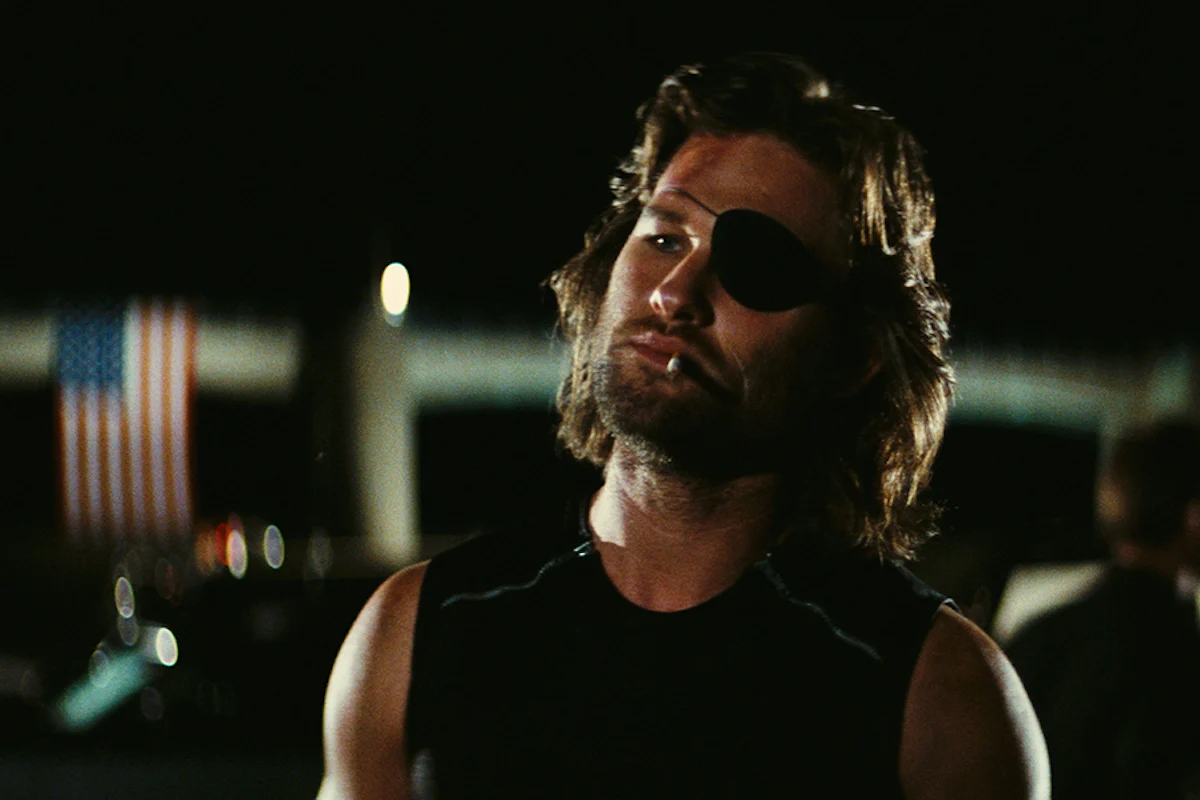
Hollywood, CA – In a move that has ignited fervent discussion across cinephile communities, visionary director Zack Snyder, known for his distinctive cinematic flair in films such as 300, Batman v. Superman: Dawn of Justice, and the recently released Rebel Moon, has officially set his sights on a remake of John Carpenter’s iconic 1981 dystopian action-thriller, Escape From New York. The announcement signals a potential return to a grittier, more practical aesthetic for Snyder, contrasting with some of his recent CGI-heavy blockbusters.
The project is currently in its nascent stages, with Snyder reportedly preparing to shop the remake to major studios in the coming weeks. Crucially, the director is said to be advocating for a traditional theatrical release, a departure from his recent collaborations with streaming giants. This strategic decision, coupled with a declared intent to lean into "more down and dirty" storytelling and a preference for practical effects over extensive computer-generated imagery, suggests a deliberate effort to recapture the raw, visceral energy that defined Carpenter’s original masterpiece.
Main Facts: A Dystopian Vision Reimagined
Snyder Takes on a Cult Classic
Zack Snyder’s interest in Escape From New York immediately positions the project as one of Hollywood’s most anticipated, and potentially polarizing, remakes. Snyder’s filmography is marked by a distinctive visual style, often characterized by hyper-stylized action, desaturated color palettes, and a penchant for exploring mythological and anti-heroic narratives. These elements could lend themselves well to the bleak, anarchic world of Escape From New York.
The original film introduced audiences to the unforgettable Snake Plissken, portrayed with gravelly charisma by Kurt Russell. Plissken is a former Special Forces soldier turned cynical outlaw, instantly recognizable by his signature eye patch. The narrative plunges him into a harrowing mission: rescue the President of the United States, whose Air Force One has crashed in a hyper-dystopian Manhattan. In Carpenter’s chilling vision of 1997, the entire island of Manhattan has been transformed into a maximum-security, walled penitentiary, devoid of law and order, where the worst criminals are left to govern themselves. Plissken’s survival, and the fate of the free world, hinge on his ability to navigate this urban hellscape and retrieve the nation’s leader within a strict time limit, all while being injected with explosives set to detonate if he fails.
A Gritty, Practical Approach
According to The Hollywood Reporter, Snyder’s proposed remake aims to be "more down and dirty," emphasizing practical effects over CGI. This declared preference is particularly noteworthy for a director often associated with ambitious, effects-laden spectacles. While Snyder has always utilized practical elements, his larger projects, particularly within the DC Extended Universe and Rebel Moon, have heavily relied on digital environments and enhancements. This commitment to practical effects for Escape From New York could signal a conscious effort to ground the film in a tangible reality, mirroring the production sensibilities of the early 80s when Carpenter crafted his original. Practical effects often imbue a film with a sense of weight and realism that CGI, no matter how sophisticated, can sometimes struggle to replicate. For a film set in a crumbling, lawless city, this approach could significantly enhance the feeling of grime, danger, and desperation.
The Original’s Enduring Legacy
John Carpenter’s Escape From New York wasn’t just a genre film; it was a prescient commentary on societal decay, political paranoia, and the allure of the anti-hero. Its influence reverberates through countless action films, video games, and comic books that followed. Kurt Russell’s portrayal of Snake Plissken became an archetype, inspiring characters from Solid Snake in the Metal Gear Solid video game series to various lone wolf protagonists across media. The film’s blend of sci-fi, horror, and action, coupled with its memorable score (composed by Carpenter himself), cemented its status as a cult classic. Remaking such a beloved and influential film inherently carries significant expectations and challenges, requiring a delicate balance between homage and innovation.
Chronology: The Long Road to Remake
Carpenter’s Original and Its Sequel
Escape From New York first premiered in 1981, emerging from a period of intense creative output for John Carpenter. Released by Avco Embassy Pictures, the film, despite a modest budget of around $6 million, was a critical success and a commercial hit, grossing over $25 million domestically. Its stark vision of a future America, where crime rates have soared and basic human rights are eroding, resonated deeply. Carpenter’s direction, characterized by tight pacing, atmospheric tension, and memorable character work, showcased his mastery of minimalist filmmaking.
Fifteen years later, in 1996, Carpenter reunited with Kurt Russell for the sequel, Escape From L.A. While it continued Snake Plissken’s adventures, relocating the dystopian penitentiary to a post-earthquake Los Angeles, it met with a more mixed critical reception and performed less robustly at the box office. Despite its flaws, Escape From L.A. maintained the satirical edge and anti-establishment spirit of its predecessor, further cementing Plissken’s status as an enduring icon.
Previous Attempts and Development Hell
The enduring popularity of Escape From New York has, predictably, made it a prime candidate for a remake for decades. However, the path to re-envisioning Plissken’s world has been fraught with difficulties, seeing numerous attempts fall into what Hollywood famously calls "development hell."
Over the years, various studios, including New Line Cinema and 20th Century Fox, have tried to revive the franchise. A litany of directors and actors have been attached to these aborted projects. Names like Brett Ratner, Jonathan Mostow, and Len Wiseman were, at different times, rumored to direct. Actors from Gerard Butler to Charlie Hunnam and even Jeremy Renner were reportedly considered to don the iconic eye patch. The reasons for these failures are manifold but often include creative differences over the tone, direction, and fidelity to the original, as well as budgetary hurdles and the inherent pressure of living up to a revered classic. The sheer number of failed attempts underscores the difficulty in translating Carpenter’s unique vision for a new generation without alienating existing fans or losing the core essence of the property.
Snyder’s Entry and StudioCanal’s Strategy
Zack Snyder’s current endeavor marks the latest, and perhaps most promising, attempt to bring Escape From New York back to the big screen. His involvement comes via StudioCanal, a French film production and distribution company that holds the rights to the original film. The Hollywood Reporter indicates that StudioCanal is actively working to "amp up its franchises," a strategy they have successfully employed with critically acclaimed and commercially successful properties like the Paddington films and the revitalized Evil Dead series.
For StudioCanal, partnering with a director of Snyder’s caliber and global recognition offers a significant opportunity to elevate Escape From New York into a major international franchise. Snyder’s ability to command large budgets and attract A-list talent, combined with his dedicated fanbase, makes him an attractive choice for a studio looking to maximize its intellectual property. His stated intention for a theatrical release aligns with StudioCanal’s traditional distribution model and their ambition to produce event-level cinema.
Supporting Data: The Landscape of Reboots and Remakes
The Allure of Established IP
Hollywood’s current landscape is heavily dominated by the pursuit of established intellectual property (IP). In an increasingly competitive global market, studios frequently opt for remakes, reboots, and sequels over original concepts. The primary driver behind this trend is risk mitigation. Established IPs come with inherent brand recognition, a built-in fanbase, and often, a clear narrative framework, making them a safer bet for financial success. Audiences are more likely to turn out for a familiar title, even if critically panned, than for an unknown original story. While this strategy has yielded massive successes like the Star Wars sequels or Disney’s live-action remakes, it has also led to a glut of uninspired rehashes that fail to capture the magic of their predecessors. The challenge for Snyder’s Escape From New York will be to justify its existence beyond mere brand recognition.
Snyder’s Track Record with Existing Franchises
Zack Snyder is no stranger to adapting existing material. His directorial debut, the 2004 remake of George A. Romero’s Dawn of the Dead, was largely praised for its fresh take on the zombie genre, proving his ability to reimagine a classic. However, his tenure as a foundational architect of the DC Extended Universe (DCEU) was met with more mixed results. While films like Man of Steel and Batman v. Superman showcased his distinctive visual style and ambitious storytelling, they also sparked considerable debate among fans and critics regarding their interpretation of beloved characters and narratives. The eventual release of Zack Snyder’s Justice League further highlighted the passionate, often divided, nature of his fanbase and his approach to established lore. This history suggests that Snyder will bring a bold, potentially divisive, but undeniably singular vision to Escape From New York.
The "Practical Effects" Renaissance?
Snyder’s emphasis on "more down and dirty" and practical effects taps into a growing sentiment within the film industry and among audiences. For decades, advancements in CGI have allowed filmmakers to create virtually anything imaginable, often leading to spectacular but sometimes sterile visual experiences. However, a counter-movement has emerged, advocating for the tactile realism and unique aesthetic that practical effects provide. Films like Mad Max: Fury Road and the Mission: Impossible franchise have garnered immense praise for their commitment to practical stunts and effects, proving that tangible action can elevate a film’s impact. John Carpenter’s original Escape From New York was a masterclass in low-budget practical filmmaking, using miniatures, forced perspective, and clever set design to create its convincing dystopian world. Snyder’s commitment to this method for the remake could be a powerful nod to the original’s spirit and a way to differentiate his version in a CGI-saturated market.
The Theatrical vs. Streaming Debate
Snyder’s insistence on a theatrical release for Escape From New York is a significant data point in the ongoing battle between traditional cinema and streaming platforms. While Snyder has found a receptive home for his original projects like Rebel Moon on Netflix, the desire for Escape From New York to play on the big screen suggests a belief in the film’s blockbuster potential and the unique communal experience of cinema. For StudioCanal, a theatrical run provides a more traditional revenue stream and higher prestige, potentially setting the stage for a full-fledged franchise. In an era where many mid-budget films are relegated to streaming, a theatrical release for a genre remake underscores its perceived importance and commercial viability. It also positions the film to compete for critical attention and awards that are often more closely associated with the theatrical circuit.
Official Responses: Silence and Speculation
John Carpenter’s Stance
John Carpenter, the maestro behind the original Escape From New York, has a well-documented, often wry, relationship with remakes of his work. While he occasionally serves as an executive producer on projects like the recent Halloween trilogy, he frequently expresses a detached, almost indifferent, perspective on others reinterpreting his creations. His general sentiment has often been that if studios want to remake his films, they are free to do so, as long as he gets paid. However, he has also voiced skepticism about whether remakes can ever truly capture the unique spirit of the originals. For Escape From New York, a film so intrinsically tied to his singular vision, it remains to be seen if he will offer a more direct public response to Snyder’s endeavor beyond the standard executive producer credit. The fan community, keenly aware of Carpenter’s views, will undoubtedly be looking for any signs of his approval or disapproval.
Snyder’s Vision, as Reported
Beyond the "down and dirty" and practical effects mandate, specific details about Zack Snyder’s creative vision for the Escape From New York remake remain largely under wraps. However, his past work offers clues. Snyder often gravitates towards morally ambiguous anti-heroes, epic scale, and intense, often brutal, action sequences. Snake Plissken, a character defined by his cynicism and his "I don’t care" attitude, fits perfectly into Snyder’s wheelhouse. The dystopian setting also provides ample opportunity for Snyder’s signature visual storytelling, depicting a fallen world with a sense of grandeur and despair. Fans can likely anticipate a visually striking film that delves deep into the character’s psyche and the harsh realities of his environment. The challenge will be to infuse this with the unique blend of dark humor and minimalist efficiency that characterized Carpenter’s original.
StudioCanal’s Franchise Ambitions
StudioCanal’s decision to pursue this remake with Snyder is a clear indicator of their aggressive strategy to expand their existing film franchises. Their success with Paddington, which transformed a beloved children’s book character into a globally adored cinematic phenomenon, and Evil Dead, which saw a successful and critically lauded soft reboot with Evil Dead Rise, demonstrates their capability to revitalize dormant or niche properties. Escape From New York represents a different kind of challenge, appealing to an adult, action-oriented demographic. By aligning with Snyder, StudioCanal is signaling its intent to invest heavily in the property, aiming for a high-profile, high-impact release that can launch multiple sequels or spin-offs, much like other studios are doing with their legacy IP.
Fan Reception and Online Discourse
News of the remake has, predictably, sent shockwaves through online fan communities. Reactions are, as often happens with Snyder projects and beloved remakes, sharply divided. Many of Snyder’s ardent supporters express excitement, believing his stylistic inclinations and penchant for dark, gritty narratives make him an ideal choice to helm a modern Escape From New York. They anticipate a visually stunning and action-packed spectacle.
Conversely, a significant portion of fans, particularly those deeply devoted to Carpenter’s original, express skepticism and even apprehension. Concerns range from Snyder’s perceived over-reliance on slow-motion and CGI (despite his stated intent for practical effects) to fears that his interpretation might stray too far from the original’s tone, characterization, or minimalist charm. The ghost of past failed remakes also looms large, reinforcing the idea that some films are best left untouched. This intense online discourse highlights the profound cultural impact of the original film and the immense pressure Snyder and his team will face to deliver a remake that respects its legacy while forging its own identity.
Implications: What This Means for Cinema
The Future of Dystopian Sci-Fi
A successful Escape From New York remake under Zack Snyder’s direction could significantly impact the trajectory of dystopian sci-fi cinema. In recent years, the genre has seen various interpretations, from the sleek futurism of Blade Runner 2049 to the social commentary of The Hunger Games. Snyder’s "down and dirty" approach could signal a return to a more grounded, grimy, and visceral form of dystopian storytelling, emphasizing physical struggle and street-level anarchy over high-tech spectacle. This could inspire other filmmakers to explore similar aesthetics, potentially revitalizing a sub-genre that often benefits from a raw, immediate feel.
Snyder’s Evolving Style and Creative Control
This project offers an intriguing look at Zack Snyder’s evolving directorial career. After his extensive work within the confines of the DCEU and his recent ventures into original IP for streaming with Rebel Moon, a remake of a beloved cult classic with a focus on practical effects and a theatrical release could represent a deliberate pivot. It might be an opportunity for Snyder to demonstrate his versatility and his ability to work within established genre parameters while still imprinting his unique vision. The emphasis on practical effects, in particular, suggests a desire for a more tangible, less digitally reliant filmmaking process, potentially offering him a different kind of creative control over the final aesthetic.
The Risk and Reward of Remakes
The Escape From New York remake exemplifies the inherent risk-reward dynamic of Hollywood’s remake culture. The reward is substantial: a potentially lucrative franchise built on pre-existing brand recognition, appealing to both nostalgic fans and new audiences. The risk, however, is equally significant. Remaking a film as beloved and influential as Carpenter’s original invites intense scrutiny and often harsh comparisons. A misstep could result in critical backlash, financial failure, and the further erosion of goodwill towards Hollywood’s remake strategy. Snyder’s challenge will be to walk the tightrope between honoring the source material and offering a compelling, contemporary interpretation that justifies its existence.
Preserving the Spirit of the Original
Ultimately, the success of Zack Snyder’s Escape From New York will hinge on its ability to preserve the spirit of John Carpenter’s original while offering something new and relevant. The original article’s poignant closing thought — "There’s a perfect Escape From New York movie already out in the world, however, which I encourage you to give a (re)watch" — encapsulates the sentiment of many fans. Carpenter’s film is a singular, timeless piece of cinema that captured a particular moment in filmmaking and cultural anxieties. Any remake, no matter how well-intentioned or skillfully executed, will inevitably be measured against this high benchmark. Snyder’s task is not merely to recreate the plot points but to tap into the essence of what made Snake Plissken and his harrowing journey so enduringly captivating. Whether he can achieve this delicate balance will determine if his Escape From New York becomes a worthy successor or another footnote in the long, often troubled, history of remakes.



Leave a Comment