
The Sky Has Eyes: Why the 1983 Action Thriller ‘Blue Thunder’ Remains a Prescient Warning in the Streaming Age
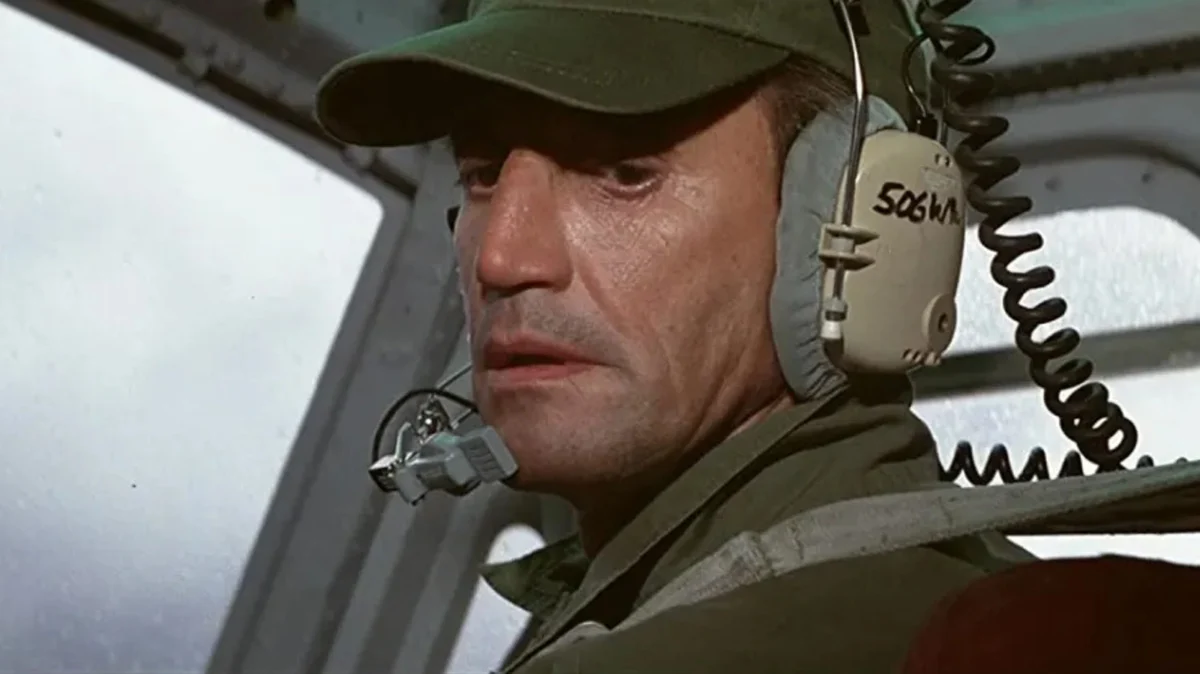
In the vast, algorithm-driven library of Netflix, gems of cinema history often find themselves buried beneath a mountain of contemporary "content." However, the recent arrival of John Badham’s 1983 action-thriller Blue Thunder on the platform offers more than just a nostalgic trip through 1980s practical effects. Starring Roy Scheider as a haunted LAPD pilot, the film has transitioned from a high-octane summer blockbuster into a chillingly accurate prophecy regarding the militarization of domestic law enforcement and the erosion of civilian privacy.
As modern audiences rediscover this "buried" classic, the parallels between its fictional dystopia and the contemporary geopolitical landscape have never been more striking.
Main Facts: A High-Tech Relic with Modern Teeth
Released in May 1983, Blue Thunder arrived at a pivotal moment in American culture. Directed by John Badham—who was concurrently shaping the techno-thriller genre with WarGames—the film follows Frank Murphy (Roy Scheider), a Metropolitan Test Pilot for the Los Angeles Police Department. Murphy is a man defined by his past; a Vietnam War veteran struggling with Post-Traumatic Stress Disorder (PTSD), he finds solace in the sky but remains deeply cynical of the bureaucracy on the ground.
The narrative engine is the eponymous "Blue Thunder," a prototype tactical helicopter designed for "urban pacification" during the upcoming 1984 Los Angeles Summer Olympics. On the surface, the aircraft is a marvel of engineering: armored plating, a 20mm electric cannon capable of firing 4,000 rounds per minute, and "Whisper Mode" technology for silent hovering. However, its most insidious features are its surveillance capabilities—infrared sensors, directional microphones that can eavesdrop through walls, and a data-link system that can access any private record in seconds.
The film’s central conflict ignites when Murphy and his rookie partner, Richard Lymangood (Daniel Stern), accidentally use the helicopter’s surveillance tech to record a secret meeting. They uncover a conspiracy involving government officials and military contractors—led by Murphy’s wartime nemesis, Colonel F.E. Cochrane (Malcolm McDowell)—who intend to incite riots in minority neighborhoods to "prove" the necessity of the Blue Thunder program.
Chronology: From Cold War Swagger to Domestic Dread
To understand the impact of Blue Thunder, one must look at the chronological context of its release. The early 1980s were defined by a resurgence of American military pride. Following the trauma of the Vietnam War and the Iran Hostage Crisis, the Reagan administration oversaw a massive buildup of the military-industrial complex.
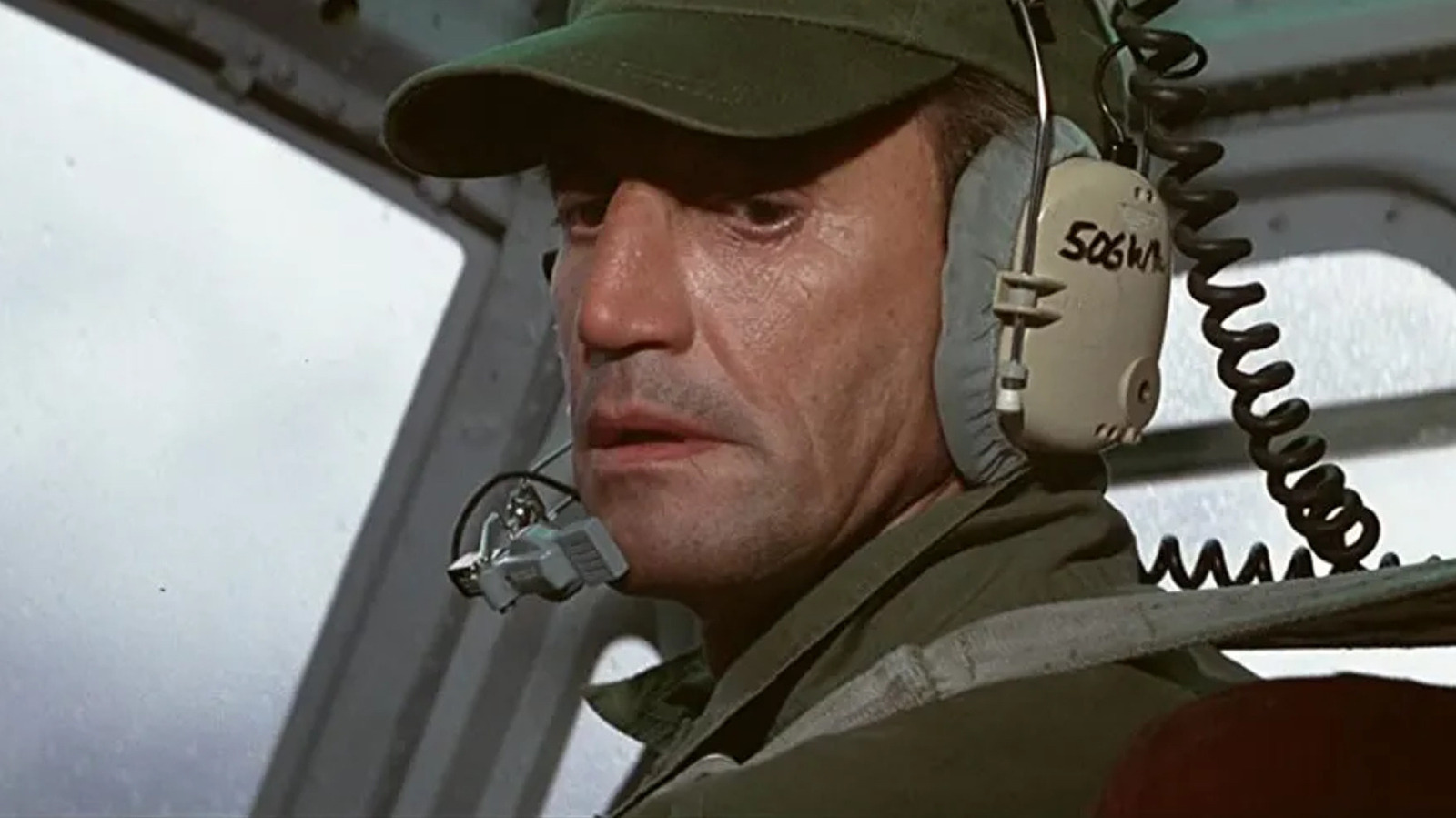
- 1982: Clint Eastwood’s Firefox hits theaters, showcasing a stolen Soviet super-jet. It reflects a national fascination with "wonder weapons" that could win the Cold War through sheer technological superiority.
- 1983 (May): Blue Thunder premieres. Unlike Firefox, it brings the theater of war home. It suggests that the same technology used to fight the U.S.S.R. is now being turned inward toward American citizens.
- 1983 (June): John Badham releases WarGames, further cementing the era’s anxiety about computers and autonomous military systems.
- 1984: The real-world Los Angeles Olympics take place. The security measures implemented for the games—though not involving a literal "Blue Thunder"—set a new precedent for the high-tech policing of major public events.
- Post-1984: The film’s success leads to a short-lived ABC television series. Crucially, the TV show stripped away the film’s subversive political edge, turning the helicopter into a "hero" vehicle, illustrating how easily cautionary tales can be co-opted into propaganda.
Supporting Data: Practical Spectacle and Technical Realism
One reason Blue Thunder holds up better than many of its contemporaries is its reliance on practical filmmaking. In an era before Computer Generated Imagery (CGI), John Badham and cinematographer László Kovács relied on actual aerial stunts over the crowded skyline of Los Angeles.
The "Blue Thunder" helicopter itself was a modified Aérospatiale SA-341G Gazelle. Designers added a bolt-on cockpit reminiscent of an AH-6 Apache attack helicopter and a heavy chin-mounted gun. The result was an aircraft that looked intimidatingly industrial and grounded in reality.
The film’s climax, a high-stakes dogfight between Murphy in Blue Thunder and Cochrane in an F-86 Sabre jet, remains a masterclass in spatial editing and practical stunt work. The production utilized miniatures for explosive sequences, but the low-altitude flying through the skyscrapers of downtown Los Angeles and the concrete channels of the L.A. River was entirely real. This tangible "weight" gives the film a visceral intensity that modern digital effects often fail to replicate.
Furthermore, the film’s depiction of surveillance technology was remarkably researched. While "Whisper Mode" remains largely a cinematic invention, the directional microphones and thermal imaging systems depicted in 1983 were early versions of technologies that are now standard in both military and high-end police hardware.
Official Responses: Critical Reception and Historical Re-evaluation
Upon its release, Blue Thunder was a commercial success, grossing over $42 million against a $22 million budget. Initial critical responses were mixed but generally positive regarding its technical achievements.
Roger Ebert gave the film three and a half stars, praising it as "a flashy, high-tech, scary thriller" while noting that its greatest strength was the "humanity" Roy Scheider brought to the role of Murphy. However, some critics at the time dismissed the plot as "paranoiac" or "implausible," viewing the idea of a military-grade helicopter patrolling American suburbs as a far-fetched Hollywood invention.
Decades later, the critical narrative has shifted significantly. In retrospective reviews, film historians now categorize Blue Thunder alongside 1970s "paranoia thrillers" like The Conversation and All the President’s Men. It is seen as a bridge between the gritty realism of the 70s and the high-concept action of the 80s.
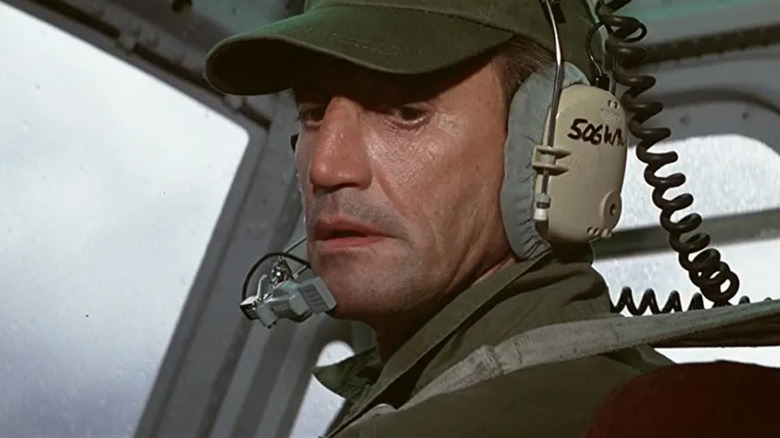
Modern scholars of the "police procedural" genre often point to Blue Thunder as a rare example of a film that questions the morality of law enforcement technology. While Robocop (1987) would later take these themes to a satirical extreme, Blue Thunder presented them with a "ten minutes into the future" sobriety that feels increasingly like a documentary.
Implications: The Prescience of the "Warrior Cop"
The most compelling reason to watch Blue Thunder on Netflix today is its terrifying relevance to the 21st-century debate over police militarization. In his seminal book Rise of the Warrior Cop: The Militarization of America’s Police Forces, investigative journalist Radley Balko outlines how the line between the soldier and the police officer has blurred since the 1980s.
The film’s premise—that military hardware designed for foreign battlefields eventually finds its way into domestic precincts—is no longer a "paranoiac" theory; it is a matter of public record. Through the Pentagon’s 1033 Program, billions of dollars in surplus military equipment (including armored personnel carriers, high-powered rifles, and aircraft) have been transferred to local police departments across the United States.
Blue Thunder touches on several modern-day anxieties:
- Surveillance and Privacy: The "Big Brother" capabilities of the Blue Thunder helicopter—the ability to look through walls and listen to private conversations—are now mirrored in the use of Stingray cell-site simulators, facial recognition software, and Pegasus spyware. Murphy’s discovery of the conspiracy via "accidental" surveillance foreshadows the modern era of "mass data collection" where every citizen is a potential suspect.
- Urban Pacification: The film’s villainous plot to "incite a riot" to justify the use of the helicopter bears a haunting resemblance to contemporary discussions about "agent provocateurs" and the aggressive police response to protests in cities like Ferguson and Minneapolis. The film asks: If the police have a hammer (Blue Thunder), does every problem begin to look like a nail?
- The Veteran’s Trauma: Roy Scheider’s portrayal of Murphy as a man with PTSD is more than a character quirk. It highlights the psychological toll of bringing combat experience into domestic policing—a theme that remains central to the discussion of how law enforcement interacts with the public today.
- The Autonomy of Technology: While Blue Thunder is piloted by a human, the film hints at the "dehumanization" of policing. Today, the rise of police drones (UAVs) has realized the film’s vision of a silent, hovering eye in the sky, often operating with little to no public oversight.
Conclusion: A Subversive Gem in Plain Sight
Blue Thunder is that rare 80s action film that grows more intelligent as it ages. While it delivers the pyrotechnics and thrills expected of its era, its core is a deeply cynical, subversive warning about the price of "security."
As it sits on the Netflix servers, it serves as a reminder of a time when Hollywood action movies were willing to bite the hand of the military-industrial complex that often funded their toys. For the modern viewer, the film is no longer a fantasy about what might happen; it is a diagnostic tool for understanding what has happened. Frank Murphy’s final act in the film—a desperate attempt to destroy the very weapon he was hired to fly—remains one of the most defiant images in action cinema history. It is a call to look up at the sky and wonder: who is watching, and what are they willing to do to keep control?


Leave a Comment