Kate Meissner Explores the Transformative Power of the Body at Lyles & King
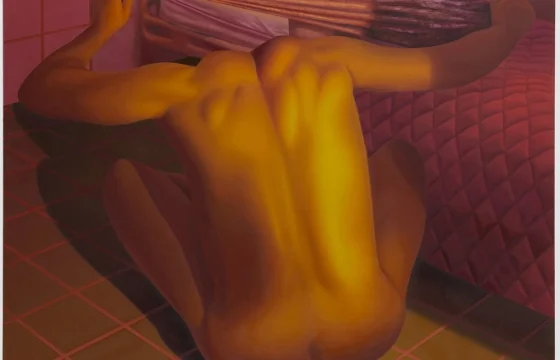
New York, NY – Lyles & King is currently hosting a compelling exhibition of new paintings by artist Kate Meissner, offering a profound exploration into the profound changes the human body undergoes. Titled "Project Kate Meissner," the exhibition, which runs through April 4th, delves into the concept of bodily elasticity and the inherent capacity for metamorphosis. Meissner’s deeply personal reflections, stemming from her recent experience of pregnancy and the birth of her first child, infuse these canvases with a visceral and introspective quality, meditating on physiological transformation and the primal, mammalian nature that underpins our existence.
The Genesis of Transformation: Pregnancy as an Artistic Catalyst
Kate Meissner, a rising artist born in Sacramento, California in 1995, brings a unique and powerful perspective to her artistic practice. Her latest body of work, showcased at Lyles & King, is intrinsically linked to her lived experience over the past year. The profound physical and emotional journey of pregnancy and childbirth has served as a potent muse, igniting a deep inquiry into the very essence of bodily change.
"These works are an exploration of the human body’s elasticity and capacity to metamorphose," Meissner states, articulating the core of her exhibition. "Informed by my own experience of pregnancy and the birth of my first child last year, these paintings are a meditation on physiological transformation and the body’s underlying animalistic and mammalian nature." This statement is not merely an artist’s explanation; it’s an invitation to witness a deeply personal odyssey translated into a universal language of paint and form.
The act of carrying and birthing a child is one of the most fundamental and transformative experiences a human can undertake. It is a period of immense physical upheaval, where the body stretches, reshapes, and ultimately recreates itself to nurture and bring forth new life. Meissner’s paintings capture this extraordinary process, not as a passive observation, but as an active engagement with the biological marvels at play. The elasticity of skin, the expansion of organs, the shifting of bone structure – these are not depicted with clinical detachment, but with an artist’s keen eye for form, texture, and emotional resonance.
Furthermore, Meissner’s reference to the body’s "animalistic and mammalian nature" adds a crucial layer of depth. Pregnancy and childbirth connect us to our primal roots, tapping into an ancient biological imperative that transcends conscious thought. It is a reminder of our place within the larger animal kingdom, a lineage marked by instinct, survival, and the continuation of the species. Her work, therefore, becomes a bridge between the individual, intensely personal experience of motherhood and the broader, evolutionary narrative of humanity.
A Chronology of Change: From Conception to Creation
While the exhibition itself is a snapshot in time, the genesis of Meissner’s artistic exploration is rooted in a clear chronological progression of personal experience. The period leading up to and following the birth of her child has been a fertile ground for her creative output.
The initial stages of pregnancy would have marked the beginning of her physical transformation. This phase, often characterized by subtle yet significant internal changes, likely sparked Meissner’s initial contemplation of the body’s adaptability. As pregnancy progressed, the visible outward changes would have become more pronounced, offering a constant visual and tactile dialogue with her evolving form. This ongoing dialogue would have informed her artistic decisions, driving her to capture the nuances of this dynamic state.
The act of childbirth itself represents a pivotal moment of extreme metamorphosis. The culmination of months of growth and preparation, birth is a powerful and often overwhelming experience that leaves an indelible mark on the body and psyche. It is reasonable to infer that the intensity and rawness of this event would have been a profound source of inspiration for Meissner, pushing her to translate such potent biological forces onto canvas.
The postpartum period, another phase of significant bodily readjustment, would have continued to fuel her artistic investigation. The body, having undergone such a radical transformation, begins the process of recovery and recalibration. This period of flux, of returning to a new normal, offers its own unique set of challenges and insights, likely providing further fodder for Meissner’s exploration of bodily elasticity and resilience.
Through this chronological lens, it becomes clear that Meissner’s exhibition is not a static representation, but a dynamic chronicle of transformation, mirroring the very processes she depicts. Each brushstroke, each compositional choice, can be seen as a testament to her journey, a visual diary of a body in flux, embracing its inherent power to change.
Supporting Data: Meissner’s Growing Recognition and Artistic Pedigree
Kate Meissner’s artistic journey is marked by a consistent trajectory of critical acclaim and growing institutional recognition. Her inclusion in the permanent collections of prominent museums underscores the significance and lasting impact of her work. These institutions, known for their discerning curation and commitment to showcasing important contemporary artists, serve as vital validators of Meissner’s artistic prowess.
The Denver Art Museum, with its broad and diverse collection, recognizes Meissner’s ability to engage with contemporary themes in a meaningful way. The Xiao Museum of Contemporary Art in Rizhao, China, highlights her international appeal and the universal resonance of her artistic concerns. The Mer Collection in Madrid, Spain, and the Abroms-Engel Institute for the Visual Arts in Birmingham, USA, further solidify her presence within the global art landscape. These acquisitions are not merely symbolic; they represent a commitment to preserving and presenting Meissner’s contributions to art history for future generations.
Her academic background is equally impressive. Meissner earned her Master of Fine Arts (MFA) from Yale University, one of the most prestigious art programs in the world. An MFA from Yale signifies rigorous training, critical engagement with artistic discourse, and a high level of technical and conceptual development. This academic foundation has undoubtedly equipped her with the tools and intellectual framework to tackle complex themes with sophistication and depth.
Furthermore, her representation by Lyles & King, a reputable New York-based gallery known for its commitment to emerging and established contemporary artists, is a testament to her burgeoning career. Galleries like Lyles & King play a crucial role in nurturing artists, providing them with platforms to exhibit their work, connect with collectors, and gain wider recognition. The current exhibition at Lyles & King is a direct result of this established relationship and serves as a significant milestone in her artistic development.
These supporting data points collectively paint a picture of an artist who is not only critically acclaimed but also possesses a strong academic foundation and a growing presence in the international art world. Her ability to consistently produce impactful work that resonates with institutions and audiences alike positions her as a significant voice in contemporary art.
Official Responses: The Gallery’s Endorsement and Curatorial Vision
Lyles & King’s decision to present Kate Meissner’s new paintings is a clear endorsement of her artistic vision and the compelling nature of her exploration. Galleries act as vital gatekeepers and champions in the art world, and their commitment to an artist’s work speaks volumes about its perceived significance.
The gallery’s presentation of "Project Kate Meissner" in their project space suggests a deliberate focus on showcasing new and impactful bodies of work that warrant dedicated attention. Project spaces within galleries are often utilized for more experimental or conceptually driven exhibitions, allowing artists the freedom to delve deeply into their current themes. This setting amplifies the intimacy and intensity of Meissner’s exploration of the human body.
The brevity of the provided information doesn’t allow for a detailed curatorial statement from the gallery itself. However, the very act of dedicating exhibition space to Meissner’s work, alongside her biography and artistic statement, signifies the gallery’s belief in the power and relevance of her themes. Lyles & King’s commitment is an "official response" in the sense that it’s a public declaration of support and a platform for Meissner’s artistic dialogue.
Their selection of Meissner’s work for exhibition indicates a curatorial interest in themes of transformation, the body, and the intersection of personal experience with broader biological and societal narratives. Galleries often curate exhibitions with an overarching vision, and by featuring Meissner, they are contributing to a conversation about contemporary artistic concerns.
While there are no direct quotes from gallery representatives in the provided text, the exhibition itself serves as their statement. It is a curated experience designed to engage viewers with Meissner’s profound artistic inquiry. The gallery’s role is to facilitate this engagement, providing the physical and conceptual framework for the audience to connect with the artwork.
Implications: Redefining Perceptions of the Body and Motherhood
Kate Meissner’s exhibition at Lyles & King carries significant implications for how we perceive the human body, particularly in the context of female transformation and motherhood. Her work challenges conventional, often idealized, representations of the body and instead embraces its raw, powerful, and ever-changing nature.
One of the most profound implications is the demystification of pregnancy and childbirth. For many, these experiences remain shrouded in a degree of mystery or are presented through a limited lens of romanticized imagery. Meissner’s unflinching engagement with the physiological realities of metamorphosis – the stretching, the reshaping, the inherent "animalistic" qualities – can foster a more honest and empowering understanding. By bringing these transformations to the forefront of artistic discourse, she encourages a deeper appreciation for the body’s incredible resilience and capacity.
Furthermore, her emphasis on the "mammalian nature" of the body can serve to re-center our understanding of humanity within the broader animal kingdom. In a society that often seeks to distinguish humans as separate from and superior to other species, Meissner’s work reminds us of our shared biological heritage. This perspective can lead to a more holistic and compassionate view of ourselves and our place in the natural world.
The exhibition also has implications for the discourse surrounding motherhood. By directly linking her artistic exploration to her personal experience, Meissner contributes to a growing body of work that validates and elevates the lived experiences of mothers. Her art can offer solace, recognition, and a sense of shared understanding to those who have navigated similar transformations. It challenges the idea that motherhood is solely a nurturing role, highlighting its profound impact on the physical self.
On a broader artistic level, Meissner’s work contributes to the ongoing dialogue about the body as a site of artistic exploration. Artists have long been fascinated by the human form, but Meissner’s approach, informed by a specific and deeply personal experience of biological change, offers a fresh and vital perspective. Her ability to translate complex physiological processes into compelling visual art pushes the boundaries of what we expect from figurative painting.
Ultimately, Kate Meissner’s exhibition at Lyles & King is more than just a collection of paintings; it is a profound meditation on life, change, and the extraordinary power of the human body. Her work invites viewers to contemplate their own physicality, their connection to the natural world, and the transformative journeys that shape us all. The exhibition serves as a powerful reminder that within the seemingly ordinary processes of biology lies a universe of wonder and artistic potential.