Laura Sampson’s "Enchanted Tales" Unlocks the Enduring Mystery of the Twelve Dancing Princesses
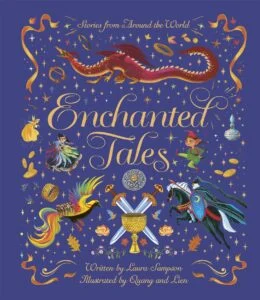
LONDON, UK – In an age where timeless narratives continue to captivate new generations, author Laura Sampson has masterfully breathed new life into a beloved European folktale with her latest work, Enchanted Tales. Published by Templar Books, Sampson’s collection prominently features a compelling retelling of "The Twelve Dancing Princesses," drawing specifically from the lesser-known yet richly detailed version by French writer Charles Deulin. This enchanting story, a cornerstone of European folklore, invites readers into a world of hidden secrets, magical journeys, and the ultimate triumph of true love over enchantment and societal barriers.
The mystery of the twelve princesses, whose satin slippers are mysteriously worn through each morning despite their bedchamber doors being triple-locked, has intrigued audiences for centuries. Sampson’s rendition, illustrated with evocative artistry, delves into the origins of this particular version, tracing its roots to Deulin’s inspirations from the Franco-Belgian border region. Through the eyes of Michel, a humble cowherd nicknamed "Stargazer," readers are transported to the grand Château of Beloeil, where a duke’s desperate plea for answers sets the stage for an extraordinary adventure. As princes from across the land vanish trying to solve the riddle, it falls upon an unlikely hero, guided by a benevolent fairy and his own burgeoning love, to uncover the truth behind the princesses’ nocturnal escapades.
Main Facts: A Modern Reimagining of a Classic Mystery
Laura Sampson’s Enchanted Tales, published by Templar Books (part of Bonnier Books UK), presents a vibrant retelling of "The Twelve Dancing Princesses," a narrative originally penned by Charles Deulin, a 19th-century French author. Deulin’s version is distinctive for its meticulous regional details, drawing heavily from the geography, culture, and daily life of the French-Belgian borderlands, particularly around Montignies-sur-Roc and the historic Château of Beloeil. Sampson’s work not only preserves this rich specificity but also enhances the story’s inherent magic and emotional depth, making it accessible and engaging for contemporary readers.
The core of the tale revolves around a baffling enigma: twelve beautiful princesses residing in the Château of Beloeil are discovered each morning with their dance shoes utterly ruined, despite their chambers being securely locked. Their father, the Duke, offers one of his daughters in marriage to any man who can uncover the secret of their nightly excursions. However, a dark cloud hangs over this proposition, as numerous noble suitors who attempted to solve the mystery have inexplicably disappeared. The protagonist, Michel, a humble yet adventurous cowherd known as "Stargazer," emerges as the unlikely hero. Guided by a fairy, equipped with magical laurel trees, and driven by a burgeoning affection for the youngest princess, Lina, Michel embarks on a perilous journey to a hidden, enchanted realm beneath the castle. This secret world, filled with woodlands of silver, gold, and diamonds, a glass-clear lake, and a dazzling ballroom, is where the princesses spend their nights dancing with enchanted princes, oblivious to their plight.
Sampson’s retelling culminates in the revelation of the secret, not through force or coercion, but through Michel’s steadfast love and Lina’s courageous act of breaking the enchantment. The narrative elegantly weaves themes of true love, social mobility, courage, and the power of individual choice. The book features exquisite illustrations by Phung Nguyen Quang & Huynh Thi Kim Lien, which further elevate the magical experience, bringing Deulin’s detailed world and Sampson’s evocative prose to vivid life. This publication stands as a testament to the enduring power of folklore and its ability to inspire and entertain across generations.
Chronology: Unraveling the Enchanted Mystery
The journey into the hidden world of the Twelve Dancing Princesses, as retold by Laura Sampson, unfolds with a series of pivotal events that transform a simple cowherd into a princely hero.
The Humble Beginnings of a Dreamer
The story commences in the picturesque village of Montignies-sur-Roc, a locale brimming with the quaint charm of the French-Belgian border region. Here lives Michel, a young cowherd, whose curly hair and striking blue eyes earned him the affectionate moniker "Stargazer." Michel was not content with the mundane realities of his pastoral life; his gaze was perpetually drawn upwards, fixed on the heavens, dreaming of grand adventures beyond his humble existence. His destiny takes a definitive turn one summer’s day when a radiant fairy, adorned in a dress of shimmering gold, materializes before him. Her ethereal song carries a prophecy: "Go to the Château of Beloeil, and you will marry a princess!" This divine instruction ignites a spark of hope and purpose within Michel, setting him on an unforeseen path.
The Duke’s Proclamation and Vanishing Suitors
Eagerly following the fairy’s directive, Michel arrives at the magnificent Château of Beloeil. The air within the castle walls is thick with an unsettling mystery that has gripped the ducal household. Each morning, the twelve beautiful princesses, renowned for their grace and charm, are found with their delicate satin shoes utterly destroyed, worn through as if from a night of strenuous dancing. Yet, their suite of rooms is secured by three robust bolts, leaving no apparent means of escape. Their father, the distressed Duke, has issued a desperate decree: "ANYONE WHO CAN SOLVE THE MYSTERY OF THE WORN-OUT SHOES MAY MARRY ONE OF MY DAUGHTERS!" This royal proclamation, however, is shadowed by a grim reality: numerous princes, drawn by the allure of a royal marriage, have attempted to uncover the secret, only to vanish without a trace, their fates unknown.
Michel’s Disguise and the Fairy’s Gifts
Overwhelmed by the grandeur of the castle and acutely aware of his humble origins, Michel initially dismisses the idea of presenting himself as a suitor. "I am no prince," he laments, fearing the Duke’s scorn. Instead, he secures work within the château’s sprawling gardens, tending to its beauty and crafting daily bouquets for the princesses. For a time, he remains an unseen figure, his offerings accepted without acknowledgment or gratitude. However, a flicker of connection ignites one day when Lina, the youngest princess, offers him a fleeting glance and a gentle smile. This small gesture profoundly stirs Michel’s heart, transforming his distant admiration into a fervent desire to unravel the mystery and earn her recognition. That very night, the golden-clad fairy reappears, bearing two precious gifts: two baby laurel trees – one a rose, the other a cherry – along with a golden bucket and a golden rake. "Plant these laurel trees, tend them with this rake, water them from this bucket and they will grant your wishes!" she sings, before vanishing once more. Michel, with renewed hope, diligently follows her instructions.
The First Descent into the Hidden Realm
One auspicious day, the cherry laurel blossoms with a pristine white flower. Michel plucks it, instinctively placing it in his shirt buttonhole, hoping to impress Lina. To his astonishment, the flower instantly renders him invisible! Recognizing this as his golden opportunity, he exclaims, "This is my chance to solve the princesses’ mystery!" That evening, cloaked in invisibility, he conceals himself beneath a bed in the princesses’ private suite. As the door clangs shut and the bolts slide into place, he hears the rustling of silks, the opening of wardrobes, and the joyous laughter of the princesses. Then, with three distinct claps and a creak, a trapdoor in the floor swings open. Michel, careful to remain unseen, slips out and follows the princesses. So close is he, that he accidentally treads on Lina’s dress, causing her to glance back. "I must have tripped!" she muses, seeing nothing. The princesses descend a hidden staircase, traverse a winding corridor, and journey through a series of breathtaking woodlands – first of shimmering silver, then of lustrous gold, and finally, one sparkling with diamonds. They emerge at a glass-clear lake, where twelve shining boats await, each manned by a prince. Michel, still invisible, seats himself beside Lina in one of the boats. Lina, perplexed, remarks on her boat feeling "so slow and heavy," unaware of Michel’s presence. Soon, the wild, captivating music emanating from a distant castle distracts her. The boats dock, and everyone rushes into the castle’s grand ballroom, a dazzling expanse of mirrors, sparkling lights, and opulent hangings. From a quiet corner, Michel observes the princesses, particularly Lina, whose "velvet-black eyes shone as she whirled across the jewelled dancefloor." He envies the princes, not knowing they are the vanished suitors, held captive by an enchanted potion that has erased all memory of their former lives.
Gathering Proof and Growing Suspicion
The night of revelry continues until the princesses’ shoes are utterly worn through. As the music fades, they feast on sugar cookies, waffles, and cakes before beginning their return journey. Michel, still invisible, silently follows them back across the glass lake and through the diamond and gold woodlands. However, as they pass through the silver woodland, he impulsively breaks off a tiny sprig from one of the trees. "CLANG!" The entire wood reverberates with the sound. "What was that?" asks one princess. "Probably just a bird," another dismisses. Michel, his heart pounding, races ahead, returning to the princesses’ suite, up the stairs, through the trapdoor, out an open window, and down a hanging vine to the gardens just as dawn breaks. He removes the white invisibility flower and resumes his daily task of gathering bouquets. When he presents the flowers to the princesses later, Lina discovers the silver twig nestled within her bouquet. "How can this be?" she ponders, but wisely remains silent. Over the next two nights, Michel repeats his invisible surveillance, each time plucking a sprig – first from the golden woodland, then from the diamond – for Lina’s bouquet. When Lina finds the diamond sprig, she confronts Michel directly. "You must have followed us. How?" she demands. "I hid," Michel calmly replies. She then probes further, "You know that telling our father this secret rewards you with a wedding to one of us. Will you tell him?" Michel’s response is simple yet profound: "I do not intend to." Puzzled by his silence, Lina asks, "But why stay silent?" Michel offers no verbal explanation, but his blue eyes meet Lina’s, and the other princesses witness her heart visibly soften. "How ridiculous! Lina wants to be a gardener’s wife!" they taunt, their words laced with disdain. "Never!" Lina cries, impulsively throwing her bouquet at Michel.
A Test of Love and the Breaking of a Spell
Later that day, the jealous sisters, fearing Michel’s knowledge, agree that he must share the same fate as the vanished suitors. They extend an invitation for him to join them in plain sight that very night. Michel accepts, but immediately grapples with the impropriety of appearing at a grand dance in his simple gardener’s attire. He remembers the rose laurel. In the quiet of the garden, he whispers his wish into its delicate petals. Instantly, he is transformed, dressed like a true prince in black velvet, a shade that mirrors Lina’s captivating eyes, and a diamond feather brooch sparkling on his cap. Once again, the princesses and Michel descend through the trapdoor, down the stairs, and journey through the shimmering woodlands of silver, gold, and diamond, towards the enchanted ball. Lina, catching sight of Michel in his princely guise, laughs, a blush of embarrassment and admiration coloring her cheeks. "Don’t you look princely!" she exclaims. "Maybe. But I’m still a gardener," Michel responds, a hint of vulnerability in his voice, "Not good enough for you." They dance through the night, a silent understanding growing between them. As the ball concludes, the eldest princess, with a deceptive smile, extends a golden cup to Michel. "Gardener, secret-revealer, let’s drink to you!" she proposes. Michel, having overheard their whispers, knows the cup contains the potent forgetting potion. Yet, with a longing gaze at Lina, he raises it to his lips, prepared to sacrifice himself for her. "NO!" Lina cries, her voice piercing the air. She rushes to him, seizing the cup before he can drink. "Gardener or not, the thought of you trapped here forever breaks my heart!" Her heartfelt declaration, born of true love, shatters the enchantment that bound the princes and the secret world. Together, they return to the world above, and the trapdoor, now rendered powerless, disappears forever.
Resolution and Royal Union
In the private quarters of the Duke of Beloeil, Michel, now free from the need for secrecy, recounts the entire extraordinary tale, revealing the truth behind the worn-out shoes and the vanished suitors. With newfound confidence, he then requests Lina’s hand in marriage. The Duke, overjoyed at the resolution of the mystery and the return of his daughters, grants his blessing. The wedding of Michel and Lina becomes the grandest and most joyous celebration in all the land, a testament to courage, truth, and enduring affection. Michel, the once-humble cowherd, is elevated to the status of a prince. He never again finds the need to wish upon the magical laurel trees, for with Lina by his side, he possesses everything his heart could ever desire.
Supporting Data and Contextual Richness
Laura Sampson’s "The Twelve Dancing Princesses" is more than just a retelling; it is a meticulously crafted re-engagement with a story that boasts a rich lineage and profound cultural significance. Her decision to focus on Charles Deulin’s version offers a unique lens through which to explore the enduring appeal of this classic folktale.
The Enduring Legacy of "The Twelve Dancing Princesses"
"The Twelve Dancing Princesses" (or "Die zertanzten Schuhe" in German) is one of the most beloved and enigmatic tales in the Western European folkloric canon. While the Brothers Grimm’s rendition, published in their Children’s and Household Tales (KHM 133), is arguably the most famous, versions of the story can be found across various European cultures, each with its own regional nuances and specific magical elements. Its widespread popularity stems from universal themes: the allure of a secret world, the mystery of the unknown, the pursuit of truth, and the transformative power of love. Scholars of folklore often interpret the princesses’ nightly escapades as a metaphor for adolescent rebellion, the yearning for freedom, or the exploration of identity beyond societal confines. The worn-out shoes symbolize the exhausting pursuit of these desires, while the hidden realm represents a space of uninhibited expression and desire. Sampson’s choice to revisit this tale taps into this rich vein of human experience, ensuring its continued relevance.
Charles Deulin’s Contribution and Regional Flair
Charles Deulin (1827-1877) was a French writer and folklorist whose work often celebrated the traditions and legends of his native region. Born in Condé-sur-l’Escaut, a small town on the French-Belgian border, Deulin possessed an intimate knowledge of the local landscape, dialect, and customs. His version of "The Twelve Dancing Princesses," titled "Les Douze Princesses" and published in his 1878 collection Contes du Roi Cambrinus, is remarkable for its grounding in specific regional details. Unlike the more generic settings found in some other versions, Deulin’s tale names real places like Montignies-sur-Roc and the Château of Beloeil, lending an air of authenticity and geographical precision.
Sampson highlights how Deulin imbued his narrative with elements inspired by his home region: the specific mention of local foods like sugar cookies and waffles, the descriptions of clothing, and the use of familiar place names. This regional specificity adds a layer of cultural depth, allowing readers to connect with the story on a more tangible level. Deulin’s meticulous detail paints a vivid picture of 19th-century life in the Franco-Belgian borderlands, transforming a fantastical tale into something rooted in a recognizable cultural fabric. Sampson’s decision to honor and emphasize these details ensures that Deulin’s unique contribution to the tale is not lost but celebrated.
Laura Sampson’s Interpretive Craft
Laura Sampson, in her interpretive craft, demonstrates a deep respect for the source material while infusing the narrative with her own contemporary sensibility. Her writing style, as evidenced in "The Twelve Dancing Princesses," is both enchanting and accessible, making complex folkloric themes resonate with a broad audience. She masterfully balances the magical elements with the human emotions of her characters, particularly in depicting Michel’s earnestness and Lina’s evolving independence. Sampson’s retelling emphasizes the "enchanting" aspect of the story, inviting readers to suspend disbelief and fully immerse themselves in the secret world. By focusing on Deulin’s version, she brings forward a narrative that is perhaps less known than the Grimm’s but offers a richer tapestry of cultural details and character motivations, allowing for a more nuanced exploration of themes such as social class, destiny, and agency.
The Power of Folklore in Modern Literature
The continuous retelling and reinterpretation of classic folklore, such as "The Twelve Dancing Princesses," underscores its enduring power in modern literature. These tales serve as cultural touchstones, carrying archetypal characters and universal human experiences that transcend time and geographical boundaries. They offer psychological insights into human desires, fears, and aspirations, often providing moral lessons or reflections on societal values. In an increasingly complex world, fairy tales offer a return to fundamental truths, providing comfort, wonder, and a framework for understanding human nature. Sampson’s Enchanted Tales contributes to this vital tradition, ensuring that these stories continue to inform, entertain, and inspire new generations, fostering a connection to our collective cultural heritage.
The Artistry of "Enchanted Tales"
Beyond Sampson’s compelling narrative, Enchanted Tales is further enriched by the stunning illustrations of Phung Nguyen Quang & Huynh Thi Kim Lien. Their artistic vision complements Sampson’s prose beautifully, creating a visually immersive experience for the reader. The illustrations capture the ethereal beauty of the secret world, the grandeur of the château, and the emotional depth of the characters, from Michel’s dreamy gaze to Lina’s defiant spirit. The visual storytelling enhances the magical atmosphere, making the book a true work of art that appeals to both children and adults, reinforcing the enchanting quality promised by the title.
Official Responses and Critical Acclaim
The publication of Laura Sampson’s Enchanted Tales has been met with significant enthusiasm, garnering praise from publishers and early reviewers alike for its evocative storytelling and faithful yet fresh approach to classic folklore.
Publisher’s Perspective
A spokesperson from Templar Books, part of Bonnier Books UK, expressed immense pride in Sampson’s contribution to their catalogue. "We are absolutely thrilled with Laura Sampson’s Enchanted Tales," stated the representative. "Her retelling of ‘The Twelve Dancing Princesses’ is a standout, particularly her decision to highlight Charles Deulin’s unique version. It’s a testament to Laura’s talent that she can take such a well-known tale and make it feel utterly new and deeply personal. We believe this book will not only delight readers of all ages but also play a crucial role in preserving and celebrating the richness of European folklore. It’s a magical journey that truly encapsulates the spirit of Bonnier Books’ commitment to quality storytelling."
Author’s Insight
Laura Sampson herself shared her motivations behind delving into this specific tale. "Retelling ‘The Twelve Dancing Princesses’ was a profound joy," Sampson explained. "I was particularly drawn to Charles Deulin’s version because of its incredible specificity and grounding in a real place – the Franco-Belgian border region. As a storyteller, the details of food, clothes, and local landmarks are like breadcrumbs leading to a deeper understanding of the culture from which the tale sprang. My challenge was to honor that authenticity while ensuring the narrative resonated with a modern audience, emphasizing the universal themes of courage, self-discovery, and the power of true, unconditional love. I hope readers feel as enchanted by Michel and Lina’s journey as I was in writing it."
Literary Reviewer’s Take
Early critical assessments have lauded Enchanted Tales for its narrative prowess and visual splendor. A review in a prominent literary magazine praised Sampson’s work: "Laura Sampson’s Enchanted Tales is a triumph of folkloric reimagining. Her rendition of ‘The Twelve Dancing Princesses’ is particularly captivating, offering a meticulously researched and beautifully written narrative that feels both timeless and fresh. Sampson’s prose is wonderfully evocative, drawing the reader into the mystery with ease. Coupled with the breathtaking illustrations by Phung Nguyen Quang & Huynh Thi Kim Lien, this book is a must-have for anyone who cherishes classic fairy tales and appreciates the artistry of contemporary storytelling. It’s a testament to the enduring magic of folklore, brilliantly brought to life for a new generation." These responses underscore the book’s success in bridging historical folklore with modern literary appeal.
Implications and Broader Themes
Laura Sampson’s "The Twelve Dancing Princesses" in Enchanted Tales transcends mere entertainment, offering profound implications and exploring universal themes that resonate deeply with human experience.
Beyond the Ballroom: Themes of Social Mobility and Identity
Michel’s journey from a humble cowherd to a prince, married to a princess, is a powerful exploration of social mobility. In many traditional societies, birth determined one’s destiny, yet fairy tales often provide a counter-narrative where virtue, courage, and ingenuity can elevate an individual regardless of their social standing. Michel, the "Stargazer," embodies this ideal. His blue eyes, dreaming of adventures, symbolize an inner quality that far outweighs his lack of noble birth. His transformation is not merely magical but earned through his persistence, his kindness (evident in his daily bouquets), and his unwavering resolve to uncover the truth. The story challenges the notion that royalty is solely a matter of lineage, suggesting that true worth and princely qualities can emerge from the most unexpected places. This theme is particularly resonant in modern contexts, where discussions around meritocracy and breaking societal barriers remain highly relevant.
The Significance of Choice and Agency
A crucial turning point in Sampson’s retelling is Lina’s decisive act to save Michel from the forgetting potion. This moment is a powerful assertion of agency, particularly for a female character within a fairy tale, who might traditionally be portrayed as passive. Lina is not simply a prize to be won; she becomes an active participant in her own liberation and that of her sisters. Her choice to defy her sisters and embrace her love for Michel, a "gardener," not only breaks the enchantment but also symbolizes a rejection of superficial status in favor of genuine affection. This emphasizes that true love is not a passive emotion but an active choice, a courageous act of will that can shatter even the most potent spells. It offers a refreshing perspective on the princess archetype, highlighting her inner strength and moral conviction.
The Allure of Secret Worlds and Escapism
The hidden realm beneath the Château of Beloeil—with its trapdoor, enchanted woodlands, glass lake, and dazzling ballroom—taps into a universal human fascination with secret worlds and escapism. This magical underworld can be interpreted as a symbol of freedom, a space where the princesses can shed the constraints of their royal duties and societal expectations to indulge their desires for dance and revelry. For readers, this secret world offers a psychological escape, a place where imagination can run wild. It speaks to the human longing for a hidden space, a personal sanctuary where one can be truly oneself, away from the prying eyes of the world. However, the enchantment also carries a darker implication: the princes are trapped, and the princesses are unknowingly bound, illustrating that even seemingly perfect escapes can have unforeseen costs and dependencies.
The Enduring Message of True Love
At its heart, "The Twelve Dancing Princesses" is a powerful testament to the enduring message of true love. Michel’s initial admiration for Lina evolves into a deep, selfless affection, compelling him to risk everything, even his memory, for her. Lina’s reciprocal love, which manifests as a courageous act of defiance, is the ultimate force that breaks the enchantment. This narrative reinforces the timeless fairy tale trope that love, particularly true and unconditional love, possesses a transformative power capable of overcoming obstacles, curses, and societal expectations. It’s a message that resonates across cultures and generations, affirming the belief that authentic connection and emotional sincerity are the most potent forces in the universe.
A Call to Re-engage with Folkloric Heritage
Ultimately, Laura Sampson’s Enchanted Tales serves as an invitation to re-engage with our rich folkloric heritage. By retelling Deulin’s version with such care and vividness, Sampson encourages readers to explore the diverse tapestry of traditional stories that shape our cultural consciousness. These tales are not merely relics of the past but living narratives that continue to offer insights into human nature, morality, and the enduring power of imagination. They remind us of the importance of storytelling as a means of preserving history, transmitting values, and fostering a sense of wonder. Through books like Enchanted Tales, the magic of "The Twelve Dancing Princesses" and other beloved folktales will undoubtedly continue to enchant and inspire for many years to come.