The Eloquence of Empty Lines: Navigating the Philosophical Abyss of Language and Reality
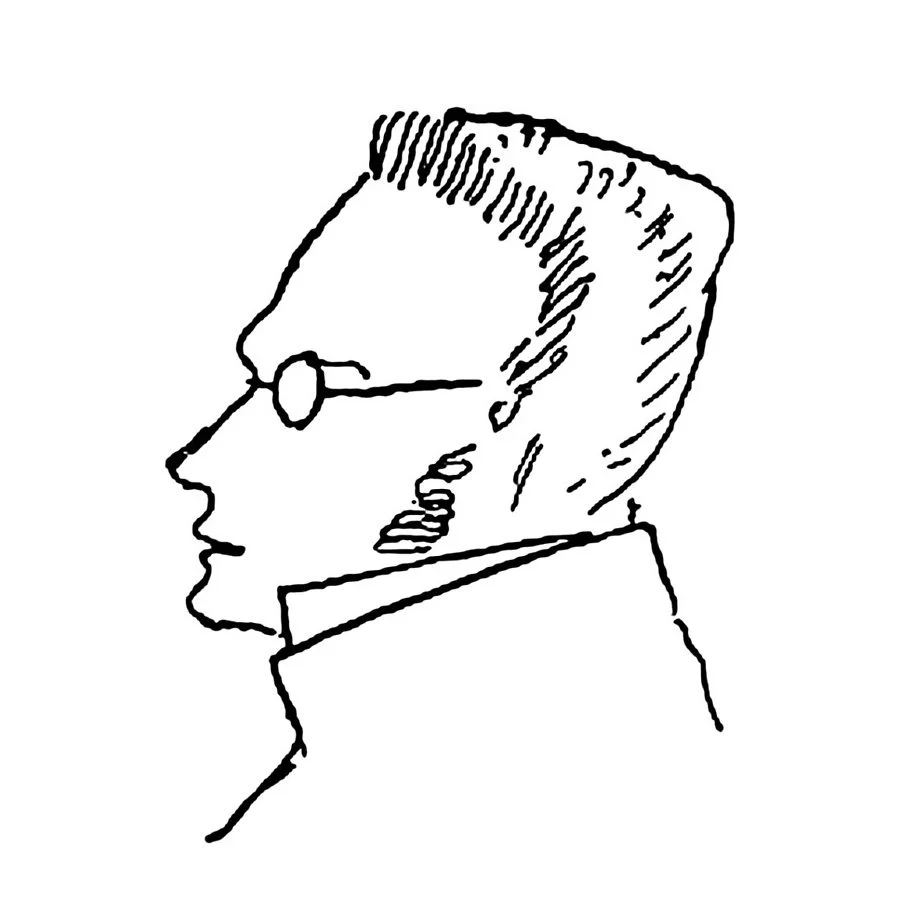
A fundamental question probes the very essence of human communication: If language is merely a finite arrangement of symbols, incapable of fully capturing the boundless complexity of reality, why do we place such profound faith in it to unravel the universe’s deepest philosophical mysteries? Is our reliance on words a futile endeavor, a quest destined for disappointment? This enduring puzzle lies at the heart of the philosophy of language, a field that has grappled with the intricate relationship between our symbolic systems and the external world for millennia.
The query, posed by William, resonates with a deep-seated skepticism about the power and limitations of human language. "Letters are just lines," he observes, "The combinations are finite. So why do we fall so heavily onto language to communicate and solve the nature of big philosophical questions? Language will never have the capacity to represent reality, so why try? Why don’t we consider it a lost cause?" This sentiment, while seemingly dismissive, touches upon a critical philosophical quandary that has occupied thinkers from antiquity to the present day.
Geoffrey Klempner, founder member of the International Society for Philosophers (ISFP), addresses this profound inquiry, acknowledging the inherent paradox. "Letters and words are just lines on paper, and spoken words are just sounds," Klempner concedes. "And yet they seem to be capable of representing a reality external to themselves. And that is truly something to wonder at." This inherent capacity of language to point beyond itself, to evoke meaning and understanding, is indeed a marvel, even as its limitations remain a source of persistent philosophical tension.
The Ancient Roots of the Linguistic Dilemma
The philosophical inquiry into how language connects with reality can be traced back to the dawn of Western philosophy. While Plato, in his seminal dialogue Cratylus, is often credited with first articulating the philosophical problem of language’s representational capacity, the seeds of this question were sown earlier by the Presocratic philosopher Heraclitus. His famous assertion, "You can never step into the same river twice," highlights the challenge of applying stable linguistic labels to a world in perpetual flux. How can a word like "river" possess meaning when the very entity it purports to describe is constantly changing, its constituent waters ever in motion? This paradox of naming a fluid reality with a fixed symbol underscores the fundamental difficulty.
Milestones in the Philosophy of Language: From Locke to Frege
The quest to understand the mechanism of meaning has seen several pivotal shifts throughout history. In the 17th century, the English philosopher John Locke proposed a theory of meaning rooted in empirical observation. Locke posited that words function as labels attached to "ideas" generated by our five senses. The ultimate meaning of any statement, in this view, is derived from the combination of these sensory-derived ideas. In essence, words gain their significance from internal mental states, a two-stage process involving perception and conceptualization.
Concurrently, on the European continent, Gottfried Wilhelm Leibniz, a formidable intellectual rival to Locke, envisioned a more ambitious solution: the characteristica universalis. This hypothetical universal language was conceived to articulate reality with such precision that all philosophical disputes could be resolved through logical calculation. Leibniz, in this endeavor, recognized a crucial point that resonates with William’s skepticism: the inherent nature of the language we employ imposes limitations on the scope of our thought. If our linguistic tools are fundamentally constrained, so too will be the reach of our philosophical inquiries.
The 19th century witnessed a profound advancement with the work of Gottlob Frege, an obscure mathematician with a keen philosophical bent. Frege’s groundbreaking contribution was the development of the first effective system of symbolic logic, his Begriffsschrift (concept-script). This system, for the first time, provided a rigorous way to represent logical quantifiers like "All x" and "Some x." By clearly displaying all possible logical relationships between quantified statements, Frege’s work overcame challenges that had eluded Aristotle and generations of philosophers for centuries. This logical precision laid the groundwork for subsequent analyses of language.
Wittgenstein’s Linguistic Turn: The Picture Theory and its Discontents
It was within this intellectual milieu that Ludwig Wittgenstein, a figure who would profoundly shape 20th-century philosophy, made his revolutionary impact. Initially drawn to aeronautics at Manchester University, Wittgenstein became captivated by the mathematical underpinnings of the discipline. His intellectual trajectory led him to Cambridge, where he encountered Bertrand Russell, a philosopher who had taken Frege’s ideas about symbolic logic to new heights. Unlike Frege, who saw his work primarily as a contribution to mathematics, Russell believed his logical analyses of language could illuminate epistemology and metaphysics, offering insights into how words serve as vehicles for knowledge about the external world.
The crucible of World War I profoundly influenced Wittgenstein’s thinking. Serving in the Austrian Army, he meticulously recorded his thoughts in his 1914-1918 Notebooks, which formed the basis of his seminal post-war work, the Tractatus Logico-Philosophicus. For many students of philosophy, including Klempner himself, the Tractatus represented a mind-altering revelation.
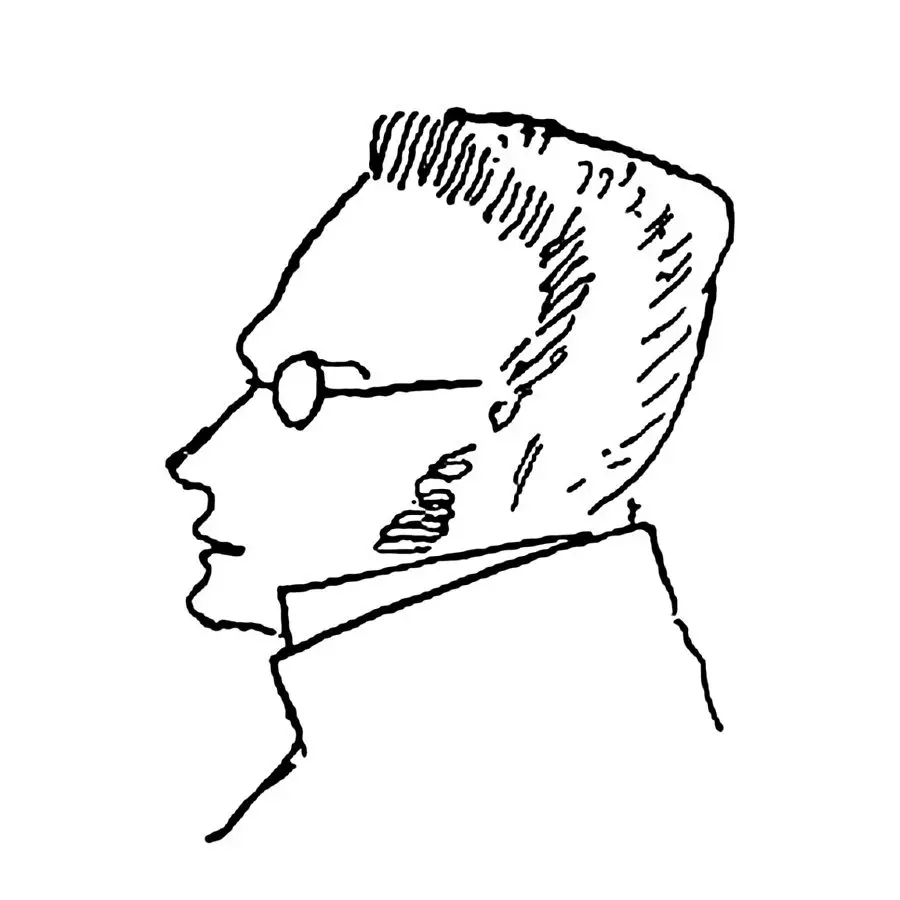
Wittgenstein’s central thesis in the Tractatus was audacious: sentences, he argued, function as "pictures" of reality. Any conceivable statement, no matter how complex, could ultimately be broken down into simple, "atomic" propositions. These atomic propositions, in turn, corresponded to "bits of the world," and their logical structure mirrored the actual relations between these bits. An analogy often employed is that of chess notation, where every possible move and game state can be precisely represented by a system of algebraic symbols. Wittgenstein proposed that, beneath the surface of everyday language, a similar underlying logical structure exists, reflecting the structure of reality itself.
This "picture theory of meaning" was a powerful and initially compelling idea. However, Wittgenstein himself later came to recognize its limitations. The Tractatus asserts with unwavering conviction that "nothing can be said" that cannot be resolved into a picture of reality or a representation of plain fact. This conclusion led to a starkly nihilistic view of much philosophical discourse. Statements concerning ethics, values, and even fundamental existential questions – "Why is there anything at all?" or "Why am I here to experience it?" – were deemed "gibberish." While such questions might evoke subjective feelings or impressions, Wittgenstein argued that, objectively, they convey no meaningful propositional content. They fail to represent any discernible aspect of reality.
The Limits of Meaning: Beyond Fact and into the Unsayable
Wittgenstein’s radical conclusion in the Tractatus presented a formidable challenge to the very enterprise of philosophy. If language is strictly bound to representing factual states of affairs, then the vast majority of philosophical inquiry, which often delves into abstract concepts, ethical considerations, and existential pondering, is rendered meaningless.
This is where the later Wittgenstein’s philosophical evolution becomes relevant, though Klempner notes it as a "side issue" to William’s core question. In his later work, Wittgenstein moved away from the rigid picture theory, acknowledging the diverse ways in which language is used. He introduced the concept of "language games," suggesting that meaning is derived from the context and rules of specific linguistic practices. Discourse about God, values, or the ultimate nature of reality could, in this view, be understood as distinct "games" played with words, legitimate within their own human-centric frameworks.
However, Klempner expresses a profound dissatisfaction with this resolution, particularly in relation to William’s original query. He argues that when individuals pose fundamental philosophical questions, they are not merely "playing" a linguistic game. There is a genuine yearning for objective truth, a desire to know something real. The frustration lies in the inability of any account of meaning to fully capture this deep-seated intentionality. "When I ask these questions I am not ‘playing’," Klempner states. "I mean what I say. I am looking for an objective reality. I want to know."
The Enduring Paradox: Meaning Beyond Representation
The core of the philosophical struggle, as highlighted by Klempner’s response, is the persistent gap between the nature of language and the richness of human experience and inquiry. William’s initial observation that language is finite and incapable of fully representing reality remains a potent challenge. Yet, as Klempner emphasizes, the fact that words do seem to represent something external, that they facilitate communication and understanding, is itself a profound philosophical mystery.
The historical trajectory from Plato’s musings on names to Frege’s logical innovations and Wittgenstein’s early picture theory reveals a continuous effort to map the terrain of meaning. Each stage brought new insights, refining our understanding of linguistic structure and its potential connection to reality. However, the ultimate question of how these "lines on paper" or "sounds" can transcend their material existence to convey abstract ideas, ethical principles, or existential truths remains an open and perhaps unresolvable puzzle.
The implications of this ongoing philosophical debate are far-reaching. If language is inherently limited, it calls into question the certainty of our knowledge and the efficacy of our communication on fundamental issues. It suggests that perhaps some philosophical questions are not meant to be definitively "solved" through linguistic analysis alone. Instead, they might point towards a realm of experience or understanding that lies beyond the reach of our current linguistic tools.
While William’s suggestion to consider language a "lost cause" might seem radical, it underscores the very real limitations we face. The pursuit of philosophical understanding through language is not a straightforward path to objective truth, but a complex and often frustrating negotiation with the inherent constraints of our symbolic systems. The enduring power of philosophy lies not necessarily in finding definitive answers, but in continually probing these fundamental questions, acknowledging the inherent mystery, and perhaps, finding a different kind of eloquence in the eloquent silences that language cannot fully articulate. The endeavor to understand reality through language, while fraught with limitations, remains a fundamental aspect of the human condition, a testament to our innate drive to comprehend the world and our place within it.