David Hockney’s Splash: A Northern Englishman’s Ode to Southern California Sunshine
By [Your Name/News Outlet Name]
Published: June 15, 2026
The art world is mourning the loss of David Hockney, the celebrated English artist who masterfully captured the essence of Southern California’s sun-drenched lifestyle. Hockney, who passed away last week, left an indelible mark on pop art and beyond, with his iconic depictions of swimming pools becoming synonymous with a certain idealized vision of Los Angeles. While his later works achieved stratospheric auction prices, it was his early explorations of the swimming pool motif that truly cemented his legacy as an observer and interpreter of Californian culture, a perspective uniquely shaped by his Northern English roots.
Hockney’s enduring fascination with the vibrant, uninhibited lifestyle of Southern California, a landscape of open spaces, unpretentious private wealth, and relentless sunshine, is perhaps best understood through the lens of his own origins. Born and raised in Bradford, a city steeped in the more reserved and traditional attitudes satirized in the famous "Four Yorkshiremen" sketch by Monty Python, Hockney found himself drawn to the audacious spirit and visual dynamism of Los Angeles. This juxtaposition of his damp, often overcast homeland with the radiant Californian sun fueled a creative energy that would define much of his artistic output.
The Genesis of an Icon: From Snapshot to Masterpiece
While many recognize David Hockney’s name and immediately picture his most famous work, "A Bigger Splash" (1967), few recall the preparatory stages that led to this idyllic yet subtly eerie depiction of a figure plunging into a swimming pool. This iconic painting wasn’t born in a vacuum; it evolved from a series of earlier works that explored the same theme, revealing Hockney’s methodical yet imaginative approach to his subject.
A Trilogy of Splashes: Tracing the Evolution
The journey began the year prior, in 1966, with two precursor paintings: "A Little Splash" and "The Splash." These works, though less widely known, were crucial in developing the visual language that would culminate in "A Bigger Splash." The initial inspiration for this series reportedly stemmed from a photograph found on the cover of a swimming pool maintenance guide from the late 1950s. This humble source material highlights Hockney’s ability to find artistic potential in the ordinary and elevate it through his unique vision.
A fascinating video, produced by Sotheby’s and available at the top of this article, meticulously illustrates the evolution of these three paintings. It demonstrates how Hockney gradually abstracted and "Californianized" his imagery with each iteration. The early works, while capturing the essence of the splash, were more literal. As the series progressed, Hockney began to simplify forms, amplify colors, and imbue the scenes with a sense of stylized grandeur that became his hallmark.
The Labor of a Fleeting Moment: Crafting "A Bigger Splash"
The creation of "A Bigger Splash" itself was a testament to Hockney’s dedication. When it came time to paint the third and most ambitious version, Hockney meticulously constructed the composition. He began by building up the arrangement of the house, pool, diving board, and sky using blocks of flat, characteristically bright color. This initial stage was a deliberate act of simplification, establishing the core visual elements.
He then gradually nudged these shapes towards representation by adding intricate detail. Hockney himself later reflected on the immense time and effort dedicated to rendering the splash. He would spend at least a full week, he noted, meticulously capturing an event that lasts mere seconds. This painstaking attention to detail, even for the most ephemeral moments, underscores his commitment to translating his artistic vision into tangible form.
Beyond the Splash: A Continual Fascination with Water and Light
While "A Bigger Splash" remains his most celebrated pool painting, Hockney’s engagement with swimming pools and the surrounding Californian environment continued throughout his career. These later works further explored themes of light, water, and human presence, often with an even greater degree of realism and emotional resonance.
The Pinnacle of Realism: "Portrait of an Artist (Pool with Two Figures)"
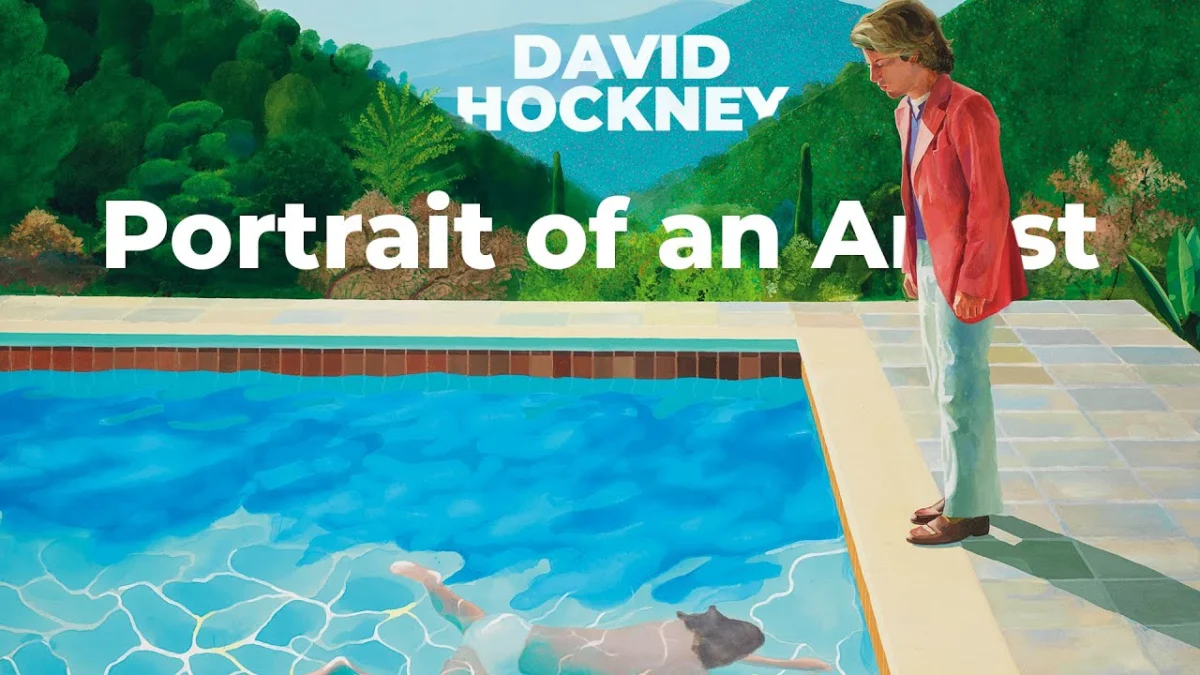
In 1971, Hockney painted "Portrait of an Artist (Pool with Two Figures)." This near-photorealistic depiction of a figure swimming in a pool while another stands looking on achieved a remarkable level of detail and emotional depth. The painting gained significant international attention when it sold for a staggering $90.3 million at Christie’s in 2018, making it one of the most expensive artworks ever sold by a living artist at the time. This sale underscored the enduring market value and critical acclaim of Hockney’s mature work.
An Enduring Symbol of Los Angeles
It is noteworthy that "A Bigger Splash" itself transcended the art world to become an integral part of Los Angeles’ cultural iconography. The painting was prominently featured on the cover of Reyner Banham’s seminal book, "Los Angeles: The Architecture of Four Ecologies." Banham, another deeply insightful British observer of the city, used Hockney’s work as a visual anchor for his perceptive analysis of Los Angeles’ unique urban fabric. This association further cemented the painting’s status as a definitive representation of Californian modernity.
Supporting Data and Critical Reception
David Hockney’s impact on the art world is undeniable, not only through his individual masterpieces but also through his consistent innovation and exploration of diverse mediums. His career, spanning over six decades, has been marked by a relentless curiosity and a willingness to embrace new technologies and artistic approaches.
A Prolific and Versatile Artist
Hockney’s oeuvre extends far beyond his iconic swimming pool paintings. He has explored a wide range of subjects, including portraits, landscapes, still lifes, and abstract compositions. His work is characterized by a vibrant color palette, a keen sense of observation, and a playful yet profound engagement with the act of seeing.
Key Aspects of Hockney’s Artistic Career:
- Pop Art Pioneer: Hockney emerged as a leading figure in the British Pop Art movement of the 1960s, alongside artists like Andy Warhol and Roy Lichtenstein. His early work challenged traditional notions of fine art by incorporating imagery from popular culture and everyday life.
- Exploration of Photography: In the 1980s, Hockney began experimenting with photography, creating "joiners" – collages of Polaroid or Kodak film prints that created panoramic or fragmented perspectives. This exploration of multiple viewpoints foreshadowed his later interest in digital art.
- Digital Art Innovations: Hockney was an early adopter of digital technologies for art creation. He utilized the Quantel Paintbox graphics system in the 1980s to create luminous and vibrant works, demonstrating his forward-thinking approach to artistic tools. More recently, he has embraced the iPad as a canvas, producing prolific series of digital drawings.
- Influence on Contemporary Art: Hockney’s innovative spirit, bold use of color, and his ability to bridge the gap between representational and abstract art have influenced generations of artists. His emphasis on the act of perception and the subjective experience of reality continues to resonate in contemporary art discourse.
Official Responses and Legacy
While the news of David Hockney’s passing has been met with widespread tributes from the art world, institutions, and collectors, the formal "official responses" in the traditional sense are typically reserved for state funerals or major national events. However, the profound impact of Hockney’s work ensures that museums, galleries, and art historians will continue to celebrate and analyze his contributions for decades to come.
Tributes and Continued Exhibitions
Major art institutions that have previously hosted Hockney retrospectives, such as the Tate Modern in London, the Centre Pompidou in Paris, and the Metropolitan Museum of Art in New York, will undoubtedly feature his work in future exhibitions and educational programming. His art has become a cornerstone of modern and contemporary art collections worldwide, ensuring its continued visibility.
The ongoing legacy of David Hockney is not just in the physical artworks he created but in the way he encouraged us to see the world. His ability to capture the mundane and elevate it to the extraordinary, to find beauty in everyday scenes, and to infuse his work with a palpable sense of joy and wonder, has left an enduring imprint on art history.
Implications and Enduring Influence
The passing of David Hockney marks the end of an era, but his artistic legacy is far from over. His influence on art, culture, and our perception of beauty is profound and multifaceted.
Redefining the Image of California
Hockney’s depictions of Southern California, particularly his swimming pool paintings, played a significant role in shaping the global perception of the region. He captured a specific moment in time, a blend of aspirational lifestyle, architectural modernism, and vibrant natural light that became synonymous with the allure of Los Angeles. His work offered an outsider’s affectionate yet critical gaze, distilling the essence of a place and transforming it into timeless art.
The Power of Observation and Artistic Process
Hockney’s dedication to his craft, his meticulous approach to composition, and his willingness to experiment with different techniques serve as an enduring lesson for aspiring artists and art enthusiasts alike. The story of "A Bigger Splash" evolving from a maintenance guide photograph to an iconic masterpiece highlights the transformative power of artistic vision and the importance of a rigorous creative process. His emphasis on the "act of seeing" continues to inspire viewers to engage more deeply with the visual world around them.
A Bridge Between Tradition and Innovation
Throughout his long and distinguished career, David Hockney consistently demonstrated a remarkable ability to bridge the gap between traditional artistic techniques and cutting-edge innovation. He embraced new technologies, from photography to digital art, without abandoning the fundamental principles of drawing, painting, and composition. This forward-thinking approach ensures that his work remains relevant and engaging for contemporary audiences, proving that artistic excellence can transcend time and technological change.
In conclusion, David Hockney’s departure leaves a void in the art world, but his vibrant creations, particularly his iconic "Splashes," will continue to inspire and captivate for generations. His unique perspective, born from the contrast between his Northern English upbringing and his embrace of Southern California’s sun-drenched allure, has gifted us with a body of work that is both deeply personal and universally resonant. His legacy is one of bold color, joyful observation, and an unwavering commitment to the art of seeing.