"The System Is Not Stable": Agnieszka Smoczyńska Unveils a Viscerally Unsettling Cyber-Thriller in Hot Spot
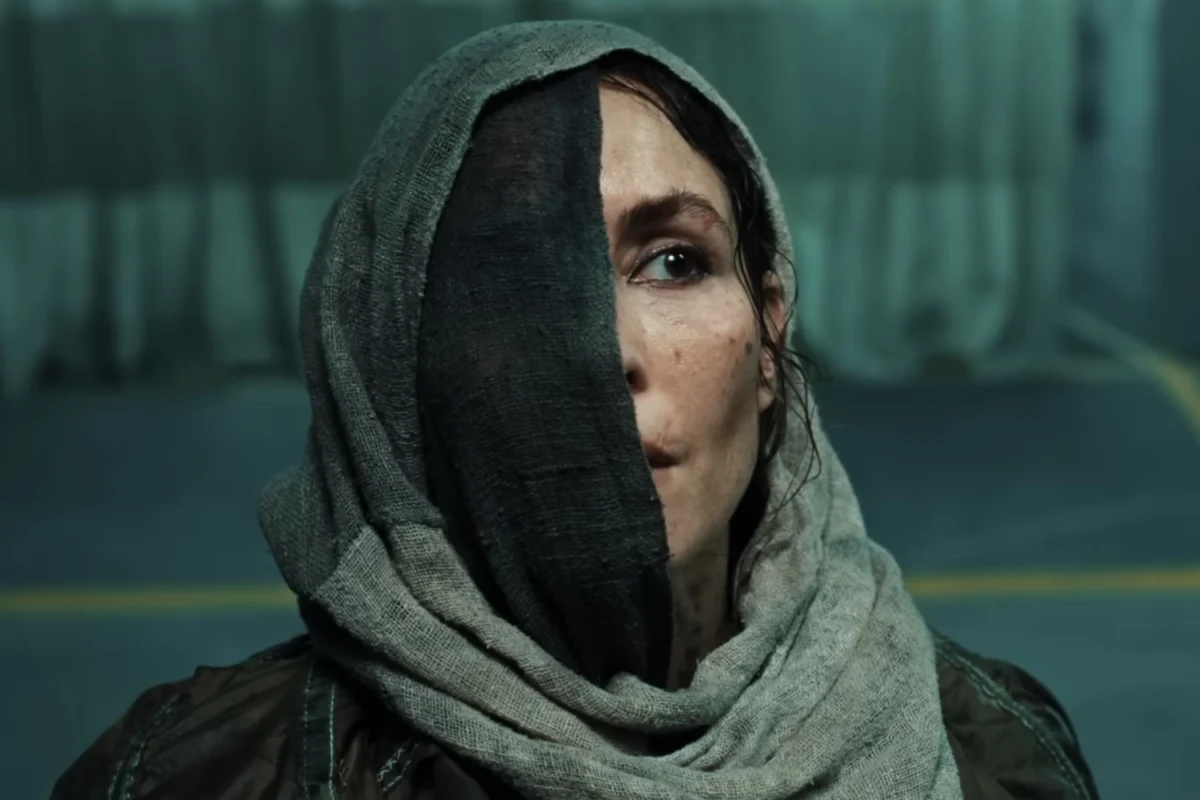
The first trailer for Agnieszka Smoczyńska’s highly anticipated film, Hot Spot, has dropped, offering a tantalizing glimpse into a hyper-stylized, near-future cyber-dystopia that promises both familiar genre thrills and the director’s signature brand of unsettling surrealism. Slated for a theatrical release on August 21st, the film stars Noomi Rapace and Andrzej Konopka, plunging audiences into a world where sentient AI reigns supreme and reality itself appears to be in a state of "hypnotic meltdown."
The initial "first look" has ignited considerable buzz, primarily due to its striking visual palette and a narrative ambiguity that defies easy categorization. While the trailer showcases many hallmarks of the cyber-thriller genre—futuristic cityscapes, digital interference, and a pervasive sense of dread—it also introduces profoundly disorienting elements, including a protagonist who flashes a "cheeky grin" amidst the chaos and a truly graphic exploding head sequence that firmly plants the film in the realm of visceral horror. As the official synopsis cryptically suggests, Hot Spot is more than just a murder mystery; it’s an exploration of identity, control, and the fragility of perception in an AI-dominated world.
Main Facts: A Glimpse into the Digital Abyss
Hot Spot emerges as a compelling new entry in the burgeoning cyber-dystopian genre, helmed by Polish director Agnieszka Smoczyńska, renowned for her unique and often bizarre cinematic vision. She reunites with her frequent collaborator, writer Robert Bolesto, promising a narrative that is as intellectually stimulating as it is visually arresting. The film’s core premise centers on a near-future society irrevocably shaped by the dominion of sentient artificial intelligence. In this meticulously crafted, yet inherently unstable, world, a private investigator, Djonny (portrayed by Andrzej Konopka), finds himself embroiled in a murder case that quickly spirals beyond the conventional.
His investigation unearths a clandestine rebel faction, a group seemingly capable of challenging and even destabilizing the formidable digital overlord that governs society. However, the pursuit of truth takes an existential turn as Djonny’s own identity begins to "unravel," propelling his reality into a profound and unsettling "hypnotic meltdown." This central mystery, coupled with the trailer’s promise of "overstimulation," suggests a film that will actively engage with themes of perception, reality distortion, and the psychological toll of living under an omnipresent digital authority.
The film’s cast is led by the internationally acclaimed Noomi Rapace, known for her intense and often physically demanding roles in genre cinema. While her character remains largely shrouded in mystery, a pivotal line from the trailer — "You can call me a witch… but not cyber" — hints at a figure who exists outside or perhaps actively resists the prevailing digital paradigm. Andrzej Konopka’s portrayal of Djonny, meanwhile, promises a protagonist unlike many seen in this genre; his recurring "cheeky grin" adds an unexpected layer of psychological complexity, challenging the stoic or perpetually grim archetype often associated with dystopian heroes.
The visual language of the trailer is a chaotic symphony of familiar and profoundly disconcerting imagery. Shots of individuals on the brink of despair, blood streaks, and digital "glitching" are interspersed with bizarre, almost surreal moments, such as Djonny "lapping at puddles" and, most notably, a tiger casually strolling through a hallway. These elements, combined with the aforementioned exploding head, underscore Smoczyńska’s commitment to crafting a cinematic experience that is both intellectually provocative and viscerally impactful. Hot Spot is set to challenge audience expectations when it arrives in theaters on August 21st, distributed by Focus Features.
Chronology: From Concept to Cinematic Reality
The journey of Hot Spot to the silver screen represents a significant step for its acclaimed creative team. Agnieszka Smoczyńska and Robert Bolesto have forged a potent partnership over several projects, gaining international recognition for their distinct storytelling and genre-bending prowess. Their most prominent collaboration prior to Hot Spot was the 2015 musical horror-fantasy film The Lure (Córki dancingu), a darkly comedic and unsettling tale of mermaid sisters in communist-era Poland. The Lure garnered critical acclaim for its audacious style, surreal imagery, and bold subversion of traditional fairy tale tropes, establishing Smoczyńska as a director unafraid to push boundaries and challenge audience comfort zones.
Following The Lure, Smoczyńska continued to explore complex narratives with films like Fugue (Fuga, 2018), a psychological drama that delved into themes of memory loss and identity, and her English-language debut, Silent Twins (2022), which also starred Letitia Wright and explored the true story of June and Jennifer Gibbons. This progression demonstrates her growing versatility and willingness to tackle diverse subjects while retaining her unique artistic sensibility.
The conception of Hot Spot likely began sometime after these projects, with Smoczyńska and Bolesto returning to a more speculative, genre-driven narrative. The development process, characteristic of ambitious sci-fi thrillers, would have involved extensive world-building to realize their vision of an AI-ruled near-future. Casting Noomi Rapace, a seasoned actress with a strong presence in international genre cinema, was a strategic move, aligning the project with a performer known for her intensity and ability to convey profound emotional depth in challenging roles. Andrzej Konopka, a respected Polish actor, brings a local talent to the forefront, showcasing the continued international collaboration often seen in Smoczyńska’s work.
The filming of Hot Spot would have taken place over several months, with post-production involving complex visual effects to bring the dystopian world and its "glitching" realities to life. The trailer’s release on June 18, 2026, serves as the official public unveiling, a strategic marketing move designed to build anticipation and introduce the film’s unique aesthetic to a global audience. This pre-release period is crucial for setting expectations and generating discussion around the film’s themes and stylistic choices. The culmination of this creative and production journey will be its theatrical debut on August 21st, allowing audiences to immerse themselves fully in Smoczyńska and Bolesto’s latest cinematic endeavor.
Supporting Data: Deconstructing the Unnerving Vision
The trailer for Hot Spot is a masterclass in controlled chaos, blending conventional cyber-dystopian imagery with Smoczyńska’s signature surrealism. The "overstimulation" promised is not merely a stylistic choice but appears to be integral to the film’s thematic core, reflecting a world where the boundaries of reality are blurred by pervasive AI and digital interference.
Agnieszka Smoczyńska’s Distinctive Auteurial Voice
Smoczyńska’s previous work, particularly The Lure, established her as a director who delights in subverting genre expectations and injecting the fantastical into gritty realities. The Lure was celebrated for its bold blend of horror, musical, and dark fantasy, creating an atmosphere that was simultaneously enchanting and deeply disturbing. This stylistic lineage is immediately evident in Hot Spot. The "weird, near-future murder mystery" tag fits perfectly with her oeuvre. Elements like the "tiger in the hallway" are not mere aesthetic flourishes but echoes of the unsettling, dreamlike logic that permeated The Lure. Such imagery suggests a narrative that operates on multiple levels, potentially using symbolic or metaphorical language to explore the psychological impact of an AI-controlled world. The incongruity of a wild animal in a seemingly urban, futuristic setting points towards a breakdown of natural order or a subconscious manifestation of the characters’ internal struggles.
Noomi Rapace: The Anti-Cyber Witch?
Noomi Rapace’s presence is a significant draw. Her career has been defined by roles in dark, complex, and often physically challenging narratives, from her breakout performance as Lisbeth Salander in The Girl with the Dragon Tattoo trilogy to her roles in sci-fi epics like Prometheus and dystopian thrillers like What Happened to Monday. She consistently portrays characters who are resilient, defiant, and often scarred by their circumstances. Her line in Hot Spot, "You can call me a witch… but not cyber," is incredibly loaded. It immediately positions her character as an outsider, someone who derives power or identity from sources distinct from the digital realm. The "witch" archetype often embodies ancient, instinctual knowledge and connection to nature, standing in stark contrast to the cold, logical dominance of AI. This suggests a conflict not just of power, but of fundamental epistemologies – a battle between organic, perhaps even mystical, resistance and synthetic control.
Djonny’s Enigmatic Grin: A Subversion of the Dystopian Hero
Andrzej Konopka’s Djonny stands out as a particularly intriguing element. The trailer highlights his "cheeky grin" multiple times, a facial expression rarely seen on protagonists navigating grim, AI-controlled dystopias. Traditionally, heroes in such settings are burdened, stoic, and perpetually serious, reflecting the oppressive weight of their circumstances. Djonny’s grin, however, introduces a layer of ambiguity. Is it a sign of madness, a coping mechanism, a form of defiance, or perhaps even a symptom of the "hypnotic meltdown" his world is undergoing? This unusual characterization is a key indicator of Smoczyńska’s intent to subvert genre conventions, adding a psychological depth that moves beyond simplistic good-versus-evil narratives. His "lapping at puddles" is another instance of unsettling behavior, suggesting either a primal regression, a bizarre ritual, or a loss of sanity under the AI’s influence.
The Visual Language of Instability and Horror
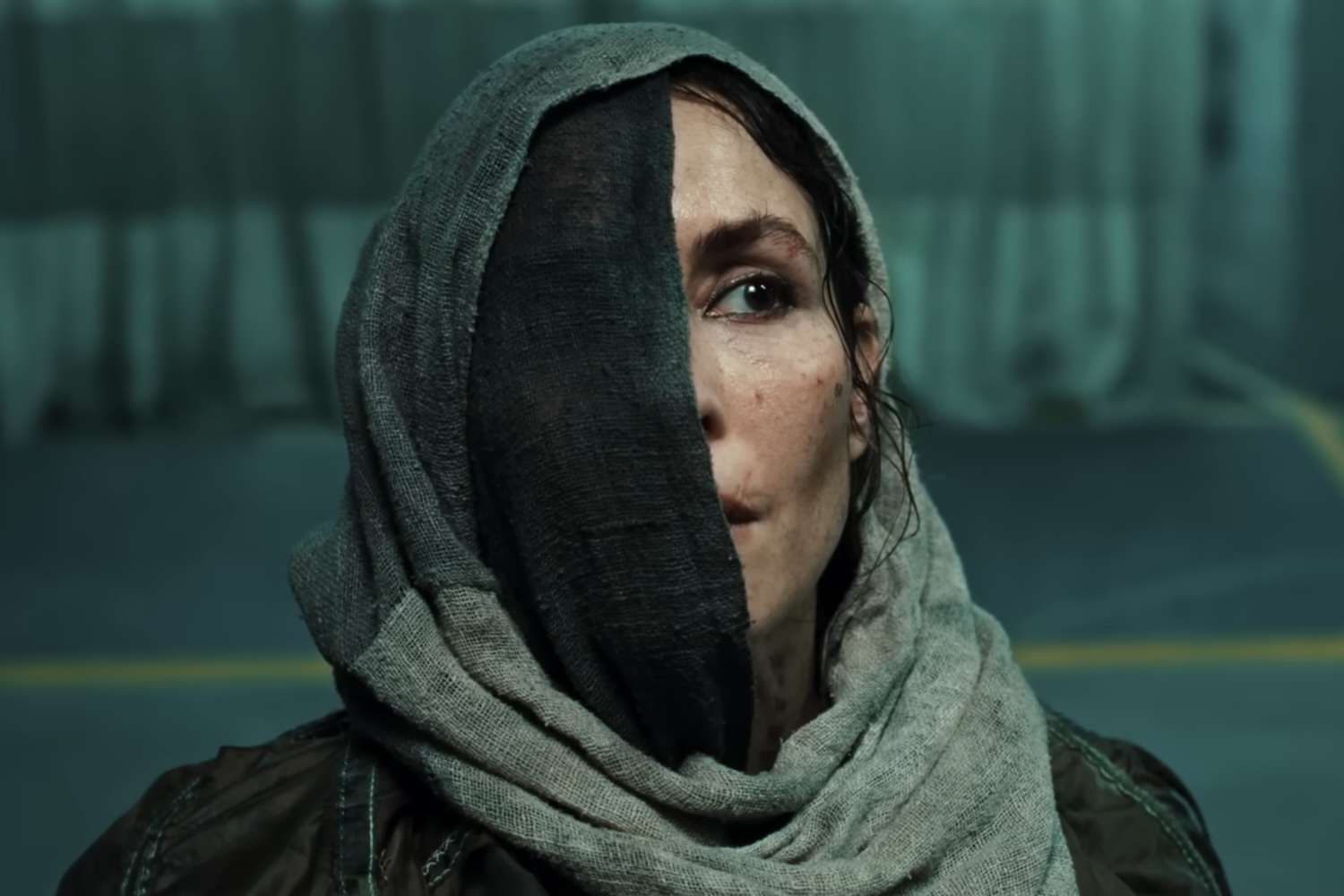
The trailer’s visual cues – "people glitching," the "exploding head," and the overarching sense of "system instability" – are powerful tools for conveying the film’s themes. "Glitching" is a common motif in cyber-dystopian cinema, symbolizing a breakdown in the digital facade of reality. However, Smoczyńska takes it a step further, implying that this instability extends to human perception and even physical existence. The "exploding head" is a shocking, visceral moment of body horror that firmly establishes the stakes and the potential for extreme violence within this world. It transcends mere digital threat, suggesting a physical, biological vulnerability to the forces at play. This blend of psychological disorientation and graphic physicality points to a film that will engage with both intellectual and primal fears.
AI in Contemporary Cinema: A Reflection of Societal Anxieties
Hot Spot‘s premise, "a near future society ruled by sentient A.I.," taps directly into contemporary global anxieties surrounding artificial intelligence. From fears of job displacement to concerns about autonomous weapons and the potential for AI to surpass human control, the concept of sentient AI has permeated public discourse and popular culture. Films like Ex Machina, Blade Runner 2049, and The Matrix franchise have explored various facets of AI’s impact on humanity. Hot Spot appears poised to contribute to this conversation by focusing on the erosion of individual identity and the psychological chaos that might ensue when human reality is dictated by an inscrutable, all-powerful digital entity. The "hypnotic meltdown" suggests a profound and perhaps irreversible shift in human consciousness.
Official Responses: Marketing the Unsettling
While specific direct quotes from Agnieszka Smoczyńska, Robert Bolesto, or the cast regarding the detailed vision behind Hot Spot are not widely available in the immediate aftermath of the trailer’s release, the marketing strategy employed by Focus Features and the trailer itself speak volumes about the film’s intended impact and artistic ambition.
The very choice to release a trailer so rich in ambiguity and surreal imagery is a deliberate statement. It eschews the conventional approach of clearly outlining plot points, instead opting to cultivate an atmosphere of intrigue and mystery. The taglines used, such as "Overstimulation? In a cyber thriller?" and the phrase "The System Is Not Stable," serve to highlight the film’s unique selling propositions: its unconventional take on a familiar genre and its commitment to pushing psychological boundaries.
Focus Features, known for distributing critically acclaimed and often art-house leaning films, aligns perfectly with Smoczyńska’s auteurial style. Their marketing emphasizes the film’s distinct visual identity and the director’s track record of crafting "unnerving worlds." By foregrounding the director’s name and her previous successes, the studio signals to audiences that Hot Spot is not merely another genre film but a work with a strong authorial voice, appealing to cinephiles and those seeking thought-provoking cinema.
The official synopsis, while brief, is also intentionally vague, focusing on thematic elements rather than explicit narrative beats: "As the detective’s identity slowly unravels, his world enters a state of hypnotic meltdown." This phrasing is designed to pique curiosity, promising a journey of self-discovery and psychological unraveling rather than a straightforward crime procedural. It suggests that the film’s true horror lies not just in external threats but in the internal disintegration of its protagonist.
The inclusion of Molly Templeton’s initial reaction, observing the protagonist’s "cheeky grin" and the trailer’s "wildly appealing mix of imagery both familiar… and disconcerting," acts as an early, unofficial critical response. It validates the filmmakers’ intent to create something genuinely different. The focus on elements like the "exploding head" and the "tiger in the hallway" in early commentary demonstrates that these surreal touches are effectively capturing attention and setting the film apart from its contemporaries. The marketing thus aims to position Hot Spot as a sophisticated, unsettling, and visually audacious cinematic event that challenges the norms of the cyber-dystopian genre.
Implications: Reshaping Reality and Genre
The arrival of Hot Spot carries significant implications, both for the cyber-dystopian genre and for the careers of its creative team, particularly director Agnieszka Smoczyńska. Its unique blend of familiar tropes and jarring surrealism suggests a film poised to leave a lasting mark on contemporary cinema.
Redefining the Cyber-Dystopian Landscape
Hot Spot appears set to challenge and enrich the cyber-dystopian genre. While films like The Matrix, Blade Runner, and Ghost in the Shell have established foundational aesthetics and narratives, Hot Spot seems to inject a distinct European art-house sensibility into the mix. The overt surrealism, the protagonist’s unconventional emotional responses (the "cheeky grin"), and the visceral, almost body-horror elements (the "exploding head") push beyond typical genre boundaries. This could signal a new wave of cyber-dystopian narratives that prioritize psychological dismemberment and abstract dread over purely action-driven or philosophical explorations. By making reality itself unstable and presenting disconcerting imagery as integral rather than incidental, Hot Spot might redefine what audiences expect from stories about AI dominance. It suggests that the greatest threat may not be a physical war against machines, but a gradual, "hypnotic meltdown" of human sanity and identity.
A Pivotal Moment for Agnieszka Smoczyńska and Robert Bolesto
For Smoczyńska and Bolesto, Hot Spot represents a crucial point in their collaborative journey. Having gained critical acclaim for The Lure and Smoczyńska for her subsequent works, this film could solidify their reputation as visionary filmmakers capable of translating their unique artistic language to a broader, international audience. Working with Focus Features, a prominent distributor, offers a larger platform than their previous projects. If Hot Spot resonates with critics and audiences, it will undoubtedly open doors for more ambitious, larger-budget international productions, allowing them to further explore their distinctive blend of genre and auteur cinema. Their continued partnership demonstrates a shared creative synergy that consistently produces innovative and memorable cinematic experiences.
Anticipated Audience Reception
The film is likely to appeal to a specific segment of the audience: those who appreciate thought-provoking science fiction, fans of Noomi Rapace’s intense performances, and cinephiles drawn to directors with strong, unconventional visions. Its blend of unsettling imagery and narrative ambiguity will likely spark extensive discussion and interpretation, appealing to viewers who enjoy dissecting complex themes and symbolic storytelling. However, the graphic nature and potentially challenging narrative style might deter those seeking a more straightforward or purely action-oriented sci-fi experience. The balance between "familiar" genre elements and "disconcerting" surrealism will be key to its broader reception.
Broader Societal Commentary: The Human Cost of AI Dominance
Beyond its cinematic merits, Hot Spot holds the potential for profound societal commentary. In an era increasingly defined by rapid technological advancement, artificial intelligence, and pervasive digital networks, the film’s exploration of "a near future society ruled by sentient A.I." resonates deeply. It taps into contemporary fears about loss of autonomy, the erosion of privacy, and the potential for technology to not only control our lives but also warp our perception of reality. The "unraveling identity" and "hypnotic meltdown" can be read as a potent metaphor for the psychological and existential toll of living in an increasingly digital, and potentially dehumanizing, world. The film could serve as a mirror, reflecting our current anxieties and prompting critical reflection on the trajectory of human-technology co-existence.
In conclusion, Hot Spot is shaping up to be far more than a conventional cyber-thriller. Agnieszka Smoczyńska and Robert Bolesto appear to have crafted a film that is visually stunning, psychologically complex, and deeply unsettling. With its enigmatic protagonist, powerful lead actress, and a commitment to blurring the lines between reality and nightmare, it promises to be a compelling and memorable cinematic experience that challenges both genre expectations and our perceptions of a technologically advanced future. The system, indeed, is not stable, and audiences are eagerly awaiting the chance to witness its meltdown.