The Enduring Specter: John Carpenter’s Multifaceted Legacy and its Echoes in Anime

Los Angeles, CA – In the year 2026, the venerable auteur John Carpenter, a name synonymous with genre-defining horror and sci-fi cinema, has largely stepped away from the director’s chair. Yet, far from retirement, the maestro is orchestrating a vibrant, eclectic portfolio of creative endeavors that underscore his enduring influence and unique artistic sensibility. From composing pulse-pounding scores for video games to crafting intricate narratives in comic books, and from touring the globe with his iconic synthesizer to engaging directly with his legions of fans at conventions, Carpenter remains a prolific, albeit unconventional, force in popular culture. This multifaceted engagement, combining the bizarre with the profoundly mundane, highlights a creator whose appeal has always defied easy categorization, a characteristic that finds surprising parallels in the diverse and often boundary-pushing world of Japanese animation.
Carpenter’s Current Cadenza: A Symphony of Non-Filmic Pursuits
John Carpenter’s decision to shift away from active filmmaking in recent years has been met with a mix of lament and fascination by fans and critics alike. However, his current slate of projects reveals a creator invigorated by new forms of expression. He is not merely resting on his laurels; he is actively shaping new narratives and soundscapes.
Main Facts: Carpenter’s 2026 calendar is packed. He is a featured guest at major fan conventions like Fan Expo Chicago, offering rare direct interaction with his audience. His distinctive synth-driven sound, which has defined many of his films, now permeates the gaming world, most notably in his work scoring the upcoming first-person shooter, John Carpenter’s Toxic Commando. This venture extends his creative reach into a medium that often mirrors the immersive, action-packed experiences of his cinematic past. Beyond the screen, Carpenter delves into sequential art, overseeing a series of comic books under the "John Carpenter’s Cathedral" imprint, often accompanied by heavy metal albums that expand the thematic universe of his graphic novels. When not crafting new worlds, he embraces the ordinary pleasures of life: watching sports and immersing himself in video games, a testament to his grounded, relatable persona.
Chronology of a Genre Icon: Carpenter’s journey to this point is a fascinating arc. Emerging from the independent film scene in the 1970s with seminal works like Dark Star (1974) and Assault on Precinct 13 (1976), he exploded into the mainstream with Halloween (1978), a film that single-handedly reshaped the horror genre. The 1980s saw him cement his legacy with a string of cult classics and critical darlings, including The Fog (1980), Escape from New York (1981), The Thing (1982), Christine (1983), Big Trouble in Little China (1986), and They Live (1988). His films were often characterized by their lean narratives, iconic scores (frequently composed by Carpenter himself), and protagonists who were more anti-hero than traditional savior.
By the 1990s and 2000s, while still directing, Carpenter’s output became less frequent, and he expressed a growing disillusionment with the Hollywood studio system and its creative constraints. This period saw a gradual shift towards other forms of creative output, notably his foray into music composition outside of film scores and his embrace of the comic book medium. This chronological progression suggests a creator who, rather than retiring, sought new avenues for his distinct vision, finding freedom and direct engagement with his artistic passions away from the traditional pressures of feature film production.
Supporting Data & Official Responses: Carpenter’s persona has always been candid and refreshingly pragmatic. He’s famously quipped about remakes of his films, stating his happiness "so long as he gets paid for it," a sentiment that playfully underscores his financial acumen while simultaneously downplaying the preciousness often associated with a celebrated director’s legacy. This stance is further contextualized by his own history of remaking films, such as The Thing, which itself was a reinterpretation of The Thing from Another World (1951). This pragmatic approach, combined with his distinctive visual and sonic hallmarks – the instantly recognizable font choices and the brooding, minimalist synth scores – has cultivated a legacy that is both deeply personal and universally resonant. His films often blend horror, sci-fi, action, and even comedy in ways that feel uniquely his own, demonstrating an artistic versatility that transcends strict genre boundaries.
Implications: Bridging Cinematic Eras and Cultural Divides
The distinctive qualities of John Carpenter’s oeuvre – his blend of frenetic energy, overblown sci-fi concepts, dark humor, and often anti-establishment themes – resonate deeply within specific niches of global pop culture. It is not unreasonable to hypothesize a significant overlap between his dedicated fanbase and the world of anime otaku. Both spheres frequently revel in narratives that are bold, visually striking, and unafraid to tackle complex philosophical or societal issues through exaggerated, fantastical lenses.
This convergence presents a compelling opportunity for a cross-cultural exchange. For the diehard Halloween fan who has yet to explore Japanese animation, or for the seasoned anime enthusiast, perhaps a follower of Shinichirō Watanabe’s works, who hasn’t delved into the wonderfully weird cinematic landscape of 1980s American genre films, a curated list of recommendations can serve as a bridge. These pairings are not merely superficial resemblances but highlight shared thematic concerns, character archetypes, and stylistic approaches that transcend geographical and medium-specific boundaries.
An Eclectic Cultural Exchange: Carpenter Films Meet Anime Counterparts
For Fans of Big Trouble in Little China – Consider Space Dandy
Main Facts:
John Carpenter’s Big Trouble in Little China (1986) is a quintessential example of his genre-bending prowess. It plunges truck driver Jack Burton into an ancient mystical conflict beneath San Francisco’s Chinatown, transforming a routine cargo delivery into a fantastical martial arts adventure. The film is celebrated for its blend of action, comedy, and horror, driven by Kurt Russell’s iconic portrayal of Burton – a swaggering, yet often incompetent, protagonist.
Shinichirō Watanabe’s Space Dandy (2014), while a spiritual successor to the "space western" aesthetic often associated with his more serious Cowboy Bebop, embraces pure absurdity. It follows Dandy, a self-proclaimed alien hunter, and his companions – QT the vacuum cleaner robot and Meow the cat-like alien – as they journey across the galaxy in search of rare alien species to register for bounty. Each episode is largely self-contained, presenting a new, bizarre cosmic scenario.
Supporting Data & Comparison:
The kinship between Big Trouble in Little China and Space Dandy lies in their shared embrace of the wonderfully goofy and their protagonists’ endearing ineptitude. Carpenter, a known admirer of Westerns, frequently infused his films with "Wild West types" transplanted into unlikely genres. Jack Burton, though a trucker, embodies the archetypal cowboy: rugged, confident, and stumbling into unfamiliar territory. His primary concern is his stolen truck, and his understanding of the supernatural underworld is minimal, leading to hilarious misunderstandings and accidental heroism. He is often sidelined or even knocked unconscious during crucial fight scenes, making him the accidental hero in a story where Wang Chi is arguably the true protagonist.
Similarly, Dandy is no traditional hero. His motivations are simple: bounty money and visits to his favorite "Breastaurant," BooBies. His utter lack of introspection and fear, born from a profound ignorance of cosmic terrors, allows him to casually navigate apocalyptic scenarios. Whether accidentally blowing up planets, becoming a zombie alongside the universe, or rejecting the offer to become a god to maintain his hedonistic lifestyle, Dandy’s reactions are consistently driven by self-interest and a detached nonchalance. Both Jack and Dandy are anti-heroes who succeed not through skill or profound understanding, but through sheer dumb luck, stubbornness, and an almost pathological inability to grasp the gravity of their situations. They are figures of subversion, whose swagger and sarcasm serve as a shield against the abyss, highlighting the comedic potential of the oblivious hero.

Implications:
This pairing demonstrates the universal appeal of protagonists who defy conventional heroic molds. In a landscape often dominated by stoic, all-powerful figures, Jack Burton and Space Dandy offer a refreshing, often hilarious, alternative. They prove that compelling narratives can emerge from characters who are less about saving the world and more about simply getting by, sustained by an infectious, albeit misplaced, confidence. Their stories celebrate the joy of irreverence and the power of humor in the face of overwhelming odds.
For Fans of They Live – Consider Parasyte: The Maxim
Main Facts:
They Live (1988) is a satirical sci-fi horror film that remains fiercely relevant. Drifter John Nada discovers a pair of sunglasses that reveal the truth: the ruling class are skull-faced aliens controlling humanity through subliminal messages like "Obey," "Consume," and "Stay Asleep" embedded in media and advertising. The film is iconic for its gritty aesthetic, memorable one-liners, and a legendary, drawn-out alley fight scene.
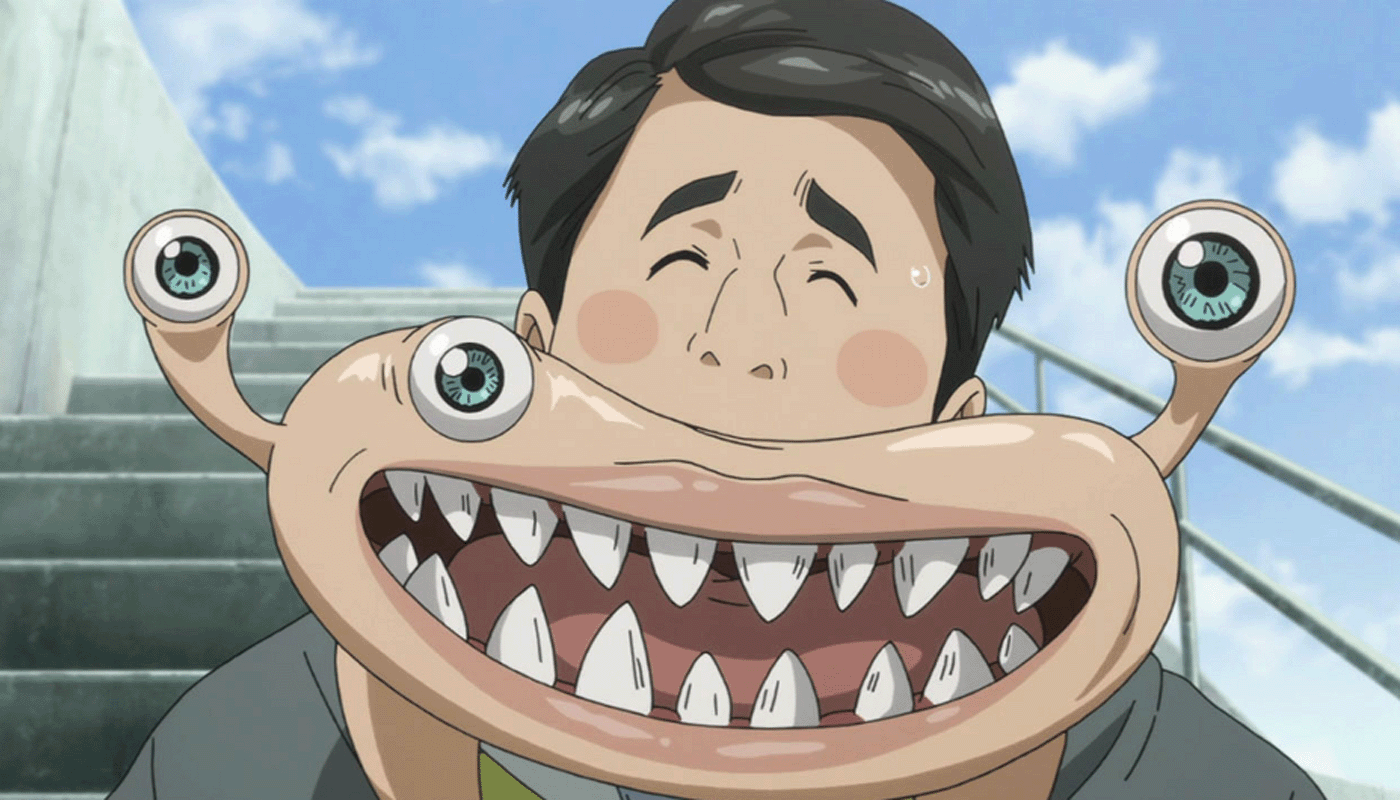
Parasyte: The Maxim (2014), an anime adaptation of Hitoshi Iwaaki’s classic 1989 manga, depicts a world where parasitic aliens infiltrate human hosts, taking over their brains and secretly preying on humanity. High school student Shinichi Izumi narrowly avoids full takeover when a parasite, Migi, only manages to infect his right hand. The two form an uneasy symbiotic relationship, forced to cooperate to survive as other parasites hunt them.
Supporting Data & Comparison:
Both They Live and Parasyte: The Maxim harness the alien invasion trope to deliver profound social and philosophical commentary, albeit with distinct cultural inflections. They Live is a direct product of Reagan-era America, a scathing critique of unchecked capitalism, consumerism, and media manipulation. The aliens embody avarice, exploiting human society for profit, their ghoulish forms visible only to those who "wake up" to the truth. The horror stems from the insidious, invisible control exerted over society, making the ordinary seem monstrous.
Parasyte, while rooted in late 1980s Japan, offers a broader ecological and existential critique. Mangaka Hitoshi Iwaaki conceived the story as a challenge to human egotism, questioning humanity’s self-proclaimed superiority over other species. The parasites, who view humans merely as food, force Shinichi and the audience to confront uncomfortable questions about empathy, survival, and the place of humanity within the natural world. Migi, a logical but emotionless entity, serves as Shinichi’s foil, constantly challenging his human perspectives. While Parasyte‘s body horror and shapeshifting aliens might visually evoke comparisons to Carpenter’s The Thing, its thematic core aligns more closely with They Live‘s allegorical power. Both narratives use alien invaders as a powerful metaphor: in They Live, for the dehumanizing forces of capitalist greed; in Parasyte, for humanity’s own destructive tendencies and lack of empathy towards other life forms. They compel viewers to scrutinize the "tiny monstrosities and casual inhumanity" that are normalized in everyday life.
Implications:
These two works demonstrate the universal effectiveness of allegorical horror. By externalizing societal anxieties through monstrous, otherworldly invaders, both Carpenter and Iwaaki prompt deep introspection about human nature and the systems we inhabit. They serve as potent reminders that the most terrifying threats often lurk not in the shadows, but in the unquestioned norms and hidden truths of our own societies.

For Fans of The Thing – Consider To Your Eternity
Main Facts:
John Carpenter’s The Thing (1982) is widely regarded as a masterclass in claustrophobic horror and paranoia. Set in an isolated Antarctic research station, it depicts a shapeshifting alien organism that assimilates and imitates its victims, leading to a terrifying breakdown of trust among the dwindling crew. The film is lauded for its groundbreaking practical effects, intense atmosphere, and open-ended, bleak conclusion.
To Your Eternity (2021), based on Yoshitoki Ōima’s manga, introduces Fushi, an immortal orb sent to Earth with the ability to take on the forms of things that stimulate it, initially a rock, then moss, a wolf, and eventually a boy. The narrative follows Fushi’s millennia-long journey of growth and learning, experiencing life, death, and profound grief as it slowly develops consciousness and empathy through its interactions with various individuals.
Supporting Data & Comparison:
While The Thing is often cited as Carpenter’s most perfect film, and To Your Eternity grapples with the challenges of sustaining its initial premise, they are kindred spirits in their exploration of an alien entity’s interaction with the world and its inhabitants. Both stories commence in stark, isolated tundra environments, where the alien presence is first discovered. In The Thing, the entity arrives in the form of a dog, its ability to perfectly mimic its victims sowing terror and distrust. In To Your Eternity, the immortal orb first takes the form of a wolf, becoming a companion to a lonely boy in an abandoned village.
The core sci-fi trope of a shapeshifting alien is central to both, but its application diverges dramatically. In The Thing, the ability to imitate is used to amplify horror, generating extreme paranoia and body horror as the creature’s true form is revealed in gruesome, ever-changing mutations. The Thing is a force of pure survival and assimilation, utterly devoid of empathy or understanding for its victims. Conversely, in To Your Eternity, Fushi’s shapeshifting ability becomes a vehicle for exploring grief and the essence of existence. After the boy’s death, Fushi assumes his form, effectively immortalizing a human life that would otherwise have been forgotten. Fushi’s journey is one of gradual evolution from an unfeeling entity to one capable of profound emotion, driven by the need to understand its purpose and the meaning of humanity.
Implications:
This pairing illustrates the remarkable versatility of a single science fiction concept. While The Thing delves into the primal fears of invasion, identity loss, and the breakdown of trust, To Your Eternity reinterprets the shapeshifting alien as a canvas for a contemplative, poignant exploration of life, death, and the development of empathy. Together, they offer a powerful study in contrasting narrative approaches, demonstrating how the same foundational trope can yield both visceral horror and deeply philosophical drama.
For Fans of Halloween – Consider Monster
Main Facts:
Halloween (1978) is universally acknowledged as the blueprint for the slasher genre. John Carpenter’s minimalist masterpiece introduced Michael Myers, a silent, implacable force of evil who stalks babysitter Laurie Strode. Revolutionary for its time, the film established many genre conventions: the unstoppable killer, the "final girl," and the idea of a horror franchise centered on a single, non-supernatural antagonist. Its terror derived from the mundane reality of a human killer in a suburban setting.

Monster (2004-2005), an anime adaptation of Naoki Urasawa’s acclaimed manga, is a psychological thriller that stands apart from typical anime horror. It follows Dr. Kenzo Tenma, a brilliant Japanese surgeon working in Germany, whose decision to save the life of a young boy, Johan Liebert, over that of the mayor, inadvertently unleashes a calculating psychopath upon the world. Tenma then embarks on a desperate quest to atone for his choice by hunting Johan.
Supporting Data & Comparison:
The terrifying common ground between Halloween and Monster lies in their unflinching portrayal of the human monster. Halloween‘s Michael Myers is horrifying precisely because he is a man, not a ghost or demon. His silent, relentless pursuit, combined with his origin as a child killer, taps into a deep-seated fear of human depravity. The film’s brilliance lies in its restraint; Michael’s presence looms large, but his screentime is minimal, allowing psychological dread to build. This focus on human villainy and the art of restraint is a rare quality in anime, which often leans towards supernatural elements or over-the-top violence.
Monster masterfully employs this same restraint. Johan Liebert, the anime’s primary antagonist, rarely appears directly but manipulates events from the shadows, orchestrating death and chaos with chilling precision. He is a "born murderer," a charismatic and intelligent psychopath who can sway anyone to his will. The horror in Monster is profoundly psychological, centered on Dr. Tenma’s moral dilemma and the unsettling notion that a child he saved grew into an embodiment of pure evil. Both narratives explore the chilling premise that "the most terrifying monster of all is man," and crucially, that "all men were once children." Michael Myers’ abuse (implied in later films, but the original shows him as inherently evil from childhood) and Johan’s traumatic past (witnessing his parents’ murder, being subjected to a sinister eugenics experiment) are presented as potential origins for their monstrousness, suggesting a profound, unsettling darkness that emerges from childhood. Both characters revisit the sources of their torment, wreaking chaos that transcends simple vengeance.
Implications:
Halloween and Monster both redefined horror within their respective mediums by stripping away supernatural elements to reveal the profound terror of human malevolence. They underscore the idea that the deepest fears are often those that lie within ourselves or in the dark potential of those around us. These stories challenge audiences to confront uncomfortable truths about evil, trauma, and the complex origins of human monstrosity.
For Fans of Escape from New York – Consider Blood Blockade Battlefront
Main Facts:
Escape from New York (1981) presents a dystopian vision of 1997 where Manhattan Island has been converted into a maximum-security prison. When Air Force One crashes within its walls, ex-soldier and convicted bank robber Snake Plissken is sent on a daring rescue mission to retrieve the President. The film is celebrated for its gritty aesthetic, memorable anti-hero protagonist, and blend of action, sci-fi, and dark humor.
Blood Blockade Battlefront (2015), from Trigun creator Yasuhiro Nightow, is set in Hellsalem’s Lot, formerly New York City, where an interdimensional rift has opened, blending humans with creatures from the "Beyond." The city is a chaotic, vibrant melting pot of humans and bizarre entities. Leonardo Watch, a young man who gains "All-Seeing Eyes of God" at the cost of his sister’s sight, joins the secret organization Libra, which works to maintain peace and order in the city’s supernatural underworld.

Supporting Data & Comparison:
Both Escape from New York and Blood Blockade Battlefront use the iconic backdrop of New York City as a character unto itself, transforming it into a lawless, fantastical, and visually arresting setting. Carpenter’s film crafts a grim, isolated Manhattan, where crumbling landmarks and menacing gangs define the urban prison. The ludicrous premise is grounded by the sheer charisma of Snake Plissken, a cynical, eyepatch-wearing anti-hero whose sole focus is self-preservation, making him a compelling, if reluctant, savior. The film’s "fun" factor comes from its unapologetic embrace of its own absurdity and its stylish, pulpy execution.
Blood Blockade Battlefront takes this concept of a transformed New York and amplifies it to cosmic proportions. Hellsalem’s Lot is a city where paranormal immigrants live side-by-side with humans, leading to constant, often chaotic, conflicts. The show revels in its vibrant, frenetic energy, showcasing dazzling battles, bizarre creatures, and a sprawling, ensemble cast of compelling characters in the organization Libra. Despite the "ballooning out of control" nature of its setting, both narratives remain grounded by compelling characters and a pervasive sense of unexpected playfulness and camp. Leonardo Watch, like Snake, is thrust into a dangerous world he barely understands, becoming an unlikely participant in its conflicts. Both stories pay homage to New York’s enduring allure, depicting it not just as a location, but as an endlessly inspiring crucible for new, often outlandish, ideas and adventures. They embody a genre spirit that blends the gritty and the fantastical with an infectious sense of style.
Implications:
These two works highlight the enduring power of urban environments, particularly New York City, as a canvas for imaginative storytelling. They demonstrate how familiar settings can be re-imagined into vibrant, dangerous, and endlessly fascinating backdrops for genre narratives. Moreover, they underscore the appeal of stories that embrace chaos and eccentric characters, proving that compelling drama can thrive amidst the most outlandish circumstances.
Conclusion: A Legacy Beyond the Lens
John Carpenter may no longer be directing feature films with the regularity of his heyday, and that absence is keenly felt by cinephiles. However, his current immersion in music, gaming, and comic books demonstrates a continued creative vitality that deserves celebration. His unique brand of filmmaking—often described as slapdash yet brilliant, dark yet campy, strange yet profoundly impactful—has left an indelible mark on popular culture.
While his specific directorial voice may be hard to imitate, the spirit of his storytelling finds vibrant echoes in unexpected places. The curated anime selections presented here are a testament to the universal appeal of themes Carpenter explored: the anti-hero, societal critique through allegory, the nature of humanity in the face of the unknown, and the power of compelling characters navigating bizarre, dangerous worlds. For those seeking the blend of weird horror, timeless camp, and profound genre exploration that Carpenter perfected, the expansive and inventive world of anime offers a rich and rewarding landscape. His legacy endures, not just in his iconic filmography, but in the continued evolution of genre storytelling across all mediums, inspiring new creators to push boundaries and challenge expectations.