The Vanishing Act: Unpacking Why Beloved Board Games Go Out of Print
For enthusiasts of tabletop gaming, few experiences are as universally frustrating as falling in love with a new game, only to discover it has vanished from shelves, relegated to the annals of "out of print" (OOP) status. This phenomenon transforms cherished titles into elusive treasures, often dubbed "Grail Games"—coveted artifacts whose scarcity drives their secondary market prices sky-high, leaving many players searching endlessly. Why do these games, some deeply loved and critically acclaimed, disappear, seemingly never to return? The answer lies in a complex interplay of economic realities, logistical hurdles, and intricate legal entanglements that define the modern board game industry.
This article delves into the multifaceted reasons behind a game’s disappearance, from the initial decisions made by small, passionate publishers to the sprawling contractual obligations faced by industry giants. We will explore the lifecycle of a game, the cold hard economics of manufacturing and distribution, and the often-overlooked legal battles over intellectual property that can silence even the most popular titles.
The Frustration of the Vanishing Masterpiece: What Does ‘Out of Print’ Truly Mean?
At its core, "out of print" signifies that a publisher no longer produces or distributes a particular game. This can range from a quiet cessation of production due to dwindling sales to a dramatic, often lamented, withdrawal of a beloved title. For gamers, the impact is immediate and profound. The thrill of discovery quickly gives way to the disappointment of unavailability. If a game wasn’t a runaway success, diligent searching might uncover a dusty copy in a forgotten corner of a local game store or at a reasonable price on the secondary market. However, for those iconic "Grail Games," the situation is far more dire. These are titles that resonate deeply with the community, whose demand persists long after production ceases, leading to exorbitant prices and intense bidding wars among collectors.
The emotional connection players form with their games makes this scarcity particularly poignant. A board game is more than just cardboard and plastic; it’s a social experience, a shared memory, a piece of art. When these experiences are no longer accessible, it creates a void in the hobby, driving both nostalgia and a fervent desire for reprints. Understanding why these voids appear requires a journey through the often-unseen mechanics of the board game industry.
The Lifecycle of a Game: From Kickstarter Buzz to Shelved Silence
Every board game embarks on a journey, often starting with a surge of anticipation and ending, for many, in quiet retirement. This chronological progression reveals critical junctures where the decision to continue or cease production is made.
The Initial Spark: Launch and the Race for Attention
The genesis of most modern board games begins with a significant investment of time and capital. Designers painstakingly craft mechanics, artists breathe life into themes, and publishers invest heavily in manufacturing, marketing, and distribution. Many games launch via crowdfunding platforms like Kickstarter, where backers’ pledges serve as the primary capital for production. Others debut at major conventions such as Essen Spiel, UK Games Expo, or Gen Con, aiming to capture global attention and generate crucial pre-orders.
The initial launch period is critical. A publisher’s entire strategy often hinges on generating significant buzz and robust sales during this window. Convention booths are expensive, requiring substantial upfront costs for space, logistics, staff, and promotional materials. Media coverage, influencer reviews, and word-of-mouth are paramount in converting initial interest into sales, which in turn cover the immense overheads and provide the necessary cash flow for future projects. Without strong early performance, a game’s future viability is immediately jeopardized.

Navigating the Market: Demand, Inventory, and the Publisher’s Dilemma
Once a game hits the market, publishers meticulously monitor its sales performance. This is where the stark realities of demand and inventory management come into play.
For small publishers, often comprising a handful of dedicated individuals working from home, every decision carries significant weight. Holding large amounts of stock is not just a risk; it’s a direct drain on their already thin margins. Each unsold box gathering dust in a warehouse represents "dead money"—capital tied up that could otherwise fund new designs, pay artists, or cover operational costs. Small publishers critically need healthy cash flow to fuel their next creative endeavor, making it economically unfeasible to sit on slow-moving inventory.
Kickstarter publishers are particularly vulnerable to these dynamics. Many operate on a project-to-project basis, relying entirely on backer funding to produce a game before moving on to the next. Reprints, unless strategically integrated into future Kickstarter campaigns (perhaps through a defining theme or art style that allows for "tag-on" deals), often lack the dedicated capital required. Without a robust financial buffer, initiating a new production run for an older title becomes a significant, often insurmountable, challenge.
Even larger publishers face similar issues, albeit on a grander scale. They require a higher turnover of games to trigger their sophisticated algorithms for reprinting decisions. These companies typically maintain a small, stable core range of "evergreen" titles that consistently sell, supported by a continuous conveyor belt of new releases. This constant influx of novelty is crucial for generating publicity and maintaining brand interest. While larger entities benefit from economies of scale, they also incur substantially higher overheads—from extensive staffing and sprawling office spaces to significant marketing budgets. Consequently, while their margins and scaling differ from smaller publishers, the end result for many games is often the same: a limited shelf life.
The ‘New’ Imperative: Why Novelty Often Trumps Longevity
The board game industry thrives on novelty. The "new" factor is a massive component of how publishers market themselves and how consumers engage with the hobby. Attending and selling a fresh game at major conventions is not just about revenue; it’s about establishing buzz, attracting media attention, and demonstrating innovation. These events can make or break a game, as early impressions and word-of-mouth spread rapidly.
On a tight budget, the risk-reward calculation often favors producing a new game each year over reprinting an older title. A convention stand filled with a slow-shifting "old" product risks a lack of interest, failing to cover potentially massive booth costs and other show overheads. In an environment saturated with thousands of new releases annually, an "old" game, even a beloved one, struggles to compete for attention against the glittering allure of the latest innovation. This relentless drive for novelty often inadvertently pushes otherwise excellent games into early retirement.
The Economics of Ink and Cardboard: Why Reprints Aren’t Always Viable
Beyond the challenges of demand and market attention, the fundamental economics of manufacturing play a critical role in a game’s journey towards being out of print. The cost of production is not linear; it dramatically shifts with scale.
The Scale of Production: Cost Per Unit and Profit Margins
One of the most significant factors influencing reprint decisions is the concept of economies of scale in manufacturing. Producing fewer copies of a game invariably means a higher cost per unit. Consider a fictional, yet realistic, example: if a print run of 1,000 units costs £12 per unit to manufacture, increasing that run to 10,000 units might reduce the cost to as little as £8 per unit. This substantial difference is due to the amortization of fixed costs.
Fixed costs include expenses like setting up printing presses, creating custom molds for unique components (miniatures, dice), graphic design layout, and pre-press preparations. These costs are incurred regardless of the number of units produced. When spread across a larger production run, the per-unit share of these fixed costs decreases dramatically. For a smaller reprint run, these fixed costs weigh heavily on each individual unit.
While a reprint might avoid some initial setup and molding costs (as the assets already exist from previous runs), it still incurs variable costs such as raw materials (cardboard, paper, plastic), labor, packaging, and, increasingly, freight and tariffs. Global shipping costs have fluctuated wildly in recent years, and international trade tariffs can add significant, unpredictable expenses. Even with existing molds, a smaller print run almost always translates to a lower profit margin per unit, making it a less attractive proposition for publishers already navigating tight financial waters. The perceived value of a game might not support a higher retail price to offset these increased per-unit costs, trapping publishers in a difficult economic corner.
The Hidden Costs: Warehousing, Distribution, and Retail Realities
The cost equation extends far beyond manufacturing. Once a game is produced, it must be stored, transported, and sold, each step adding layers of expense and risk.
Warehousing costs involve not only the physical space but also insurance, inventory management systems, and labor for picking and packing. Every day a game sits unsold in a warehouse, it accrues these costs, further eroding potential profits.
Distribution fees are another significant slice of the pie. Distributors act as intermediaries between publishers and retailers, handling logistics and sales. They take a percentage of the wholesale price, and their willingness to stock a game depends heavily on its perceived market viability. Distributors prioritize fast-moving inventory, making it challenging for older, slower-selling titles to gain a foothold.
Finally, retailer shelf space is a fiercely contested commodity. Brick-and-mortar stores, with their limited physical footprint, prefer to stock items that sell quickly and generate consistent revenue. A game that is "old" or has uncertain demand struggles to compete for this prime real estate against the constant stream of new releases. For a publisher considering a reprint, the question isn’t just "can we make it?" but "can we sell enough units through the existing distribution and retail channels to make a profit?" Often, the answer is no, even for games with a passionate, albeit niche, following.

Niche Markets vs. Mass Appeal: The P500 Model and Its Limitations
Some publishers have innovated to address the reprint dilemma, particularly within niche markets. GMT Games, renowned for its complex historical wargames, pioneered the P500 model. Under this system, customers register their interest and payment details for a back-catalog game they wish to see republished. Once 500 pre-orders are secured, GMT charges customers and initiates a print run. This model directly addresses demand, minimizes risk, and ensures a viable production quantity.
The P500 model works exceptionally well for GMT because their games typically feature more utilitarian production values—less emphasis on elaborate miniatures and more on maps, cards, and chits—and cater to a dedicated, often predictable, audience. Their initial print runs are often smaller, meaning the pricing structure doesn’t fluctuate as dramatically with modest increases in quantity.
However, this model is difficult for most other publishers to mimic successfully. Modern board games frequently feature lavish components, intricate artwork, and complex production requirements that make small print runs prohibitively expensive. The fixed costs associated with creating custom plastic miniatures, for instance, cannot be absorbed by just 500 units without an astronomical retail price. Furthermore, the broader, more diverse audience for contemporary board games often expects a higher level of aesthetic and component quality, making the P500 model unsuitable for games with more flamboyant production values.
The Legal Labyrinth: Licensing, Contracts, and Intellectual Property Rights
Beyond economics and demand, a significant, often invisible, barrier to reprints lies in the complex world of legal agreements. Many "Grail Games" remain dormant despite clear market demand precisely because of expired licenses, unresolved contract disputes, or intricate intellectual property (IP) issues.
The Silent Killers: Expired Licenses and Contractual Quagmires
One of the most common, yet frustrating, reasons for a game’s permanent disappearance involves studio licensing. When a publisher acquires the rights to use a major intellectual property—be it Star Wars, a well-known fantasy novel series, or even a much smaller brand—the agreement is almost always time-limited. These deals typically last for a set number of years, and if the terms cannot be renegotiated and extended, the publisher’s right to manufacture and sell copies simply expires. This means that even if a game is a massive seller, it must cease production once the license term ends.
The dilemma then arises: can the game be rethemed? Stripping away the licensed IP and replacing it with generic art and lore is an option, but it’s a risky one. How much of the game’s appeal was tied to the beloved characters, worlds, or stories? Taking Boba Fett or Gandalf off the box cover might significantly diminish its market appeal, turning a guaranteed seller into a speculative gamble.
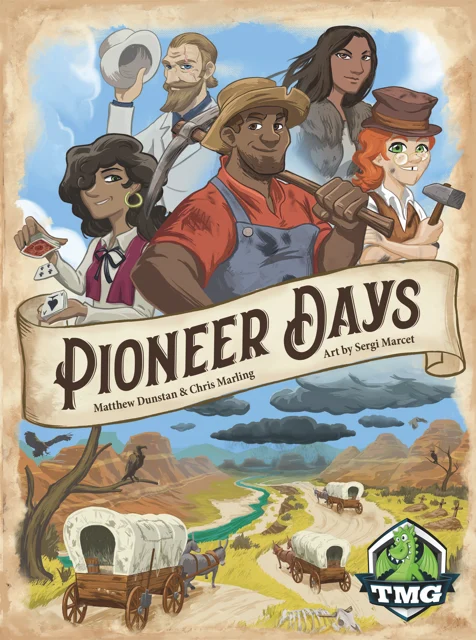
Designer and artist contracts add another layer of complexity. Publishers might amicably return rights to designers, as experienced by Chris Marling with Pioneer Days after its original publisher, Tasty Minstrel Games (TMG), went out of business. Despite TMG returning the rights without fuss, the journey to bring Pioneer Days back has been arduous. Finding a new publisher willing to take on the myriad processes—confirming the original manufacturer’s availability, ensuring the artist is on board, and deciding how to expand or change the game while maintaining compatibility with the original—requires immense patience and dedication. Each of these elements might be governed by separate, often complex, agreements.

Moreover, if an artist, a previous publisher, or even their estate refuses to agree to their work being used for a reprint, or if they cannot be contacted to resolve contractual ambiguities, a simple reprint can suddenly incur massive new costs for commissioning entirely new art, designing new molds, and redoing the entire production layout. Such bitter or unresolved issues can effectively consign a game to permanent obscurity, regardless of its popularity.
The Retheme Dilemma: A Risky Pivot
When licensing agreements expire, retheming a game stands as a potential lifeline, albeit one fraught with risk. The central question a publisher must answer is: how much of the game’s success was intrinsic to its mechanics, and how much was derived from its thematic skin?
A prime example of a successful retheme is Fantasy Flight Games’ (FFG) transformation of their popular cooperative/traitor board game, Battlestar Galactica: The Board Game. After the Battlestar Galactica license expired, FFG masterfully repurposed its acclaimed mechanics into Unfathomable, set within their established and popular Arkham Horror universe. This pivot was remarkably successful for several reasons:
- Strong Core Mechanics: Battlestar Galactica‘s hidden traitor, cooperative survival, and crisis management mechanics were universally praised and robust enough to stand on their own.
- Established Publisher and IP: FFG possessed another strong, internally controlled IP in Arkham Horror, which already had a dedicated fanbase and a rich thematic universe.
- Clever Thematic Integration: The retheme wasn’t just superficial; it wove the original game’s tension and narrative into the cosmic horror of Arkham, even including cheeky nods like naming the ship the "SS Atlantica."
However, such success stories are rare. Most publishers don’t have the luxury of solid backup licenses to fall back on, nor do all game mechanics translate seamlessly to a new theme. Retheming requires significant investment in new art, new lore, and new marketing, essentially relaunching a "new" game based on "old" mechanics. Without a strong thematic fit and a clear market strategy, a retheme can easily fail, proving that a game’s IP is often as integral to its identity as its gameplay.
Protecting Creativity: The Role of Designers and IP Holders
Designers are the creative heart of the industry, and their intellectual property rights are paramount. Celebrated designers like Reiner Knizia and Alan Moon, who make a good living from selling their games via multiple publishers, are meticulous about protecting their creations. They are unlikely to compromise on legal fees or contractual terms, ensuring their work is handled fairly.
Publishers vary widely in reliability, from timely royalty payments to efficient product production. Designers (or their estates) are well within their rights to withdraw from a contract if a publisher is in breach of its terms (e.g., non-payment) or if the contract simply runs its term. This can lead to a game being pulled from production, even if it’s profitable for the publisher, simply because the designer chooses to move their IP elsewhere.
Furthermore, the fragmentation of IP rights can complicate reprints immensely. If the game design is owned by one entity, the art by another, and a specific component mold by a third, securing all necessary permissions for a reprint from a new publisher can become a legal nightmare. Each party holds a piece of the puzzle, and if any one piece is missing or unwilling to cooperate, the entire project can grind to a halt. This intricate web of contracts often makes the path of least resistance for publishers to simply move on to new, less legally encumbered projects.

Official Responses and Industry Adaptations: Navigating the OOP Challenge
Despite the daunting challenges, publishers and the wider industry are not passive observers of games disappearing. Various strategies and models have emerged to address demand for out-of-print titles and manage the inherent risks of publishing.
Publisher Strategies for Reprints and Managing Demand
Beyond the P500 model, publishers employ several approaches to bring back beloved games or manage their inventory more effectively:
- Crowdfunding Reprints: Kickstarter and similar platforms are increasingly used not just for new games but also for "second editions," "deluxe editions," or direct reprints of popular OOP titles. This model allows publishers to gauge actual demand, secure funding upfront, and minimize financial risk. Often, these reprint campaigns include new content, expansions, or upgraded components to incentivize existing owners and attract new players.
- Print-on-Demand (POD): While still limited for complex board games with many unique components, POD technology is advancing. For card-driven games, rulebooks, or certain expansions, POD offers a way to keep titles technically "in print" without holding large physical stock. The cost per unit remains higher, but it eliminates warehousing and obsolescence risks.
- Strategic Partnerships: Some publishers collaborate, with one company licensing a game from another for a reprint, especially for different regional markets. This can share the financial burden and leverage another publisher’s distribution network.
- Community Engagement: Publishers actively monitor communities on platforms like BoardGameGeek, Reddit, and social media to gauge interest in potential reprints. Polls, surveys, and direct interactions help inform decisions, ensuring that any reprint initiative is genuinely demand-driven.
The Distributor’s Influence and Retailer Demands
Distributors play a pivotal role as gatekeepers in the supply chain. They are the primary interface between publishers and thousands of retailers. Their decisions heavily influence which games get stocked and, critically, which ones are deemed worthy of a reprint. Distributors rely on sales forecasts and historical data to determine what to order. A game that has gone out of print due to low demand will be a hard sell to a distributor, who prioritizes guaranteed sellers and new releases that generate rapid turnover.
Retailers, in turn, are constrained by limited shelf space and capital. They are more inclined to stock games with high visibility and predictable sales. For an older, out-of-print title to regain a coveted spot on a retailer’s shelf, it often requires a significant marketing push from the publisher or an overwhelming, verifiable surge in demand that distributors cannot ignore. This dynamic means that even a publisher willing to reprint a game might struggle to get it into the hands of consumers if the distribution network isn’t convinced of its market viability.
The Broader Implications: For Hobbyists, Industry, and the Future
The phenomenon of games going out of print has far-reaching consequences, shaping consumer behavior, industry trends, and the very accessibility of the hobby.
The Rise of the Secondary Market and FOMO Culture
The scarcity created by out-of-print games directly fuels the secondary market. "Grail Games" can fetch hundreds, sometimes thousands, of dollars on platforms like eBay or BoardGameGeek’s marketplace. While this offers a lifeline for some determined collectors, it creates significant accessibility issues for new players or those on a budget, effectively pricing them out of experiencing highly regarded titles.
This scarcity also contributes to a pervasive "Fear of Missing Out" (FOMO) culture within the hobby. Gamers, keenly aware that a beloved title could vanish at any moment, are often compelled to make impulse purchases of new releases, even if they haven’t thoroughly researched them. This FOMO contributes to the rapid churn of new games, as consumers rush to acquire the latest "hotness" before it too becomes