The virtual reality (VR) industry, once heralded as the undisputed "next frontier" of interactive entertainment, is currently grappling with a severe and systemic market correction. In a rapid succession of announcements that have sent shockwaves through the developer community, several prominent VR titles—including the genre-defining A Township Tale and the commercially successful Ghosts of Tabor—have announced significant staff reductions or total service shutdowns.
This wave of instability highlights a growing disparity in the VR ecosystem: while a handful of "titan" titles manage to secure sustainable audiences, the middle-market and indie sectors are being hollowed out by rising development costs, shifting platform priorities, and a consumer base that remains stubbornly difficult to scale.
I. Main Facts: A Four-Fold Blow to the Ecosystem
The current crisis is defined by four major developments across different sectors of the VR market:
Combat Waffle Studios Layoffs: Despite Ghosts of Tabor generating over $30 million in revenue, the studio has been forced to reduce its headcount. The decision follows the cancellation of a high-profile project by an unidentified "large platform partner."
The End of A Township Tale: Developer Alta has announced that its long-running open-world RPG, A Township Tale, will cease all live services on July 20. This follows the recent cancellation of their secondary project, Reave.
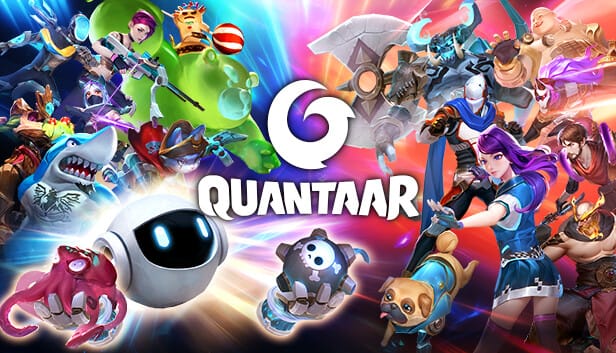
Quantaar’s Final Round: Pumpkin VR’s competitive brawler Quantaar is scheduled for a total server shutdown in September 2026. The game has already been removed from major digital storefronts, including Quest, Steam, and Pico.
Memoreum’s Stalled Development: The Dead Space-inspired sci-fi shooter Memoreum has officially exited full-time development. Patient 8 Games cited poor sales as the primary driver, leaving the future of its Steam port in a state of uncertainty.
II. Chronology of a Downturn: From Growth to Contraction
To understand the gravity of these announcements, one must look at the timeline of the VR industry’s recent trajectory, which shifted from pandemic-era optimism to the "hard landing" of 2025 and 2026.
2018–2021: The Early Momentum: Titles like A Township Tale launched in pre-alpha and eventually moved to the Meta Quest platform in 2021. During this period, venture capital and platform funding from Meta and Sony were plentiful, encouraging developers to build ambitious, server-dependent multiplayer worlds.
2023: The Peak of Expectation: At Gamescom 2023, titles like Memoreum were announced with significant fanfare. Combat Waffle Studios saw Ghosts of Tabor explode in popularity, reaching $10 million in revenue during its Early Access phase on App Lab.
2024–Early 2025: The First Cracks: As the "Gold Rush" slowed, platform holders began tightening their belts. While Ghosts of Tabor reached the $30 million milestone and expanded to PlayStation VR2, smaller studios began to feel the "engagement cliff"—a phenomenon where player retention drops off sharply after the initial launch buzz.
May–June 2026: The Collapse of Sustainability: In May 2026, Alta ended development on Reave. By June, the situation escalated into a full-scale retreat, with Combat Waffle, Pumpkin VR, and Patient 8 Games all releasing statements regarding layoffs or shutdowns within the same month.
III. Supporting Data: The Financial Realities of Virtual Worlds
The financial data underlying these closures provides a sobering look at the "all-or-nothing" nature of the current VR market.
The Revenue Paradox
Ghosts of Tabor is widely considered one of the greatest success stories in independent VR development. With $30 million in lifetime revenue and successful crossovers with The Terminator and Splinter Cell, the studio should, theoretically, be in a position of extreme stability. However, the layoff of "talented individuals" due to a single cancelled partnership project demonstrates how even the top 1% of VR studios remain precariously dependent on platform holders (Meta, Sony, or Valve) to fund their growth.
The Cost of Live Services
For A Township Tale and Quantaar, the "Live Service" model proved to be their undoing. Unlike single-player titles, multiplayer VR games require constant server maintenance, backend updates, and community management.
A Township Tale existed for eight years (since 2016).
Quantaar offered a "party experience" that relied on a critical mass of players to keep matchmaking times low.
When player numbers dip below a certain threshold, the cost of keeping the servers running exceeds the revenue generated from microtransactions or new sales. For Alta, the failure of their second game, Reave, meant there was no secondary revenue stream to subsidize the aging A Township Tale.
Sales Performance and the "Quest Wall"
Memoreum provides a case study in the difficulty of the "Premium" VR market. Despite a respectable 4.4/5 rating on the Meta Quest store from over 350 reviewers, the game failed to move enough units to sustain a full-time team. This suggests that even high-quality, "Very Positive" rated games are struggling to break through the noise of the Quest storefront, where a few dominant titles (like Beat Saber and Gorilla Tag) command the majority of user playtime.
IV. Official Responses: A Somber Industry Sentiment
The statements released by studio leadership reflect a mix of gratitude toward their communities and a blunt admission of economic defeat.
Scott Albright, CEO of Combat Waffle Studios, focused on the necessity of "sustainability" in a volatile market:
"These actions are part of a broader effort to align the company with the current state of the VR industry and ensure we are positioned for long-term sustainability… We came to this decision after having a project we were working on with a large platform partner get cancelled."
This statement is particularly telling, as it confirms that even the industry’s "winners" are vulnerable to the whims of the platform giants.
Joel van de Vorstenbosch, Co-founder of Alta, delivered a more emotional farewell to the community that had supported A Township Tale for nearly a decade:
"We’ve been impacted by the state of the VR industry in ways we didn’t foresee… We have explored various avenues to keep A Township Tale live, but unfortunately none are realistic in our situation."
Patient 8 Games used their Discord to highlight the "bills and lights" reality of indie development:
"Passion alone doesn’t pay the bills or keep the lights on… The reality is that the game didn’t sell enough copies to justify continued full-time development."
V. Implications: The "Indie Winter" and the Future of VR
The simultaneous retreat of these four developers points to several long-term implications for the VR industry.
1. The Death of the "Mid-Tier" Multiplayer Game
We are witnessing the end of the "build it and they will come" era for VR multiplayer. Developers are realizing that unless they have the backing of a platform holder or a massive pre-existing IP, the costs of maintaining a live-service VR game are too high for the current active user base to support. We may see a shift back toward single-player or peer-to-peer (P2P) multiplayer experiences that do not require expensive dedicated servers.
2. Platform Dependency and the "Meta" Risk
The layoffs at Combat Waffle Studios, likely linked to a cancelled Meta project, underscore the danger of "putting all your eggs in one basket." When a major player like Meta shifts its internal focus (for example, moving resources from gaming to AI or enterprise hardware), the ripple effects can cripple even successful third-party studios.
3. The "Curation" Crisis
The failure of Memoreum to find a sustainable audience despite positive reviews suggests a discovery problem. As the Quest and Steam VR stores become more crowded, high-quality "AA" games are being buried. Without significant marketing budgets—which many of these studios lack—passion projects are failing to reach the "escape velocity" needed for commercial viability.
4. A Shift Toward "Sustainability" Over "Scale"
For years, VR studios operated on a "growth-at-all-costs" mindset, fueled by the hope that the next headset (Quest 3, Apple Vision Pro) would bring 100 million users. That mass adoption has not yet materialized. Studios are now pivoting to leaner operations, focusing on "core products" rather than experimental secondary projects. Combat Waffle’s decision to double down on Ghosts of Tabor while cutting staff is the blueprint for this new, more conservative era.
Conclusion
The events of June 2026 mark a turning point for the VR industry. The "pioneer phase" is over, replaced by a grueling period of consolidation and survival. While titles like Ghosts of Tabor will likely survive by focusing on their core audience, the loss of social hubs like A Township Tale and the stagnation of ambitious projects like Memoreum leave the ecosystem poorer.
For players, this is a reminder that in the world of digital-only, server-dependent VR, nothing is permanent. For developers, it is a clarion call to prioritize financial independence and sustainable design over the siren song of platform-funded growth. The VR dream is far from dead, but it is currently waking up to a very cold reality.
The landscape of sports documentary filmmaking is undergoing a seismic shift, moving away from the traditional "flat" screen and into the realm of spatial computing. The latest catalyst for
The landscape of wearable technology has long been a battlefield of trade-offs, where designers struggle to balance aesthetic appeal with functional utility. For years, the industry consensus—led by g
The landscape of virtual reality (VR) gaming is one of rapid evolution, high-risk experimentation, and, occasionally, the emergence of a title that defines a sub-genre. Since its debut in early 2023,