Unearthing Green Histories: Amanda Edmiston’s The Time Traveller’s Herbal Invites a Journey Through Botanical Lore
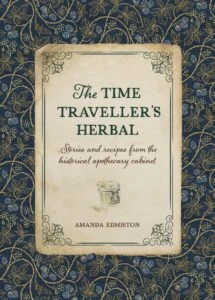
Edinburgh, Scotland – In an age increasingly disconnected from the natural world, a new literary and experiential offering emerges, promising to bridge the chasm between humanity and its botanical heritage. Herbal storyteller Amanda Edmiston, through her acclaimed venture Botanica Fabula, invites readers on an extraordinary expedition into the depths of history with her latest book, The Time Traveller’s Herbal: Stories and Recipes from the Historical Apothecary Cabinet. This captivating work challenges contemporary perceptions of herbalism, positioning ancient practitioners not as figures of superstition, but as foundational pioneers of science and venerable custodians of traditional knowledge.
Edmiston’s unique approach blends meticulous historical research, vibrant storytelling, and practical botanical wisdom, crafting a narrative that is both educational and deeply immersive. The book is an invitation to step into a "spiral of history," tracing the vital threads of stories, folklore, and herbal remedies that are inextricably woven into the fabric of our world. It proposes a radical re-evaluation of how we understand the origins of medicine, science, and our enduring relationship with the plant kingdom.
The Chronicler of Green Histories: Amanda Edmiston and Botanica Fabula
Amanda Edmiston, the visionary behind Botanica Fabula, is not merely an author but a dedicated ethnobotanist and storyteller with a profound passion for the intersection of plants, people, and narrative. Her work transcends conventional herbalism, delving into the cultural and historical contexts that have shaped our understanding and use of flora across millennia. Edmiston champions the idea that plants are living archives, holding within their forms and histories countless tales of human ingenuity, survival, and belief.
For centuries, the figures we now recognise as herbalists have carried many names, some revered, others feared: the cunning woman, the wise woman, the witch. These titles, often laden with societal biases and misunderstandings, frequently obscured the profound truth of their roles. They were, in essence, the early scientists, pharmacists, and medical practitioners of their communities. Operating without formal institutions, they meticulously observed, experimented, and passed down generations of knowledge about the medicinal, nutritional, and spiritual properties of plants. Their practices, though often entwined with folklore and ritual, formed the bedrock of what would later become modern pharmacology and botany. Edmiston’s work seeks to reclaim and honour this complex legacy, presenting these historical figures as the true pioneers they were.
Her journey to authoring The Time Traveller’s Herbal is rooted in years of walking the ancient landscapes of Scotland, observing, listening, and connecting. "Many of my stories, the recipes and tastes that accompany them, originate in the places I walk," Edmiston explains. "I stop, take a moment, sit and look around me, I start to notice the plants and the changes afforded by time, both seasonal change and historical. I think about the history of the place, the changes that have occurred and the folklore associated with the plants that grow there." This deep engagement with the physical environment and its historical echoes forms the methodological core of her "time slip" experience.
A Journey Through Time: The Book’s Vision and Methodology
The Time Traveller’s Herbal is structured not as a dry academic text, but as a series of guided meditations and historical explorations. Edmiston invites readers to join her on these immersive journeys, starting "further back" in history to trace the long lineage of plant knowledge. The book serves as a portal, designed to transport the reader through different epochs, revealing how humanity’s relationship with specific plants has evolved alongside societal changes.
The concept of a "time spiral" is central to Edmiston’s narrative. It suggests that history is not a linear progression but a cyclical, interconnected phenomenon, where past events and knowledge constantly inform and echo in the present. By engaging with this spiral, readers can unlock a deeper appreciation for the continuity of human experience and the enduring power of nature.
One such journey, offered as a captivating preview of the book’s immersive potential, transports us to 200 AD, into a world Edmiston evocatively labels "meadow phantoms." This specific historical jump is not arbitrary; it represents a period rich in Celtic culture, nascent scientific understanding, and a profound connection to the land. The journey begins with a simple act: sitting on the ground, feeling the earth beneath one’s feet, and observing the "unchanging elements" – the flow of a river, the contours of the land. These constants serve as anchors in the swirling currents of time, providing a sense of geographical certainty amidst historical flux.
Stepping into 200 AD: A Meadow of Phantoms
Edmiston often frequents a wild floodplain meadow, ecologically rich and historically significant, nestled behind a castle where two rivers converge near her home in Scotland. This specific locale, brimming with hidden histories, becomes the setting for our first "time slip." The invitation is to visualise this meadow, to imagine traveling back into its ancient past, exploring the plants it nurtured and the stories it held.
As we journey back to 200 AD, the landscape transforms. Familiar architectural constructs – the castle, the modern paths – vanish. The treeline, while present, is sculpted differently. Larch trees give way to ancient oaks, their majestic forms dominating the canopy. A tunnel of blackthorn, a seemingly constant feature, stretches further, its young saplings replacing the gnarled, mechanically pruned forms of our own time. These subtle yet profound shifts in vegetation paint a vivid picture of an ecosystem less touched by human intervention, operating on different cycles of growth and decay.
Yet, certain elements remain steadfast. The "arc and curve of the rivers" and the "contours of the hills and mountains" are constants, their geological journey unfolding at a pace imperceptible to human time. These enduring features offer a reassuring sense of continuity, anchoring the time traveller in a recognisable, albeit transformed, landscape.
We find ourselves on a rocky outcrop overlooking the confluence of the two rivers, the natural marker of the meadow. The shadow where the future castle will stand is behind us, but on the opposite bank, a bustling Pictish village thrives – a vibrant hub of early Scottish life. The air is alive with the sounds and scents of a distant past.
Drawing us towards the flower-strewn field is an unmistakable scent, "the scent of salicylates," beckoning with a "faintly medicinal allure, partially sweet notes, partially antiseptic." This olfactory clue is our first direct encounter with the botanical star of this historical moment.
As we approach the river’s edge, the meadow reveals itself in its full glory. "Creamy clouds of flowers seem to be blurring the view of the bank, as if some ethereal queen was hiding behind them, not wanting anyone to catch her in her natural form." The visual is intoxicating, almost supernatural. A sense of playful mystery permeates the air. Edmiston describes stepping closer, brushing past the blooms, scattering petals in search of the "being" she imagined she saw, only to find nothing concrete.
A "silvery slipping away downstream" on the river, perhaps "eyes watching from the nearby wood," fuels the fantasy. A young bullock grazes peacefully, oblivious to the imagined regal figure. The ephemeral vision prompts a moment of self-reflection: "My imagination has clearly been seduced by the Queen of the Meadows, flower-led into fantasising phantoms sitting on the shore, or maybe I’m running a temperature?"
Meadowsweet: The Queen and the Warrior
The playful self-doubt leads directly to a practical, time-honoured herbal remedy. Edmiston checks for fever, then instinctively adds "a few heads of the meadowsweet (Filipendula ulmaria)" to her flask of hot water. As she sips the resulting tisane, a story whispers to her, a "penny drops." We are, she realises, in the presence of the Morrigan.
The Morrigan, often translated as "Phantom Queen" or "Great Queen," is a powerful and complex figure in Celtic mythology. She is a shapeshifter, a goddess of war, fate, and sovereignty, often appearing on battlefields as a raven, crow, or wolf. She is one of the "ethereal, rarely acknowledged, middle feminine figures" – a potent symbol of feminine power, transformation, and the wild, untamed aspects of nature. Her presence here, amidst the meadowsweet, is no coincidence.
The story recounted by Edmiston tells of the warrior Cu Chulainn, a central hero in Irish mythology. Sent to Skye to learn combat from the warrior maid Sgathaich, he falls in love with her daughter, Uathach. Cu Chulainn, a man of temper and violence, frequently engages in battles, and his heroic journeys are "littered with dubious encounters with women."
During a fierce battle at a ford, he encounters the mighty Morrigan, who appears as a beautiful young woman. She offers him aid in exchange for his love, an offer he rebuffs, claiming his heart belongs to Uathach. Incensed by his rejection, the Morrigan transforms, first into an eel, attempting to trip him. He injures her. Next, she becomes a huge grey wolf, stampeding cattle towards him, and he wounds her again with his slingshot. Finally, she takes the form of a white heifer, leading a stampede directly at him, and he spears her one last time before she vanishes, "haar-like into the river."
Weary and wounded after the battle, Cu Chulainn makes his way along the riverbank, fearing an encounter with the Bean nighe (washerwoman of the shrouds) or the cry of the Caointeach (keener), both harbingers of death in folklore. Instead, he meets an old woman milking a deer, her body bearing the familiar injuries he inflicted upon the eel, wolf, and heifer. Sore and thirsty, he asks for a drink. With each cup she gives him, he blesses her. With each blessing, her injuries heal. After the third blessing, he realises her true identity.
The Morrigan, now healed, gives him meadowsweet as a gift. Though some accounts suggest he regretted healing her, the story insists he carried it on his belt from that day forth. She taught him to use it – a handful of fresh blossoms or a palmful of dried flower heads in a muslin bag added to a bath – to heal his wounds, reduce fevers, and cool his temper. This tale beautifully intertwines the mythical with the practical, illustrating how plant knowledge was often embedded within rich oral traditions and heroic sagas.
The Science and Spirit of Filipendula ulmaria
Meadowsweet, or Filipendula ulmaria, is a plant deeply rooted in both folklore and medicinal history. Its Gaelic name, crios Chu-chulainn (Cu-chulainn’s belt), directly references the myth. It was also known as "bride-wort" due to its popularity as a floral confetti, its creamy white blossoms symbolising purity and joy.
Beyond its mythological connections, meadowsweet holds significant ethnobotanical value. The "scent of salicylates" Edmiston noted is key to its medicinal properties. Meadowsweet contains salicylic acid, a compound chemically related to aspirin. Historically, preparations from meadowsweet were used as a natural pain reliever, anti-inflammatory, and fever reducer. It was so effective that it was one of the plants from which salicylic acid was first isolated, eventually leading to the synthesis of acetylsalicylic acid – aspirin.
Its historical uses extended beyond pain relief. Meadowsweet was revered for its ability to soothe indigestion, heartburn, and other gastric complaints, a property still valued in traditional herbal medicine today. Its gentle astringent qualities also made it suitable for external applications, such as wound washing. The plant’s presence in damp meadows and along riverbanks made it readily accessible to communities, cementing its place as a staple in the historical apothecary cabinet.
Crafting Historical Remedies: Recipes and Revivals
Edmiston’s The Time Traveller’s Herbal doesn’t just narrate; it empowers. It offers practical guidance for engaging with these ancient remedies, allowing readers to incorporate a touch of historical wisdom into their modern lives. The suggested recipes for meadowsweet are a perfect example:
Soothing Meadowsweet Bath
This simple yet effective remedy taps into meadowsweet’s anti-inflammatory and fever-reducing properties, much as Cu Chulainn might have used it.
- Ingredients: Three or four fresh or dried meadowsweet flower heads; muslin (or similar) bag; optional: oats (for irritated skin).
- Method: Place meadowsweet blossoms in the muslin bag. As bathwater runs, add the bag to infuse the water. For added skin soothing, a handful of oats can also be included in the bag.
- Benefits: Helps reduce fevers, soothes irritated or inflamed skin, and promotes relaxation.
Meadowsweet Tisane
A traditional herbal tea, easy to prepare and remarkably effective for various ailments.
- Ingredients: A few fresh or dried meadowsweet flower heads; freshly boiled water.
- Method: Place meadowsweet in a cup. Pour freshly boiled water over it and steep for three to four minutes.
- Benefits: A valuable remedy for its mildly pain-relieving properties and excellent for soothing indigestion.
A Cordial for a Phantom Queen to Ease Tempers, Fevers and Heartburn
This recipe elevates meadowsweet into a delicious and potent cordial, embodying the plant’s essence in a more concentrated form, fit for both mythical queens and modern palates.
- Ingredients:
- 30 heads of meadowsweet blossoms, in full flower.
- Juice of one unwaxed, freshly squeezed lemon and a little grated rind.
- 300 grams of blossom honey (locally produced has additional benefits).
- 1 litre of filtered water.
- Method:
- Bring the filtered water to a boil. Dissolve half of the honey into the boiling water.
- Once dissolved, add the meadowsweet blossoms, lemon juice, and grated rind. Allow to simmer gently for a further three minutes.
- Remove from heat and let it rest overnight (or at least for one to two hours) to allow the meadowsweet to infuse thoroughly.
- Strain the mixture, discarding the plant material.
- Add the remaining honey to the strained liquid and return to the heat. Bring back to a boil and simmer for a further five minutes or so, allowing it to reduce and thicken to the consistency of a cordial. More honey can be added if a sweeter or thicker consistency is desired.
- Bottle in sterile glass jars or kilner-style bottles. Store in a cool place; it can last for up to three months.
- Serving: Mix with still or sparkling water, or even a sparkling wine, to create a refreshing drink that helps dissipate heat and soothe.
These recipes are more than just instructions; they are tangible connections to the past, allowing individuals to experience a sliver of the historical apothecary’s wisdom in their own homes.
Implications: Preserving Heritage, Inspiring Connection
Amanda Edmiston’s The Time Traveller’s Herbal carries significant implications beyond personal enjoyment. It serves as a vital tool for cultural preservation, ensuring that the rich tapestry of folklore, mythology, and practical plant knowledge is not lost to the currents of time. By weaving stories with science, Edmiston helps re-establish a reverence for indigenous wisdom and traditional ecological knowledge, often overlooked in the modern scientific paradigm.
Furthermore, the book encourages a deeper, more mindful connection with the natural world. In an era of ecological concern, understanding the historical relationship between humans and plants can foster greater environmental stewardship. By learning the stories of the plants around us, we develop a more profound appreciation for their intrinsic value and their role in the delicate balance of ecosystems.
Edmiston’s interdisciplinary approach, blending storytelling, history, ethnobotany, and practical herbalism, exemplifies a growing trend in education and cultural heritage. It demonstrates how engaging narratives can serve as powerful conduits for complex information, making subjects like botany and history accessible and exciting to a broader audience. It is an invitation to view our landscapes not just as scenery, but as living libraries, each plant and geographical feature holding a key to understanding our shared past.
Expert Perspectives and Broader Context
While The Time Traveller’s Herbal is a creative and narrative work, its foundation in ethnobotany aligns with broader academic and cultural efforts to document and preserve traditional knowledge. Ethnobotanists globally work to understand how different cultures interact with plants, examining medicinal uses, food sources, and cultural significance. Edmiston’s work contributes to this field by popularising and contextualising such knowledge for a general audience, making it accessible outside of academic journals.
Her approach echoes the sentiments of many environmental historians and folklorists who argue that understanding the deep past is crucial for navigating present and future challenges. By revisiting how our ancestors lived in harmony (and sometimes conflict) with nature, we can glean insights into sustainable practices and a more integrated way of life.
Conclusion
The Time Traveller’s Herbal is more than just a book; it is an experience, a guided meditation into the ancient wisdom held within the botanical world. Amanda Edmiston, through Botanica Fabula, offers a unique opportunity to journey through time, connecting with the "cunning women, wise women, and witches" who were, in truth, the early pioneers of science and the keepers of invaluable traditional knowledge.
By immersing ourselves in the stories of plants like meadowsweet, we are not merely learning historical facts or herbal remedies; we are experiencing "that twist in time, the feeling of being pulled into a tide of years ebbing and flowing, the shift is visceral." It is a call to awaken our senses, to rediscover the magic and utility that lie hidden in plain sight, in the meadows and wild places around us. This book promises to be a cherished companion for anyone seeking to enrich their understanding of history, folklore, and the enduring power of nature.
To embark on this herbal storytelling journey through time, The Time Traveller’s Herbal is available in all good bookshops and via the Botanica Fabula website.
Disclaimer: FolkloreThursday and this article do not offer medical advice. Information regarding folklore practices and remedies is provided for entertainment and educational purposes only. Always consult a medical professional before trying any remedies or practices.