Rebecca Roanhorse’s "River of Bones" Navigates the Treacherous Waters of Identity, Oppression, and Vengeance
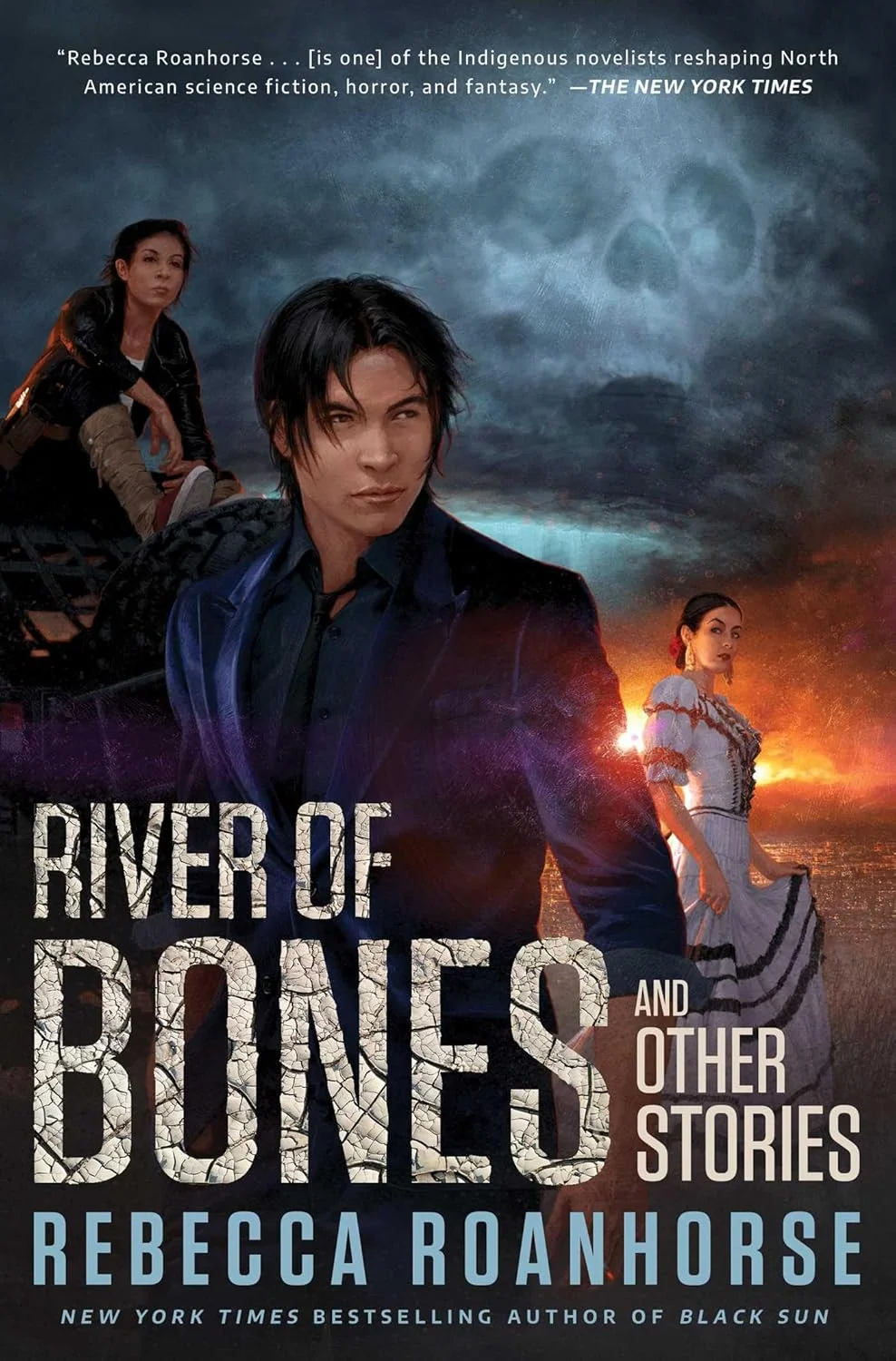
Albuquerque, NM – Award-winning author Rebecca Roanhorse, celebrated for her trailblazing contributions to speculative fiction, has released her latest collection of short stories, River of Bones. Published by Saga Press, this compilation offers a panoramic view of Roanhorse’s diverse literary landscape, bringing together acclaimed tales from across her career and culminating in a compelling new novella set in her popular "Sixth World" universe. The collection arrives on the heels of significant recognition for Roanhorse, whose "Between Earth and Sky" trilogy (2020-2024), inspired by pre-Columbian cultures, recently secured the prestigious 2025 Hugo Award for Best Series.
River of Bones serves as a powerful testament to Roanhorse’s singular voice, delving into profound themes of fraught identity, the enduring legacy of oppression, and the complex calculus between revenge and compassion. Her narratives, often rooted in her own experiences as a person of Indigenous and African American descent, resonate deeply with a broad spectrum of readers from various marginalized communities, a phenomenon she discusses candidly in the collection’s introduction. Through a masterful blend of fantasy, science fiction, and incisive social commentary, Roanhorse compels readers to confront uncomfortable truths about cultural authenticity, systemic injustice, and the moral ambiguities of resistance.
A Journey Through a Celebrated Career: The Chronology of Rebecca Roanhorse’s Work
Rebecca Roanhorse burst onto the literary scene with a distinctive vision, quickly establishing herself as a vital voice in contemporary speculative fiction. Her career trajectory, marked by critical acclaim and numerous awards, provides essential context for understanding the breadth and depth of River of Bones.
Roanhorse’s journey began in earnest with "The Sixth World" series, an urban fantasy saga that debuted in 2018 with Trail of Lightning. This series, deeply inspired by Navajo culture and practices, introduced readers to Maggie Hoskie, a Diné monster hunter in a post-apocalyptic world. "The Sixth World" quickly garnered a loyal following for its unique blending of Indigenous mythology with a gritty, action-packed narrative, offering a refreshing departure from traditional fantasy tropes. It was here that Roanhorse first showcased her ability to craft worlds that felt both fantastical and intimately connected to real-world cultural heritage.
Following the success of "The Sixth World," Roanhorse embarked on another ambitious project: "The Between Earth and Sky" trilogy. Kicking off in 2020, this epic fantasy series drew inspiration from pre-Columbian cultures, creating a vibrant, intricate world reminiscent of the Aztec and Mayan empires. The trilogy, lauded for its rich world-building, compelling characters, and sophisticated exploration of power dynamics and imperial legacies, culminated in the recent 2025 Hugo Award for Best Series. This significant accolade solidified Roanhorse’s position as one of the genre’s leading lights, recognizing her innovative approach to fantasy and her commitment to diverse storytelling.
River of Bones, while a collection of shorter works, is not merely a retrospective. It acts as a vital bridge, connecting the thematic threads that have woven through her larger series. The inclusion of early, acclaimed stories alongside newer works, culminating in a novella set in "The Sixth World" universe, illustrates the consistent evolution of her artistic concerns. From her very first published works to her most recent, Roanhorse has consistently grappled with questions of identity, belonging, and the repercussions of historical trauma. This collection, therefore, is a curated journey through her intellectual and creative landscape, demonstrating how her foundational ideas have deepened and broadened over time, always pushing the boundaries of what speculative fiction can achieve.
Supporting Data: Deconstructing the Thematic Core of "River of Bones"
The strength of River of Bones lies in its relentless and nuanced examination of the human condition through a lens of Indigenous and marginalized experiences. Roanhorse expertly uses speculative elements—from virtual reality to vampires to alien colonization—to amplify and explore complex sociopolitical realities.
The Performance of Authenticity: "Welcome to Your Authentic Indian Experience"
The collection opens with one of Roanhorse’s most celebrated and incisive stories, "Welcome to Your Authentic Indian Experience." Told in a unique second-person perspective, the narrative immerses the reader in the plight of a Native American performer at a resort that sells "authentic" Indigenous virtual reality experiences to tourists. The protagonist finds himself incrementally replaced, both professionally and personally, by a white man who, steeped in white cultural expectations of what an "Indian" should be, is ironically better at performing the very "authenticity" he does not possess.
This story masterfully critiques the commodification of culture and the white gaze’s insatiable, yet superficial, desire for "authenticity." It echoes themes found in works like Michael Crichton’s Westworld (1973), with its theme-park setup and focus on exploitative recreation. However, Roanhorse’s narrative sharpens this critique by specifically targeting cultural tourism, where the "realities of being Native do not interest" the tourists. Instead, they crave the sensation of authenticity—a performance of culture rather than the lived truth of Indigenous existence. This delves into the post-structural concept of hyperreality, where simulacra become more "real" than reality itself. The caricatures embodied by the performers, tailored to pre-existing stereotypes, are perceived by the tourists as more genuinely "Native" than actual Indigenous people living complex, modern lives. The story thus raises poignant questions: What constitutes "authentic" representation? Who dictates these standards, and what happens when one’s own community, or the broader society, deems one "not authentic enough"?
Blurred Lines and Impossible Choices: Allegiances in a Fractured World
A central thread woven throughout River of Bones is the exploration of blurred boundaries—between in-group and out-group, oppressor and oppressed, and the often-artificial categories society imposes. Many characters are thrust into impossible choices, forced to determine where their allegiances truly lie, often at great personal cost.
In "The Boys from Blood River," Lukas, an Indigenous and openly gay teenager in a small, hostile town, grapples with both the relentless abuse of bullies and the impending loss of his terminally ill mother. He finds a semblance of solace and belonging with a group of vampire boys, all united by a thirst for revenge, primarily stemming from racially motivated hate crimes perpetrated against them. Lukas feels seen and understood by the Blood River Boys, yet his loyalty is severely tested when he is asked to sacrifice the life of his white friend to fully join their ranks. This story masterfully intertwines themes of intersectional identity, the allure of vengeance for the marginalized, and the moral complexities of choosing a side when both options demand an unbearable price.
Similarly, "White Hills" presents a chilling "devil’s bargain" scenario. Marissa, a white-passing Native American woman, has married into immense wealth, escaping the poverty of her youth. She is willing to sacrifice almost anything to maintain her newfound haven of security and luxury. However, her mother-in-law, a devotee of racial pseudo-science, uncovers Marissa’s Native ancestry, presenting her with an ultimatum: sever all ties with her past and heritage, or be exiled from her privileged world. The story starkly portrays the insidious nature of systemic racism and the agonizing choices individuals are forced to make when their identity becomes a weapon wielded against them by the dominant culture.
"Wherein Abigail Fields Recalls Her First Death, and, Subsequently, Her Best Life" further complicates the theme of vengeance. Abigail seeks retribution against the sheriff complicit in her father’s murder, promising the desert her vow to kill him in exchange for a second chance at life. When she finally finds him, however, he is already a decaying shell, festering from his own hatred even in life. This potent image evokes the work of post-colonial theorists such as Frantz Fanon and Aimé Césaire, who argued that colonialism is a rot that dehumanizes and decays the colonizer from within, just as it does the colonized. Abigail is thus faced not with the question of if he should die, but whether she wishes to be the one to deliver the final, perhaps unnecessary, blow, and what that act would do to her own soul.
The Hybrid Identity and Colonial Legacy: "Falling Bodies"
The collection’s standout, "Falling Bodies," showcases Roanhorse’s prowess in sociopolitical science fiction. Set in a distant future where an alien race known as the Genteel has colonized Earth, the story follows Ira, a human adopted son of a Genteel senator. Ira begins a new life as a college student on a space station, grappling with the aftermath of a kidnapping that challenged his entire worldview. He is caught between the narratives he was raised with and those imparted by his human rights activist kidnappers, feeling like a traitor to both groups. As he attempts to escape his past, history inevitably follows him, forcing Ira into a drastic, life-altering choice.
"Falling Bodies" exemplifies sociopolitical SF at its most potent: it avoids being a simplistic allegory, instead providing a rich metaphorical framework to explore universal themes. While clearly echoing the complexities of mixed-race identity and the psychological realities experienced by countless groups navigating dual heritages, it also speaks to any instance of colonialism and generational trauma in human history. It asks a profound question: When one is a member of both the ruling class and the oppressed, yet accepted by neither, what recourse remains? This story powerfully articulates the internal conflict of hybrid identities, the burden of inherited histories, and the search for agency within deeply entrenched power structures.
Concluding the Journey: The Titular Novella "River of Bones"
The collection culminates with its titular novella, "River of Bones," which returns to "The Sixth World" universe through the perspective of Kai Arviso. Like many of Roanhorse’s characters, Kai finds himself caught between disparate worlds—the world of his ancestry and a world of privilege he has the opportunity to marry into, echoing Marissa’s dilemma in "White Hills." The novella ties together the collection’s pervasive themes: a character torn between multiple identities and social strata, confronted with an ethical decision that demands either abandoning his friends or relinquishing a chance at heroism and a life-altering reward. This concluding piece solidifies the collection’s overarching message: that identity is fluid, allegiances are tested, and true justice often lies in the gray areas between stark binaries.
Official Responses: Rebecca Roanhorse’s Voice and Its Resonance
Rebecca Roanhorse’s own insights into her work, particularly as articulated in the introduction to River of Bones, serve as crucial "official responses" to the themes she explores. She notes that while her stories are often deeply personal, drawn from her experiences as an Indigenous and African American individual, they possess a universal resonance. "Many readers from other marginalized groups have approached her to let her know that these stories resonated with them as well." This observation is key, highlighting the power of specific, authentic storytelling to transcend cultural boundaries and tap into shared human experiences of struggle, identity formation, and resistance.
The recent Hugo Award for Best Series for her "Between Earth and Sky" trilogy is another significant "official response," albeit from the broader literary community. This prestigious award is not just a recognition of narrative excellence but also an affirmation of the importance of the diverse voices and perspectives Roanhorse brings to the genre. It underscores the critical acclaim and cultural impact of her work, marking her as a leading figure in contemporary speculative fiction who is actively expanding the scope and depth of its narratives. Her success signals a shift in the literary landscape, celebrating stories that challenge conventional Eurocentric fantasy tropes and foreground non-Western mythologies and sociopolitical concerns.
Implications: The Enduring Impact of "River of Bones"
River of Bones is more than just a collection of short stories; it is a profound literary statement with significant implications for contemporary literature and cultural discourse.
Firstly, its broader cultural impact lies in its unflinching engagement with issues of colonialism, cultural appropriation, and systemic oppression. Roanhorse’s work forces readers, particularly those from dominant cultures, to confront uncomfortable truths about historical injustices and their ongoing repercussions. By weaving these complex themes into compelling speculative narratives, she makes them accessible and immediate, fostering empathy and critical reflection. Her stories serve as vital contributions to conversations about decolonization, identity politics, and the imperative for genuine reconciliation.
Secondly, the collection solidifies Roanhorse’s literary significance as a vanguard in shaping modern speculative fiction. She is a pivotal figure in the burgeoning fields of Indigenous futurism and diverse fantasy, demonstrating that narratives rooted in specific cultural traditions can achieve universal relevance and profound artistic merit. Her ability to blend ancient mythologies with futuristic settings and contemporary social commentary enriches the genre, pushing its boundaries and inspiring a new generation of writers to explore their own unique cultural legacies.
Finally, the collection’s ultimate implication for reader engagement is its refusal to provide easy answers. As Roanhorse herself implies in the article, her characters are faced with agonizing choices, and they do not all choose the same path. "Roanhorse is not interested in giving us straight answers to the questions she raises, nor should she be. The questions do not have easy answers." This deliberate ambiguity is perhaps the most powerful aspect of River of Bones. It challenges readers to sit with discomfort, to grapple with moral complexities, and to look inward to examine their own values, biases, and complicity in the systems she critiques. This call to introspection ensures that the stories linger long after the final page, prompting ongoing dialogue and critical self-assessment.
In essence, River of Bones positions Rebecca Roanhorse not just as a storyteller, but as a cultural provocateur. Her collection is a vital contribution to the literary canon, offering both delight in its imaginative scope and a profound challenge to confront the difficult, yet essential, questions of our time. It is a testament to the enduring power of narrative to illuminate, to question, and to inspire change.