Christopher Nolan’s The Odyssey Nears Port: A Cinematic Voyage Set to Reshape Epic Storytelling
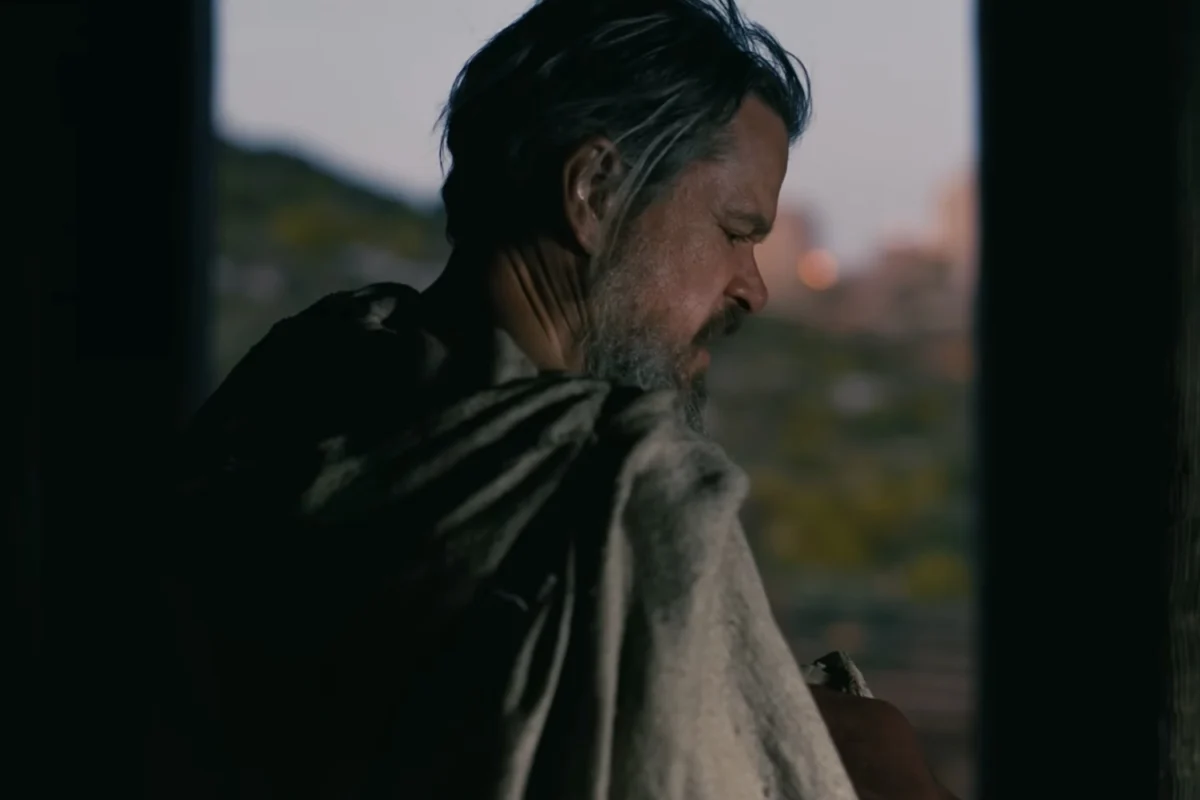
Hollywood, CA – In just over two weeks, acclaimed filmmaker Christopher Nolan is set to unveil his latest ambitious cinematic endeavor, The Odyssey, a monumental adaptation of Homer’s ancient Greek epic poem. The highly anticipated film, which boasts an runtime approaching three hours, promises to transport audiences on a sweeping journey through myth, heroism, and the enduring human quest for home. As the final countdown to its July 17 theatrical release begins, a new trailer has just dropped, offering a tantalizing, albeit familiar, glimpse into Nolan’s vision, while simultaneously igniting a fervor among Classics scholars worldwide.
The film’s imminent arrival marks the culmination of a production shrouded in Nolan’s characteristic secrecy, yet one that has consistently generated immense buzz since its initial announcement. Beyond the spectacle of mythological creatures and grand battles, The Odyssey delves deep into themes of resilience, loyalty, and the psychological toll of prolonged absence, all filtered through the distinctive lens of one of contemporary cinema’s most revered auteurs.
Main Facts: A Modern Epic from a Master Storyteller
Christopher Nolan’s The Odyssey is positioned as a bold reinterpretation of one of Western literature’s foundational texts. The film centers on the arduous ten-year journey of Odysseus, King of Ithaca, as he strives to return home to his loyal wife Penelope and son Telemachus after the fall of Troy. Known for his intricate narratives, commitment to practical effects, and penchant for exploring complex intellectual themes, Nolan brings his signature style to this timeless tale of gods, monsters, and the human spirit.
The ensemble cast is a veritable who’s who of Hollywood talent, many of whom are Nolan collaborators. Matt Damon takes on the titular role of Odysseus, a hero renowned for his cunning and strategic mind. Anne Hathaway portrays the steadfast Penelope, whose unwavering loyalty and cleverness hold Ithaca together amidst a relentless tide of greedy suitors. Robert Pattinson, in a departure from his more heroic roles, embodies the arrogant and manipulative Antinous, the chief antagonist among Penelope’s unwanted suitors, whose taunts are vividly highlighted in the latest trailer. Tom Holland steps into the role of Telemachus, Odysseus’s son, whose journey of maturation and search for his absent father forms a crucial parallel narrative.
Adding further intrigue to the already stellar lineup are Elliot Page and Lupita Nyong’o, both appearing in roles that have been largely kept under wraps. Nyong’o, notably, is confirmed to play two distinct characters, fueling speculation about her potential portrayal of powerful mythological figures such as the sorceress Circe or the nymph Calypso, both of whom play significant roles in Odysseus’s prolonged voyage. The final trailer provides only the briefest glimpses of Page and Nyong’o, maintaining much of the mystery surrounding their contributions.
Visually, the film promises to be a feast for the senses, with the trailer showcasing stunning cinematography that captures both the vastness of the open sea and the claustrophobia of perilous encounters. Iconic moments from Homer’s epic are teased, including men desperately rowing to escape the terrifying whirlpool of Charybdis, and the poignant return of Odysseus’s loyal dog, Argos, depicted at different stages of life, a detail that, according to early reactions, evokes a profound emotional response. The narrative is expected to weave together Odysseus’s trials with the struggles faced by Penelope and Telemachus back in Ithaca, culminating in the hero’s ultimate confrontation with the suitors.
Chronology: The Journey to the Silver Screen
The path to bringing The Odyssey to the big screen under Christopher Nolan’s direction has been a meticulously orchestrated, multi-year process, beginning long before cameras started rolling.
Early Conceptualization & Development (Pre-2023): While specifics remain under wraps, reports suggest that Nolan had been considering an adaptation of a classical epic for several years, drawn to the universal themes and grand scale inherent in stories like The Odyssey. His previous films, particularly Interstellar with its themes of homecoming and profound longing, laid thematic groundwork that resonated with the ancient text. Initial whispers of a new, ambitious Nolan project began circulating in late 2022, hinting at a departure from his recent historical dramas like Oppenheimer.
Official Announcement & Pre-Production (Early 2023): The project was formally announced in early 2023, immediately sending ripples of excitement through the industry and among cinephiles. Nolan’s involvement alone guarantees a certain level of intellectual ambition and cinematic spectacle. Casting announcements followed swiftly, with the confirmation of Matt Damon, Anne Hathaway, and Robert Pattinson indicating Nolan’s trust in his recurring ensemble, while the addition of Tom Holland signaled an infusion of fresh talent. The decision to cast Lupita Nyong’o in two roles was particularly intriguing, promising a complex and multifaceted performance. Pre-production involved extensive research into ancient Greek culture, mythology, and shipbuilding, ensuring historical and mythological fidelity while allowing for Nolan’s unique artistic interpretation.
Filming & Post-Production (Mid-2023 to Early 2024): Principal photography commenced in mid-2023, spanning various international locations chosen for their dramatic landscapes that could convincingly stand in for the diverse settings of Odysseus’s travels – from windswept coastlines to volcanic islands. Nolan, known for his preference for practical effects over CGI, reportedly oversaw elaborate set pieces, including the construction of historically accurate ships and complex mechanical rigs for scenes involving creatures like Charybdis. The production was characterized by Nolan’s signature tightlipped approach, with plot details guarded fiercely. Post-production, which extended into early 2024, focused on editing the vast amount of footage, crafting the film’s immersive soundscape, and integrating any necessary visual effects.
Trailer Releases (Late 2024 – June 2025): The marketing campaign kicked off in late 2024 with the release of the first teaser trailer. This initial preview offered atmospheric glimpses, establishing the film’s tone and grand scale without revealing too much plot. A second, more action-oriented trailer followed in early 2025, showcasing some of the mythological creatures and perilous encounters Odysseus faces. Both trailers, while visually striking, were noted for their strategic omission of key plot points and character interactions, a common tactic for Nolan films designed to build suspense.
The Final Countdown & Trailer (Late June 2025): The release of the final "countdown" trailer in late June 2025 signals the immediate proximity of the film’s premiere. This trailer, while containing largely familiar footage from its predecessors, notably features a new voiceover and provides the first definitive, albeit fleeting, appearances of Elliot Page and Lupita Nyong’o. The strategic reuse of compelling "trailer hits"—such as Pattinson’s Antinous mocking Holland’s Telemachus, Hathaway’s resolute Penelope, and the desperate escape from Charybdis—suggests a deliberate choice by Nolan and the studio to reinforce core emotional beats and maintain intrigue, rather than spoil major reveals. The emphasis on Argos, Odysseus’s loyal dog, across different ages, serves as a powerful emotional anchor, highlighting the theme of enduring loyalty and the passage of time.
Supporting Data: A Classical Resurgence and Nolan’s Track Record
The anticipation surrounding Christopher Nolan’s The Odyssey extends far beyond typical blockbuster hype, particularly within academic circles. CNN’s recent report, declaring that "Odyssey fever grips the Classics world," underscores the profound impact a high-profile adaptation from a director of Nolan’s caliber can have on scholarly and public interest in ancient literature.
Academic Enthusiasm: For Classics professors and ancient history enthusiasts, a major Hollywood production rooted in Homer’s epic is a rare and welcome event. Dr. Kim Shelton, a professor of ancient Greek and Roman studies at UC Berkeley, articulates this sentiment: "I hope there is a surge in interest. I am teaching my class on the Trojan War this fall for that exact reason." This enthusiasm stems from the potential for the film to introduce a new generation to the richness and relevance of classical mythology and history, often perceived as niche subjects. Past adaptations, from the 1997 TV miniseries starring Armand Assante to various cinematic takes on the Iliad (like Troy), have historically led to spikes in book sales and course enrollments, but a Nolan film is expected to elevate this impact significantly due to his reputation for intellectual depth and widespread appeal. The hope is that The Odyssey will spark curiosity about the original text, its historical context, and its enduring philosophical questions.
The Enduring Power of Homer’s Epic: Homer’s Odyssey, alongside The Iliad, forms the bedrock of Western literature. It is not merely a tale of adventure but a profound exploration of identity, memory, fate, the nature of heroism, and the human desire for belonging. Odysseus’s journey is a metaphor for life’s trials, his encounters with gods and monsters symbolic of internal and external struggles. Themes such as the definition of home, the consequences of war, divine intervention, and the cunning of human intelligence remain as relevant today as they were millennia ago. Nolan’s known affinity for complex, layered narratives makes him a particularly fitting director to tackle such a text, promising an adaptation that respects the source material’s profundity while imbuing it with contemporary cinematic flair.
Nolan’s Legacy and Influence: Christopher Nolan has cultivated a reputation as a director who consistently delivers intellectually stimulating, visually spectacular, and commercially successful films. From the mind-bending architecture of Inception to the temporal intricacies of Tenet and the historical gravitas of Dunkirk and Oppenheimer, his filmography demonstrates a consistent ability to elevate genre filmmaking into art. His commitment to practical effects, large-format photography (often IMAX), and innovative storytelling techniques ensures that his films are not just watched, but experienced. This track record suggests that The Odyssey will not be a simplistic retelling but a thoughtful, immersive journey that honors the epic’s grandeur while adding Nolan’s distinctive authorial voice. His previous success with ensemble casts and emotionally resonant character arcs further supports the expectation that the film will capture both the sweeping adventure and the intimate human drama of Odysseus’s tale.
Official Responses: Studio Buzz, Nolan’s Vision, and Cast Enthusiasm
While Christopher Nolan productions are notoriously tight-lipped, the release of the final trailer has prompted a controlled, yet enthusiastic, wave of "official responses" from the studio, the director, and the cast, designed to amplify excitement without revealing key plot points.
Studio Perspective (Warner Bros. / Universal Pictures): Studio executives have expressed immense confidence in The Odyssey, touting it as a landmark cinematic event. Early statements highlight the film’s unprecedented scale, the meticulous detail in its production design, and the emotional resonance of its narrative. They emphasize Nolan’s unique ability to merge high-concept storytelling with broad audience appeal, positioning The Odyssey as a major contender for critical acclaim and box office success, particularly in a landscape often dominated by established franchises. The strategic decision to hold back extensive plot details, even in the final trailer, is seen as a deliberate move to foster anticipation and encourage a pure, unspoiled viewing experience.
Christopher Nolan’s Vision: Nolan himself, while rarely granting extensive interviews prior to a film’s release, has offered glimpses into his directorial philosophy for The Odyssey. He has spoken of his deep respect for Homer’s original text, describing it as a "timeless blueprint for human perseverance and the search for meaning." He reportedly aimed to capture not just the fantastical elements but also the raw human emotion, the profound sense of longing, and the moral complexities that define Odysseus’s character. His vision involves grounding the mythological elements in a tangible reality, allowing audiences to feel the weight of Odysseus’s choices and the visceral danger of his encounters. He has also hinted at exploring the themes of time and memory, recurring motifs in his filmography, within the context of Odysseus’s prolonged absence and return.
Cast Enthusiasm: The lead actors have universally expressed their excitement and the profound challenge of their roles. Matt Damon has reportedly spoken of the immense responsibility of portraying such an iconic figure, praising Nolan’s script for its fresh perspective on a familiar story. Anne Hathaway has highlighted the strength and intelligence of Penelope, emphasizing her role as a beacon of stability amidst chaos. Robert Pattinson has hinted at the psychological depth of Antinous, moving beyond a simplistic villain to explore the character’s motivations and entitlement. Tom Holland has conveyed his awe at working with Nolan and his dedication to bringing Telemachus’s coming-of-age journey to life. These carefully worded responses collectively reinforce the film’s artistic integrity and the commitment of its creators to delivering a truly epic experience.
Implications: Reshaping the Epic, Redefining Blockbusters
The release of Christopher Nolan’s The Odyssey carries significant implications across the film industry, academic fields, and popular culture.
For the Film Industry: In an era increasingly dominated by franchise filmmaking, reboots, and sequels, The Odyssey stands as a powerful testament to the enduring appeal and commercial viability of original, large-scale storytelling. Nolan’s consistent success with non-IP (intellectual property) films provides a crucial counter-narrative, proving that audiences are hungry for ambitious, original narratives from visionary directors. If The Odyssey achieves the expected critical and commercial success, it could inspire other studios to invest in similar epic productions based on classical literature or original concepts, fostering a new golden age for cinematic grandeur. It also reinforces the importance of the theatrical experience, with Nolan’s films often designed specifically for the big screen, particularly IMAX.
For Christopher Nolan’s Legacy: The Odyssey represents a pivotal moment in Nolan’s career. Having tackled sci-fi, war, history, and superhero genres, this film sees him engage directly with the mythological epic, a genre often fraught with challenges in modern adaptation. A successful Odyssey would cement his status not just as a master filmmaker but as a versatile storyteller capable of reinterpreting foundational narratives for contemporary audiences, further solidifying his unique position in Hollywood as a director whose name alone can open a film globally.
For Classics and Humanities: The most charming implication, as noted by academics, is the potential for a renewed public interest in classical studies. A mainstream, high-quality adaptation of Homer’s Odyssey has the power to demystify ancient texts, making them accessible and exciting to a broader audience. This "Odyssey fever" could lead to increased enrollment in ancient Greek and Roman studies courses, higher sales of translations of the epic, and a general cultural re-engagement with the wisdom, mythology, and philosophical depth of antiquity. It serves as a vital bridge between high culture and popular entertainment, demonstrating that stories millennia old still hold profound relevance.
For Audiences and Cultural Discourse: Beyond the box office and academic impact, The Odyssey offers audiences a chance to engage with universal themes of identity, home, loyalty, perseverance, and the struggle against overwhelming odds. In a rapidly changing world, the enduring quest for meaning and belonging remains deeply resonant. Nolan’s interpretation has the potential to spark widespread cultural conversations about heroism, destiny, and the human condition, inviting viewers to reflect on their own "odysseys" and the challenges they face in navigating their own journeys home.
As Christopher Nolan’s The Odyssey prepares to dock in theaters on July 17, it promises not merely a film, but an event—a grand, immersive, and intellectually stimulating voyage that seeks to remind us of the timeless power of storytelling and the enduring allure of the hero’s journey. The stage is set for an epic return, both for Odysseus and for the epic genre itself.