Unrefined Truths: David Singerman’s "Unrefined" Exposes Sugar’s Role in Forging Modern Capitalism
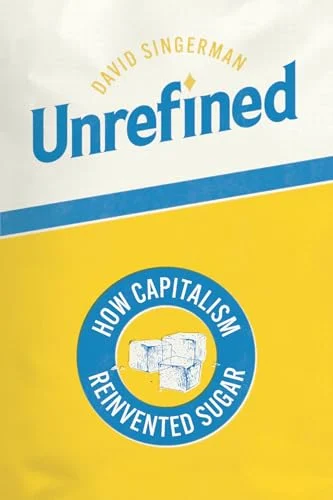
New York, NY – In an era grappling with the complexities of global economics, labor exploitation, and systemic corruption, a forthcoming academic work promises to shed unprecedented light on the historical roots of these pervasive issues. David Singerman’s "Unrefined: How Capitalism Reinvented Sugar (Synthesis)," slated for release in 2025 by the University of Chicago Press, offers a meticulously researched and unflinching examination of sugar’s profound, often brutal, influence on the development of capitalism as we know it today. This 352-page tome, already garnering attention for its dense historical analysis and sophisticated argumentation, is poised to become an indispensable resource for historians, academics, and scholars seeking to understand the intertwined legacies of imperialism, industrialization, and human exploitation that crystallized around this seemingly innocuous commodity.
Main Facts: Unveiling the Bitter Sweet Truth
"Unrefined" is not merely a history of sugar; it is a sweeping intellectual journey that uses sugar as a prism to dissect the fundamental mechanisms of modern economic and social systems. Author David Singerman, an Assistant Professor of History and American Studies at the University of Virginia, brings his specialized expertise in science, technology, and capitalism to bear on a subject he has explored since his doctoral dissertation. The book’s central thesis posits that the global sugar industry, from its earliest plantation forms to its highly refined contemporary manifestations, served as a crucial laboratory for the invention and refinement of capitalist practices, shaping everything from the domination of natural resources to the legal frameworks governing international trade.
The book is rated highly (4.5 out of 5 stars), reflecting its depth and scholarly rigor, though its "Hard" difficulty rating and "Professional" audience designation signal that it is designed for those already comfortable with dense historical and theoretical texts. Singerman meticulously unpacks how seemingly disparate elements – chemistry, standardization, machinery, political economy, and even cultural biases – coalesced to create a powerful "sugar capitalism" that continues to echo in our current global economy.
A Chronology of Sweet Domination: From Cane Fields to Global Markets
Singerman organizes "Unrefined" into three distinct parts, comprising eleven chapters, each meticulously detailing how sugar catalyzed transformative changes across various societal and economic spheres. The narrative unfolds chronologically, tracing sugar’s journey from a luxury item to a global commodity, and in doing so, reveals the insidious ways it fostered unprecedented economic structures and social hierarchies.
The Plantation’s Dawn and Enslaved Ingenuity
The book commences its historical journey in the Caribbean, delving into the brutal realities of sugar plantations. Here, Singerman illuminates how the industrialization of these agricultural enterprises was inextricably linked to the forced labor of enslaved people. Contrary to simplistic narratives, the book highlights the indispensable skills and ingenuity of enslaved workers, whose expertise often surpassed that of their overseers and planters. Their knowledge of cultivation, processing, and machinery was not merely exploited but was, in fact, the very engine driving the "sugar revolution" and the nascent industrialization of the era. The book vividly portrays the harsh conditions and complex social dynamics that defined these early capitalist ventures, where human life was commodified and subjected to extreme exploitation in pursuit of profit.
Industrial Evolution and Refinement
As the narrative progresses, Singerman transports the reader from the sun-drenched cane fields to the burgeoning industrial centers of the Western world. He meticulously details the emergence of sophisticated refineries in places like New York and the cutting-edge workshops of Glasgow, showcasing the development of advanced machinery and chemical processes that revolutionized sugar production. This section demonstrates how the drive for efficiency and scale in sugar processing became a crucible for broader industrial advancements, influencing manufacturing techniques and the organization of labor far beyond the sugar industry itself. The quest for "purity" and refinement in sugar became a metaphor for industrial progress, often masking the impure, exploitative foundations upon which it was built.
Federal Intervention and the Rise of Monopolies
The second part of "Unrefined" shifts focus to the federal and governmental aspects of the sugar trade. Singerman meticulously documents how tariffs, trade laws, and regulatory frameworks were enacted, ostensibly to manage the burgeoning industry. However, he critically reveals how these very mechanisms often became tools for powerful companies to consolidate control. The book provides compelling evidence of how large corporations, through strategic lobbying and legal maneuvering, were able to bypass regulations intended to curb their influence, leading to the rapid monopolization of the sugar trade. This historical account serves as a stark precursor to contemporary debates about corporate power and regulatory capture, demonstrating how the rules of the game were often bent to favor entrenched interests.
The Deceptive Lure of Standardization
The final section of the book delves into the complex and often "finicky" nature of sugar standardization. Singerman exposes how sugar was subjected to a rigid hierarchy based primarily on its color, with the whitest sugar being deemed the most coveted and "pure," while darker varieties were relegated to lower status. This seemingly objective classification, the book argues, was deeply intertwined with broader societal biases, reflecting a pervasive desire to categorize and compartmentalize based on superficial attributes. The author suggests that this standardization, often presented as a scientific advancement, was in many ways arbitrary and even "false," manipulated by those in power to control markets and reinforce cultural prejudices. The emphasis on "Western" sugar as the purest further underscores the imperialistic underpinnings of this standardization process.
Supporting Data: The Interwoven Threads of Sugar Capitalism
Singerman’s exhaustive research draws on a wealth of primary sources, allowing him to weave a rich tapestry of historical detail that underpins his arguments. The book is enhanced by contemporary photographs and ephemera, which serve not merely as illustrations but as vital evidentiary tools, helping readers visualize the intricate details of the world the author describes.
Science, Bureaucracy, and the Machinery of Control
"Unrefined" provides a masterful examination of how scientific advancements and bureaucratic systems were harnessed to serve the ends of sugar capitalism. From the chemical processes of refining to the administrative structures required to manage vast plantations and global trade networks, science and bureaucracy became instruments of control. They enabled the precise measurement, categorization, and commodification of both the product and the labor required to produce it. This section highlights how the pursuit of scientific efficiency often overlooked, or actively contributed to, profound human and environmental costs.
The Shadow of Slavery and Labor Exploitation
Central to Singerman’s narrative is the undeniable role of slavery in the initial industrialization of sugar production. The book does not shy away from detailing the brutal exploitation of enslaved individuals, not just as brute force, but as skilled laborers whose knowledge was essential. It then traces the evolution of labor exploitation beyond formal slavery, showing how the capitalist drive for efficiency often led to the imposition of ever-greater stress on laborers, even as machinery became more prevalent. This demonstrates a core tenet of "sugar capitalism": the constant effort by mill owners and industrial magnates to extract maximum power and profit from the labor force, often at the expense of human dignity and well-being.
Corruption, Conspiracies, and the Power of Definition
A recurring theme in "Unrefined" is the ease with which corruption infiltrated the booming sugar industry. Singerman illustrates how the immense profits and global reach of sugar created fertile ground for illicit practices, conspiracies, and the manipulation of rules. The book argues that the very obsession with categorization and standardization, a hallmark of capitalism, inadvertently created opportunities for corruption. Whoever held the power to define "quality," set tariffs, or interpret laws could change the rules to their advantage, leading to the formation of monopolies and the subversion of fair competition. This historical analysis provides a sobering blueprint for understanding how similar dynamics play out in modern industries.

Visualizing History: The Role of Ephemera
The inclusion of contemporary photographs and ephemera is a critical element of "Unrefined." These visual aids are not mere decorative additions but serve as direct windows into the past, allowing readers to connect with the material culture, machinery, and human faces of the sugar industry. From images of vast cane fields and bustling refineries to advertisements and official documents, these visuals underscore the tangible realities of Singerman’s historical arguments, making the abstract concepts of industrialization and standardization more concrete and impactful.
Official Responses: Government, Corporations, and the Shaping of an Industry
Singerman’s work extensively chronicles the various "official responses" that shaped the sugar industry, not as external reactions, but as integral components of "sugar capitalism" itself. These responses encompass governmental policies, corporate strategies, and the legal frameworks that either facilitated or ostensibly regulated the trade.
Tariffs, Laws, and Their Unintended Consequences
The book meticulously examines the implementation of tariffs and trade laws related to sugar. Singerman demonstrates how these governmental interventions, often framed as measures to protect domestic industries or generate revenue, frequently had profound and sometimes unintended consequences. They created complex landscapes of subsidies, duties, and quotas that could be exploited by well-resourced companies. This historical account offers crucial insights into the intricate dance between state power and market forces, revealing how legislative actions often inadvertently bolstered the very monopolies they aimed to control.
Corporate Bypass and Regulatory Capture
A particularly compelling aspect of "Unrefined" is its detailed exposé of how powerful sugar companies learned to navigate, and often bypass, the legal and regulatory structures designed to govern them. Singerman illustrates instances where corporate entities exploited loopholes, influenced policy-making, or engaged in outright illicit practices to gain competitive advantages. This historical pattern of "regulatory capture," where industries exert undue influence over the bodies meant to regulate them, is a key takeaway, demonstrating that such practices are not modern aberrations but deeply ingrained features of capitalist development. The book provides a historical framework for understanding how corporate power can subvert democratic processes and ethical governance.
The Politics of Purity: Western vs. Foreign Sugar
Singerman’s analysis of the categorization and standardization of sugar highlights a significant "official response" that was as much cultural as it was economic. The preference for "whitest" sugar, often associated with Western processing and perceived purity, was not a neutral scientific judgment. It was a politically charged distinction that privileged Western production methods and products while devaluing "foreign" or unrefined sugars. This reflects a broader colonial mindset and imperialistic trade policies that sought to establish hierarchies not just of products, but of peoples and places. The book thus unpacks how the very definition of "quality" became a tool for economic and cultural domination, shaping consumer preferences and global trade patterns.
Profound Implications: Sugar’s Enduring Legacy on Modern Capitalism
"Unrefined: How Capitalism Reinvented Sugar" is far more than a historical account; it is a profound commentary on the enduring legacy of "sugar capitalism" on our contemporary world. Singerman’s work compels readers to confront uncomfortable truths about the origins and continuing evolution of global economic systems.
Deconstructing the Mechanisms of Power
By meticulously tracing the history of sugar, Singerman provides a powerful lens through which to deconstruct the fundamental mechanisms of power in capitalist societies. He reveals how control over resources, labor, science, and law can be leveraged to create immense wealth and influence, often at great human and environmental cost. The book illustrates how the relentless pursuit of profit drove innovations in industrialization, legal frameworks, and social organization, laying down patterns that persist in various industries today.
Historical Parallels to Contemporary Challenges
Perhaps the most striking implication of "Unrefined" is the uncanny resonance between "sugar capitalism" and the challenges facing our world today. The book’s insights into labor exploitation, the rise of monopolies, systemic corruption, and the manipulation of standards offer direct parallels to current issues in industries ranging from technology to pharmaceuticals. Singerman’s historical narrative serves as a cautionary tale, demonstrating that the dynamics of power, profit, and control are deeply rooted and continually reassert themselves in new forms. It encourages readers to critically examine how historical precedents continue to shape contemporary economic inequalities and social injustices.
A Call for Critical Historical Inquiry
Ultimately, "Unrefined" serves as a powerful call for critical historical inquiry. By demonstrating how a single commodity could so profoundly shape the trajectory of global capitalism, Singerman challenges readers to look beyond superficial explanations and delve into the complex, often hidden, histories that underpin our modern world. The book’s demand for rigorous analysis, its refusal to simplify complex processes, and its emphasis on interconnectedness make it an essential read for anyone seeking a deeper understanding of economic history, the nature of power, and the ethical responsibilities inherent in global commerce. It is a work that promises to reshape academic discourse and inspire a more nuanced understanding of the forces that have forged, and continue to shape, our global society.
In conclusion, David Singerman’s "Unrefined: How Capitalism Reinvented Sugar" is poised to be a landmark publication. It offers a dense, challenging, yet ultimately rewarding exploration of a history often overlooked, revealing how the sweet substance we consume daily has a bitter and profound legacy, intricately woven into the very fabric of modern capitalism. Its insights will undoubtedly fuel academic discussions and provoke critical reflection for years to come.
About the Reviewer (as per original article):
This analysis draws from insights originally presented by Carisma Webb, a university student and independent researcher focusing on American culture, American history, and public policy. Webb is currently completing her BA in Sociology at the University of Michigan-Dearborn.