A Seismic Shift in British Broadcasting: Sky’s £1.6 Billion Acquisition of ITV’s Media Arm
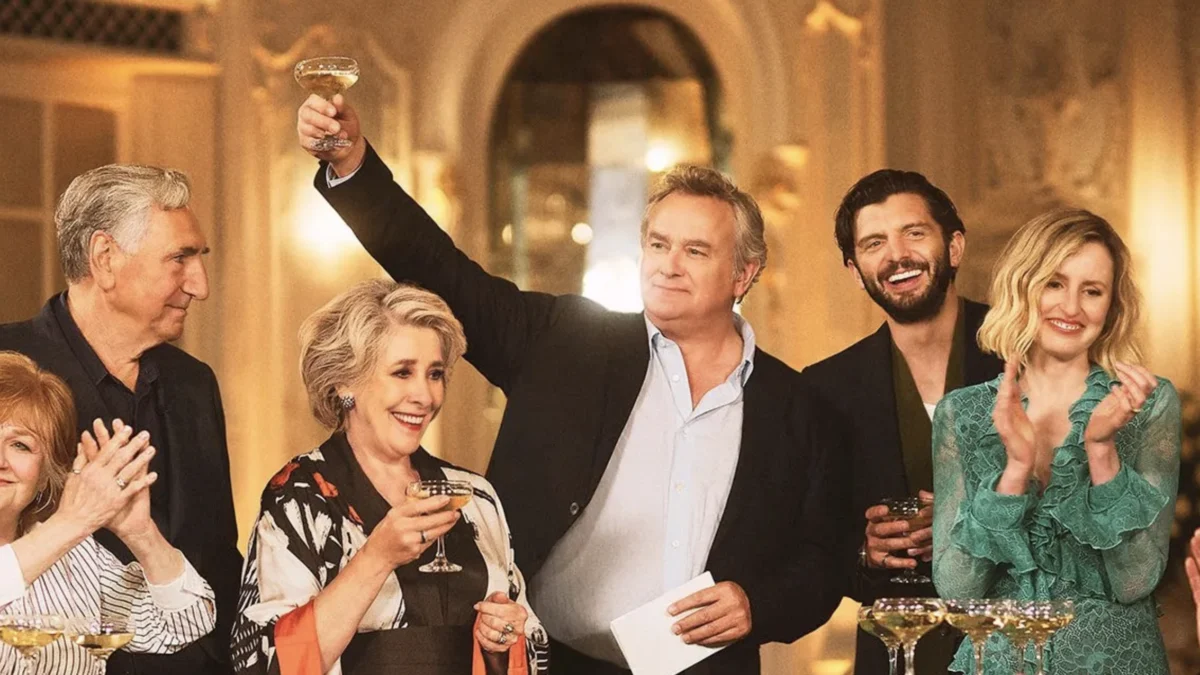
The British television landscape, a bastion of public service broadcasting and a global leader in high-end drama and reality formats, has entered a transformative new era. In a move that has sent shockwaves through the City of London and the global media industry, ITV has officially agreed to sell its media and entertainment business to Sky—the Comcast-owned telecommunications and broadcasting giant—in a deal valued at approximately £1.6 billion.
This landmark agreement marks one of the most significant consolidations in UK media history. It signals a definitive pivot in how traditional terrestrial broadcasting interacts with the hyper-competitive world of global streaming. While the deal represents a massive windfall for ITV and a strategic land grab for Sky, it raises fundamental questions about the future of free-to-air television, the evolution of advertising-supported video-on-demand (AVOD), and the long-term survival of the British "public service" ethos in a digital-first world.
Main Facts: What the Deal Includes—and What It Leaves Behind
The £1.6 billion transaction is surgical in its focus. Sky will take full ownership of ITV’s media and entertainment division, which encompasses the broadcaster’s entire suite of free-to-air linear channels—including the flagship ITV1, ITV2, ITV3, ITV4, and ITVBe. Crucially, the deal also includes ITVX, the broadcaster’s revamped streaming platform, which has seen significant growth in active users and digital advertising revenue since its relaunch in late 2022.
However, the deal intentionally excludes "ITV Studios," the company’s powerhouse production arm. ITV Studios is the creative engine behind global hits such as Love Island, I’m a Celebrity… Get Me Out of Here!, and the critically acclaimed Mr Bates vs. The Post Office. By retaining the Studios division, ITV’s parent company remains a major global content creator, selling programming to rivals like Netflix, Amazon, and the BBC, while offloading the increasingly volatile burden of managing a domestic broadcast network and its associated advertising risks.
For Sky, the acquisition provides an immediate and massive boost to its reach. By absorbing the UK’s largest commercial broadcaster, Sky—already a dominant force in pay-TV and broadband—now gains a foothold in the mass-market, free-to-air sector, allowing it to offer a "cradle-to-grave" entertainment ecosystem that spans from premium sports and cinema to national news and soap operas.
Chronology: The Path to Consolidation
The road to this £1.6 billion deal began long before the formal announcement, rooted in the structural decline of traditional linear television advertising.
- 2018–2021: The Comcast Era Begins. Following Comcast’s successful $39 billion bid for Sky, the broadcaster began looking for ways to deepen its integration into the UK market. Meanwhile, ITV, under CEO Carolyn McCall, launched a "More Than TV" strategy, attempting to pivot the company toward digital growth.
- December 2022: The Launch of ITVX. Recognizing that the "ITV Hub" was falling behind rivals like Disney+ and Netflix, ITV launched ITVX. The platform was designed to be "streaming-first," offering exclusive content ahead of linear broadcast. Its success—reaching billions of streams within its first year—made the media business a much more attractive target for acquisition.
- 2023: The Advertising Slump. A downturn in the UK economy led to a sharp contraction in linear TV advertising spend. ITV’s share price faced pressure as investors questioned whether a traditional broadcaster could survive the "streaming wars" alone.
- Early 2024: Secret Negotiations. Reports began to circulate that Sky/Comcast was looking at ITV’s broadcast assets. Analysts noted that Sky needed a stronger AVOD (Advertising-based Video on Demand) presence to compete with the rising "ad-tier" subscriptions from Netflix and Amazon Prime Video.
- July 2026: The Announcement. The deal is finalized at £1.6 billion. The agreement outlines a transitional period where ITV Studios remains the primary content provider for the now Sky-owned ITV channels, ensuring a level of continuity for viewers.
Supporting Data: The Financials and Audience Reach
To understand why Sky was willing to pay £1.6 billion, one must look at the sheer scale of ITV’s domestic footprint. Despite the rise of TikTok and YouTube, ITV remains a powerhouse of "appointment viewing."
- Audience Share: ITV1 consistently accounts for the largest share of commercial viewing in the UK. Major events, such as the UEFA European Championships or high-stakes reality finales, frequently draw audiences exceeding 10 million viewers—numbers that are increasingly rare in a fragmented media market.
- Digital Growth: ITVX reported a 27% increase in digital revenue in the last fiscal year, with total streaming hours surpassing 1.5 billion. This data-rich environment is highly valuable to Sky, which uses its "AdSmart" technology to target specific households with tailored commercials.
- The 2034 Guarantee: A critical piece of data in this deal is the duration of ITV’s Public Service Broadcasting (PSB) license. ITV’s commitment to provide news, regional programming, and high-quality original content is legally mandated until 2034. This provides Sky with a stable regulatory environment for at least the next decade.
- Valuation Gap: The £1.6 billion price tag reflects the "rationalization" of the industry. While ITV’s market cap has fluctuated, the valuation of the media business at this level suggests a premium for ITVX’s technology and the sheer volume of first-party viewer data ITV has collected.
Official Responses: Experts Weigh In
While official statements from Sky and ITV have emphasized "synergy" and "enhanced viewer experiences," industry analysts offer a more nuanced perspective on what this means for the marketplace.
Tom Harrington, TV Analyst at Enders Analysis, notes that the deal is a logical progression for a legacy broadcaster. "ITV remains profitable, and the reach it commands as the major commercial broadcaster is probably the main reason why it is attractive to Comcast/Sky," Harrington explains. He suggests that Sky’s interest lies in the "sizeable audience that is loyal to linear TV," even as they pivot toward digital.
However, Harrington also warns of the "merger effect" on creativity. "Generally, in a merger such as this, the result is less content being produced overall, as savings and efficiencies are immediately sought. While this might not be immediately obvious to the viewer, the total volume of original UK commissions could face downward pressure."
Peter Ingram, Research Manager at Ampere Analysis, views the deal as a masterstroke for Sky’s digital strategy. "A sale of ITV to Sky will likely lead to an acceleration of the development—and possible integration—of streaming propositions such as ITVX and NOW TV," Ingram says. "The focus will be on expanding online video subscription and advertising revenues. By combining these ecosystems, Sky can offer advertisers a scale that is currently unmatched in the UK."
Implications: What This Means for the Future of TV
The ramifications of Sky owning ITV extend far beyond the corporate boardroom. For the average viewer, the changes will be subtle at first, but profound over time.
1. The Merger of ITVX and NOW TV
The most immediate technical implication is the likely convergence of Sky’s streaming service, NOW, and ITVX. Currently, Sky customers often have to jump between apps to access content. Under a unified ownership, we may see a "super-app" that combines ITV’s free, ad-supported content with Sky’s premium subscription tiers (Sky Sports, Sky Cinema, and HBO imports). This would create a formidable British rival to the "Big Three" US streamers (Netflix, Disney+, and Amazon).
2. The Fate of Free-to-Air Television
For many, the biggest concern is whether ITV will remain free. Because of the 2034 PSB license, ITV1 and its sister channels must remain free-to-air on platforms like Freeview and Freesat. However, the quality of that free offering may shift. Experts predict that the most prestigious "must-see" dramas might move behind a "Sky/ITVX Premium" paywall earlier, leaving the linear channels as a secondary window for content.
3. A New Dynamic for ITV Studios
By separating the production arm from the broadcast arm, ITV Studios is now a "free agent." While it has a long-term agreement to supply Sky’s ITV channels, it is now incentivized to sell its best ideas to the highest bidder globally. This could lead to a scenario where a hit show formerly associated with ITV ends up as a Netflix Original, further blurring the lines of brand loyalty in the TV world.
4. Impact on the BBC and Channel 4
The Sky-ITV deal places immense pressure on the BBC and Channel 4. With Sky now controlling the lion’s share of commercial advertising revenue and possessing a massive data advantage, the "public" broadcasters may find it harder to compete for talent and sports rights. This consolidation may force the BBC and Channel 4 into even closer collaboration (such as their existing Freely venture) to maintain their relevance.
5. Advertising Dominance
For the advertising industry, this deal is a game-changer. Sky’s ability to combine ITV’s mass-market reach with Sky’s granular household data creates a "closed-loop" advertising system. Brands will be able to track a viewer from a mass-market ad during a football match on ITV1 to a targeted follow-up ad on a mobile device via ITVX, all within the Sky/Comcast ecosystem.
Conclusion
The £1.6 billion sale of ITV’s media business to Sky is more than just a corporate transaction; it is a surrender to the realities of the digital age. It acknowledges that in the era of global tech giants, even a national institution like ITV cannot stand alone. While the move secures the financial future of the ITV channels and gives Sky the tools to dominate the UK’s digital advertising future, the true test will be whether the "Britishness" of the programming—the local news, the regional voices, and the unique cultural touchstones—can survive under the umbrella of a global American conglomerate. For now, the "Play" button has been pressed on a new chapter of television history, and the whole world is watching.