The Shadow of Freedom: Unpacking the Black Codes of Reconstruction
Main Facts
The Black Codes represent a dark and pivotal chapter in American history, a series of profoundly discriminatory laws enacted by Southern states in the immediate aftermath of the Civil War (1865-1866). Designed to circumvent the newly won freedom of formerly enslaved African Americans, these codes sought to re-establish white supremacy and maintain a captive labor force, effectively creating a system of "quasi-slavery" under the guise of legal order. Rooted in centuries-old vagrancy statutes and the brutal logic of antebellum slave codes, the Black Codes severely restricted Black freedoms, denied equal political and civil rights, and compelled freedmen and women into forced labor, often under conditions eerily similar to their former bondage.
These legislative attempts to negate emancipation sparked widespread outrage among Northerners and Radical Republicans in Congress. This indignation was a primary catalyst for the "Radical" phase of Reconstruction, leading to landmark federal interventions such as the Civil Rights Act of 1866, the Fourteenth Amendment, and the Reconstruction Acts. While these federal actions temporarily dismantled many of the Black Codes, their underlying philosophy of racial subjugation did not vanish. Instead, the principles enshrined in the Black Codes mutated and evolved, ultimately laying the groundwork for the insidious system of Jim Crow segregation that would plague the American South for nearly another century.
Chronology
A Legacy Forged in Oppression: Antecedents to the Black Codes
Roots in Ancient Laws: Vagrancy and Social Control
The conceptual framework for the Black Codes was not born in a vacuum; it drew heavily from historical legal precedents, particularly vagrancy laws. Originating in medieval England, these statutes, such as the Statute of Labourers of 1351, were initially designed to control the movement and labor of the poor after demographic crises like the Black Death led to labor shortages. Individuals deemed "vagrants"—those without visible means of support or fixed employment—could be arrested, fined, or forced into labor. These laws served to bind peasants and serfs to their manorial lords, ensuring a stable workforce and maintaining social order.
Over centuries, these laws migrated to the American colonies and were adapted to local contexts. They were initially used against indentured servants and the impoverished of all races. However, as the institution of slavery became entrenched, the application of vagrancy laws increasingly targeted free Black populations, even before the Civil War. Authorities weaponized these laws to restrict the movement of free African Americans, control their access to employment, and prevent them from settling in certain areas, thereby reinforcing racial hierarchies and limiting their economic independence. This long history of using legal mechanisms to control the movement and labor of marginalized groups provided a ready-made blueprint for post-emancipation Southern legislatures.
The Enslavement Blueprint: American Slave Codes
Even more directly, the Black Codes inherited their spirit and many specific provisions from the elaborate slave codes of colonial and Antebellum America. These brutal laws, varying slightly by state but consistent in their intent, were the legal scaffolding that upheld chattel slavery. They meticulously codified the racial hierarchy, unequivocally defining enslaved people not as human beings with rights, but as property—chattel—of their masters. Key tenets of these codes included:
- Hereditary Slavery: A child born to an enslaved mother was automatically enslaved, perpetuating the system across generations.
- Denial of Rights: Enslaved individuals were forbidden from owning property, entering contracts, marrying legally, learning to read or write, testifying in court against white persons, or assembling without white supervision.
- Physical Control: Masters were granted broad authority to whip, brand, imprison, or even kill enslaved people with minimal legal consequence, effectively legalizing severe brutality as a means of control.
- Movement Restrictions: Enslaved people required passes to leave their plantations and were subject to curfews and patrols.
These slave codes were essential for maintaining the South’s agrarian, plantation-based economy, which relied almost entirely on forced labor. The abolition of slavery through the Emancipation Proclamation and the impending Thirteenth Amendment thus stripped the South of its fundamental economic and social structure. The desire to restore this structure, combined with deeply ingrained white supremacist ideologies and a thirst to avenge the Confederacy’s defeat, directly led Southern lawmakers to fuse the punitive aspects of vagrancy laws with the repressive mechanisms of the old slave codes to create the Black Codes.
The Dawn of a New Era: Post-Civil War and Presidential Reconstruction
The Promise of Freedom and its Immediate Challenges
The surrender of the Confederacy in April 1865 brought an end to four years of brutal conflict and ushered in a period of immense hope and profound uncertainty. Millions of African Americans, previously enslaved, now faced a new reality: freedom. Yet, this freedom was largely theoretical. They possessed no land, no capital, no education, and often no legal protections in a society still steeped in racial prejudice and economic dependency on their former enslavers. The scale of the task of integrating these newly freed people into American society, politically, economically, and socially, was unprecedented. The Emancipation Proclamation and the soon-to-be-ratified Thirteenth Amendment abolished the legal institution of slavery, but the question of what citizenship, rights, and opportunities would entail for freedpeople remained unanswered.
Andrew Johnson’s Lenient Approach
President Abraham Lincoln, in his final speech, had cautiously advocated for granting suffrage to some freedmen, particularly those who had served the Union. However, Lincoln’s assassination thrust his vice president, Andrew Johnson, into the presidency. Johnson, a Tennessee Democrat and a staunch Unionist but also a vocal white supremacist, quickly signaled a different path for Reconstruction. Despite initially speaking of punishing "traitors," Johnson’s primary goal was a swift reintegration of the Southern states with minimal federal intervention.
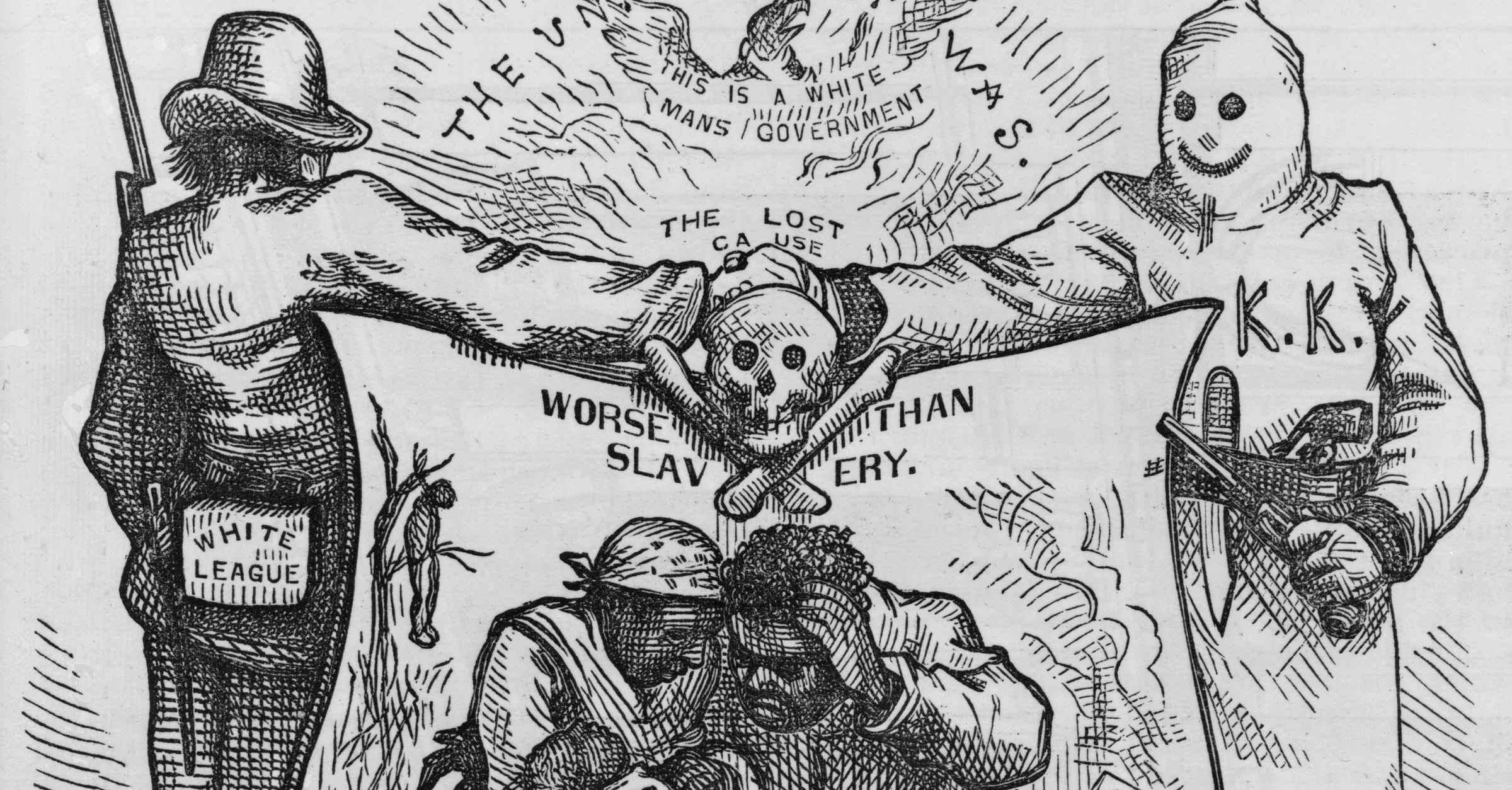
His "Presidential Reconstruction" policy, implemented through executive orders, was remarkably lenient. He offered broad amnesty to ex-Confederates, requiring only a simple loyalty oath, and quickly restored their property rights (excluding enslaved people). This approach rapidly re-empowered the very planter class that had orchestrated secession and maintained slavery. Johnson consistently obstructed the Freedmen’s Bureau, an agency established by Congress to provide aid, education, and legal assistance to freedpeople. He vetoed attempts to provide land distribution—the "forty acres and a mule" promise—arguing it was an overreach of federal power and an infringement on property rights. He also removed Black Union regiments from the South, claiming their presence was humiliating to white Southerners and an impediment to "peaceful" reconstruction. This leniency emboldened former Confederate states to test the boundaries of their restored autonomy, leading directly to the enactment of the Black Codes.
The Enactment: States Embrace "Quasi-Slavery"
Witnessing Johnson’s permissive stance, Southern legislatures, largely composed of former Confederate officials and planters, quickly moved to reassert control. Mississippi led the way, enacting its Black Code in late 1865. Other states rapidly followed suit, often adopting similar provisions with remarkable consistency. By early 1866, most former slave states, including South Carolina, Florida, Alabama, Louisiana, Texas, North Carolina, Maryland, Kentucky, and Tennessee, had implemented their versions of the Black Codes. This rapid and coordinated legislative action demonstrated a shared intent among Southern white leadership to undermine emancipation and restore a racial hierarchy that ensured a subservient Black labor force.
Supporting Data
Mechanisms of Control: Deconstructing the Black Codes
The Black Codes were sophisticated legal instruments designed to replicate the economic and social control of slavery. Their provisions were meticulously crafted to ensnare freedpeople in a web of dependency and subjugation.
Labor Control and Economic Subjugation
The most immediate and pervasive goal of the Black Codes was to re-establish a captive labor force for the decimated Southern economy.
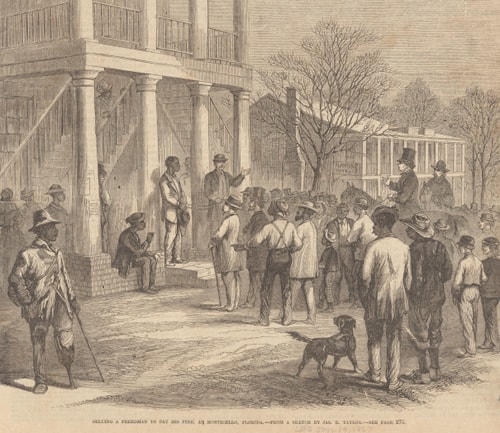
- Vagrancy Laws Reimagined: These laws were the cornerstone of labor control. Freedpeople without steady employment or proof of a labor contract by January 1st of each year were declared "vagrants." This classification was broad and arbitrary, often applied to anyone perceived as idle, unemployed, or even simply traveling. Vagrants faced arrest, fines, and forced labor. Those unable to pay fines were often leased out to private planters or public works projects, a system that quickly evolved into the brutal practice of convict leasing, essentially slavery by another name.
- Compulsory Labor Contracts: The codes mandated annual labor contracts between Black workers and white employers. These contracts were often exploitative, dictating long working hours (often "sunrise to sunset"), meager wages, and harsh conditions. Workers who left before their contract expired could be arrested and forced back, forfeiting all accrued wages. In states like Florida, employers were legally permitted to whip Black workers for "impudence and disrespect," echoing the physical brutality of slavery. The language used in many codes often referred to white employers as "masters," starkly revealing the intended power dynamic.
- Economic Barriers: To prevent economic independence, several codes imposed specific taxes or licensing requirements on Black workers in professions outside of agriculture or domestic service. South Carolina’s "Domestic Relations of Persons of Color" law, for instance, required Black artisans and skilled laborers to pay an annual tax of $10 to $100. This disproportionately impacted thriving Black communities in cities like Charleston, forcing many skilled workers back into agricultural labor. Restrictions on renting or owning land, such as Mississippi’s law limiting Black land rental to within city limits, deliberately prevented freedpeople from establishing independent farms and competing with white landowners.
Social and Civil Rights Restrictions
Beyond economic control, the Black Codes systematically stripped African Americans of their basic civil and social rights, asserting white supremacy in all spheres of life.
- Limited Legal Standing: While some codes nominally granted Black people the right to marry (though only within their race) and own property, these rights were severely curtailed. Freedpeople were typically forbidden from testifying in court against white persons, serving on juries, or bearing arms. This denied them legal recourse against abuses and rendered them vulnerable to violence and exploitation.
- Prohibition of Interracial Marriage: Many codes explicitly outlawed interracial marriage (miscegenation), often with severe penalties. Mississippi’s law declared any such marriage a felony punishable by life imprisonment, reinforcing racial purity narratives and social separation.
- Segregation: The Black Codes laid the groundwork for future segregation, mandating separate facilities in public spaces, transportation, and other areas, although the comprehensive "separate but equal" doctrine would solidify later under Jim Crow.
The Cruel Ploy: Apprenticeship Laws
One of the most insidious aspects of the Black Codes was the weaponization of traditional apprenticeship laws. Originally intended to provide vocational training for children, these laws were perverted to exploit Black child labor. State legislatures declared that freedpeople, with few "industrious" and "honest" exceptions, were incapable of properly raising their own children. Under this pretext, thousands of Black children, some as young as two years old, were forcibly removed from their parents and "apprenticed" to white "masters," often their former enslavers. This practice served a dual purpose: it provided free child labor for plantations and systematically undermined the formation and stability of Black families, a crucial institution for freedpeople rebuilding their lives.
The Human Cost: Violence and Terror
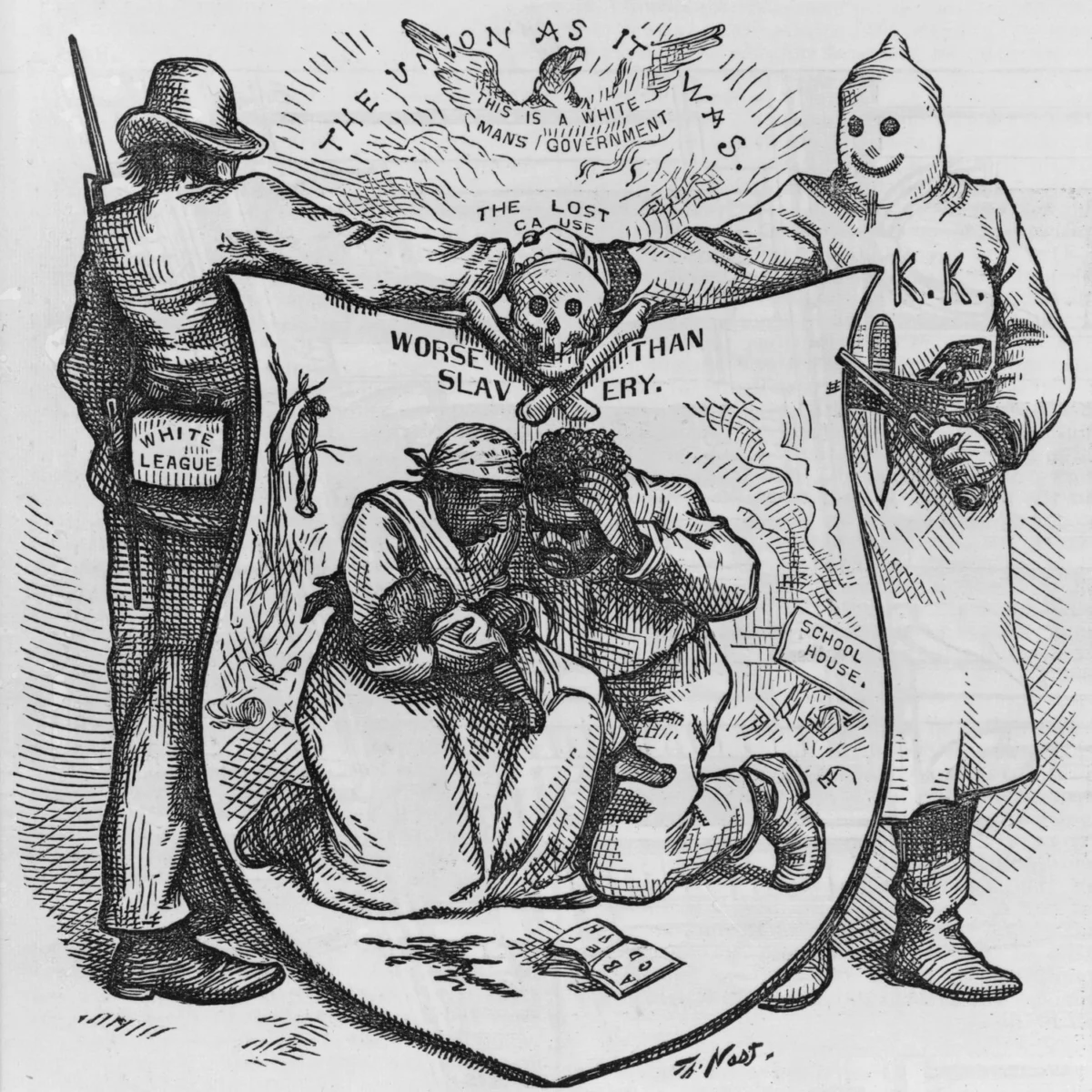
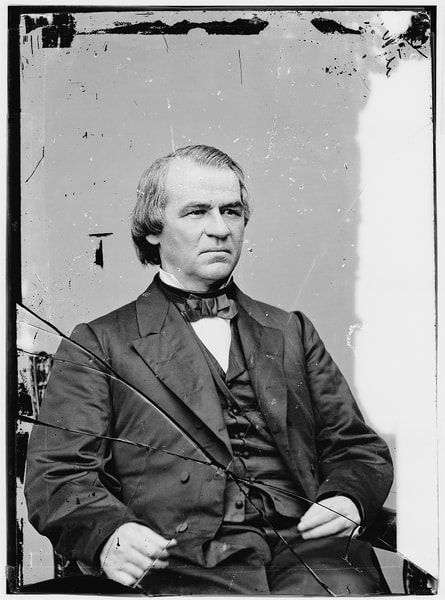
The enactment and enforcement of the Black Codes were not solely a matter of legislation; they were accompanied by a terrifying wave of violence and intimidation across the South. White supremacist groups, including nascent organizations like the Ku Klux Klan, emerged to enforce the spirit of the codes through terror. Beatings, whippings, rapes, and murders of freedpeople became alarmingly common. This systematic violence was a clear message that white Southerners would resist any challenge to their racial dominance, even if it meant resorting to extralegal brutality to suppress Black aspirations for true freedom and equality.
Official Responses
Northern Outrage and Congressional Resistance
Public Opinion and Abolitionist Voices
The audacity and severity of the Black Codes shocked and enraged many Northerners and abolitionists. The codes exposed the true intentions of the former Confederate states, making it clear that they sought not reconciliation and compliance, but a return to a system as close to slavery as possible. Prominent abolitionists and Republican newspapers condemned the codes as a blatant attempt to subvert the Union victory and the Thirteenth Amendment. One abolitionist captured the sentiment, calling it "a little short of madness" for the South to believe the "triumphant North…would tolerate this new slave code." Southern leaders, however, remained defiant, claiming the codes were necessary because freedmen would not work voluntarily and asserting they were legislating "what was best for the State and for society; ever remembering that it was a white man’s State [they were] legislating for."
This widespread outrage undermined President Johnson’s narrative of a swift and peaceful Reconstruction. It solidified the growing conviction among many in the North that the federal government needed to take a more active and forceful role in protecting the rights of freedpeople and restructuring Southern society.
The Rise of Radical Republicans
The Black Codes dramatically strengthened the hand of the "Radical Republicans" in Congress. This faction, led by powerful figures like Representative Thaddeus Stevens of Pennsylvania and Senator Charles Sumner of Massachusetts, believed that the South needed to be fundamentally reformed, politically and socially, to ensure true equality for African Americans. They were driven by both moral conviction and a pragmatic understanding that unchecked white supremacy in the South would undermine the Union’s victory and potentially threaten Republican political power. The codes provided irrefutable evidence that Johnson’s lenient Presidential Reconstruction was a failure and that stronger federal intervention was essential.
Catalysts for Action: The Memphis and New Orleans Massacres
The political tensions escalating around the Black Codes were tragically underscored by two horrific incidents of violence against African Americans in the South during the summer of 1866. These events served as undeniable proof for Congress that the codes were not isolated legal anomalies, but part of a broader, violent campaign to suppress Black freedom.
- The Memphis Riots (May 1-3, 1866): This massacre began with an altercation between white police officers and recently discharged Black Union veterans. It quickly escalated into a three-day rampage by white mobs, largely composed of Irish immigrants and local police, who stormed through Black neighborhoods. Homes, churches, and schools were burned, and freedpeople were brutally assaulted, raped, and murdered. By the time federal troops intervened, 46 Black people had been killed, and 75 injured, with hundreds more left homeless.
- The New Orleans Massacre (July 30, 1866): Just weeks later, a peaceful demonstration of freedpeople and white Unionists, advocating for Black suffrage and a more inclusive state constitution, was attacked by a white mob, including many ex-Confederate soldiers and police. The violence was indiscriminate and brutal, resulting in at least 34 Black people killed and 119 wounded, along with several white Unionists.
These massacres, occurring as President Johnson was actively campaigning against his Radical Republican opponents, horrified the nation. They vividly demonstrated the depth of white Southern resistance and the urgent need for federal protection for African Americans. They galvanized Northern public opinion and decisively shifted the balance of power in Congress towards the Radical Republicans.
Legislative Countermeasures: Dismantling the Codes
The egregious nature of the Black Codes and the accompanying violence convinced Congress that decisive action was needed to protect the rights of freedpeople and secure the fruits of the Union victory.
The Civil Rights Act of 1866
Passed on April 9, 1866, this landmark legislation was the first federal law to define citizenship and affirm that all citizens are equally protected by the law. Its key provisions directly targeted the core discriminatory aspects of the Black Codes:
- It declared all persons born in the United States (excluding Native Americans) to be citizens, thereby legally recognizing African Americans as citizens.
- It guaranteed all citizens, regardless of race, equal rights under the law, including the right to make and enforce contracts, sue and be sued, give evidence in court, inherit, purchase, lease, sell, hold, and convey real and personal property.
- It provided for the full and equal benefit of all laws and proceedings for the security of person and property, as enjoyed by white citizens.
President Johnson, predictably, vetoed the Civil Rights Act, arguing it was unconstitutional and an overreach of federal power. However, Congress, with a two-thirds majority, successfully overrode his veto, marking a significant constitutional clash and a triumph for federal intervention in civil rights.
The Fourteenth Amendment
Recognizing that a mere statute could be repealed by a future Congress or overturned by the Supreme Court, Radical Republicans sought to enshrine these protections in the Constitution itself. The Fourteenth Amendment, proposed by Congress in June 1866 and ratified in July 1868, became one of the most transformative amendments in American history. It aimed directly at nullifying the Black Codes and guaranteeing civil rights:
- Citizenship Clause: Reaffirmed and expanded the Civil Rights Act, declaring "All persons born or naturalized in the United States…are citizens of the United States and of the State wherein they reside." This definitively granted citizenship to African Americans.
- Privileges or Immunities Clause: Intended to protect fundamental rights of citizens from state infringement (though its scope was later narrowly interpreted by the Supreme Court).
- Due Process Clause: Prohibited states from depriving any person of "life, liberty, or property, without due process of law," effectively applying parts of the Bill of Rights to the states.
- Equal Protection Clause: Declared that no state shall "deny to any person within its jurisdiction the equal protection of the laws." This clause became the bedrock of future civil rights litigation, directly challenging the discriminatory nature of the Black Codes and Jim Crow laws.
The Fourteenth Amendment fundamentally redefined American citizenship and the relationship between states and the federal government, placing federal protection of civil rights above state prerogatives.
The Reconstruction Acts of 1867
Following a decisive victory in the 1866 midterm elections, which gave Radical Republicans an even stronger mandate, Congress moved to implement a more radical approach to Reconstruction. The Reconstruction Acts of 1867 (and subsequent acts) effectively dismantled the state governments that had enacted the Black Codes. Key provisions included:
- Dividing the ten former Confederate states (all except Tennessee, which had already ratified the 14th Amendment) into five military districts, each under federal military command.
- Mandating that these states draft new state constitutions that granted suffrage to all adult Black men.
- Requiring these states to ratify the Fourteenth Amendment as a condition for readmission to the Union and the removal of federal troops.
These acts effectively superseded the Black Codes, imposed federal authority over Southern states, and initiated a period of significant Black political participation, marking the zenith of the Radical Reconstruction era.
Implications
The Shifting Tides of Reconstruction
Temporary Gains and Enduring Resistance
The federal response to the Black Codes, particularly the Civil Rights Act, the Fourteenth Amendment, and the Reconstruction Acts, ushered in a period of unprecedented progress for African Americans. Under military occupation and with newly enfranchised Black voters, new state governments were formed in the South. These governments, often referred to as "Radical" or "Redeemer" governments, included African Americans in legislative and administrative roles for the first time. They established public school systems, initiated land reforms (though limited), and passed laws to protect civil rights.
However, this progress was met with fierce and often violent resistance from white Southerners. White supremacist groups like the Ku Klux Klan, the White League, and the Red Shirts terrorized Black communities and their white Republican allies, using intimidation, lynchings, and electoral fraud to suppress Black political power. As the 1870s progressed, Northern weariness with Reconstruction, coupled with economic panics and political scandals, led to a gradual withdrawal of federal troops and a decline in commitment to protecting Black rights.
The Seeds of Future Oppression: From Black Codes to Jim Crow
The Retreat from Reconstruction
The end of Reconstruction, symbolically marked by the Compromise of 1877, allowed white "Redeemer" governments to regain control across the South. The federal government’s commitment to protecting Black civil rights waned, further undermined by Supreme Court decisions (e.g., the Slaughterhouse Cases of 1873, Civil Rights Cases of 1883) that narrowly interpreted the Fourteenth and Fifteenth Amendments, effectively stripping them of much of their protective power.
Jim Crow: The Black Codes Reborn
As federal oversight diminished, Southern states moved to re-establish white supremacy, building directly on the foundation laid by the Black Codes. The Jim Crow era, which emerged in the late 19th century and lasted until the mid-20th century, represented a more systematic and insidious form of racial segregation and discrimination.
While the Black Codes were explicitly designed to control labor and explicitly re-enslave, Jim Crow laws focused more on institutionalizing social segregation, disenfranchisement, and economic marginalization. Jim Crow laws mandated racial segregation in virtually every aspect of public life: schools, hospitals, transportation, housing, restrooms, and even cemeteries. African Americans were systematically stripped of their voting rights through poll taxes, literacy tests, grandfather clauses, and outright intimidation. Economically, sharecropping and tenant farming, often accompanied by debt peonage, replaced direct forced labor, keeping Black families in a cycle of poverty.
The continuity between the Black Codes and Jim Crow is undeniable. Jim Crow refined the mechanisms of control, adopting a veneer of "separate but equal" (legitimized by Plessy v. Ferguson in 1896) while maintaining the core principle of white supremacy and the subjugation of African Americans. The Black Codes were the initial, crude attempt to nullify emancipation; Jim Crow was their more sophisticated and enduring progeny.
A Lingering Shadow: The Enduring Legacy
The Black Codes, though relatively short-lived in their original form, cast a long and devastating shadow over American history. They represent a stark illustration of the deep-seated resistance to racial equality following the abolition of slavery. Their legacy profoundly shaped the course of Reconstruction, spurred critical constitutional amendments, and tragically laid the groundwork for nearly a century of Jim Crow oppression. Understanding the Black Codes is essential to comprehending the persistent struggle for civil rights in the United States and the enduring impact of systemic racism on American society. They serve as a powerful reminder of how legal systems can be perverted to deny fundamental human rights and perpetuate cycles of injustice, even in the face of proclaimed freedom.