The Shifting Sands of Fantasy Anime: Witch Hat Atelier and the Rise of the "Cozy" Pantheon
For decades, the anime and manga landscape has been neatly segmented by demographic categories. Among these, the shojo genre, primarily targeting tween and teen girls, has carved out a distinct niche, often characterized by its emphasis on romance, personal growth, and, frequently, "cute girls doing cute stuff." From aspiring musicians to globe-trotting adventurers, these protagonists, typically designed for adorable appeal, serve as relatable gateways for their intended audience, often navigating social anxieties or striving for self-improvement, usually with a love interest waiting in the wings.
However, the rigid boundaries of these demographics are increasingly blurring, giving rise to narratives that defy easy categorization. Storytellers, seeking broader expressive freedom, often venture beyond shojo into seinen (older male readers), josei (older female readers), or even shonen (young male readers) magazines. These categories, initially marketing tools, have become less indicative of a work’s thematic depth or character complexity. A mature, introspective josei-esque narrative, for instance, might find an unexpected home within a shojo publication, highlighting the industry’s evolving flexibility.
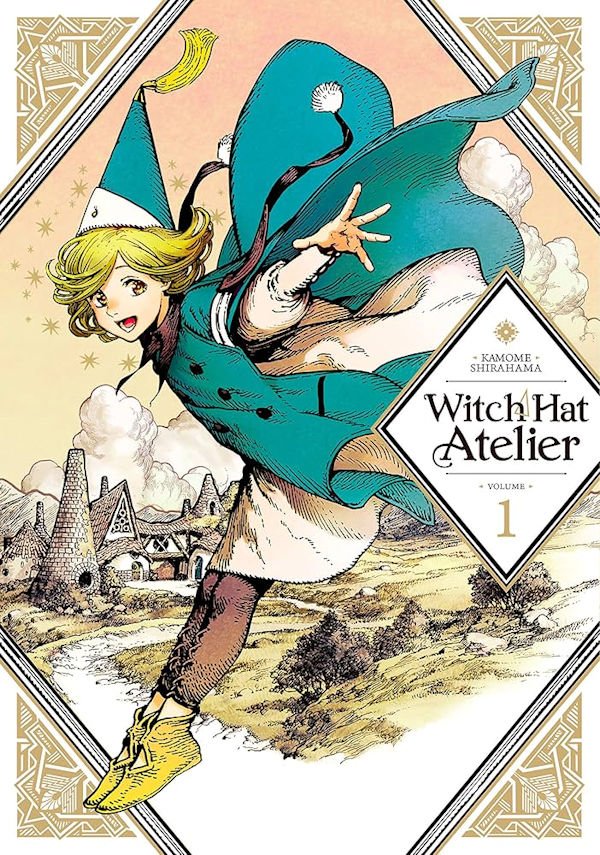
It is within this fascinating convergence of demographic fluidity and thematic innovation that Witch Hat Atelier (とんがり帽子のアトリエ, Tongari Bōshi no Atorie) emerges as a compelling case study. Though serialized in a seinen magazine, Kodansha’s Monthly Morning Two, its central cast comprises young, endearing girls learning magic in a charming, visually stunning world. On the surface, this might appear to be a quintessential shojo setup. Yet, the series, both in its critically acclaimed manga form by Kamome Shirahama and its highly anticipated anime adaptation, masterfully subverts conventional tropes, drawing a global audience and solidifying its place in a burgeoning new wave of fantasy storytelling.
Unveiling Witch Hat Atelier: A Seinen Gem in Shojo’s Clothing
Witch Hat Atelier first captured widespread attention with its breathtaking artwork and an enchanting premise that beckons viewers into a world where magic is not merely cast but meticulously crafted. The series centers on Coco, a young girl whose life is irrevocably altered by a forbidden act of magic. Her journey, alongside her fellow apprentices, delves into themes of mentorship, belonging, and the profound consequences of power, all while maintaining an aesthetic that is undeniably charming.
The manga’s serialization in a seinen publication is particularly noteworthy. Seinen titles are traditionally aimed at an older male demographic and often explore more complex, mature themes, or feature darker narratives than their shonen or shojo counterparts. While Witch Hat Atelier certainly possesses a profound narrative depth and touches upon darker elements, its initial presentation of "cute girls" and a seemingly whimsical world could mislead those unfamiliar with its nuanced storytelling. This demographic placement allows Shirahama to explore themes with a subtlety and depth often restricted in shojo, challenging the preconceived notions of what a story featuring young female protagonists can achieve. It signifies a growing recognition that compelling narratives, regardless of their superficial appeal, can resonate across diverse audiences when granted the freedom to develop organically.
The blend of seemingly shojo-esque charm with seinen-level thematic complexity is a hallmark of the series. It doesn’t shy away from depicting danger, moral ambiguity, or the weight of responsibility, yet it never loses sight of the wonder and warmth inherent in its magical world. This genre-bending approach is precisely what has garnered Witch Hat Atelier significant critical acclaim, including nominations for the Manga Taishō and the Eisner Award, and a win for Best Manga at the Harvey Awards.
A Journey into the Forbidden: The Story of Coco
The narrative of Witch Hat Atelier unfurls with a delicate yet impactful chronology, beginning in the idyllic, pastoral life of Coco, a young girl with an unshakeable dream.
Chronology of Coco’s Awakening
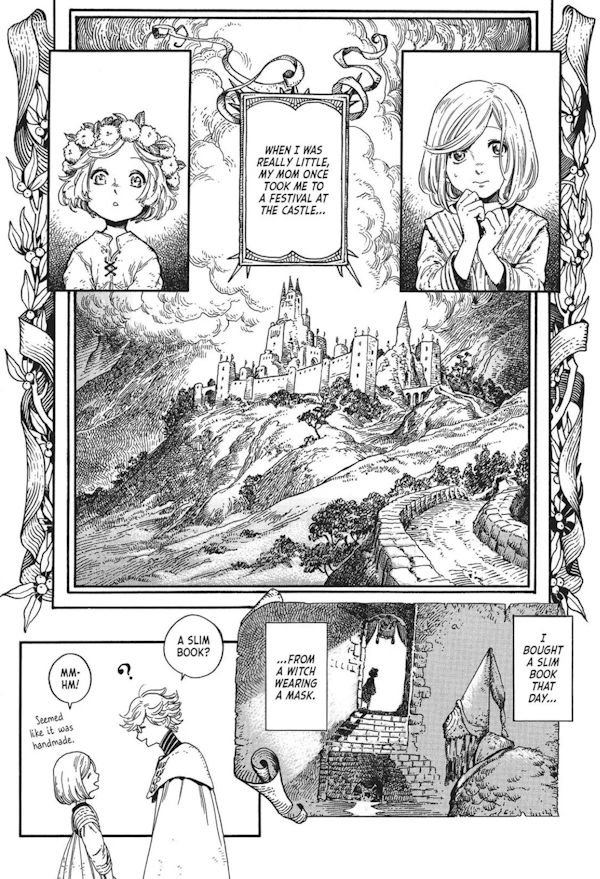
From an early age, Coco has been captivated by the allure of magic, a fascination sparked by a chance encounter with a masked witch who sold her a mysterious book of symbols. Living a simple life as an apprentice dressmaker alongside her mother, Coco cherishes the dream of one day becoming a witch, a pursuit she believes is beyond her reach as only those born with magical abilities can wield them.
Her quiet existence is shattered one fateful day when Qifrey, a tall, enigmatic witch, arrives seeking exquisite fabric. An accident involving his magical carriage prompts Qifrey to retreat to a private room in Coco’s home to repair it with a spell, strictly cautioning her against observing his work. Driven by an insatiable curiosity and a lifelong yearning, Coco cannot resist a furtive peek. What she witnesses is a revelation: magic is not an innate gift but a craft, manifested through the intricate drawing of symbols.
Armed with this forbidden knowledge, Coco retreats to her room, poring over the symbol book she has treasured for years. She discovers that the "magic wand" that came with the book is, in fact, a pen filled with a unique ink. Emboldened, she attempts to replicate a complex design. The result is catastrophic: a surge of forbidden magic erupts, consuming her home in a massive, glowing crystal. While Qifrey manages to rescue Coco, her mother is tragically encased within the crystal, trapped in a timeless stasis.
With her home destroyed and her mother imprisoned, Coco is taken under Qifrey’s wing, whisked away to his atelier—a magical workshop where he trains young witches. Here, Qifrey reveals the perilous workings of the magical world, entrusting Coco with the secret of her forbidden spellbook and the circumstances of her magical awakening. She soon meets her fellow apprentices: the vivacious and kind Tetia, the quiet and observant Richeh, and the fiercely independent and initially hostile Agott. Agott, burdened by her own struggles and a rigid adherence to magical law, immediately views Coco as an unwelcome intruder, convinced she should not be allowed to practice magic due to her forbidden origins.
Character Dynamics and Thematic Depth
Despite Agott’s initial antagonism, Coco’s unwavering optimism and profound love for magic begin to subtly influence those around her. Her innocent enthusiasm becomes a beacon, slowly chipping away at Agott’s formidable defenses. The narrative beautifully explores the dynamics of sisterhood, mentorship, and the challenges of forging one’s path in a world governed by strict rules and ancient secrets.
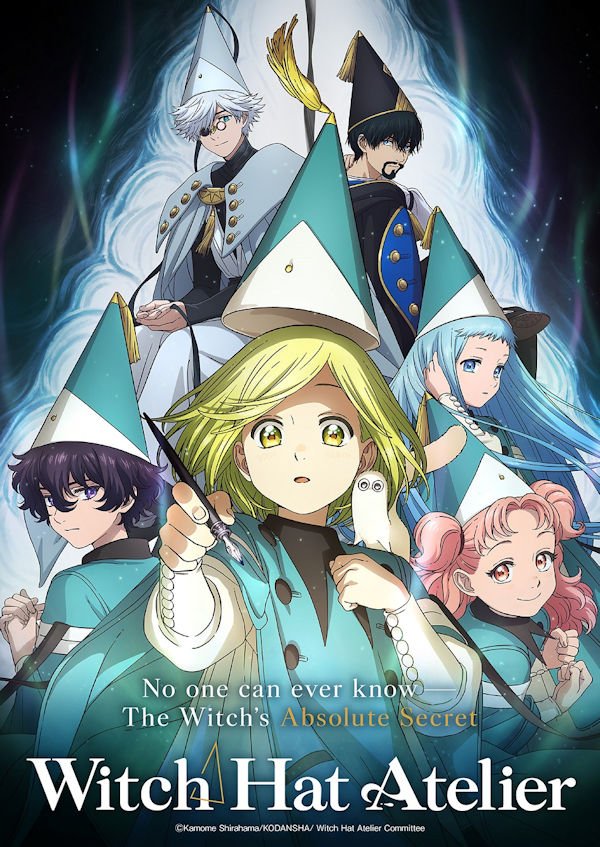
Qifrey, the handsome and seemingly gentle mentor, harbors secrets of his own. His quiet demeanor masks a deep-seated obsession: a lifelong hunt for the Brimmed Caps, a mysterious faction of rebellious magicians who reject the established magical society’s doctrines. Coco, unknowingly, holds a crucial lead concerning this clandestine group, tying her destiny inextricably to Qifrey’s quest for vengeance. This underlying tension adds a layer of intrigue, hinting at the darker, more adult themes that are characteristic of seinen narratives, even within a seemingly whimsical setting.
The world-building in Witch Hat Atelier is meticulous and enchanting, reminiscent of the beloved works of Studio Ghibli. Each spell, intricately drawn on circular notepads, bursts forth with vibrant, hand-animated energy, showcasing a unique and visually stunning magical system. The visual style is consistently gorgeous, creating a rich tapestry that feels both fantastical and deeply real. Each witch possesses distinct specialities—Qifrey, for instance, is a master of water magic—and the apprentices gradually discover their own niches as they diligently practice drawing spells, fostering a sense of individual growth within a collective learning environment.
The series, both manga and anime, is a masterclass in slow-burn storytelling. Creator Kamome Shirahama prioritizes quiet character moments and immersive world-building over rapid plot progression. This deliberate pacing allows the audience to fully inhabit Coco’s world, to empathize with her struggles, and to celebrate her small triumphs. While comparisons to popular characters like Gojo from Jujutsu Kaisen have been made due to Qifrey’s striking appearance, Qifrey stands as a unique character, driven by a complex mix of protective instinct and simmering vengeance. Coco’s sweet enthusiasm, however, acts as the narrative’s moral compass, grounding the story in hope and wonder even as darker elements loom. As Coco delves deeper into the mysteries of magic, so too does the audience, embarking on a truly magical ride that is both visually captivating and emotionally resonant.
The Rise of Cozy Fantasy: A New Anime Pantheon
Witch Hat Atelier is not an isolated phenomenon but rather a prominent entry in a recent surge of critically acclaimed fantasy anime that have collectively redefined audience expectations.
Supporting Data: The "Fantasy Big Three" Emerges
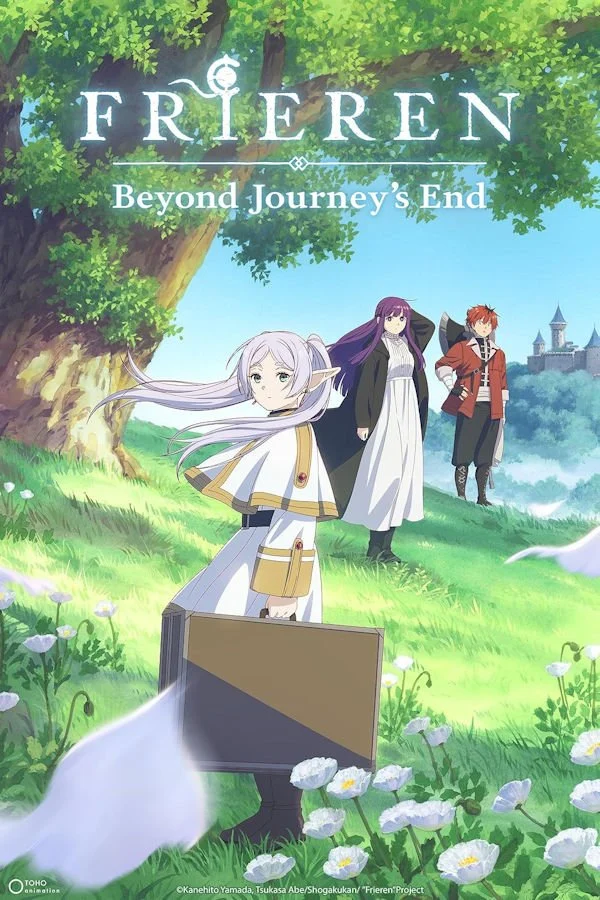
This series joins the ranks of Frieren: Beyond Journey’s End (2023–present) and Delicious in Dungeon (2024–present), forming what many in the anime community have dubbed "The Fantasy Big Three." This moniker, a playful nod to the original "Big Three" shonen giants (Naruto, Bleach, One Piece), signifies a paradigm shift in the fantasy genre’s popular appeal. These three titles, while distinct in their individual premises, share a common thread: a focus on "cozy fantasy" narratives that blend heartfelt character exploration with moments of adventure and understated action.
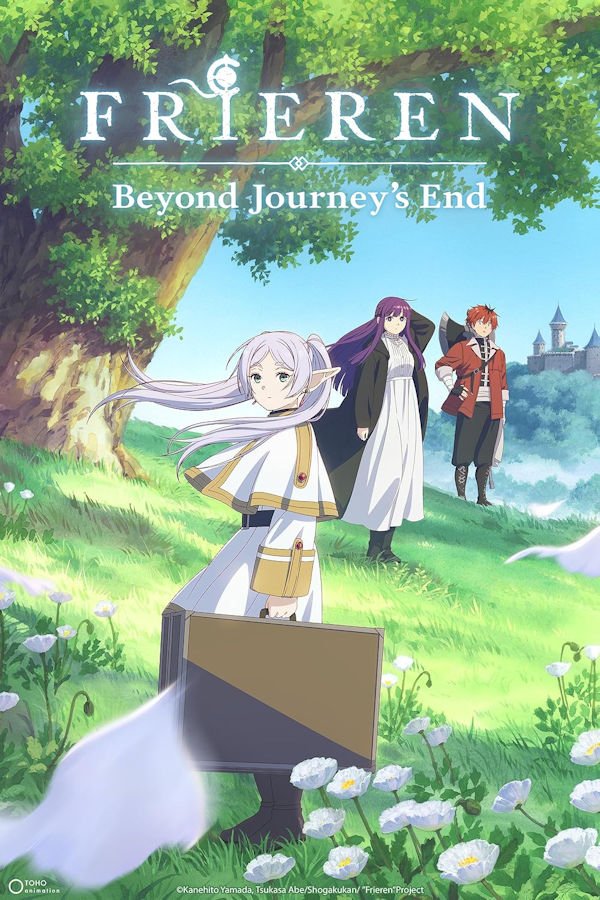
Frieren: Beyond Journey’s End mesmerizes with its introspective exploration of time, memory, and the human condition through the eyes of an elven mage who outlives her heroic companions. Its contemplative pace and poignant character interactions offer a unique take on the aftermath of a grand adventure. Delicious in Dungeon, on the other hand, delights with its quirky premise of adventurers cooking and eating the monsters they defeat, blending fantasy action with culinary comedy and genuine camaraderie. Both series, like Witch Hat Atelier, prioritize character development, intricate world-building, and emotional resonance over relentless action or epic battles.
This new "Big Three" underscores the enduring, and indeed, expanding popularity of the fantasy genre within anime, demonstrating its capacity for diverse storytelling beyond traditional hero’s journeys or power fantasies.
Redefining Fantasy in a Post-Game of Thrones Era
The emergence of these titles also reflects a broader shift in audience preferences within the fantasy genre across all media. Following the conclusion of Game of Thrones, a series that epitomized dark, gritty, and politically complex fantasy, there was some speculation that traditional fantasy might be losing its mainstream steam. However, the resounding success of Witch Hat Atelier, Frieren, and Delicious in Dungeon proves quite the opposite.
These shows, alongside the rising popularity of "romantasy" and "cozy fantasy" in literature—exemplified by authors like T. J. Klune (The House in the Cerulean Sea) and Travis Baldree (Legends & Lattes)—indicate a significant audience appetite for narratives that are more uplifting, character-driven, and emotionally rich. While the Game of Thrones brand certainly retains its fan base, the willingness of audiences to embrace something softer, more introspective, and less overtly grim has been undeniable.
This trend suggests a maturation of the fantasy genre, moving beyond the singular focus on epic conflict or political intrigue to explore themes of belonging, personal growth, healing, and the simple joys of companionship and discovery. The "cozy" element lies in their ability to evoke a sense of warmth, comfort, and emotional satisfaction, making them incredibly appealing to viewers seeking escapism that nurtures rather than exhausts.
Industry Reception and Broader Implications
The critical reception for Witch Hat Atelier and its "Fantasy Big Three" companions has been overwhelmingly positive, with critics and audiences alike praising their unique storytelling, artistic merit, and emotional depth.
Critical Acclaim and Audience Resonance
Witch Hat Atelier has been lauded for its stunning art direction, intricate magical system, and compelling character arcs. Its ability to weave a narrative that is both enchanting and thought-provoking has cemented its place as a modern fantasy classic. Frieren: Beyond Journey’s End has garnered widespread acclaim for its melancholic beauty, its masterful exploration of time and grief, and its surprisingly heartwarming moments. Delicious in Dungeon has been celebrated for its inventive premise, hilarious character interactions, and surprisingly insightful take on monster ecology.
These titles have not only topped popularity charts but have also sparked extensive discussion across online communities, with fans dissecting their themes, praising their animation quality, and celebrating their distinctive approaches to fantasy. This enthusiastic audience resonance is a clear "official response" from the market, signaling a demand for more diverse and nuanced fantasy narratives.
Impact on the Anime Landscape
The success of this new "Fantasy Big Three" has had a tangible impact on the anime industry. It has demonstrated that high-quality, character-focused fantasy can achieve widespread appeal, potentially paving the way for more diverse fantasy projects. While violent and gory shows certainly retain their popularity, the success of these gentler, more introspective series signals a broadening of the market and a willingness from studios to invest in different types of stories.
Furthermore, these shows serve as excellent entry points for those who might have previously steered clear of anime. Their universal themes, gorgeous animation, and often less intimidating narrative structures make them highly accessible. Each series deftly ditches tired tropes or ingeniously inverts them, providing delightful surprises and joyful detours from the usual genre fare. Instead of relying on chosen ones or grand prophecies, they focus on the intrinsic value of companionship, the pursuit of knowledge, and the quiet dignity of everyday struggles within fantastical settings.
Conclusion: A Magical Invitation
Witch Hat Atelier, with its enchanting premise, breathtaking artistry, and profound narrative depth, stands as a testament to the evolving nature of fantasy storytelling in anime. As part of the new "Fantasy Big Three," it exemplifies a broader trend towards "cozy fantasy" narratives that prioritize emotional resonance, intricate world-building, and character development over relentless action or grimdark themes.
This shift reflects a growing audience desire for stories that uplift, inspire, and offer a comforting escape. It showcases the versatility of the fantasy genre and the boundless creativity of its creators. For those who have been contemplating a foray into the vibrant world of anime, or for seasoned fans seeking narratives that offer a fresh perspective, now is an opportune moment. Whether you choose to pick up a magical pen with Coco, embark on a millennia-long journey with Frieren, or savor a dungeon delicacy with Laios, a world of wonder, warmth, and genuine emotion awaits. It’s time to embrace the magic.