The Deadly Charms of Deception: Unpacking Problematic Romance in ’90s Teen Horror
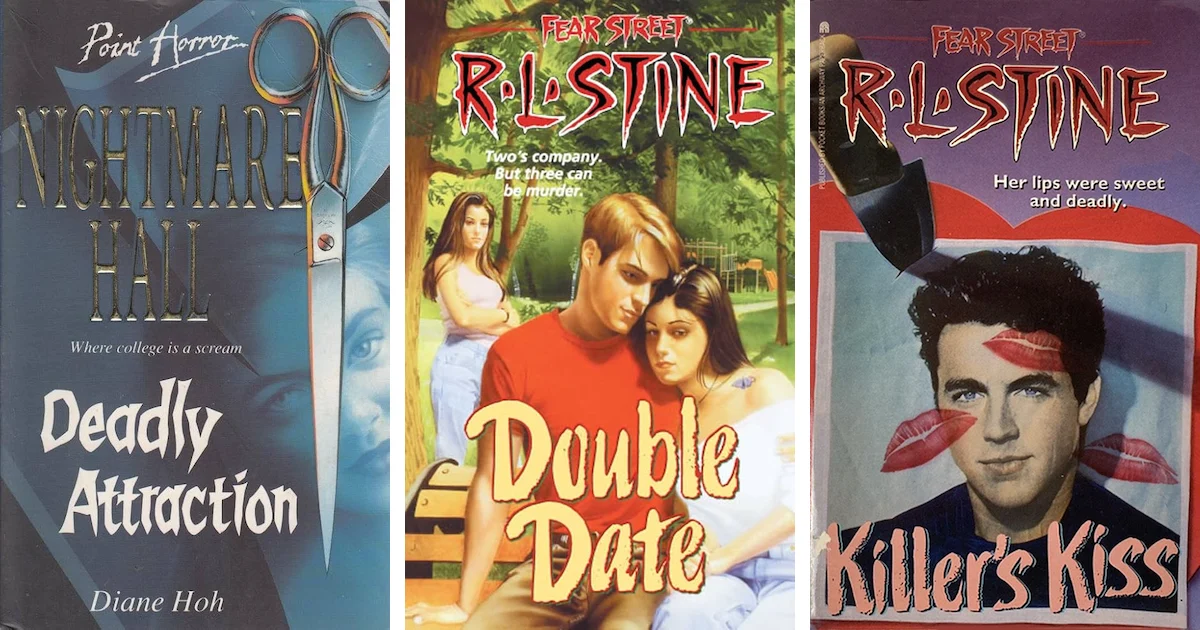
The 1990s were a golden age for teen horror, a genre that masterfully blended adolescent angst with supernatural scares and visceral thrills. Beyond the masked killers and haunted halls, a pervasive and often perilous theme dominated these narratives: romance. From clandestine hookups to bitter breakups, unrequited desires to forbidden loves, the complexities of teenage relationships were a constant undercurrent, frequently serving as the catalyst for the terror that unfolded. Yet, few romantic tropes proved as consistently lethal as the pursuit of "having it all" – the perilous game of secretly dating multiple partners. When these tangled webs of deceit inevitably unraveled, the consequences ranged from public humiliation to outright murder, as vividly illustrated in Diane Hoh’s Deadly Attraction (1993) and R.L. Stine’s Fear Street novels, Double Date (1994) and Killer’s Kiss (1997).
These three novels, while distinct in their settings and specific horrors, share a common DNA: they dissect the male protagonists’ audacious attempts to maintain multiple romantic entanglements, often at the expense of the emotional well-being and safety of the young women involved. The narratives highlight the inherent dangers of objectification and manipulation, ultimately leading to a violent reckoning.
Main Facts: The Dangerous Dance of ’90s Teen Romance
The core of these ’90s teen horror stories lies in their exploration of deceitful romantic practices and their dire outcomes. In Deadly Attraction, Robert Q. Parker III, a privileged university student, juggles a casual relationship with a local waitress while awaiting the return of his "real" girlfriend. His casual cruelty and the stark class divide between him and his temporary paramour ignite a series of violent incidents. R.L. Stine’s Double Date presents Bobby Newkirk, an arrogant teenager who bets his friends he can simultaneously date identical twins, Bree and Samantha Wade, without either discovering the other. His superficiality and objectification of the girls lead him into a bewildering and terrifying psychological trap. Finally, Killer’s Kiss delves into the intense rivalry between Delia and Karina, two high-achieving seniors who find themselves competing not only for a prestigious scholarship but also for the affections of the manipulative Vincent Milano, whose double-dealing sparks a fatal obsession.
Across these narratives, the male characters exhibit a profound lack of empathy, viewing their romantic interests as interchangeable trophies rather than individuals with feelings and agency. This self-serving perspective sets the stage for escalating conflict and ultimately, horror. The young women, initially victims of manipulation, often resort to extreme measures – whether it be elaborate revenge plots or acts of fatal desperation – to reclaim their dignity or exact retribution.
Chronology: Unpacking the Deceptions and Consequences
Each novel meticulously builds its suspense, detailing the progression from casual deception to terrifying violence, showcasing the cascading effects of romantic duplicity.
The "Townie" and the Trickster: Deadly Attraction (1993) by Diane Hoh
Diane Hoh’s Deadly Attraction plunges readers into the insular world of Salem University, where the divide between "town and gown" is sharply drawn. Robert Q. Parker III, a student of considerable privilege and questionable morals, embodies the entitlement often associated with the university elite. His casual dalliance with Darlene, a waitress from a local diner, is presented as a mere pastime, a placeholder until his ex-girlfriend, Gerrie, tires of dating his friend Richard and returns to him. Darlene, infatuated and eager to bridge the social chasm, throws herself into fitting in with Robert Q.’s world, only to be brutally discarded.
The pivotal moment of her humiliation occurs at a fraternity party. Robert Q., having reunited with Gerrie, callously dismisses Darlene, attempting to pay his friend Richard twenty dollars to "take the townie home." This overheard conversation, a stark revelation of her worthlessness in Robert Q.’s eyes, shatters Darlene. The narrative emphasizes the objectification at play: Darlene and Gerrie, despite their differing social backgrounds and experiences, are reduced to "moveable game pieces" by Robert Q. and Richard, to be picked up, passed around, and discarded at whim.
The horror escalates quickly after this betrayal. Gerrie is attacked with a rock, Robert Q.’s sports car is torched, and Richard is tragically killed in a hit-and-run while trying to prevent his own car theft. Darlene, the spurned "townie," immediately becomes the prime suspect among the Salem University students. Hailey, a fellow student who initially offers Darlene comfort, begins to harbor doubts due particularly to Darlene’s unwavering, almost delusional, belief that she and Robert Q. are destined to reunite. Hailey’s investigation leads her down a winding path, initially suspecting Darlene’s half-brother, Finn Conran, who, in a twist of dramatic irony, turns out to be Hailey’s new boyfriend.
The true antagonist is revealed to be Pete Torrance, a childhood friend of Darlene and Finn. Pete, nursing a long-standing, unrequited crush on Darlene, orchestrates the attacks with a chillingly warped logic: eliminate the competition, frame Darlene’s brother, and thus ensure he is Darlene’s only remaining romantic option. The climax sees Pete luring Hailey to Darlene and Finn’s house, intending to murder her and frame Finn. Hailey, however, demonstrates quick thinking and resourcefulness, utilizing chemicals from Finn’s photography darkroom to defend herself, trap Pete in the basement, and call the police. This empowers Hailey, saving herself before Finn’s arrival, though his presence is a welcome relief. Darlene, too, receives a resolution of sorts, reuniting with her ex-boyfriend Bo, though the narrative shrewdly flags their relationship with "a bucketload of red flags," hinting at a continued, troubling dynamic of obsession. The story, therefore, leaves a lingering sense that while the immediate danger is quelled, the underlying pathologies of attraction and control persist.
Identical Twins, Double Trouble: Double Date (1994) by R.L. Stine
R.L. Stine’s Double Date introduces Bobby Newkirk, a character whose conceit and obnoxiousness are almost cartoonish, yet whose actions carry genuinely terrifying consequences. Bobby is a serial dater, discarding girls without a second thought for their feelings, convinced that he is doing them a favor by gracing them with his presence. His latest challenge: a bet with his friends that he can date identical twins, Bree and Samantha Wade, over a single weekend without either discovering the other. His objectification of the girls is explicit; when asked to differentiate between them, Bobby dismisses the question with, "What difference does it make? […] They’re both totally hot!" This interchangeable view of the twins fuels his reckless pursuit.
Bobby’s initial confidence quickly erodes as he discovers significant differences between Bree, the quiet and reserved twin, and Samantha, the adventurous risk-taker who shoplifts for thrills. The psychological games begin when Samantha reveals she knows about Bobby’s double-dating and warns him about Bree’s supposed instability. She paints Bree as "fragile—like glass," hinting at a dangerous past, escalating Bobby’s anxiety. Melanie, one of Bobby’s many scorned ex-girlfriends and a friend of the twins, further muddies the waters with cryptic warnings, adding layers of paranoia. Bobby clings to a perceived differentiator – a small butterfly tattoo on Samantha’s shoulder – believing it to be his infallible guide.
The narrative takes a truly bizarre turn when Bree introduces the idea of a secret third sister, Jennilynn, supposedly the truly unstable one, living with an aunt and uncle after attempting to harm Bree and Samantha. This revelation throws Bobby into a spiral of confusion and fear, forcing him to re-evaluate every interaction. The horror culminates when Jennilynn lures him to a remote cabin in the woods, knocks him unconscious, and, upon his waking, ties him to a chair, pours honey over him, and unleashes a box of biting ants onto his head.
Bobby’s desperate escape leads him to Melanie, who offers him a ride to the Wade house. However, the true horror, for Bobby, is not physical but psychological and social. Upon arriving, he discovers there is no Jennilynn. The twins, along with Melanie and a host of Bobby’s other ex-girlfriends, orchestrated the entire elaborate ruse. They had known about his deceit from the start, using temporary butterfly tattoos to switch identities and play mind games with him. Bobby is publicly humiliated, covered in honey and ants, screaming about a non-existent third sister, while the Wade parents look on in bewilderment. His final, pathetic question, "You—you mean you don’t like me?", underscores his profound self-absorption. The girls, through their collective ingenuity and "sisterhood and solidarity," deliver a powerful, albeit sticky, lesson in retribution.
A Fatal Rivalry: Killer’s Kiss (1997) by R.L. Stine
Killer’s Kiss delves into a more insidious form of rivalry, one steeped in a lifetime of competition between Delia and Karina. These two seniors have been pitted against each other in every aspect of their lives, from academic achievements to extracurricular accolades. This ingrained competitiveness finds its most dangerous outlet in their shared desire for Vincent Milano, a young man who, much like Robert Q. and Bobby, sees himself as a coveted prize. Vincent masterfully plays them against each other, telling each girl she is his "one and only" while disparaging the other.
The truth surfaces when Delia catches Vincent and Karina together, leading to a brief, fragile truce between the girls. Karina articulates their shared victimization: "he made it easy to believe what I wanted to believe. He should have told me. He should have told you too. He lied to both of us." However, Vincent’s manipulative prowess quickly reignites their rivalry. Tensions escalate further as Delia’s Conklin scholarship materials—her guitar and artistic portfolio—are sabotaged, intensifying the suspicion between the girls. The revelation that Vincent is also secretly making out with Delia’s younger sister, Sarah, adds another layer of betrayal and disgust.
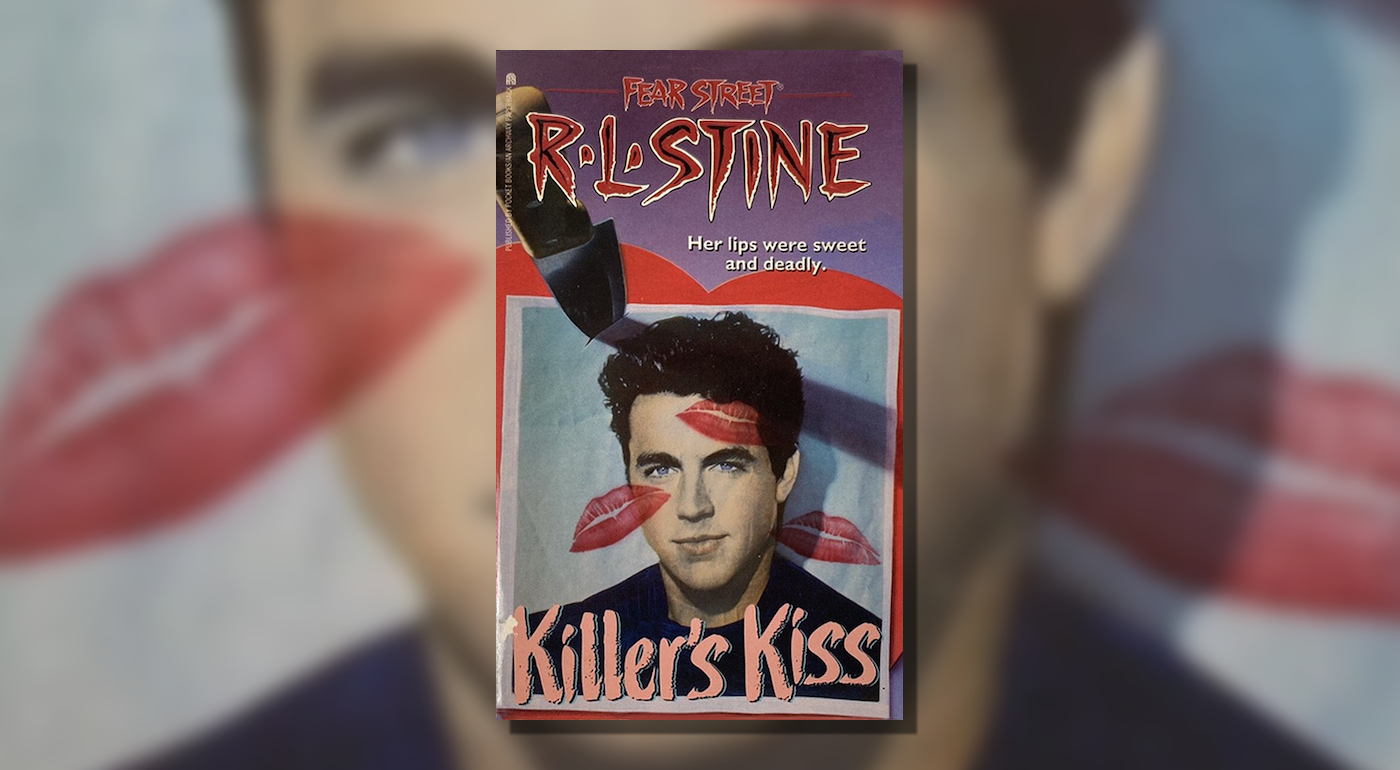
The volatile situation explodes at Vincent’s birthday party, held in a derelict house on Fear Street. Delia arrives late, disheveled and injured, claiming Karina tied her up to prevent her from attending. The next morning, Vincent is found dead, a lipstick print in Delia’s signature shade on his cheek. The police, presented with seemingly damning evidence—Karina’s room containing blotting papers used by Delia to create the reversed lip print—charge Karina with murder and institutionalize her.
The narrative then executes a chilling reversal. Delia, visiting Karina in the hospital with their friend Gabe, begins to confess. She reveals her meticulous plot: sabotaging her own scholarship materials, faking her injuries, murdering Vincent after the party, and framing Karina. Her confession is born of a desperate fear of losing everything: Vincent, her sister, and the scholarship. "I had to kill him for liking Karina better than me. And for kissing my sister," she chillingly admits, revealing a profound, homicidal obsession. Fortunately, Karina’s doctor overhears Delia’s confession, leading to her arrest and the eventual setting right of the injustices. Delia, driven by an all-consuming need to win, exemplifies the extreme, tragic consequences of unbridled competition and unchecked desire.
Supporting Data: The Cultural Mirror of ’90s Teen Horror
The themes explored in Deadly Attraction, Double Date, and Killer’s Kiss were not isolated incidents but reflections of a broader cultural fascination with the darker side of adolescent life in the 1990s. The decade witnessed a surge in popularity for teen-centric media, from the rise of Young Adult (YA) literature to iconic television shows and films. Authors like R.L. Stine, Christopher Pike, and Diane Hoh became household names, dominating bookstore shelves with their fast-paced, accessible thrillers.
These books resonated deeply with their target audience because they tapped into universal teenage anxieties: fitting in, navigating social hierarchies, dealing with betrayal, and, crucially, the tumultuous landscape of first loves and heartbreaks. While often dismissed as "pulp fiction," they offered a safe space for young readers to explore complex emotions and dangerous scenarios without real-world repercussions. The horror element amplified these anxieties, transforming everyday relationship dramas into life-or-death struggles.
The ’90s also saw the resurgence of the teen slasher film (Scream, I Know What You Did Last Summer), which frequently intertwined romantic subplots with gory violence. These films and books collectively formed a narrative tapestry where seemingly innocuous social situations could quickly spiral into terrifying ordeals. The "problematic romance" trope, in particular, served as a cautionary tale, reflecting real fears about manipulation, infidelity, and emotional abuse, albeit exaggerated for dramatic effect. The enduring appeal of these stories lies in their ability to mirror the emotional turbulence of adolescence, even as they wrapped it in a thrilling, suspenseful package.
Official Responses (Literary Context): Beyond the Pulp: Addressing Complex Themes
While ’90s teen horror often faced criticism for its formulaic plots and straightforward prose, these books, when examined through a broader literary lens, offer surprisingly incisive social commentary. They engaged with serious psychological and sociological themes, providing a platform for discussions that were perhaps less openly addressed in other forms of mainstream teen media at the time.
The "town and gown" conflict in Deadly Attraction, for instance, subtly critiques class disparities and the arrogance of privilege. Robert Q.’s casual dehumanization of Darlene highlights the power dynamics inherent in socio-economic differences. The book, while a horror thriller, implicitly questions the ethics of using and discarding individuals based on their social standing.
Double Date, despite its outlandish plot, delves into themes of identity, perception, and psychological manipulation. Bobby’s inability to see Bree and Samantha as distinct individuals, viewing them solely through the lens of his own shallow desires, is a powerful, albeit exaggerated, commentary on the objectification of women. The twins’ elaborate revenge plot, executed through sisterly solidarity, can be seen as a defiant reclaiming of agency and a collective "response" to male chauvinism.
Killer’s Kiss offers a stark exploration of obsessive rivalry and unchecked ambition. Delia’s descent into murder, driven by a fear of losing "everything," speaks to the immense pressures placed on teenagers to succeed and the potentially destructive nature of comparison and competition. The novel, in its own way, probes the psychological fragility that can emerge when self-worth becomes entirely tied to external validation, whether from a scholarship or a romantic partner.
These books, therefore, transcended their pulpy covers by tackling complex issues relevant to their young readership: the perils of emotional manipulation, the importance of self-worth, the consequences of deception, and the dark side of competition. They were not just about scares; they were about the social horrors that could unfold when teenage emotions ran wild and moral boundaries were blurred.
Implications: Lasting Lessons from Love Gone Lethal
The enduring legacy of these ’90s teen horror novels, particularly those centered on problematic romance, lies in their ability to serve as timeless cautionary tales. The consequences depicted – from public humiliation and psychological torment to outright murder – underscore the gravity of deception and manipulation in relationships. These narratives implicitly taught young readers about the importance of honesty, respect, and recognizing the humanity in others, even when those lessons were delivered wrapped in blood-soaked pages.
In an era increasingly defined by complex dating landscapes, from online interactions to nuanced social dynamics, the lessons from these books remain remarkably pertinent. The dangers of objectification, the psychological toll of being strung along, and the explosive potential of unchecked jealousy are issues that continue to resonate. While the methods of manipulation and revenge might have evolved, the core emotional stakes are unchanged.
Moreover, these stories subtly championed female agency and solidarity. In Double Date, the collective action of the scorned girls turns the tables on their manipulator. In Deadly Attraction, Hailey’s intelligence and self-reliance ultimately save the day. Even in Killer’s Kiss, while one sister succumbs to murderous obsession, the underlying commentary is on the destructive nature of pitting women against each other for male validation.
Ultimately, these ’90s teen horror novels, through their thrilling and often gruesome plots, served as a cultural mirror, reflecting and exaggerating the very real dangers and heartaches of adolescent romance. They reminded a generation of readers that while all might seem fair in love and war, the consequences of emotional recklessness and deceit can be far more profound, and far deadlier, than any teenager could ever bargain for. Their unsettling blend of dating drama and deadly outcomes ensures their place as influential, if often overlooked, contributions to both the horror genre and the broader discourse on youth culture.