Miklós Horthy: Hungary’s Controversial Regent Navigating War and Political Turmoil
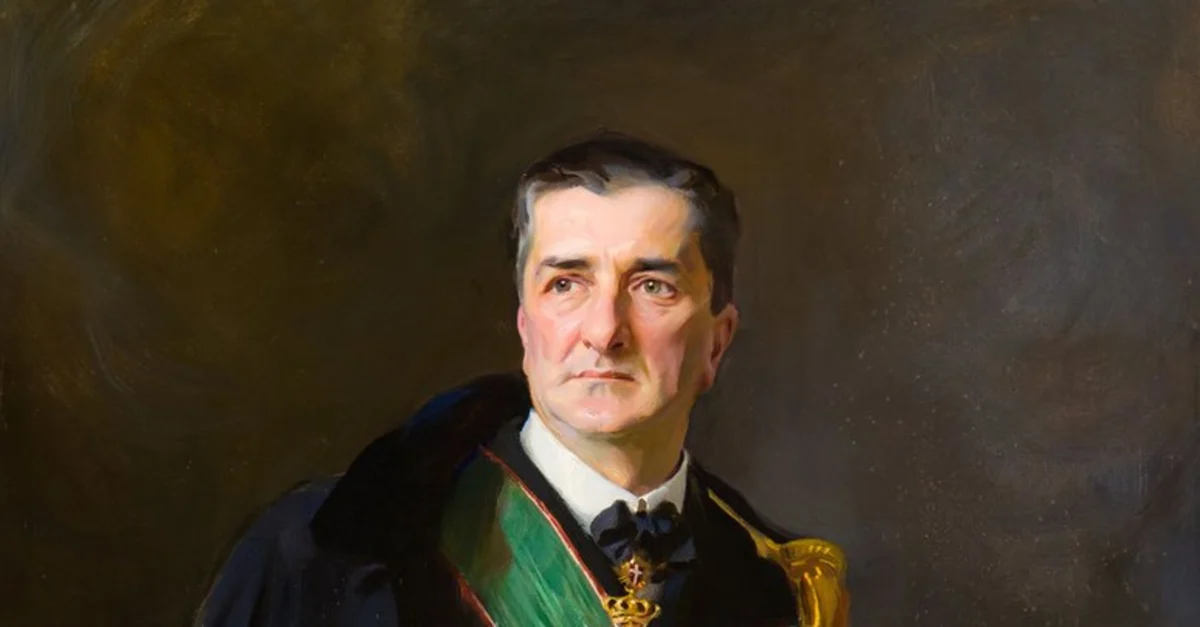
Budapest, Hungary – Miklós Horthy de Nagybánya (1868-1957) stands as one of Hungary’s most complex and contentious figures of the 20th century. Serving as Regent for the Kingdom of Hungary from 1920 until his forced abdication in 1944, Horthy steered the nation through a turbulent interwar period and the cataclysm of World War II, playing a critical yet deeply controversial role in both its foreign and domestic affairs. His legacy, marked by authoritarian rule, an alliance with Nazi Germany, and a disputed involvement in the Holocaust, continues to fuel intense historical and political debate within Hungary and beyond.
Main Facts: A Life Defined by Crisis and Compromise
Born into Hungarian aristocracy, Horthy’s early career as a distinguished naval officer in the Austro-Hungarian Empire foreshadowed a life of leadership. Following the empire’s collapse and the tumultuous aftermath of World War I, he emerged as a strongman, leading the National Army to suppress the communist Hungarian Soviet Republic. In 1920, with the monarchy’s restoration deemed unfeasible by Allied powers, Horthy was elected Regent, a position he held for nearly a quarter-century.
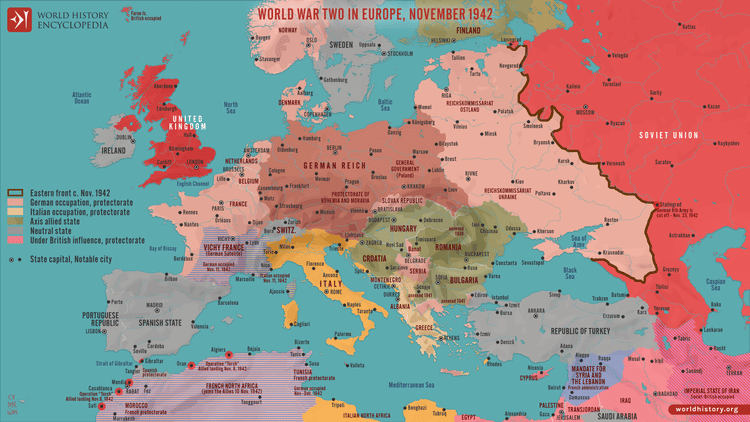
His regency was characterized by a fervent desire to revise the humiliating Treaty of Trianon, which had stripped Hungary of vast territories and populations. This revisionist ambition increasingly drew Hungary towards an alliance with Fascist Italy and Nazi Germany in the late 1930s. Horthy’s government signed the Tripartite Pact in November 1940 and subsequently participated in the 1941 Axis invasion of the Soviet Union.
However, as the tide of war turned, Horthy sought to extricate Hungary from its entanglement with the Axis. His attempts to negotiate a separate armistice with the Allies in 1944 led to a swift and brutal Nazi-backed coup, which saw him overthrown and replaced by a puppet regime. Following his capture by Allied forces, Horthy was released in December 1945 and lived out his remaining years in exile in Portugal until his death on 9 February 1957. His life encapsulates a nation’s struggle for identity and sovereignty amidst the ideological clashes and brutal realities of global conflict.
Chronology: From Naval Hero to Wartime Regent
Early Life and Illustrious Naval Career (1868-1918)
Miklós Horthy de Nagybánya was born on 18 June 1868 in Kenderes, Austria-Hungary, into an ennobled family that had held a significant 1,500-acre estate since 1635 and maintained connections to the powerful Hungarian House of Magnates. His privileged upbringing afforded him an extensive education, including classical studies, literature, and proficiency in multiple languages such as German, French, English, and later Italian and Croatian. This cosmopolitan background would serve him well in his diplomatic and military career.
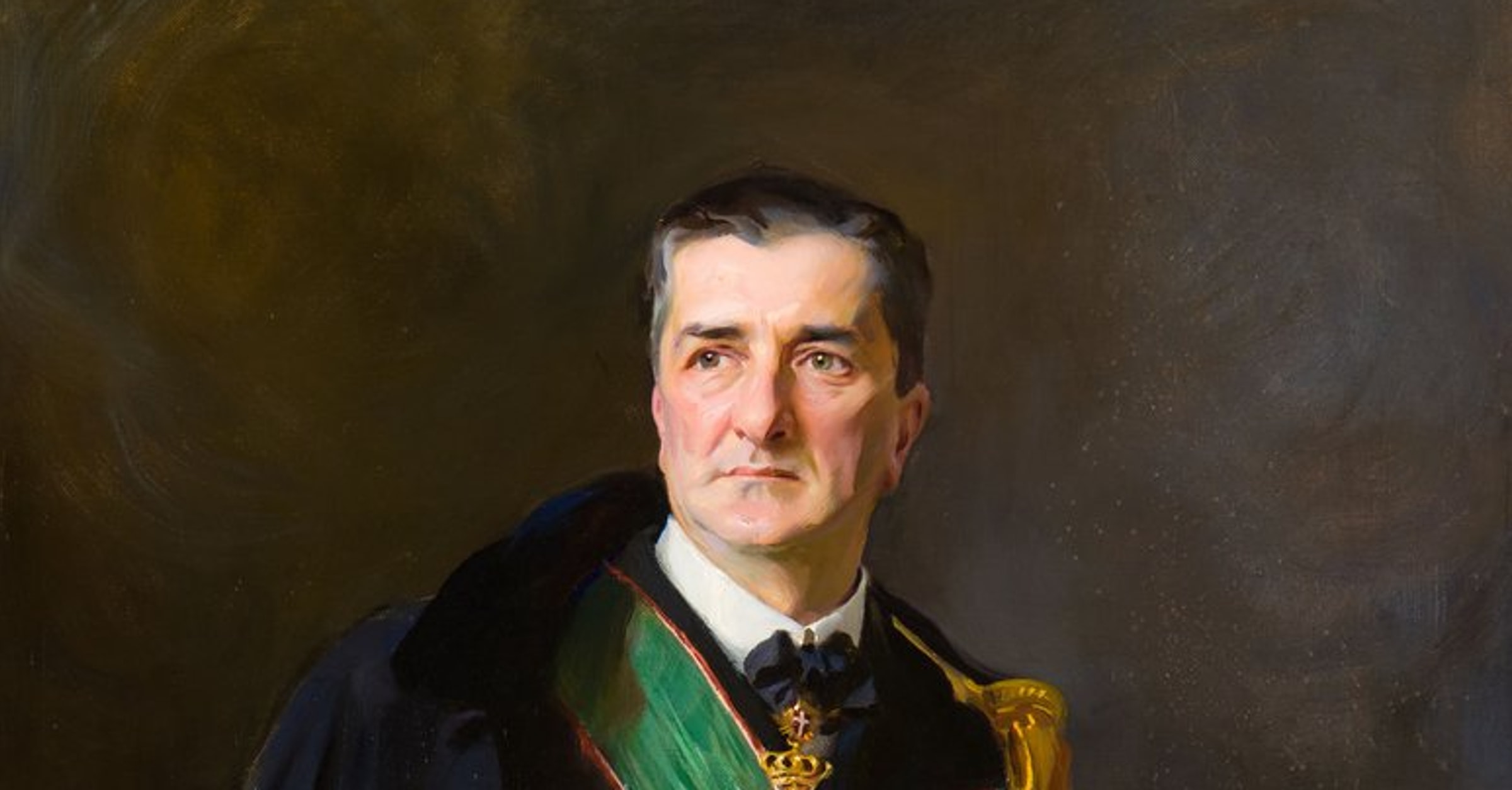
At the age of 14, Horthy embarked on a path that would define his early life, joining the Imperial and Royal Naval Academy in Fiume. He quickly distinguished himself, undertaking several overseas missions across the Mediterranean and even circumnavigating the globe after his graduation in 1892, with stops in India, Australia, Thailand, Indonesia, and various Pacific islands. His early exploits earned him a reputation for bravery and boldness, particularly through successful missions in the Adriatic Sea.
In 1901, after a brief stint as a parliamentary translator in Vienna, Horthy married Magdolna Purgly de Jószáshely (1881-1959). Together, they had four children: Magdolna (1902-1918), Paulette (1903-1940), István (1904-1942), and Miklós Jr. (1907-1993). Tragically, Horthy would outlive all but his youngest son.
His career took a diplomatic turn in 1908 when, as captain of the Taurus, he was sent on a mission to the Ottoman Empire, where he witnessed the Young Turks Revolution. Credited with evacuating the Austrian ambassador and saving the diplomatic mission, Horthy’s decisive actions impressed Emperor Franz Joseph, who appointed him naval aide-de-camp in 1911. In this esteemed position, Horthy developed a profound admiration for the emperor, becoming a trusted naval advisor and overseeing daily court routines, even dabbling in painting.
The outbreak of World War I on 28 July 1914 saw Horthy transferred from Vienna to the Austro-Hungarian naval base in Pula. He commanded the pre-dreadnought SMS Habsburg and later the modern light cruiser SMS Novara. It was aboard the Novara that Horthy solidified his reputation as a daring commander, raiding the Italian coast, sinking enemy warships, and escorting German U-boats, for which he was awarded the Iron Cross. His most significant military triumph came at the Battle of the Strait of Otranto, the largest naval engagement in the Adriatic, where he led a smaller Austro-Hungarian fleet to victory against combined British, French, and Italian forces, sinking over a dozen enemy vessels. Wounded by an explosion, Horthy commanded from a stretcher until he lost consciousness, sustaining hearing damage that plagued him for life.
In March 1918, Miklós Horthy was promoted to Admiral and Commander-in-Chief of the Imperial Navy by the new Austro-Hungarian ruler, Charles I (as Emperor of Austria) and Charles IV (as King of Hungary). His subsequent attempt to break the Entente blockade of Austria with a larger battleship fleet was thwarted after an Italian torpedo sank the dreadnought SMS Szent István. Horthy preserved much of the Austrian fleet until 31 October 1918, when he was ordered to surrender it to the newly formed State of Slovenes, Croats and Serbs as part of Austria-Hungary’s capitulation.
Interwar Period and Ascent to Regency (1918-1930s)
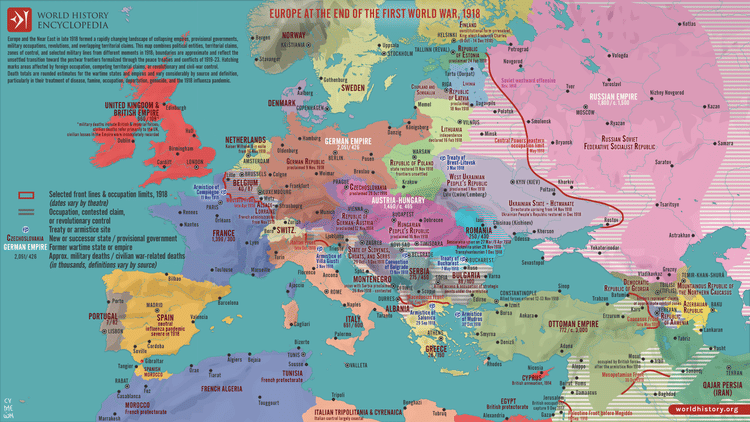
The end of World War I plunged Hungary into a period of profound instability. The collapse of Austria-Hungary and the abdication of the Habsburg monarchy unleashed a series of revolutions, foreign occupations, and territorial disputes. The initial liberal government under Mihály Károlyi proved incapable of resisting advancing Czechoslovak, Romanian, and Serbian forces, nor could it secure favorable terms from the victorious Entente powers. In March 1919, Károlyi’s government fell, replaced by the communist Hungarian Soviet Republic led by Béla Kun. As Kun’s government rapidly lost popularity, anti-communist politicians orchestrated a counterrevolution, with Horthy accepting command of its National Army.
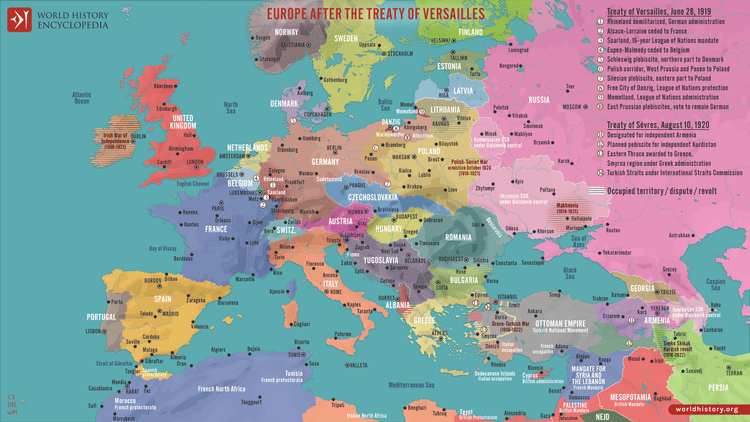
In August 1919, the communist regime collapsed following an offensive by Romanian forces that occupied Budapest. Under Entente pressure, Romanian troops withdrew months later, allowing Horthy’s counterrevolutionary government to establish control. This period culminated in the deeply controversial Treaty of Trianon, signed on 4 June 1920. The treaty dramatically reshaped Hungary, reducing its territory to roughly one-third and its population to a quarter of its pre-war size, severing its access to the sea, and inflicting immense economic damage. Crucially, the new borders often disregarded ethnic lines, inflaming tensions, and leaving millions of ethnic Hungarians in neighboring states. Hungary lost 80% of its timber and iron ore production and faced severe military restrictions, including a prohibition on an air force and an army capped at 35,000 soldiers.
During the counterrevolution, Horthy’s National Army was implicated in the "White Terror," a wave of political violence targeting suspected communists, socialists, and Jews through executions, torture, and intimidation. While historians debate the precise extent of Horthy’s direct responsibility, there is broad consensus that he was aware of the atrocities and did little to curb them until they threatened the legitimacy of the emerging conservative government. The violence gradually subsided after the new regime consolidated power in 1921.
Rather than restoring the Habsburg monarchy, which was opposed by the Entente powers fearing regional destabilization, Hungary was re-established as a kingdom without a king. As a compromise, the Hungarian parliament elected Horthy as Regent in March 1920 by an overwhelming majority. Two attempts by the former Habsburg king, Charles IV, to reclaim the throne in 1921 failed due to both Entente and Hungarian government opposition. With no popular alternative monarch and Horthy himself unwilling to assume the throne, the regency became a permanent feature, allowing Horthy to remain in power until 1944.
Throughout the 1920s, Horthy served as head of state, while Prime Minister István Bethlen (1874-1946) oversaw the consolidation of the new government. This era saw economic growth and political stabilization, but also the development of an authoritarian parliamentary regime blending conservative nationalism, anti-communism, and an unwavering commitment to revise Trianon. Suffrage was restricted, communist organizations banned, and political opposition tightly controlled. While Horthy typically delegated daily administration, he wielded significant influence over prime ministerial appointments, foreign policy, and the armed forces, thereby shaping Hungary’s unique authoritarian-democratic trajectory. His regency is often considered moderately popular by contemporary historians.
Prelude to World War II: The Lure of Revisionism (1930s-1941)
The 1930s saw Hungarian foreign policy dominated by the singular goal of Treaty of Trianon revision. The rise of Nazism in Germany in 1933 fueled the growth of fascist movements in Hungary, notably the Party of National Will and later the Arrow Cross Party. Many conservative politicians saw Nazi Germany’s economic recovery and diplomatic successes – such as German rearmament and the remilitarization of the Rhineland – as a blueprint for Hungary’s own path to Trianon revision. Though not personally a fascist, Horthy pragmatically collaborated with prominent fascist politicians like Prime Minister Gyula Gömbös.
Horthy cultivated strong diplomatic ties with Adolf Hitler and Benito Mussolini, viewing them as key European powers willing to support Hungarian territorial claims and secret rearmament. While maintaining some engagement with Entente nations, his focus shifted. The 1938 Bled Agreement marked a significant turning point, revoking all military restrictions imposed by Trianon and allowing Hungary to expand its army and air force – the first major international revision of the postwar military settlement.
After Nazi Germany annexed the Sudetenland in October 1938, Hungary, through German and Italian mediation, secured the First Vienna Award. This treaty transferred Southern Slovakia, a region with a substantial ethnic Hungarian population, from Czechoslovakia to Hungary, ostensibly to correct ethnic boundaries. Although Horthy declined to participate in Hitler’s full occupation of Czechoslovakia in March 1939, he authorized the occupation and annexation of neighboring Carpathian Ruthenia. Following Germany’s invasion of Poland in September 1939, Horthy and Prime Minister Pál Teleki adopted a policy of formal neutrality, while continuing to pursue territorial revision through diplomacy.
The collapse of France in 1940 emboldened Hungary to renew its claims against Romania over Transylvania. The Second Vienna Award in August 1940, again arbitrated by Germany and Italy, transferred Northern Transylvania to Hungary. This region, though ethnically mixed, held a large Hungarian population and was widely perceived as one of Trianon’s greatest injustices. To secure continued German support for further territorial gains, Horthy’s government formally aligned Hungary with the Axis powers by joining the Tripartite Pact in November 1940.
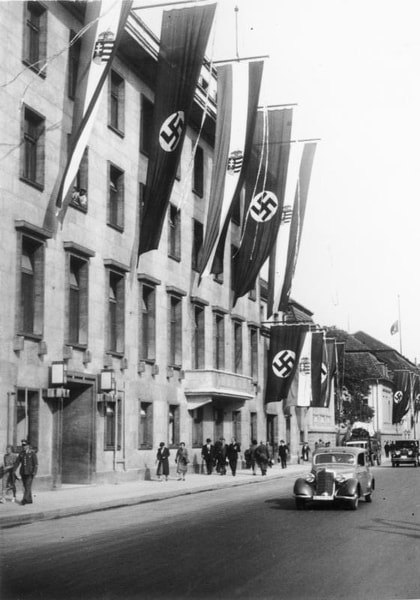
Despite this alliance, Horthy and his conservative government attempted a delicate balancing act, pursuing a policy of limited neutrality while striving to preserve Hungary’s territorial acquisitions. This became increasingly precarious as German influence expanded across Europe, making Hungary more dependent on Berlin’s political and economic backing. When a pro-Allied coup in Yugoslavia prompted Hitler to order an invasion in April 1941, Germany demanded Hungarian participation. Swayed by promises of territory and renewed access to the sea, Horthy authorized the attack. Prime Minister Teleki, faced with violating Hungary’s recently signed Treaty of Eternal Friendship with Yugoslavia, committed suicide on 3 April 1941, believing Hungary had sacrificed its honor and independence. He was succeeded by László Bárdossy and his staunchly pro-German camp, under whom Hungary officially abandoned its policy of neutrality. Following the German invasion of the Soviet Union, code-named Operation Barbarossa, on 22 June, Horthy supported a Hungarian declaration of war against the Soviets. It was not until December 1941, however, that Hungary formally declared war on the United Kingdom and the United States.
During World War II: Shifting Loyalties and Tragic Consequences (1941-1944)
Although Horthy did not assume a major military role on the Eastern Front, his political authority within Hungary remained formidable. A self-proclaimed anti-Semite, he oversaw the enactment of several anti-Jewish laws throughout his regency, particularly between 1938 and 1942, which severely restricted the social, economic, and occupational freedoms of Hungarian Jews. While Horthy initially resisted Hitler’s demands for mass Jewish deportations and rejected genocidal policies, his government was nonetheless responsible for massacres and war crimes in occupied territories, including the Kamianets-Podilskyi Massacre on 27 August 1941 and the Novi Sad raid in January 1942.
Primary sources indicate Horthy’s initial enthusiasm for the war against the Soviet Union waned considerably by early 1942. He actively sought to distance Hungary from Germany and the escalating conflict. On 9 March 1942, he replaced the pro-German Prime Minister László Bárdossy with the more moderate Miklós Kállay and initiated secret backdoor communications with Allied representatives. His resolve was further hardened by personal tragedy on 20 August 1942, when his son István, a fighter pilot and vice-regent, was killed in action.
The Axis defeat at the Battle of Stalingrad in February 1943, and the devastating losses suffered by the 2nd Hungarian Army, solidified Horthy’s determination to exit the war. He once again rebuffed Hitler’s demands for the mass deportation and extermination of Hungary’s approximately 800,000 Jews and intensified his secret armistice negotiations with the Allies. Fearing Horthy’s imminent surrender to the Soviets, the Nazis launched Operation Margarethe on 19 March 1944. Horthy was lured to a conference in Salzburg while German troops swiftly occupied Hungary. Caught completely off guard, neither the Hungarian government nor the army offered significant resistance.
Though Horthy was allowed to retain the title of Regent, his powers were severely curtailed. The Nazis replaced key political figures, installing the ardently pro-Nazi Döme Sztójay as Prime Minister. Following the German occupation, Nazi and Arrow Cross authorities immediately began the systematic, large-scale deportation and extermination of Hungarian Jews. Prior to the German occupation in 1944, approximately 63,000 Hungarian Jews had perished through various atrocities and forced labor. By the end of the war, a staggering nearly 560,000 had been murdered, primarily through deportations to Auschwitz-Birkenau.
Coup, Exile, and Final Years (1944-1957)
With the Soviet army rapidly approaching Hungary, the collapse of Romania in August 1944, and widespread international protests against the ongoing extermination of Hungarian Jews, Horthy made a desperate attempt to regain political control. On 29 August 1944, he dismissed pro-Nazi officials, including Prime Minister Döme Sztójay, and appointed the conservative Géza Lakatos to power. Horthy also ordered an immediate halt to all Jewish deportations and reopened peace negotiations with Allied officials. On 15 October, Horthy publicly announced that an armistice with the Soviet Union had been reached and instructed the Hungarian army to surrender.
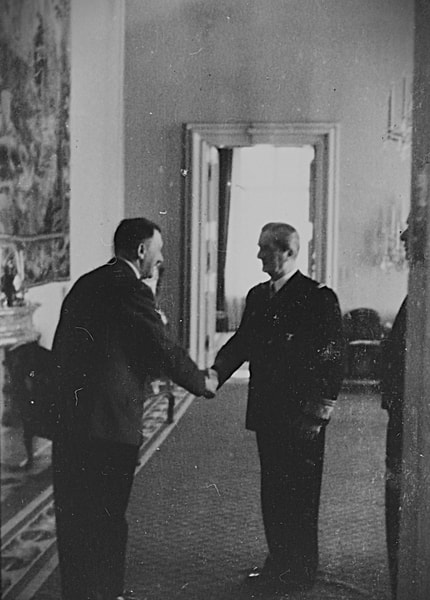
However, Nazi forces, anticipating Horthy’s move, immediately launched Operation Panzerfaust on 15 October 1944 to remove him from office. They kidnapped his only surviving child, Miklós Horthy Jr., and flew him to Germany as a hostage. German and Arrow Cross soldiers then stormed Castle Hill, forcing Horthy at gunpoint to abdicate in favor of the fanatically pro-Nazi Arrow Cross leader Ferenc Szálasi. The Jewish exterminations immediately resumed under the new regime. Horthy and his family were deported to Bavaria and placed under house arrest.
Following Germany’s surrender on 7 May 1945, Horthy was liberated by American forces and subsequently detained. Despite requests for his trial for war crimes by Yugoslavian and Hungarian Communist leaders, American diplomats and Joseph Stalin ultimately refused to indict Horthy, recognizing his attempts to withdraw from the Axis and his resistance to Hitler’s genocidal demands in 1943-44. After testifying at the Nuremberg trials as a witness, Horthy and his family were officially released. Unable to return to Hungary due to the newly established Communist government, Horthy was exiled to Estoril, Portugal. He spent the remainder of his life primarily supported by funds from American diplomats, Hungarian Jews and exiles, and Pope Pius XII, dedicating his time to writing his memoirs until his death on 9 February 1957.
Supporting Data: Key Figures and Impact
- Treaty of Trianon (1920): Hungary lost 71% of its territory and 66% of its population (including 3.3 million ethnic Hungarians), 80% of its timber and iron ore production. Its army was limited to 35,000 men with no air force.
- Holocaust in Hungary: Approximately 63,000 Hungarian Jews perished before the German occupation in March 1944. After the occupation and Horthy’s loss of effective power, nearly 560,000 more were murdered, predominantly in Auschwitz.
- Family Tragedy: Horthy outlived three of his four children, two of whom died during the war (Paulette in 1940, István in 1942). His remaining son, Miklós Jr., was kidnapped by the Nazis in 1944.
- Naval Achievements: Horthy’s victory at the Battle of Otranto (1917) against superior British, French, and Italian forces remains a significant, albeit often overlooked, naval feat of WWI.
Official Responses and Post-War Repercussions
The decision by Allied powers, particularly the United States and the Soviet Union, not to prosecute Miklós Horthy for war crimes despite requests from newly established communist governments in Yugoslavia and Hungary is a crucial "official response" that shaped his post-war narrative. This decision highlights the complex political calculations of the time, acknowledging Horthy’s late-war efforts to save Hungarian Jews and extricate Hungary from the Axis. His testimony at Nuremberg provided insights into the inner workings of the Axis alliance from a high-ranking, albeit reluctant, participant. Horthy’s own memoirs, "Memoirs of a Regent," published posthumously, represent his personal "official response" – a justification and defense of his actions amidst the immense pressures of his era.
Implications: A Legacy Under Perpetual Scrutiny
Miklós Horthy’s legacy remains profoundly controversial and polarizing in Hungarian history, serving as a mirror reflecting the nation’s own internal struggles with its past.
Supporters often credit him with restoring political stability and national order after the chaotic revolutions of 1918-1920, effectively suppressing the communist threat. They highlight his unwavering commitment to revising the Treaty of Trianon, arguing that his alliance with Germany, however distasteful, was a pragmatic necessity to reclaim lost territories and restore national pride. Furthermore, proponents emphasize his active resistance to Hitler’s genocidal demands and his efforts to protect Hungarian Jews before 1944, as well as his ultimate attempt to withdraw Hungary from the Axis as the war turned. For them, Horthy was a patriot navigating an impossible situation.
Critics, conversely, condemn his authoritarian rule, the suppression of democratic freedoms, and his government’s enactment of anti-Jewish legislation even prior to German occupation. They argue that his alliance with Nazi Germany, regardless of its motivations, inextricably linked Hungary to the Axis atrocities. Critics also hold Horthy directly or indirectly responsible for the persecution and deaths of hundreds of thousands of Hungarian Jews, particularly after 1944, arguing that his earlier policies laid the groundwork for the later catastrophe. The actions of Hungarian soldiers in war crimes across occupied Europe are also laid at his government’s feet. For these critics, Horthy represents a tragic collaboration that brought immense suffering.
The enduring debate surrounding Horthy underscores the profound impact of his decisions on Hungary’s national identity. Following the fall of Hungarian communism in 1989, his remains were repatriated from Portugal and reburied in his hometown of Kenderes in 1993. This event, attended by over 10,000 people, was simultaneously met with large-scale protests in Budapest, illustrating the deep divisions. The placement of a statue of Horthy in a Calvinist Church in central Budapest in November 2013 further ignited public controversy, receiving a mixed reception and highlighting that Horthy’s story is far from settled.
His life serves as a stark reminder of the moral compromises and agonizing choices faced by leaders in times of extreme geopolitical pressure, and the lasting implications of those decisions on a nation’s soul. Horthy’s attempts to balance national aspirations with the brutal realities of power politics, particularly in the shadow of Nazi Germany, continue to provoke fierce debate, ensuring his place as one of the 20th century’s most scrutinized figures.