
The Unseen Threads: Why Engaging with Everyday Folklore Can Transform Your Life
London, UK – In a world that often rushes past the profound in pursuit of the immediate, the ancient whispers of folklore can seem distant, an anachronism confined to history books or the quaint customs of remote villages. Many dismiss it as mere "flim-flam," a collection of old wives’ tales, plot devices for fantasy novels, or a convenient way to market themed merchandise. Yet, as a burgeoning movement suggests, folklore isn’t merely an artifact of the past; it is a vibrant, living current that subtly, and sometimes overtly, shapes our daily lives. From the way we celebrate birthdays to the precise order of jam and cream on a scone, traditions, rituals, and customs are the invisible architecture of our existence, reminding us how to navigate the complex tapestry of life.
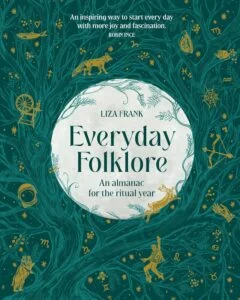
At the forefront of this re-evaluation is author Liza Frank, whose new book, Everyday Folklore: An Almanac for the Ritual Year, champions a conscious engagement with these often-overlooked practices. Frank posits that folklore, far from being a niche academic pursuit or a curious relic, is a practical guide for living a more connected, mindful, and joyful life. Her work, born from a year-long personal immersion in the ritual calendar, serves as a compelling "call to action" for anyone with even a passing interest in the subject.
"Folklore is all around us; the rituals, traditions and customs that remind us how to live our lives even down to making a brew," Frank explains, drawing a direct line from academic definitions to the most mundane of actions. For those who typically observe from the sidelines, Frank offers five compelling reasons to actively weave a little folklore into their daily fabric, urging them to "feel the folklore fear and do it anyway." This perspective challenges the passive consumption of cultural heritage, advocating instead for an active, participatory role in its perpetuation and evolution.
A Year of Immersion: Frank’s Journey into the Ritual Calendar
Liza Frank’s personal journey into the heart of everyday folklore provides the foundational narrative for her advocacy. Between St Distaff’s Day in January 2020 and Twelfth Night in January 2021, Frank embarked on an ambitious project: to practice ritual year folklore every single day. This immersive experience, meticulously documented and later forming the bedrock of her book, was more than an academic exercise; it was a profound personal exploration into the rhythms and meanings embedded within traditional practices.
St Distaff’s Day, celebrated on January 7th, marked the end of the Christmas festivities and the resumption of women’s spinning work, a poignant starting point for a year dedicated to observing and participating in the cycles of life and labour. Her journey concluded on Twelfth Night, typically January 5th or 6th, signaling the end of the Christmas season. This period, spanning a full year of the ritual calendar, allowed Frank to experience firsthand the ebb and flow of seasonal customs, ancient superstitions, and modern adaptations.
Her "Everyday Lore Project" became a living laboratory, testing the relevance and impact of diverse folklore practices. From significant pagan festivals to obscure local traditions, Frank engaged with each day’s associated lore, transforming abstract concepts into tangible experiences. This rigorous, hands-on approach allowed her to not only compile a comprehensive almanac but also to internalize the profound, often subtle, benefits that arise from conscious engagement with these traditions. The resulting work, Everyday Folklore: An Almanac for the Ritual Year, is not just a guide; it’s a testament to the transformative power of living folklorishly.
The Five Pillars of a Folkloric Life: Supporting Data and Personal Growth
Frank’s argument for active engagement with folklore is structured around five key benefits, each offering a distinct pathway to enriching one’s life. These points serve as both practical advice and a philosophical framework for understanding the enduring relevance of ancient customs in a modern context.
1. Reclaiming Time: Folklore as an Antidote to Modern Haste
In an era defined by relentless speed and the ceaseless march of digital notifications, the concept of "slowing down" has become a luxury. Frank argues that while folklore cannot literally halt time – though she humorously suggests "there’s a charm for that" – actively observing the ritual year can foster a profound sense of presence and mindfulness. Our days often blur into weeks, and weeks into months, leading to a common lament about the swift passage of the year. The daffs bloom and fade, the nights lengthen, and we find ourselves wondering where the time went.
Folklore offers anchors. By engaging in practices tied to specific dates, months, or seasons, individuals become more attuned to the natural rhythms of the year. Wassailing in January, an ancient tradition of singing to apple trees to ensure a good harvest, transforms a winter month into an act of communal hope and connection to the land. It gives one "a stake in how the apple harvest turns out," making the future yield a personal investment rather than an abstract concept. Counting fogs in August to predict winter snowfalls is another delightful example, turning meteorological observation into a playful, participatory ritual.
Beyond structured rituals, simple acts of observation, such as watching hedgerows transition from barrenness to budding life, then to fecundity, and back to sparsity, cultivate a deeper appreciation for the cyclical nature of existence. This conscious engagement with the environment fosters a slower pace of life, which, in turn, opens one to "possibility and wonder." In a world clamouring for attention, folklore provides a quiet space for contemplation and a re-engagement with the sensory world, a vital balm for the overstimulated modern mind.
2. An Abundance of Joy: The Ritual Year as a Calendar of Celebration
Life, Frank contends, should be punctuated by more than just birthdays, anniversaries, and major holidays. The ritual year, she reveals, offers an almost limitless array of opportunities for celebration, transforming the mundane into the meaningful and providing countless excuses for joy. This isn’t just about adding more events to an already busy schedule; it’s about embracing the inherent human need for marking time and acknowledging diverse sources of happiness.
Want to celebrate trees? There are several dedicated days throughout the year, from Arbor Day to ancient pagan tree veneration, allowing for moments of ecological appreciation and connection to nature. Even the most unusual subjects find their folkloric moment: "Whole festivals are dedicated to innies and outies over June and July," Frank notes, referring to the whimsical celebration of belly buttons. For those who appreciate libations, specific days are dedicated to wine (August 19), gin (the second Saturday of June), and rum (July 31), transforming a simple drink into a culturally significant toast.
Modern folklore, too, finds its place, with dedicated days for beloved franchises like Back to the Future, Star Trek, and Star Wars ("May the Fourth be with you"). These contemporary observances highlight how folklore continually evolves, integrating popular culture into its celebratory framework. Moreover, joy can be found in the unexpected, such as celebrating when it doesn’t rain on St Swithin’s Day, a nod to ancient weather lore. Or in the deeply personal satisfaction of completing a folklore task, like counting "seven stars on seven consecutive nights" to have a wish granted. The ritual year, in Frank’s vision, becomes an expansive canvas for human delight, offering endless ways to acknowledge, appreciate, and revel in the passage of time.
3. Engaging the Spirit: Folklore as a Cure for Boredom and Ennui
Boredom and ennui are pervasive maladies of modern society, often stemming from a perceived lack of meaningful engagement. Frank suggests that folklore offers a potent remedy, providing a wealth of participatory activities that challenge, entertain, and connect individuals to their communities and heritage. Instead of passively consuming entertainment, folklore encourages active creation and participation.
Take, for instance, the leftover Christmas cake. Rather than discarding it, one could emulate the citizens of Manitou Springs, Colorado, who stage their annual Great Fruitcake Toss in January – a quirky, communal event that transforms a culinary anachronism into a source of amusement. The kitchen, too, becomes a site for folkloric adventure, with challenges to recreate historical "ritual year recipes" like Heg Peg Dumps, Harvest shot, or knotting-sowins. Even baking a simple batch of scones for National Cream Tea Day (June 26) becomes an act steeped in tradition, though Frank humorously advises against certain culinary experiments, particularly "plum duffs" made with vegetarian suet and a favourite tea towel.
For those with a flair for the dramatic, folklore offers opportunities for transformative costume play. Imagine becoming "the King for a weekend" at the Porthcawl Elvis Festival in September, or embodying a badger to celebrate St Piran’s Day in March. More adventurous souls might find their thrill in the extreme sports of folklore: chasing a wheel of cheese down Cooper’s Hill in May, or participating in the Dorking Wife Carrying Race in March, an obstacle course requiring considerable strength and teamwork. Frank’s "year of living folklorishly" proved that there is "always something to do," even if it’s as arcane as "conducting an exorcism at midnight by spitting black beans and walking backwards" during Lemuralia on May 9. These activities, however outlandish, combat stagnation by fostering engagement, creativity, and a healthy dose of silliness.
4. The Scholar of the Everyday: Folklore as a Source of Curious Knowledge
Folklore, at its heart, is a vast repository of humanity’s collective knowledge, beliefs, and observations, often brimming with "weird and wonderful stuff." Engaging with it is an excellent way to accumulate fascinating facts, making one a formidable opponent in any pub quiz and enriching one’s understanding of the world. Beyond mere trivia, these nuggets of lore often reveal deeper connections between culture, nature, and human psychology.
Consider the unexpected finding that "spiders prefer classical music to techno." This intriguing piece of arachnid folklore, rooted in scientific observation and traditional beliefs, not only offers a potential solution for unwelcome houseguests (if you’re a techno fan) but also connects to broader weather lore, where "indoor spiders in March augurs rain." Similarly, the modern folklore surrounding space travel is equally captivating: since the early 1970s, Baikonur cosmonauts have traditionally watched The White Sun of the Desert, a 1970 Russian Civil War comedy, the day before their missions, a poignant example of a professional ritual adopted for luck in high-stakes environments.
Bats, often maligned in folklore as "the Devil’s messenger," reveal a more nuanced story through a folkloric lens combined with ecological understanding. Beyond their mythical associations, bats are "one of the main pollinators of agave plants," a crucial fact that has direct implications for our culinary pleasures. Without these "winged wonders," Frank points out, "you’d be swapping your Margaritas for Manhattans." The "folklore rabbit hole" is thus not just a path to quirky facts but an invitation to explore the interconnectedness of belief, nature, and human culture, fostering a deeper, more informed curiosity about the world.
5. The Storyteller’s Gift: Folklore as a Generator of Personal Narratives
Ultimately, engaging with folklore is an unparalleled way to generate unique, memorable, and often delightfully bizarre personal stories. While some folklore can appear "bonkers," Frank emphasizes that this doesn’t invalidate people’s beliefs. Indeed, she embraces the eccentricity, declaring that anyone "stalking a churchyard in Leicestershire to see if St Wistan’s hair sprouts amongst the headstones" on June 1st is "my kind of people."
These personal encounters with folklore become the raw material for compelling anecdotes. Imagine recounting the time you "thought you caught a whiff of demonic sulphur in the woods while a-nutting in September," or swearing that "the boil on your neck decreased with the application of a cabbage leaf," a nod to traditional folk medicine. More romantically, there’s the tale of having "that vision of your one true love after slipping a sprig of rosemary and a crooked sixpence under your pillow on St Luke’s Eve" – though Frank humorously adds, "in my case, Mark Hamill. He’s not rung though."
These stories, whether fantastical, humorous, or surprisingly effective, transform passive knowledge into active experience. They are not merely observations but engagements that leave an imprint, creating a personal mythology. A word of caution, however, accompanies this storytelling bounty: while you might find it impressive that you "failed to detect any vampire activity in your gardening implements," Frank wisely suggests saving such eccentric anecdotes "for the second date." The ability to weave these experiences into personal narratives not only enriches one’s own life but also provides engaging material for social interaction, fostering connection and shared amusement.
Broader Context: Academic Perspectives and Societal Implications
While Frank’s approach is deeply personal and practical, it resonates with broader academic understandings of folklore’s vital role in human society. Scholars like G. E. Warshaver (1991), cited in Frank’s work, highlight the pervasive nature of "postmodern folklore," demonstrating that traditions are not static but continually adapt and evolve within contemporary contexts, even down to the ritual of "making a brew." This academic perspective reinforces Frank’s assertion that folklore is not just a historical curiosity but a living, breathing aspect of our present.
From a sociological standpoint, folklore acts as a powerful binder of communities. Shared rituals, whether ancient Wassails or modern fandom celebrations, create collective identities and reinforce social cohesion. They provide a common language of symbols and practices that transcend individual differences, fostering a sense of belonging and continuity. The communal aspect of many folkloric activities, from village festivals to shared meals, underscores their importance in building and maintaining social fabric.
Psychologically, engagement with folklore offers numerous benefits. The act of ritual itself can reduce anxiety and provide a sense of control and predictability in an often chaotic world. The mindfulness cultivated through observing seasonal changes, as Frank highlights, is a well-documented path to mental well-being. Furthermore, the act of storytelling, a core outcome of folkloric engagement, is crucial for processing experiences, constructing personal identity, and transmitting cultural values across generations. Even seemingly irrational beliefs, such as those surrounding luck or divination, offer a psychological comfort and a framework for understanding the unknown, providing agency in uncertain circumstances.
Moreover, folklore often serves as a conduit for ecological knowledge and a deeper connection to the natural world. Many traditions, from lunar planting cycles to weather prognostication, are rooted in generations of observation and interaction with the environment. In an age of environmental disconnect, re-engaging with these practices can foster a renewed appreciation for nature’s rhythms and the intricate web of life.
A Resolution for a Richer Life: Embracing the Folkloric Future
In conclusion, Liza Frank’s call to consciously incorporate folklore into daily life is more than a whimsical suggestion; it is an invitation to live more fully, mindfully, and joyfully. Her journey, meticulously chronicled in Everyday Folklore: An Almanac for the Ritual Year, demonstrates that the benefits are tangible and far-reaching. By embracing the rituals, traditions, and customs that surround us, we can slow down the relentless pace of modern existence, discover new reasons to celebrate, stave off the ennui of routine, expand our knowledge in unexpected ways, and accumulate a treasury of unique personal tales.
As the New Year approaches, Frank proposes a resolution: to "consciously add a bit of folklore into your life." This involves cultivating curiosity, daring to try new things, actively creating new traditions, and challenging oneself to look beyond the obvious. While January 19th is traditionally cited as the day when most New Year’s resolutions falter, Frank offers a comforting perspective: given the multitude of "New Year’s Days" throughout the ritual calendar, there are always "plenty of opportunities for a do over should you need one."
In a world yearning for meaning and connection, the threads of folklore offer a rich tapestry waiting to be re-discovered and re-woven into the fabric of contemporary life. It is an accessible, engaging, and profoundly human way to navigate the complexities of existence, reminding us that wonder, joy, and wisdom are often found in the most unexpected, and ancient, corners of our everyday world.
Everyday Folklore: An Almanac for the Ritual Year is out now, offering a practical guide for those ready to embark on their own folkloric journey.

Leave a Comment