The landscape of British gaming and high-stakes dreaming has undergone a seismic shift this month as Powerball, the American lottery titan known for its record-shattering jackpots, officially marked its arrival on UK shores. Orchestrated by Allwyn, the multi-national lottery operator that recently assumed stewardship of The National Lottery, and executed by the powerhouse creative agency VCCP, the launch represents one of the most ambitious marketing blitzes in recent UK history.
Centering on the provocative question, "What Would You Do?", the campaign seeks to redefine the public’s relationship with wealth, moving away from traditional notions of financial security and toward a realm of surreal, transformative, and often absurd possibilities. From the acquisition of struggling football clubs to the founding of bespoke music festivals, the campaign challenges the British public to expand the horizons of their imagination.
Main Facts: A New Era for British Lotteries
The introduction of Powerball to the United Kingdom is not merely an addition to the existing suite of games; it is a strategic maneuver by Allwyn to revitalize the lottery market. Since taking over the license, Allwyn has signaled a desire to modernize the gaming experience and capture a younger, more digitally-native demographic while maintaining the core base of hopeful players.
The "What Would You Do?" campaign is an integrated, multi-channel effort that leverages every facet of modern media. Key components include:
A Hero Film: A 30-second cinematic centerpiece that explores the "heady possibilities" of a Powerball win.
High-Impact Placements: Strategic slots during the FIFA World Cup Final and alongside Christopher Nolan’s latest cinematic release, The Odyssey.
Digital Innovation: The use of Snapchat’s "Imagine Lens," utilizing generative AI to allow users to visualize their dreams.
Creator Partnerships: Collaborations with influencers across diverse niches, including cooking, art, and comedy, to ground the "life-changing" nature of the win in various lifestyle contexts.
The campaign is not just about the money; it is about the "transformative" potential of that money. By focusing on "silly and surreal" outcomes, Allwyn and VCCP are distancing Powerball from the more conservative "sensible" win narrative often associated with domestic draws.
Chronology of the Launch: From Teasers to the Global Stage
The rollout of the Powerball campaign was meticulously timed to coincide with major cultural and sporting touchstones, ensuring maximum visibility and conversation.
Phase 1: The Teaser (Early July)
Before the full reveal, Allwyn and VCCP released a series of short, enigmatic teasers across social media and digital out-of-home (OOH) displays. These teasers focused on the scale of Powerball, hinting at jackpots that dwarfed traditional UK offerings. The goal was to build "the lottery equivalent of a blockbuster movie trailer," creating a sense of anticipation and curiosity.
Phase 2: The Hero Launch (July 19)
The campaign reached its crescendo on July 19. Allwyn secured one of the most coveted advertising slots in the world: a 30-second spot during the FIFA World Cup Final. This placement was a statement of intent, positioning Powerball as a premier global brand. The hero film was immediately followed by a nationwide rollout across television networks, ensuring that the "What Would You Do?" question was at the forefront of the national conversation.
Phase 3: Cinematic and Digital Integration (Late July – Present)
Following the TV debut, the campaign moved into cinemas. In a move that highlights the campaign’s high-production values, the hero film was placed before screenings of Christopher Nolan’s The Odyssey. Simultaneously, the digital arm of the campaign went live, with the Snapchat AI lens and creator partnerships beginning to populate social feeds.
Supporting Data: The Power of the "Big Win" Narrative
The decision to bring Powerball to the UK and the specific creative direction of the campaign are supported by significant market trends and psychological data regarding consumer behavior in the gaming sector.
The Scale of Powerball
In the United States, Powerball has famously reached jackpots exceeding $2 billion. While the UK version is structured to fit within local regulatory frameworks, the brand name carries the weight of those astronomical figures. Data from the lottery industry suggests that "jackpot fatigue"—where players stop participating in smaller draws—is a real phenomenon. By introducing a brand associated with "infinite" wealth, Allwyn aims to combat this fatigue.
The Shift to "Experiential" Wealth
Marketing research conducted by VCCP and Allwyn indicates that younger generations (Gen Z and Millennials) are less motivated by the prospect of "early retirement" or "buying a house" than previous generations. Instead, they are motivated by "experiences" and "impact." This explains the campaign’s focus on:
Community Impact: Saving a local football club.
Cultural Creation: Founding a music festival.
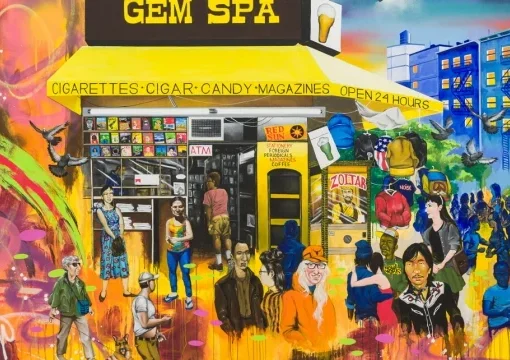
Self-Expression: Commissioning massive murals to "say the little things bigger."
Generative AI and Engagement
The inclusion of Snapchat’s Imagine Lens is a data-driven move. Generative AI is currently one of the highest-engagement tools in digital marketing. By allowing users to input their own dreams and see them visualized, Allwyn is moving from passive advertising to active, participatory branding.
Official Responses: "Thinking Bigger"
The leadership behind the campaign has been vocal about the philosophy driving this launch. The creative direction seeks to move past the "usual stuff" associated with lottery wins.
Darren Bailes, Global Chief Creative Officer at VCCP, articulated the vision:
"We are encouraging the country to think bigger, past the usual stuff and into the realms of, ‘Oh yeah, I really could make almost anything happen.’ This is going to be a conversation with the country about their wildest dreams… some for good wholesome reasons, some for pure silliness, and some just for the sheer hell of it."
Allwyn’s spokespeople have echoed this sentiment, emphasizing that Powerball represents a "step-change" for the UK market. The company has stated that the goal is to make the lottery "more relevant to more people," using Powerball as the flagship for a more modern, exciting gaming portfolio.
Industry analysts have noted that this campaign also serves to solidify Allwyn’s reputation as an innovator following their takeover of the National Lottery license from Camelot. By successfully launching a global brand like Powerball with such a high-gloss campaign, Allwyn is demonstrating its capability to manage complex, large-scale transitions.
Implications: A New Competitive Landscape
The arrival of Powerball and the "What Would You Do?" campaign carries several long-term implications for the UK’s gambling and advertising industries.
1. Pressure on Existing Lottery Products
The presence of Powerball may force a recalibration of existing games like Lotto and EuroMillions. If Powerball successfully captures the "dreamer" market with its focus on transformative wealth, other games may need to adjust their marketing to emphasize different value propositions, such as "winning more often" or "supporting local charities."
2. The Normalization of High-Stakes Gamification
The use of generative AI and influencer partnerships to market a lottery game marks a shift toward the "gamification" of the lottery. By making the process of "dreaming" an interactive digital experience, Allwyn is integrating the lottery into the daily social media habits of the public. This raises questions for regulators regarding the line between "fun engagement" and the promotion of high-stakes gambling to potentially vulnerable audiences.
3. A Benchmark for Integrated Campaigns
From a creative standpoint, VCCP has set a new benchmark for integrated campaigns in the UK. The seamless transition from a World Cup TV spot to a Snapchat AI lens to a cinema placement shows a sophisticated understanding of how modern audiences consume media. The "What Would You Do?" tagline is designed for longevity, providing a flexible framework that can be adapted for years to come.
4. The "Dream Economy" and Social Sentiment
The campaign launches at a time of economic uncertainty in the UK. Historically, lottery participation often increases during downturns as the "dream of escape" becomes more potent. By leaning into "silliness" and "pure hell of it" reasons for winning, the campaign offers a form of aspirational escapism that contrasts sharply with the "cost of living" headlines dominating the news cycle.
Conclusion
The UK debut of Powerball is more than just the launch of a new game; it is a high-stakes experiment in modern branding and consumer psychology. By asking "What Would You Do?", Allwyn and VCCP have moved the conversation from the odds of winning to the infinite possibilities of the win itself. As the campaign continues to roll out across retail, experiential activations, and social media, the British public will find themselves invited—at every turn—to stop thinking about the "usual stuff" and start dreaming of the surreal. Whether this shift results in a permanent change in the UK’s gaming habits remains to be seen, but for now, the "Powerball effect" is undeniably in full swing.
NEW YORK — In the hallowed, white-walled sanctuary of the PPOW Gallery, a bridge is being built between the grimy, adrenaline-fueled subway tunnels of the 1970s and the sophisticated contemporary art
In an era increasingly defined by the seamless, hyper-optimized outputs of generative artificial intelligence, a counter-movement is quietly gaining momentum within the upper echelons of the creative
In an industry often criticized for the commoditization of the passenger experience, Porter Airlines has long positioned itself as the "civilized" alternative. Since its inception, the Canad