A Voice That Defined a Generation: The Tragic Loss and Enduring Legacy of Glen Hansard
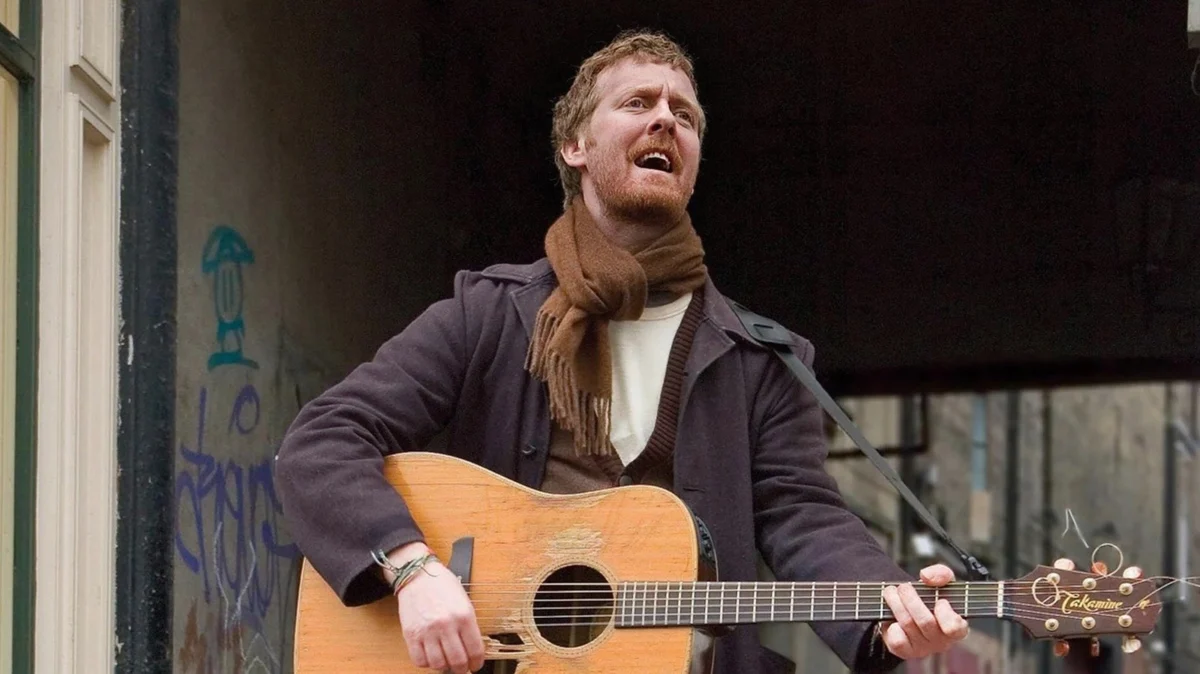
The world of music and independent cinema is in mourning following the shocking news that Glen Hansard, the Academy Award-winning singer-songwriter and actor, has passed away at the age of 56. Reports confirmed that Hansard died following a motorcycle accident, a sudden and tragic end for an artist whose raw, emotive performances became a cornerstone of Irish cultural identity. Hansard, perhaps best known as the soul-stirring lead of the 2007 film Once, leaves behind a legacy that bridged the gap between the gritty streets of Dublin and the glittering lights of Hollywood.
Hansard was more than just a musician; he was a storyteller who found beauty in the mundane and resonance in the "battered" parts of the human experience. From his early days busking on Grafton Street to his triumphant night at the Oscars, his journey was a testament to the power of authenticity in an often-artificial industry.
The Main Facts: A Sudden Departure
On the evening of the incident, emergency services were called to a scene involving a motorcycle crash. Hansard, a lifelong enthusiast of the open road and a man known for his nomadic, free-spirited lifestyle, was pronounced dead shortly thereafter. He was 56 years old.
The news sent shockwaves through the global artistic community. Hansard was not merely a celebrity; he was a foundational figure in the "New Irish" movement of the 1990s and 2000s. As the frontman of The Frames and one-half of The Swell Season, he provided the soundtrack for a generation of listeners who sought honesty over polish. His death marks the silencing of one of the most powerful voices in contemporary folk-rock—a voice capable of a delicate whisper and a glass-shattering roar.
A Chronology of a Life in Song
The Commitments and Early Breakthroughs
Glen Hansard’s entry into the public consciousness began in 1991 when he was cast as Outspan Foster in Alan Parker’s cult classic The Commitments. Though the film focused on a group of working-class Dubliners forming a soul band, Hansard’s natural charisma and genuine guitar skills stood out. At just 21, he was already a veteran of the Dublin busking scene, having left school at age 13 to pursue music full-time.
While The Commitments offered him a path to acting, Hansard’s heart remained tethered to his own songwriting. In 1990, he formed The Frames. The band became a central pillar of the Irish music scene, known for their high-energy live performances and Hansard’s uncompromising leadership.
The Frames: The Architects of Irish Indie Rock
Throughout the late 90s and early 2000s, The Frames evolved from a rock outfit into a deeply atmospheric and experimental force. Albums like Fitzcarraldo (1995) and For the Birds (2001) earned them a fervent following. However, it was the 2004 release Burn the Maps that truly cemented their legendary status, debuting at #1 on the Irish charts.
During this era, Hansard became a mentor to many younger musicians, embodying the "busker’s work ethic"—the idea that music is a service provided to the people on the street, requiring total emotional investment regardless of the venue’s size.
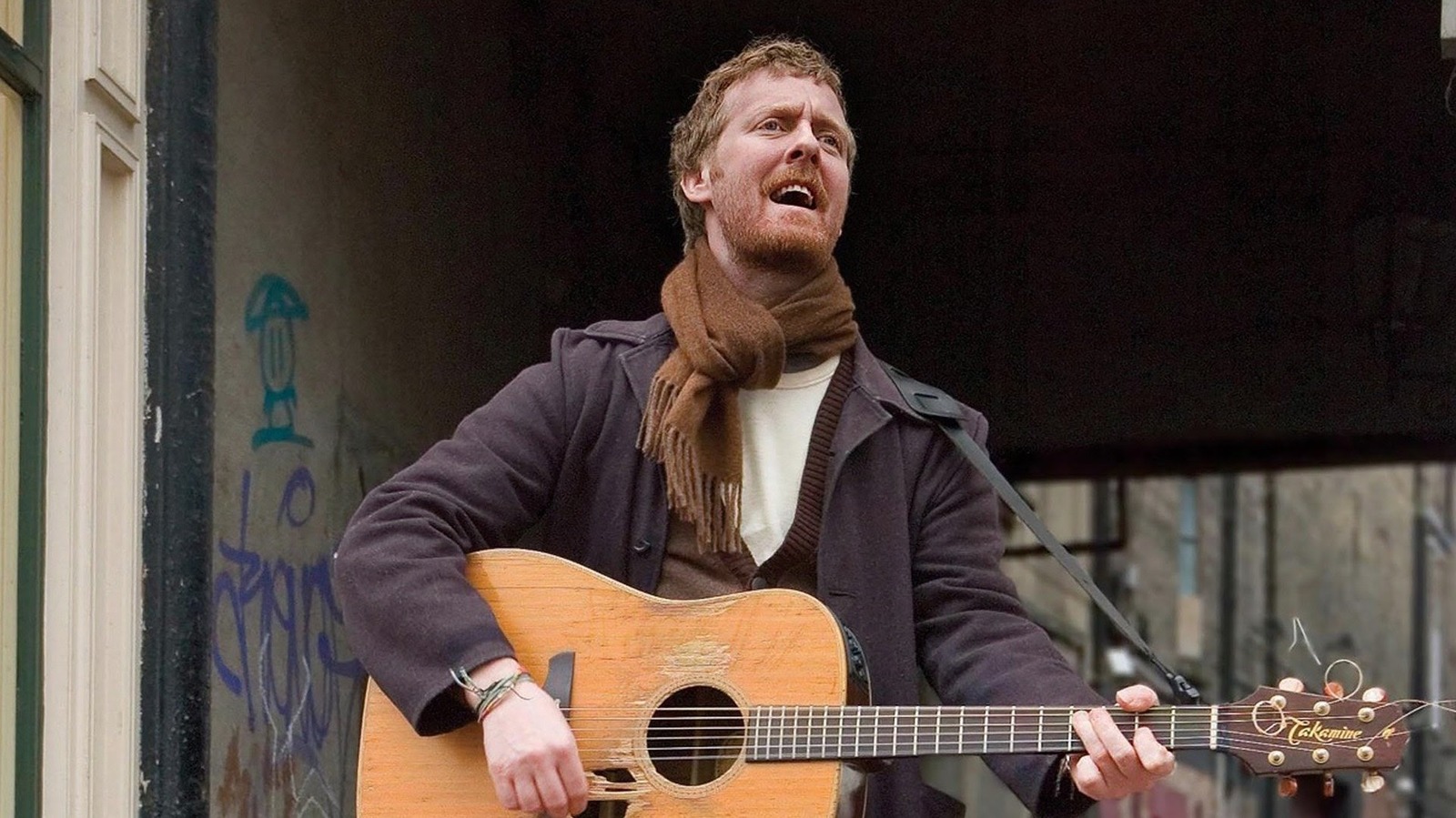
The Phenomenon of Once
In 2006, Hansard’s life changed forever when he collaborated with Czech pianist and singer Markéta Irglová. Their creative partnership, known as The Swell Season, became the focal point of the 2007 film Once, directed by Hansard’s former Frames bandmate John Carney.
Produced on a shoestring budget of roughly $150,000 and shot in just 17 days using natural light, Once was a modern-day musical that felt like a documentary. Hansard played "Guy," an unnamed busker and vacuum cleaner repairman, while Irglová played "Girl," a Czech immigrant. The film captured the "ache" of a connection that is profound but ultimately impossible.
The centerpiece of the film, the song "Falling Slowly," became a global anthem. The scene in which the duo performs the song for the first time in a music shop is widely regarded as one of the most romantic and authentic moments in cinema history. The song went on to win the Academy Award for Best Original Song in 2008, a moment famously punctuated by Irglová being invited back to the stage by host Jon Stewart after her initial speech was cut short by music.
Supporting Data: The Impact of a "Battered" Guitar
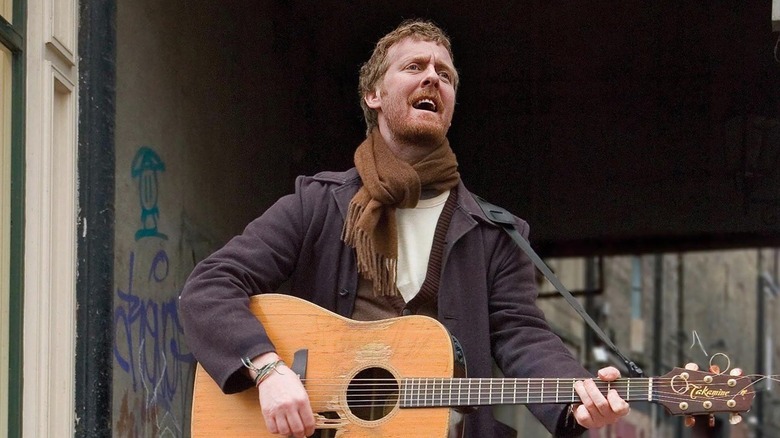
Hansard’s musical style was inextricably linked to his instrument: a heavily worn Takamine NP15 acoustic guitar, which he nicknamed "The Horse." The guitar featured a massive hole worn through the wood from years of aggressive strumming—a visual metaphor for Hansard’s own "all-in" approach to performance.
- Chart Success: Beyond the #1 success of Burn the Maps, Hansard’s solo debut, Rhythm and Repose (2012), was a critical darling, showcasing a more intimate, soul-searching side of his artistry.
- Stage Legacy: Once was adapted into a Broadway musical, winning eight Tony Awards, including Best Musical in 2012. This adaptation ensured that Hansard’s melodies would be heard in theaters across the world for decades to come.
- The Swell Season Documentary: The 2011 documentary The Swell Season provided a raw look at the pressures of sudden fame and the toll it took on Hansard and Irglová’s personal relationship, further cementing Hansard’s reputation for radical honesty.
Official Responses and Tributes
The outpouring of grief following the news of the motorcycle crash has been immense, reflecting the deep personal connection Hansard maintained with his peers and fans.
John Carney, Director of Once:
"Glen was the heartbeat of every room he entered. He didn’t just play music; he lived it. He taught me that you don’t need a big budget to tell a big story—you just need a big heart. I’ve lost a brother and a collaborator who changed my life."
Markéta Irglová, Musical Partner:
"Glen was a force of nature. He sang with a fire that could warm a whole city. Our time together, both on and off the screen, was a gift. He was a poet of the streets, and the streets will feel very empty without him tonight."
The President of Ireland, Michael D. Higgins:
"Glen Hansard represented the very best of Irish creativity and spirit. He was a man who never forgot his roots, who championed the marginalized, and who brought the soul of Dublin to the global stage. His passing is a profound loss to our nation."
Fellow musicians, including Eddie Vedder of Pearl Jam—a close friend and frequent collaborator—and Bono of U2, have also expressed their devastation. Vedder, who frequently brought Hansard on tour, often remarked that Hansard was "the greatest singer on the planet."
Implications: The Future of the Hansard Legacy
The death of Glen Hansard leaves a void in the "busker-to-bard" lineage of folk music. However, the implications of his work remain vast.
The Standard for Musical Cinema
Before Once, the movie musical was often seen as a polished, Broadway-adjacent genre. Hansard and Carney proved that music in film could be gritty, low-fi, and deeply personal. This paved the way for Carney’s later works like Begin Again, Sing Street, and Flora and Son, as well as a broader movement of "authentic" music films.
Mentorship and the Dublin Scene
Hansard was a constant presence in Dublin, often appearing at the Christmas Eve busking sessions on Grafton Street to raise money for the homeless. His death leaves the local music community without its unofficial patriarch. Many young Irish artists cite Hansard’s "Falling Slowly" as the reason they first picked up a guitar.
Posthumous Works
At the time of his passing, Hansard was reportedly working on new material and had several unreleased recordings with The Frames. The future of these projects remains uncertain, but there is no doubt that his estate and collaborators will eventually share these final notes with a world eager to hear his voice one last time.
Conclusion: A Plaintive Ballad Ends
Glen Hansard’s life was a series of crescendos. He moved from the quiet desperation of a street corner to the deafening applause of the Kodak Theatre without ever changing who he was. He remained the man with the hole in his guitar and the crack in his voice—the man who believed that a song, if sung loudly enough, could fix almost anything.
As the "Falling Slowly" lyrics suggest, he "took this sinking boat and made it home." While the boat may have finally reached the shore, the songs he left behind will continue to echo in music shops, on street corners, and in the hearts of those who believe that music is the only language that truly matters. Rest in peace, Glen Hansard. Your song is far from over.