Derry’s Dark Past Deepens: Andy Muschietti Reveals Gritty, Depression-Era Details for ‘It: Welcome to Derry’ Season 2
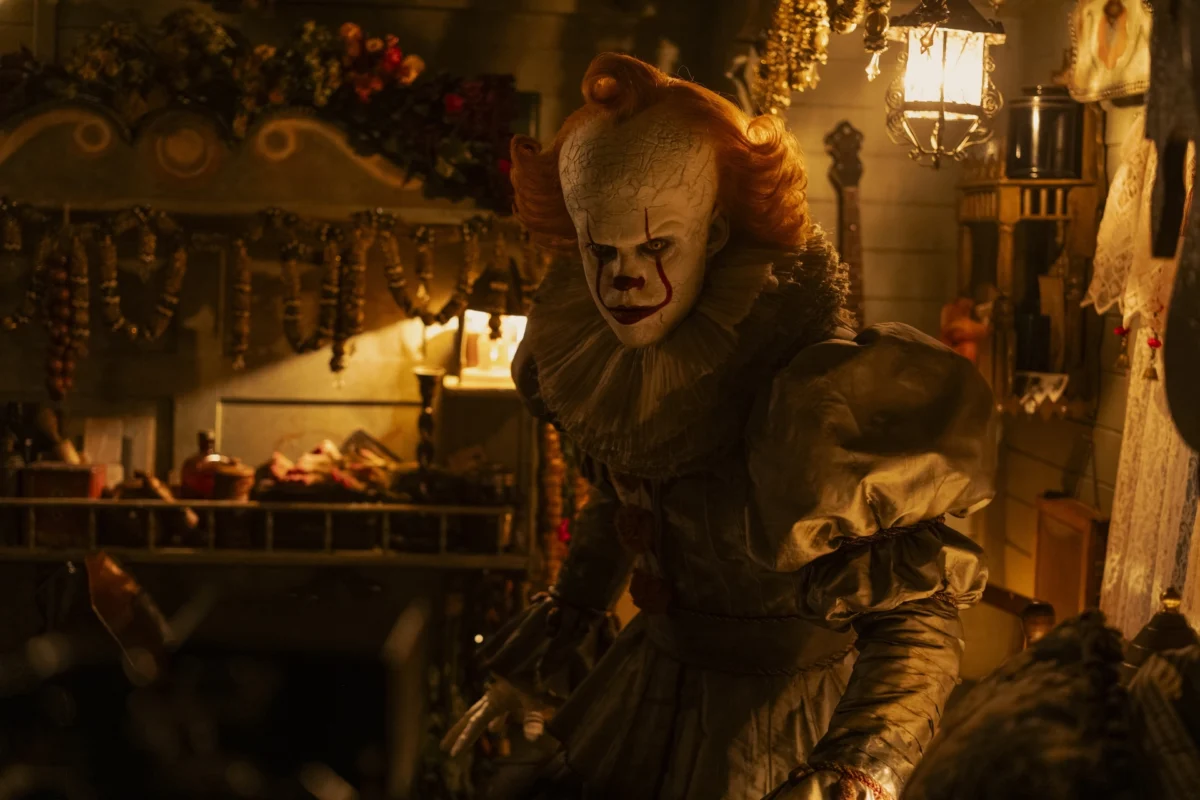
The malevolent shadow of Pennywise the Dancing Clown continues to lengthen over the small, cursed town of Derry, Maine. As fans of Stephen King’s seminal horror masterpiece immerse themselves in the debut season of the prequel series It: Welcome to Derry, co-creator and director Andy Muschietti has pulled back the curtain on the show’s ambitious future. In a revealing update, Muschietti confirmed that the creative team is already deep within the writers’ room for Season 2, a chapter that promises to pivot away from the "suburban comfort" typically associated with the franchise and into the bleak, desperate landscape of the Great Depression.
This expansion of the It cinematic universe—which Muschietti successfully revitalized with his 2017 and 2019 feature films—represents a significant shift in storytelling. By moving backward through time, the series aims to unearth the foundational rot of Derry, exploring how the town’s history of violence and social decay fed the ancient entity lurking beneath its streets.
Main Facts: A Pivot to the Bradley Gang Massacre
The most significant revelation regarding Season 2 is its temporal and thematic anchor: the year 1935. While Season 1 explored the early 1960s—a period of Cold War paranoia and military secrets—Season 2 will leap back exactly 27 years to tackle one of the most infamous "interludes" from Stephen King’s 1,100-page novel.
Central to this new narrative is the Bradley Gang Massacre. In King’s lore, the Bradley Gang was a group of ruthless outlaws who terrorized the American Midwest and Northeast during the mid-1930s. Their story in Derry ends in a hail of gunfire on Canal Street, where the townspeople, seemingly possessed by a collective, murderous rage—fueled by the presence of "It"—took the law into their own hands in a display of shocking brutality.
Muschietti confirms that this historical event will serve as the heartbeat of the second season. Unlike the 1950s or 1980s settings of previous adaptations, which often leaned into the nostalgia of childhood, the 1935 setting will be characterized by "depression-era hustling." The characters will not be riding bicycles through sun-drenched suburbs; they will be fighting for survival in a town that Muschietti describes as a "carcass."
Chronology: The 27-Year Cycle of Terror
To understand the trajectory of It: Welcome to Derry, one must understand the internal logic of the "It" entity. According to King’s mythology, the creature awakens approximately every 27 years to feed on the fear and flesh of the town’s inhabitants, particularly its children, before returning to a state of hibernation.
Muschietti’s vision for the series follows this cycle in reverse, providing a "backwards" look at the curse:
- 2016/2017 (The Films): The modern-day confrontation between the Losers Club and Pennywise.
- 1988/1989 (The Films): The childhood encounter that defined a generation of horror fans.
- 1962 (Season 1): The current focus of the Max series, dealing with a missing child and military-industrial intrigue during the Cold War.
- 1935 (Season 2): The newly announced setting, focusing on the Bradley Gang and the economic collapse of the Great Depression.
- 1908 (Season 3 – Proposed): A potential future chapter focusing on the Easter Sunday explosion at the Kitchener Ironworks, another pivotal tragedy in Derry’s history.
By structuring the show this way, Muschietti, alongside co-creators Barbara Muschietti and Jason Fuchs, is effectively building a historical mosaic of evil. Each season acts as a standalone exploration of an era, tied together by the recurring presence of Bill Skarsgård’s Pennywise and the ancestral bloodlines of the town’s families.
Supporting Data: The Aesthetic of a "Graveyard" Town
The shift to 1935 brings a drastic change in visual and atmospheric tone. Horror in the It franchise has traditionally thrived on the juxtaposition of "White Picket Fence" Americana and the eldritch horrors beneath. However, for Season 2, that facade of comfort is stripped away.
"In this case, on the surface, Derry is a graveyard almost," Muschietti explained. "It’s a carcass of something because people are depleted, poor, tired, jobless, homeless."
This setting allows the show to explore "social and cultural horrors" that were prevalent during the 1930s. The Great Depression was a time of extreme scarcity, racial tension, and social upheaval. By integrating these real-world anxieties into the supernatural framework of Pennywise, the production team aims to create a more grounded, visceral type of horror.
The protagonists of Season 2 will reflect this grim reality. Muschietti noted that the new group of characters will include orphans and runaways—individuals already living on the fringes of society with no safety net. This heightens the stakes; when these children go missing, the world is even less likely to notice, making them the perfect prey for an entity that feeds on the vulnerable.
Official Responses: The Creative Philosophy
The decision to delve into King’s interludes was born out of a desire to honor the source material’s density. Many of the historical vignettes in the novel were either trimmed or entirely removed from previous film and television adaptations due to time constraints.
"I realized there was a hidden story there," Muschietti told Variety. "Stephen King was leaving crumbs that could guide us somewhere. It’s a story told backwards."
Muschietti also emphasized that despite the bleakness of the 1935 setting, the core of the story remains human resilience. "There’s always the aspect of hope that is always there, burning, and it’s what keeps our new group going," he said. This "burning hope" has been a hallmark of Muschietti’s interpretation of It, focusing on the power of friendship and collective will as the only true defense against the "Deadlights."
Furthermore, the director teased a "family tree" connection that will link the characters across the decades. This suggests that viewers might see the grandparents or great-grandparents of characters they already know, deepening the sense of a generational curse that plagues specific Derry lineages.
Beyond Derry: Muschietti’s Future with Stephen King
While Welcome to Derry is the current priority, Muschietti’s obsession with the "King-verse" does not end at the Derry city limits. During the interview, he expressed a profound interest in adapting other works by the Master of Horror, specifically the short story "The Jaunt."
Originally published in 1981 and later included in the Skeleton Crew collection, "The Jaunt" is a terrifying piece of hard science fiction concerning the invention of teleportation and the horrific psychological consequences of staying conscious during the process.
"It just completely shattered me," Muschietti recalled of his first time reading the story at age 14. While "The Jaunt" is not currently an active production, Muschietti’s track record with It makes him a top candidate for any future King adaptations, as he has proven a unique ability to translate King’s specific blend of sentimentality and visceral terror to the screen.
Implications: The Future of Horror Franchising
The expansion of Welcome to Derry into a multi-generational saga has significant implications for the horror genre on streaming platforms. By moving toward a period-piece format, Max (formerly HBO Max) is positioning It not just as a horror brand, but as a prestige historical drama with supernatural elements.
This approach mirrors the success of other "elevated horror" series like The Terror or Lovecraft Country, which use specific historical settings to comment on timeless human flaws. For the It franchise, this move ensures longevity. Instead of repeating the "kids on bikes" trope, the series can reinvent itself every season, exploring different genres—from Cold War noir to Depression-era western-horror.
The return of Bill Skarsgård is also a crucial factor. His portrayal of Pennywise has become iconic, and his involvement in the television expansion provides a level of continuity and star power that is rare for film-to-TV transitions. As the writers’ room continues to map out the carnage of 1935, the industry and fans alike are watching closely to see if Muschietti can once again capture lightning in a bottle—or, more accurately, a red balloon in a storm drain.
It: Welcome to Derry Season 1 is currently available for streaming on Max, offering a chilling prelude to the historical horrors Muschietti has planned for the years to come.