The Poor Man of Nippur: An Ancient Mesopotamian Tale of Hospitality, Injustice, and Vengeance
Nippur, Mesopotamia – From the dusty archives of ancient Mesopotamia emerges a timeless narrative, "The Poor Man of Nippur," a poem that challenges fundamental questions of social justice, the sacred bonds of hospitality, and the often-elusive nature of retribution. Dating back millennia, this compelling story, initially unearthed in fragments and later in a near-complete form, continues to resonate with modern audiences, prompting reflection on human obligations and the consequences of moral failings.
At its core, "The Poor Man of Nippur" delves into the Mesopotamian understanding of hospitality, a deeply ingrained cultural and religious imperative. Guests, irrespective of their social standing, were to be treated with utmost respect and provided for according to their needs. The poem, however, provocatively asks its audience to grapple with the interpretation of this sacred duty: What truly constitutes "deserving" treatment? Should a nobleman receive preferential consideration over a pauper? And what, if any, punishment is warranted for those who dare to make such distinctions?
A Journey Through Time: Discovery and Transmission
The poem’s journey to modern understanding is as fascinating as its narrative. While the most complete extant text dates to circa 701 BCE, during the Neo-Assyrian period, its roots are considerably older, almost certainly Sumerian in origin. This is evidenced by its references to prominent Sumerian deities such as Ea and Ellil (known in later Akkadian as Enki and Enlil), and the archaic term "the black-headed people," a self-designation used by the Sumerians in their own ancient texts.
Echoes from Ancient Libraries
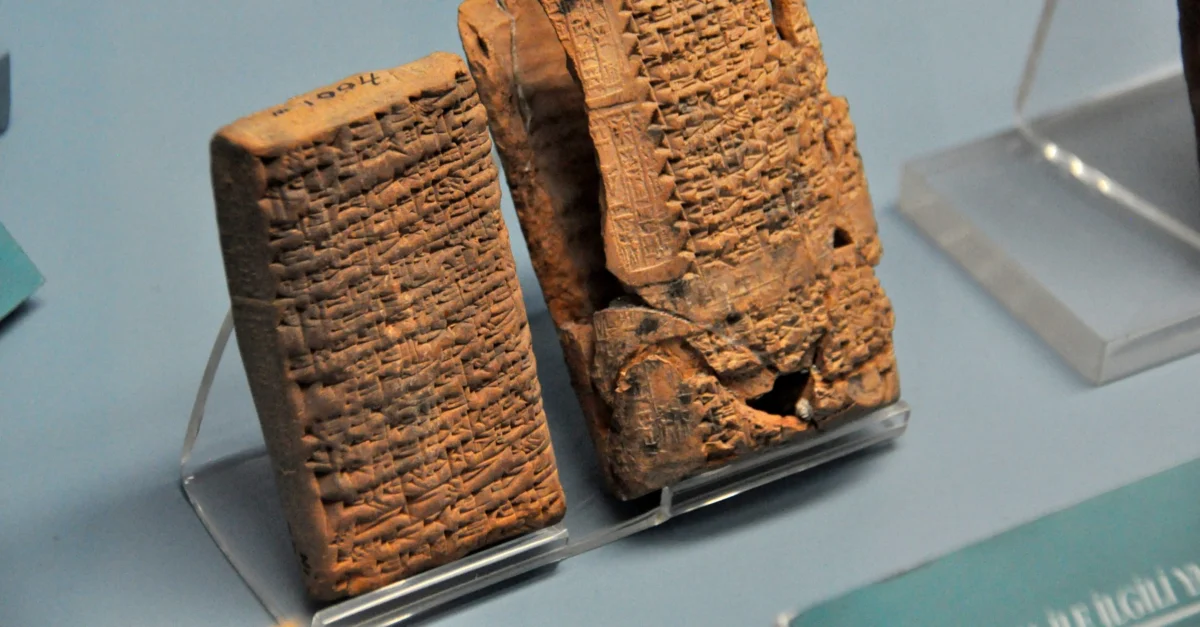
The nearly complete text of "The Poor Man of Nippur" was a significant discovery made at Sultantepe in 1952. Sultantepe, located in modern-day Turkey, was once the ancient city of Tushhan, a vital center during the Neo-Assyrian Empire. The tablet found there offered an unparalleled window into the poem’s full scope. Prior to this, fragments of the work had surfaced elsewhere: in the ruins of Nippur itself, suggesting its composition and study within the city’s renowned scribal schools, and notably, among the vast collection of tablets in the famous library of the Neo-Assyrian king Ashurbanipal at Nineveh.
The identification of the poem has been fluid, reflecting its widespread transmission across various Mesopotamian cultures. It is often referred to as Babylonian due to the discovery location of the most complete tablet in ancient Babylonia. However, given the cuneiform script used, it is sometimes labeled Akkadian, the lingua franca of the region. The fragment from Nineveh also led to earlier classifications as Neo-Assyrian, highlighting its importance across these successive empires.
Tracing its Origins: Sumerian Roots and Akkadian Script
The Sumerian origins of the poem are crucial to understanding its initial context. Sumer, often regarded as the cradle of civilization, developed complex social structures, religious beliefs, and legal codes that profoundly influenced subsequent Mesopotamian cultures. The reverence for gods like Enki (Ea) and Enlil (Ellil), central figures in the Sumerian pantheon, underscores this heritage. The poem’s presence within the curriculum of the scribal school at Nippur further emphasizes its didactic purpose, likely used to impart moral lessons and linguistic skills to aspiring scribes.
The Sultantepe copy concludes with a fascinating colophon – an inscription by the scribal apprentice, Nabu-rehtu-usur, who meticulously copied the text. This colophon not only identifies the scribe and his master, Nabu-ahu-iddina, but also includes a potent curse directed at anyone who dares to remove the tablet from the library. This echo of a curse, protecting intellectual property, subtly mirrors the themes of justice and retribution explored within the poem itself, adding another layer of intrigue to this ancient artifact. The colophon also provides a precise date: the 21st day of the month Addaru (XII) in the eponymate of Hanani, the provincial governor of Til-Barsip, corresponding to 701 BCE.
The Narrative Unfolds: A Study in Mesopotamian Ethics
"The Poor Man of Nippur" introduces us to Gimil-Ninurta, a man afflicted by profound poverty in the city of Nippur. His very name, meaning "revenge of Ninurta," a god associated with war, humanity, and retribution, serves as an ominous foreshadowing of the events to come. Gimil-Ninurta’s plight is dire: he lacks silver, gold, grain, bread, and even a change of clothes. Driven by hunger and social necessity, he contemplates a solution.
The Code of Hospitality: A Sacred Trust
In Mesopotamian society, hospitality was not merely a courtesy; it was a sacred obligation, a cornerstone of social cohesion and religious piety. To deny a guest proper treatment was not only a personal affront but an offense against the gods themselves. This cultural backdrop is critical to understanding Gimil-Ninurta’s initial decision. He sells his last possession, his clothes, to buy a goat. However, he quickly realizes that without beer, he cannot prepare a proper feast, and to offer only a paltry goat would bring shame and insult to his family and neighbors.
Instead of facing this social humiliation, Gimil-Ninurta devises a plan rooted in the very fabric of Mesopotamian hospitality. He decides to present the goat as a gift to the city’s mayor, relying on the established custom that a guest, especially one bearing a gift, must be reciprocated with a better offering. This was not a plea for charity but a strategic invocation of a deeply respected social contract.
The Mayor’s Transgression: A Breach of Sacred Duty
Upon Gimil-Ninurta’s arrival at the mayor’s house, he is initially granted entry. However, the mayor, disregarding the sacred tenets of hospitality, responds with contempt. He offers Gimil-Ninurta only a bone, sinew, and beer diluted to one-third, before having him unceremoniously thrown out of the gate. This act is a profound breach of duty, especially coming from a figure of authority who should embody the community’s highest standards. It is this egregious insult, a public humiliation and a violation of divine and social law, that ignites Gimil-Ninurta’s resolve for vengeance. As he departs, he vows to the gatekeeper that he will requite the mayor three-fold for the insult.
Three-Fold Retribution: A Masterclass in Deception
Gimil-Ninurta’s subsequent actions unfold as a meticulously planned, three-part act of retribution, each designed to humiliate the mayor as profoundly as he himself was humiliated.
-
The Royal Courier’s Ruse: For his first act of vengeance, Gimil-Ninurta approaches the king, requesting to rent a chariot for a day, promising a mina of gold in return. Dressed in noble finery by the king, he returns to the mayor’s house disguised as a royal courier. Before his arrival, he cunningly captures two live birds, placing them in a sealed box to simulate the weight of gold. Welcomed as a distinguished guest, he enjoys a lavish feast. After the mayor has retired, Gimil-Ninurta discreetly opens the box, allowing the birds to fly away. The next morning, the mayor is horrified to discover the open, empty box, believing the royal gold has been stolen under his roof. Gimil-Ninurta, feigning outrage and responsibility for the "lost" gold, proceeds to severely beat the mayor. Desperate, the mayor pleads for his life and offers Gimil-Ninurta two minas of gold (one of which is presumably used to pay the king) and new clothes. As he leaves, Gimil-Ninurta reminds the gatekeeper that two more burdens await the mayor.
-
The Cunning Physician’s Cure: For his second act, Gimil-Ninurta disguises himself as a physician, a role identified by the practice of shaving one side of the head. He returns to the mayor’s house, claiming an uncanny ability to diagnose injuries simply by touch. He accurately points out the mayor’s fresh wounds from the previous beating. He then insists that his cures only work in complete darkness. Once alone with the mayor in a secluded room, Gimil-Ninurta binds him, beats him again, and then departs, leaving the mayor in agony.
-
The Echo of the Goat: For his final, most personal revenge, Gimil-Ninurta hires a young man who resembles him. He instructs the youth to go to the mayor’s house and loudly proclaim, "I am the one with the goat!" As the mayor’s household staff rush out to capture this perceived instigator and prevent further beatings, the mayor is left vulnerable and alone. Gimil-Ninurta, who has been lying in wait beneath a nearby bridge, seizes the opportunity. He emerges, delivers a third and final beating to the mayor, and then walks away into the countryside, leaving the disgraced official to crawl back to his home. This final act closes the circle of retribution, fulfilling Gimil-Ninurta’s three-fold vow.
The extensive poetic excerpt provided within the original article vividly illustrates Gimil-Ninurta’s initial poverty, his thought process, the mayor’s callousness, and the precise execution of the first act of revenge. Despite some ellipses indicating missing words or sentences in the ancient tablet, the narrative’s power and clarity remain undiminished.
Scholarly Debates and Modern Interpretations
The enduring power of "The Poor Man of Nippur" lies in its moral ambiguity, a characteristic that has fueled scholarly debate for decades. The poem does not offer easy answers, compelling each generation to grapple with its ethical dilemmas.
The Ambiguity of Justice: Who is the Hero?
On one hand, Gimil-Ninurta appears to be the hero, a champion of justice. His name, "revenge of Ninurta," strongly links him to a deity associated with retribution, suggesting a divine mandate for his actions. In a society where the gods were expected to punish breaches of sacred law, Gimil-Ninurta effectively steps into this divine role, avenging a profound insult to the sacred code of hospitality. The mayor’s initial transgression was not merely a personal slight but a public affront to any vulnerable guest who might seek succor at his door. The fact that the mayor then welcomes the same man disguised as a noble courier and later as a doctor highlights his hypocrisy and reinforces the idea that his initial judgment was based solely on Gimil-Ninurta’s appearance and presumed lack of status.
However, the interpretation is not entirely one-sided. Scholars also point out that Gimil-Ninurta initially approaches the mayor under false pretenses. While the section of the poem where he fully explains his intentions (lines 51-57) is fragmented, the narrative suggests he brought the goat not purely as an honorable gift, but with the expectation of a better return gift, given his dire circumstances. Furthermore, the goat itself was purchased with his only clothes, implying it was hardly a lavish offering. An ancient audience, keenly aware of social nuances, might have sympathized with the mayor to some extent, perceiving Gimil-Ninurta’s initial act as a manipulative attempt to leverage the rules of hospitality for personal gain. From this perspective, the mayor’s meager offering could be seen as a cynical, yet perhaps justified, response to what he perceived as a ruse. The excessive nature of Gimil-Ninurta’s three-fold revenge also raises questions about whether his actions transcended justice and veered into cruelty.
These complexities make "The Poor Man of Nippur" a rich subject for ongoing discussion, forcing us to confront our own biases and definitions of justice, mercy, and what constitutes a deserved punishment.
The Cambridge Experiment: Bringing Babylonian to Life
In a remarkable testament to the poem’s enduring relevance, renewed interest was generated in 2018 by a short film dramatizing the story. Produced by students of St. John’s College, University of Cambridge, under the direction of Assyriologist Dr. Martin Worthington, this project achieved a unique historical milestone: it was the world’s first film ever made in Babylonian.
The students and Dr. Worthington meticulously reconstructed the ancient language, remaining faithful to the original cuneiform text. This ambitious undertaking not only brought the narrative to life in an unprecedented way but also offered modern audiences an authentic glimpse into how such a story might have been performed and understood in ancient Babylonia. The film served as a powerful educational tool, bridging the vast expanse of time and culture, and presenting contemporary viewers with the same profound questions that challenged the scribal students of ancient Nippur: What do people owe each other? How should they be treated, regardless of their station? And what, if anything, does anyone truly deserve? The project underscored the vibrant and innovative ways ancient texts can be engaged with in the 21st century.
Enduring Legacy: Lessons from Ancient Nippur
"The Poor Man of Nippur" stands as a powerful testament to the sophistication of ancient Mesopotamian literature and its capacity to explore universal human themes. Its continued study and revival are crucial for several reasons.
Timeless Questions of Fairness and Power
The poem’s central themes remain strikingly pertinent today. In an era marked by persistent social inequality, debates over economic justice, and concerns about the abuse of power, Gimil-Ninurta’s story serves as a potent ancient mirror. It forces us to examine our own societal norms: How do we treat the less fortunate? What are the responsibilities of those in positions of authority? Is the concept of "deserving" inherently tied to wealth or status, or is there a fundamental human right to dignity and respect? The mayor’s failure to extend basic hospitality to Gimil-Ninurta because of his poverty highlights the dangers of prejudice and the corrosive effects of unchecked power. Conversely, Gimil-Ninurta’s extreme retribution raises questions about the appropriate response to injustice and the fine line between righteous vengeance and excessive cruelty.
Cultural Preservation and Academic Revival
The journey of "The Poor Man of Nippur" from fragmented clay tablets to digital archives and even a cinematic adaptation exemplifies the critical importance of cultural preservation and academic endeavor. Institutions like the Oracc Museum site at the University of Pennsylvania and the Cuneiform Digital Library Initiative play a vital role in making these ancient texts accessible to scholars and the public alike. Assyriology, a field dedicated to the study of ancient Mesopotamia, continues to unveil and interpret these invaluable cultural artifacts, enriching our understanding of human history, literature, and thought. The Cambridge film project, in particular, showcases how innovative approaches can breathe new life into ancient narratives, making them relevant and engaging for a global audience.
In conclusion, "The Poor Man of Nippur" is far more than an ancient curiosity. It is a profound moral fable, a historical document, and a timeless work of literary art that continues to provoke thought and discussion across millennia. Its narrative, woven from the threads of ancient Mesopotamian life, challenges us to confront enduring questions about justice, human dignity, and the profound consequences of neglecting our shared obligations to one another. The saga of Gimil-Ninurta and the corrupt mayor of Nippur remains a powerful reminder that the search for what is fair and what is deserved is a quest as old as civilization itself.