The Unifying Theory of 2+2: How Andrew Stanton’s Philosophy Reclaims the Art of Active Cinema
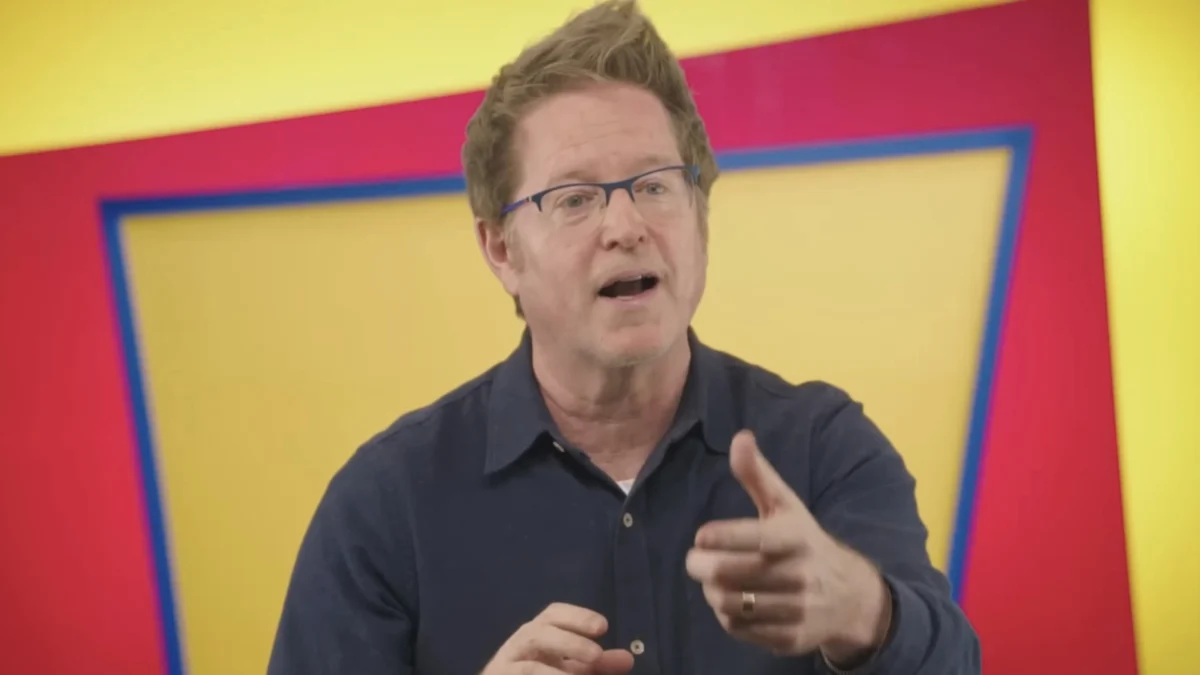
In the landscape of modern digital entertainment, where the boundary between "content" and "cinema" has become increasingly blurred, few voices resonate with as much authority as Andrew Stanton’s. As a foundational pillar of Pixar Animation Studios, Stanton has spent over three decades championing a brand of storytelling that prioritizes emotional intelligence over exposition. Central to his success is a singular, deceptively simple mantra: "Don’t give them 4; give them 2+2."
This philosophy, which Stanton famously articulated during a 2012 TED Talk, serves as a rallying cry for filmmakers to respect the intellect of their audience. In an era dominated by "second-screen" viewing—where streaming giants often optimize shows to be understood while the viewer scrolls through their phone—Stanton’s insistence on active engagement is more than just a creative preference; it is a vital defense of the cinematic medium.
Main Facts: The Genesis of the "2+2" Theory
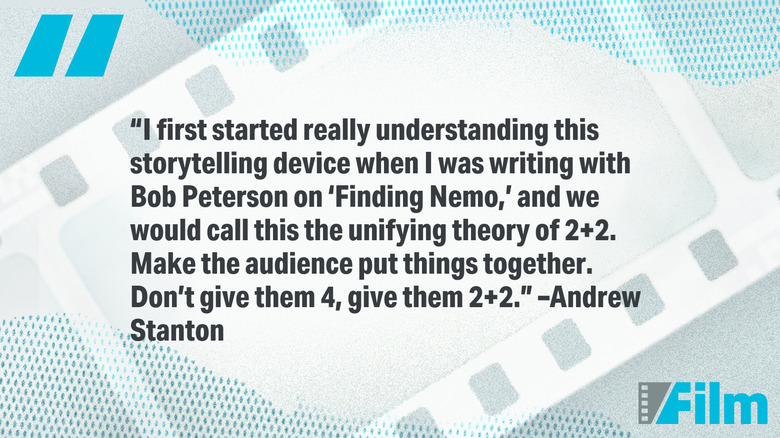
Andrew Stanton’s "Unifying Theory of 2+2" was born from his long-standing collaboration with fellow Pixar veteran Bob Peterson (co-director of Up). The concept posits that the audience possesses an innate, primal desire to solve problems. When a storyteller provides the final answer—the "4"—they inadvertently rob the viewer of the satisfaction of discovery. However, by providing the components—the "2+2"—the filmmaker invites the audience to participate in the narrative process.
"The audience actually wants to work for their meal," Stanton explained. "They just don’t want to know that they’re doing that. That’s your job as a storyteller: to hide the fact that you’re making them work for their meal."
This approach is rooted in the belief that storytelling is an interactive experience. By withholding information or conveying plot points through visual cues rather than dialogue, a director can forge a deeper psychological bond with the viewer. When the audience "solves" a character’s motivation or connects two disparate plot points, the resulting dopamine hit cements their emotional investment in the story.
Chronology: From Pixar Pioneer to Live-Action Architect
To understand the weight of Stanton’s philosophy, one must look at the trajectory of his career, which mirrors the evolution of computer-generated imagery (CGI) from a technical curiosity to a dominant art form.
The Early Pixar Years (1990–1995)
In 1990, Stanton became only the second animator and the ninth employee to join Pixar. At the time, the company was a struggling hardware and software outfit. Stanton was instrumental in the pivot toward feature filmmaking, serving as a writer on Toy Story (1995). This film didn’t just change animation; it established the "Pixar style"—stories that appealed to children through spectacle but resonated with adults through sophisticated themes of obsolescence and friendship.
The Golden Age of Visual Storytelling (2003–2008)
Stanton reached a creative zenith with Finding Nemo (2003) and WALL-E (2008). Finding Nemo became a global phenomenon, utilizing the "2+2" theory to explore the complexities of grief and overprotective parenting. However, it was WALL-E that truly tested Stanton’s limits. The film’s first act is famously devoid of dialogue, relying entirely on pantomime and sound design. This bold choice forced audiences of all ages to deduce the robot’s loneliness and curiosity through observation—a pure application of the "2+2" principle. The film’s inclusion in the Criterion Collection in 2022 solidified its status as a masterpiece of visual cinema.
The Live-Action Transition and Television (2012–2024)
Stanton’s journey has not been without its hurdles. His 2012 live-action debut, John Carter, was a notorious box office disappointment for Disney. Critics at the time argued the film was "too dense," perhaps a case where the "2+2" equation became too complex for a general audience. However, in the years since, the film has gained a significant cult following, with many praising its ambitious world-building.
Stanton subsequently found immense success in the prestige television landscape. By directing episodes of Stranger Things, Better Call Saul, Obi-Wan Kenobi, and For All Mankind, he adapted his Pixar-honed sensibilities to the serialized format, proving that the "2+2" theory is as effective in a gritty drama as it is in an animated adventure.
The Return to Roots: Toy Story 5 (2026)
Most recently, Stanton returned to the franchise that started it all. As the writer and co-director of Toy Story 5, he steered the series to another record-breaking box office performance. In an industry increasingly wary of sequels, Stanton’s involvement ensured that the film maintained the "heart and humor" that defined the original trilogy, rather than settling for a cynical cash-in.
Supporting Data: The Rise of "Second-Screen" Content
The urgency of Stanton’s "2+2" theory is highlighted by shifting consumer habits. A 2025 report by The Guardian investigated a disturbing trend in the streaming industry: the "dumbing down" of scripts to accommodate distracted viewers.
According to industry insiders, some executives at major streaming platforms have issued notes to creators requesting that plot points be repeated multiple times through dialogue. The logic is that if a viewer is looking at their smartphone, they should still be able to follow the story through audio alone. This "background noise" approach to production is the antithesis of Stanton’s philosophy.
| Comparison of Storytelling Approaches: | Feature | The "2+2" Philosophy (Stanton) | The "Second-Screen" Approach |
|---|---|---|---|
| Audience Role | Active Participant | Passive Consumer | |
| Information Delivery | Visual Cues & Subtext | Explicit Dialogue & Recaps | |
| Emotional Impact | High (Earned discovery) | Low (Spoon-fed information) | |
| Attention Required | 100% (Single-screen) | Low (Multi-tasking friendly) |
By contrast, Stanton’s work on WALL-E demonstrates that even children can follow a complex narrative without a single word of explanation, provided the visual language is precise. The "math" is simple, but the act of doing the math is what creates the magic.
Official Responses and Creative Commandments
Stanton has often spoken about the "commandments" of storytelling that guide the Pixar "Brain Trust." These principles are designed to prevent the creative laziness that leads to "giving the audience 4."
- "Make Me Care": This is the greatest commandment. Stanton argues that interest is not enough; the audience must have an emotional stake.
- "If You Want Someone’s Attention, Whisper": This aligns with the "2+2" theory. In a world of loud explosions and frantic pacing, subtlety and silence force the audience to lean in.
- "Art is Chaos; You Need a System": Stanton acknowledges that while the creative process is messy, the structure of the "2+2" theory provides the necessary framework to ensure the story remains coherent.
- "Use What You Know": Stanton encourages filmmakers to draw from personal truths. Finding Nemo, for instance, was heavily influenced by his own experiences as a father and his realizations about the dangers of being overprotective.
Bob Peterson, Stanton’s frequent collaborator, has echoed these sentiments, noting that the most memorable moments in cinema are often the ones where the filmmaker "trusted the audience to get it."
Implications: The Future of Challenging Cinema
The success of Toy Story 5 and the enduring legacy of WALL-E suggest that there is still a massive market for stories that demand attention. However, the battle between "active" and "passive" media is far from over.
As AI-generated content and algorithm-driven scripts become more prevalent, the temptation to create "perfectly predictable" stories—giving the audience "4" every time—will grow. The risk is a homogenization of culture where the "itch" for discovery is never scratched, leading to a more disengaged and less critical viewing public.
Stanton’s career serves as a blueprint for how to navigate this landscape. By moving between high-budget animation and prestige live-action television, he has shown that the "2+2" theory is a universal tool. It transcends genre and medium.
The implication for the next generation of filmmakers is clear: to survive in the age of the algorithm, they must offer something the algorithm cannot—the experience of being humanly understood. By "making the audience put things together," filmmakers like Stanton ensure that cinema remains an exercise in empathy and intellect, rather than a mere distraction. As Stanton famously put it, the goal isn’t just to tell a story; it’s to "capture a truth from your experience and express values you feel deep down in your core." That is a math problem that will always be worth solving.