"Strong Medicine" and the Enduring Allure of the Amlingmeyer Brothers: Steve Hockensmith’s "Holmes on the Range" Rides On
FOR IMMEDIATE RELEASE
SAN FRANCISCO, CA – [Insert Current Date] – In an increasingly crowded landscape of Sherlock Holmes adaptations and Western fiction, Steve Hockensmith’s "Holmes on the Range" series has carved out a distinctive and beloved niche. Twenty-three years after its inception, the saga of brothers Otto and Gustav Amlingmeyer—cowboys applying the deductive methods of Baker Street to the untamed American West—continues to captivate readers. With the recent release of "Strong Medicine," the eighth novel in the main series, Hockensmith reaffirms his masterful blend of historical fiction, engaging mystery, and character-driven humor, proving that the spirit of Holmes can indeed thrive on the range.
The series, lauded for its originality and sharp wit, has garnered a dedicated following, celebrating its unique premise where Victorian deduction meets frontier grit. Through the eyes of the verbose Otto Amlingmeyer, readers are invited into a world where seemingly trivial details hold the key to complex crimes, and the harsh realities of cowboy life are infused with a charming, often hilarious, intellectual pursuit.
Main Facts: A Unique Blend of Western Grit and Holmesian Wit
Steve Hockensmith’s "Holmes on the Range" series introduces readers to Gustav "Old Red" Amlingmeyer and Otto "Big Red" Amlingmeyer, two red-haired cowboy brothers whose lives take an unexpected turn after encountering a copy of The Strand Magazine featuring Arthur Conan Doyle’s Sherlock Holmes stories. Inspired by "The Adventure of the Red-Headed League," the taciturn Gustav becomes obsessed with applying Holmes’s methods to the mysteries they encounter while on cattle drives and later as professional "cowboy detectives." His younger, more gregarious brother Otto narrates their adventures through letters, often to real-world figures like Dr. Watson or publishers, providing a witty and grounded perspective.
The series masterfully juxtaposes the refined intellectualism of Sherlock Holmes with the rugged, often brutal, environment of the Old West. Instead of the gas-lit streets of London, the Amlingmeyer brothers navigate dusty trails, rowdy saloons, and isolated ranches, confronting criminals whose motives are as varied as the vast American landscape. The core appeal lies in this unexpected fusion: a brilliant, albeit socially awkward, cowboy attempting logical deduction in a world often governed by brute force and frontier justice, meticulously documented by his loquacious sibling.
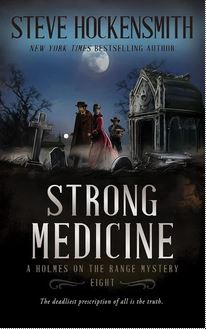
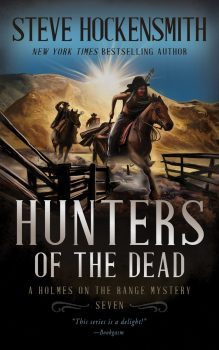
The latest installment, "Strong Medicine," picks up directly after the events of "Hunters of the Dead." The Amlingmeyer brothers accompany Olivia Pertwee, daughter of the inventor of a cashew-based "Nut Butter," to Galveston. Their mission shifts from dinosaur-related mysteries to a corporate conundrum: a business partner’s murder and the siege of the Nut Butter company. This new challenge plunges them into a world of family secrets, business rivalries, and a mysterious foreign woman leading a raw-food cult, forcing Gustav to apply his Holmesian logic to a decidedly un-Western urban mystery.
Chronology: A Quarter-Century of Frontier Deduction
The journey of the Amlingmeyer brothers began over two decades ago, showcasing Steve Hockensmith’s consistent dedication to the series and its evolving narrative.
- Early Beginnings: The first short story, "Dear Mr. Holmes," appeared in Ellery Queen’s Mystery Magazine, laying the groundwork for the unique premise.
- The Original Quintet (2006-2010): The series truly took off with five novels released in rapid succession:
- Holmes on the Range (2006)
- On the Wrong Track (2007)
- The Crack in the Lens (2008)
- The Black Dove (2009)
- The World’s Greatest Sleuth! (2010)
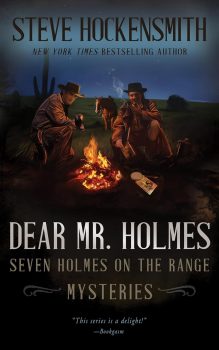
- First Collection: Dear Mr. Holmes (2011), a collection of short stories, further enriched the Amlingmeyer lore.
- A Brief Hiatus and Resurgence: After a period, the brothers made a triumphant return:
- The White Mountain (2018)
- The Stampede of 2023: A remarkable year saw a flurry of new material, re-energizing the fanbase:
- A new novel in October.
- A short story collection in November.
- Two novellas in December.
- Another short story in Ellery Queen’s Mystery Magazine.
- "Strong Medicine" (2026): The eighth novel in the main series, continuing the Amlingmeyer brothers’ adventures and deepening their character arcs.
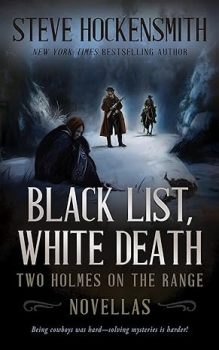
Alongside the main series, Hockensmith expanded his literary universe with "The Double-A Western Detective Agency," a spin-off that explores different facets of the Old West.
- "The Double-A Western Detective Agency" Series:
- Hired Guns (Release Year TBD but after 2023)
- No Hallowed Ground (Release Year TBD but after Hired Guns)
- One additional short story.
This robust publication schedule, particularly the recent surge, underscores the enduring popularity and creative vitality of Hockensmith’s Western world, offering readers a steady stream of new adventures to explore.
Supporting Data: Characters, Craft, and the Holmesian Underlay
The success of "Holmes on the Range" is deeply rooted in its compelling characters, Hockensmith’s meticulous crafting of their world, and the ingenious integration of Sherlock Holmes’s principles.
The Amlingmeyer Brothers: A Study in Contrasts
At the heart of the series are Otto and Gustav Amlingmeyer, a duo that mirrors Holmes and Watson but with a distinctly American frontier flavor.
-
Otto "Big Red" Amlingmeyer: The narrator, Otto, is the series’ voice and its emotional core. At 6’1" and 200 lbs, he’s physically imposing but possesses a keen observational mind, a sharp wit, and a talent for storytelling. His "sixth-grade education" belies his practical intelligence and his surprising knack for oratory and poetry. Unlike Watson, who often reveres Holmes, Otto frequently offers wry commentary on Gustav’s eccentricities and even challenges his deductions, though he ultimately defers to his older brother due to a hinted "tragic family history." His humor, often self-deprecating, serves as a crucial counterpoint to Gustav’s solemnity. Otto embodies the pragmatic, adaptable spirit of the West, constantly trying to "smooth down all the feathers" his brother ruffles. His character evolution in "Strong Medicine," where he becomes more of a published writer, adds further layers to his role beyond just muscle and social lubricant.
-
Gustav "Old Red" Amlingmeyer: The Holmesian figure, Gustav, is a smaller man (5’6", 125 lbs) but possesses an intellect that shines through his taciturn nature. Nicknamed "Old Red" for his grumpy, prematurely aged demeanor (despite being only about 25), Gustav is an introvert, pathologically shy around women, and utterly focused on his "deducifications." His curtness can border on rudeness, a trait reminiscent of Holmes’s own social detachment. Gustav’s method involves meticulous observation of "trifles" and a skeptical view of "obvious facts," directly applying Holmes’s maxims to frontier scenarios. His signature "Feh" acts as his version of Nero Wolfe’s "Pfui," a dismissive grunt that speaks volumes. The genius of Hockensmith’s portrayal is that Gustav isn’t a perfect imitation; he’s a cowboy learning to be a detective, making his occasional missteps and eventual triumphs all the more engaging. In "Strong Medicine," glimpses of "depth layered on" hint at further character development for this enigmatic figure.
The Holmesian Underlay: More Than Just Pastiche
Hockensmith’s integration of Sherlock Holmes is far more sophisticated than a simple parody. The brothers genuinely believe Holmes and Watson are real, and Gustav uses The Strand Magazine as his textbook. This meta-narrative allows for:
- Direct Application of Maxims: Gustav frequently quotes Holmes, often to Otto’s annoyance, using lines like "It is a capital mistake to theorize before one has data" or "You know my method. It is founded upon the observation of trifles." These aren’t just Easter eggs; they are integral to Gustav’s problem-solving approach.
- The "Keeping in the Dark" Trope: Holmes famously withheld information from Watson to maintain suspense. Gustav, being a natural introvert, achieves a similar effect simply by being quiet. Otto’s observations of Gustav’s silent interest in certain details mimic Watson’s struggle to understand Holmes’s thought process, keeping both the narrator and the reader guessing.
- O. Henry Twists: Particularly in the short stories, Hockensmith frequently employs an O. Henry-style twist at the end, adding a surprising conclusion that rewards careful reading and Gustav’s (or Otto’s) often overlooked insights. This narrative device perfectly complements the Holmesian emphasis on the unexpected.
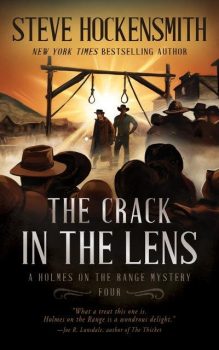
- Intertextuality: The series is peppered with references to Conan Doyle’s stories, from specific quotes to the use of names like Lestrade, Gregson, and Melas as aliases. Even book titles, like "The Crack in the Lens," are drawn directly from Holmesian canon, adding layers of appreciation for knowledgeable fans.
Hockensmith’s Craft: Voice and Verisimilitude
Hockensmith’s writing style is a key factor in the series’ success. Otto’s narrative voice is authentic, full of period-appropriate vernacular without being inaccessible. The prose flows easily, even when describing the rough-and-tumble world of the Old West.
- Humor and Satire: The humor is pervasive, often stemming from Otto’s exasperation with Gustav, his self-deprecating remarks, or his observations of the absurdity around him. The running gag about sensationalized story titles chosen by his editor ("Crimson Claws of the Phantom Puma" instead of "Curious Incidents") is a brilliant meta-commentary on the pulp fiction era and adds a consistent comedic thread.
- Atmosphere: Despite the humor, Hockensmith never sacrifices the authentic feel of the Old West. His descriptions evoke the harshness, beauty, and unique social dynamics of the era, making the setting a character in itself.
- Character Interaction: The dynamic between the brothers is central. Their sibling banter, Otto’s constant efforts to interpret Gustav, and Gustav’s single-minded pursuit of truth create a rich tapestry of human interaction that transcends the mystery plot.
"The Double-A Western Detective Agency": A Different Brand of Frontier Story
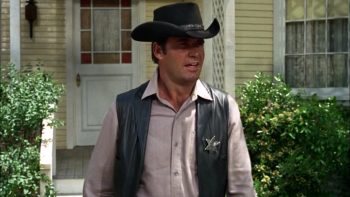
The spin-off series, featuring Oswin Diehl, Ira Hoop, and the Apache scout Eskaminzim, offers a stark contrast to the Amlingmeyer brothers’ adventures. These are "straight" Westerns, devoid of the mystery element, focusing instead on survival, justice, and the complexities of the post-Civil War West.
- New Character Dynamics:
- Oswin Diehl: A "worn-down private eye" archetype, leading the disparate group with a blend of cynicism and determination.
- Ira Hoop: A proud, quiet black man navigating racial prejudice in the Old West, his relationship with Diehl often tense and adversarial.
- Eskaminzim: The standout character, dangerously mischievous and capable of sudden violence, embodying the unpredictable spirit of the Apache. His amusement at "white culture" and his moral ambiguity make him fascinating.
- Thematic Shift: The focus here is on action, moral dilemmas, and the struggle against overwhelming odds, reminiscent of classic Western films. The agency, founded by Colonel Crowe, takes on jobs for survival, often placing its operatives in perilous situations.
- Narrative Style: While still engaging, the tone is more serious, reflecting the grittier realities of the genre. Hockensmith demonstrates his versatility by excelling in this more traditional Western format while retaining his sharp characterizations.
Official Responses: Authorial Intent and Critical Reception
While the provided text does not contain direct "official responses" from Steve Hockensmith beyond a mention of a Q&A, the longevity and consistent quality of the "Holmes on the Range" series, coupled with the reviewer’s enthusiastic praise, serve as strong indicators of its critical and popular success. The author’s evident deep understanding of both Sherlock Holmes lore and the historical nuances of the Old West suggests a deliberate and thoughtful approach to his craft.
Hockensmith’s choice to blend these two seemingly disparate genres speaks to an authorial intent to explore the universality of logical deduction and human nature across vastly different cultural and historical backdrops. The decision to make the protagonists inspired by Holmes, rather than direct descendants or contemporaries, allows for a fresh perspective, highlighting the power of literature to influence and shape individual lives.
The series has consistently been well-received, particularly by fans of both mystery and Western genres, who appreciate the intelligent plotting, authentic voice, and genuinely funny interactions. The reviewer’s personal anecdotes about listening to audiobooks and repeatedly returning to the series underscore its re-readability and enduring appeal, a testament to Hockensmith’s engaging storytelling. The "Holmes on the Range" books are often cited in discussions of innovative Holmesian pastiches, solidifying their place in the broader canon of Sherlock Holmes-inspired fiction. The recent surge in publications further signals publisher confidence and sustained reader demand.
The availability across multiple formats—paperback, digital (including Kindle Unlimited), and audiobooks—reflects a responsive approach to contemporary publishing trends, ensuring the series remains accessible to a broad audience. The reviewer’s detailed commentary on audiobook narrators, highlighting Chuck Galco as the preferred voice, also points to the importance of production quality in enhancing the reader’s experience, a factor often considered in the overall "official" presentation of a series.
Implications: An Enduring Legacy in Genre Fiction
The "Holmes on the Range" series and its spin-off, "The Double-A Western Detective Agency," represent a significant contribution to both the mystery and Western genres. Steve Hockensmith has not only created a highly entertaining and original series but has also demonstrated the incredible versatility and enduring appeal of classic literary archetypes when recontextualized with creativity and respect.
- Expanding the Holmesian Universe: Hockensmith’s work proves that Sherlock Holmes’s methods and spirit are not confined to Victorian England but can transcend time and place, inspiring deduction in the unlikeliest of settings. This broadens the scope of what a "Sherlock Holmes story" can be, moving beyond mere emulation to genuine reinvention.
- Elevating the Western Mystery: By fusing the intellectual rigor of detective fiction with the rugged backdrop of the Old West, Hockensmith has invigorated the Western mystery subgenre. He offers a sophisticated alternative to purely action-driven Westerns, appealing to readers who appreciate both historical authenticity and clever plotting.
- Character-Driven Narratives: The enduring appeal of the Amlingmeyer brothers lies in their rich characterization and dynamic relationship. Their evolution, particularly Otto’s growth as a writer and Gustav’s deepening complexity, ensures that the series remains fresh and engaging over multiple installments. This emphasis on character over pure plot mechanics is a hallmark of truly lasting fiction.
- Longevity and Relevance: The series’ ability to maintain a strong following for over two decades, culminating in a surge of new content, speaks volumes about its sustained relevance. In an era where new intellectual properties constantly vie for attention, "Holmes on the Range" stands as a testament to the power of well-crafted stories and beloved characters.
As the "Holmes on the Range" series continues its journey, readers can look forward to more adventures with Big Red and Old Red, and potentially further explorations into the untamed world of the Double-A Western Detective Agency. Steve Hockensmith has not merely written books; he has built a vibrant, living literary universe that continues to offer "great Big Red and Old Red fun," promising many more years of frontier deduction and thrilling Western tales.
Bob Byrne’s ‘A (Black) Gat in the Hand’ made its Black Gate debut in 2018 and has returned every summer since. His ‘The Public Life of Sherlock Holmes’ column ran every Monday morning at Black Gate from March, 2014 through March, 2017. And he irregularly posts on Rex Stout’s gargantuan detective in ‘Nero Wolfe’s Brownstone.’ He is a member of the Praed Street Irregulars, and founded www.SolarPons.com (the only website dedicated to the ‘Sherlock Holmes of Praed Street’). He organized Black Gate’s award-nominated ‘Discovering Robert E. Howard’ series, as well as the award-winning ‘Hither Came Conan’ series, which is now part of THE Definitive guide to Conan. He also organized 2023’s ‘Talking Tolkien.’ He has contributed stories to The MX Book of New Sherlock Holmes Stories – Parts III, IV, V, VI, XXI, and XXXIII. He has written introductions for Steeger Books, and appeared in several magazines, including Black Mask, Sherlock Holmes Mystery Magazine, The Strand Magazine, and Sherlock Magazine. You can definitely ‘experience the Bobness’ at Jason Waltz’s ‘24? in 42’ podcast.