The Neon Abyss: Analyzing Katie Skelly’s Subversive Vision in "Heaven"
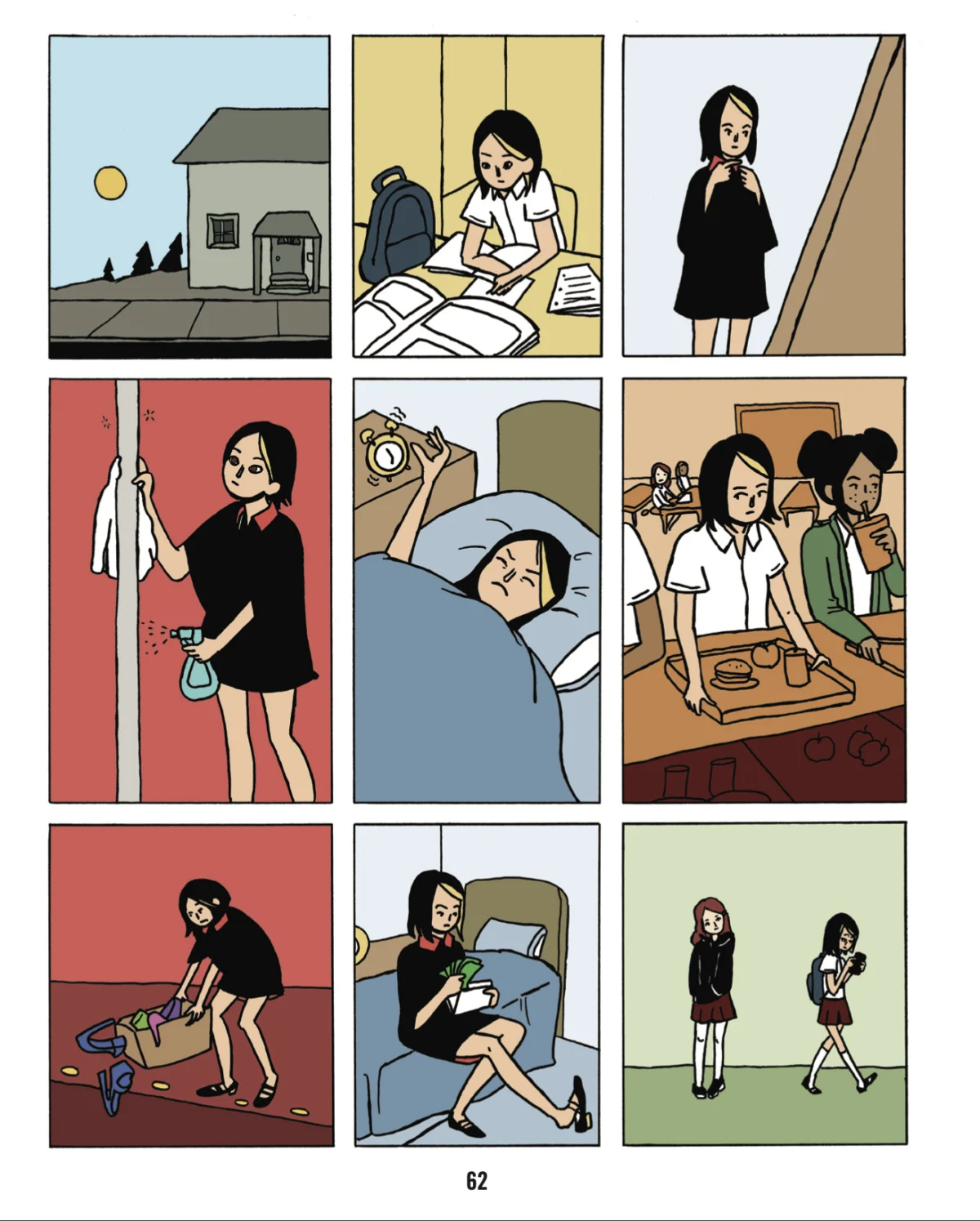
The landscape of independent American comics has long been a battleground for creators seeking to reconcile the "cutesy" aesthetic of pop art with the grim realities of the human condition. Few artists navigate this tension as deftly as Katie Skelly. With the release of her latest work, Heaven, Skelly cements her reputation as a provocateur of the "grotesque-cute," delivering a narrative that intertwines the mundane realities of sex work with the looming shadows of Lovecraftian horror.
As a conceptually ambitious graphic novella, Heaven challenges the traditional moral frameworks often applied to stories of adolescence and labor. By examining the book’s narrative structure, Skelly’s career trajectory, and the broader implications for the medium, we can better understand how Heaven serves as both a culmination of her previous themes and a bold, if abbreviated, step toward a new narrative direction.
Main Facts: A Descent into the Desert "Heaven"
At its core, Heaven is a coming-of-age story stripped of typical sentimentality. The protagonist is Dolly, an 18-year-old former gymnast living in the stultifying quiet of the American suburbs. Driven by a desperate, almost pathological need to experience something "interesting" before her youth expires, Dolly makes a radical choice: she joins "Heaven," a mysterious strip club located in the middle of the desert.
The narrative follows Dolly as she utilizes her physical prowess—honed through years of gymnastics—to secure a position as a dancer. As she integrates into the club’s ecosystem, she begins to find a "found family" among the other performers, a bond that grows in direct proportion to her alienation from her parents and high school peers. However, Heaven is not a simple workplace drama. The club harbors a dark, supernatural secret: men who enter the establishment frequently fail to leave, and the manager is seen consorting with eldritch entities from another dimension.
Skelly’s work is characterized by its visual minimalism. Her lines are clean, her colors are vibrant and "pop," and her characters often possess an endearing, doll-like quality. Yet, this aesthetic serves as a Trojan horse for subject matter that is frequently abject, violent, and sexually charged. In Heaven, this contradiction is pushed to its limit, presenting a world where the transition from girlhood to womanhood is marked not by a soft landing, but by a violent leap into the unknown.
The Chronology of a Provocateur: Katie Skelly’s Artistic Path
To understand the weight of Heaven, one must look at the evolution of Skelly’s bibliography over the last decade. She has consistently focused on the intersections of femininity, labor, and the grotesque, building a body of work that is as intellectually challenging as it is visually striking.
The Early Surrealism: The Agency
One of Skelly’s notable earlier projects, The Agency, established her interest in the surreal nature of women’s labor. The collection of short stories follows women in vaguely defined, sci-fi professions where their bodies and sexualities are the primary tools of their trade. It introduced the idea that in Skelly’s universe, "work" is rarely just a means to an end; it is an all-encompassing, often surreal identity.
The True Crime Breakthrough: Maids
Skelly’s most critically acclaimed work prior to Heaven was Maids, a brightly colored retelling of the real-life Papin sisters, two maids in 1930s France who brutally murdered their employers. In Maids, Skelly explored the "abjectness of girlhood" through the lens of class warfare and domestic abuse. The book was a masterclass in using "cute" art to depict visceral violence, forcing the reader to confront the horror of the sisters’ situation without the distancing effect of gritty, realistic art.
The Transition to Heaven (2026)
Heaven represents the next stage in this evolution. While Maids was grounded in historical tragedy and The Agency in sci-fi surrealism, Heaven merges these interests with cosmic horror. It is her most narratively direct work to date, moving away from the atmosphere-heavy vignettes of her past and toward a structured character arc. It reflects a creator who is increasingly comfortable with long-form storytelling, even as she maintains the "short and sweet" brevity of the graphic novella format.
Supporting Data: The Aesthetics of the Grotesque and the Labor of the Body
The thematic richness of Heaven lies in its refusal to offer the reader a moral safety net. In American comics, stories involving sex work are often pigeonholed into two categories: pitiable tragedies or hyper-sexualized fantasies. Skelly rejects both, opting for a "cheery middle finger" to moral crusaders.
The "Braces" Scene: A Metaphor for Autonomy
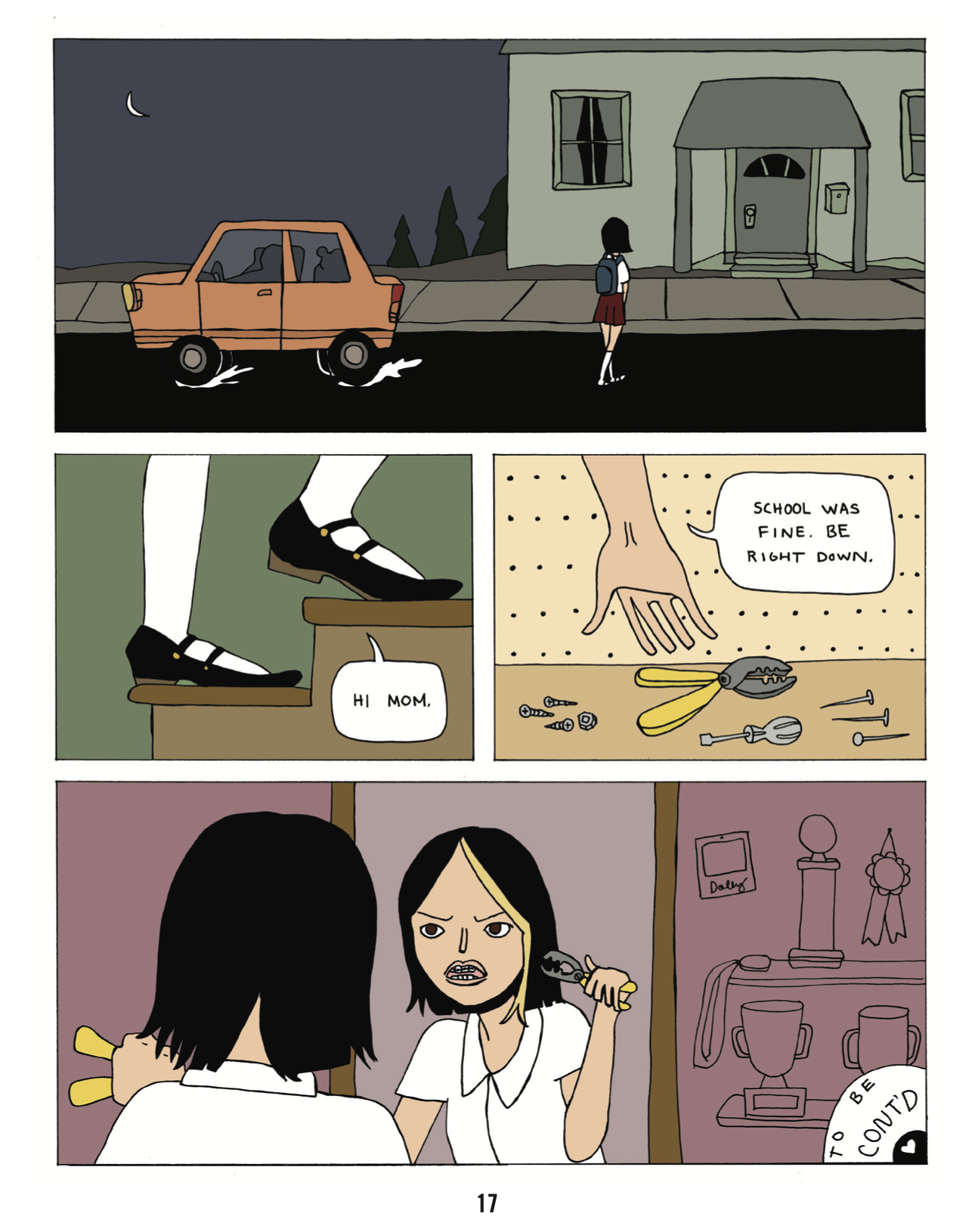
Perhaps the most discussed moment in the book is when Dolly, realizing her braces make her look too young for the club, uses a pair of pliers to rip them off her teeth. It is a gruesome, wince-inducing scene, yet Skelly presents it without judgment. This act serves as a literal and metaphorical shedding of childhood. For Dolly, the physical pain of the pliers is a small price to pay for the agency to choose her own "madness" over the "mundanity" of the suburbs.
Sex Work as Mundane Labor
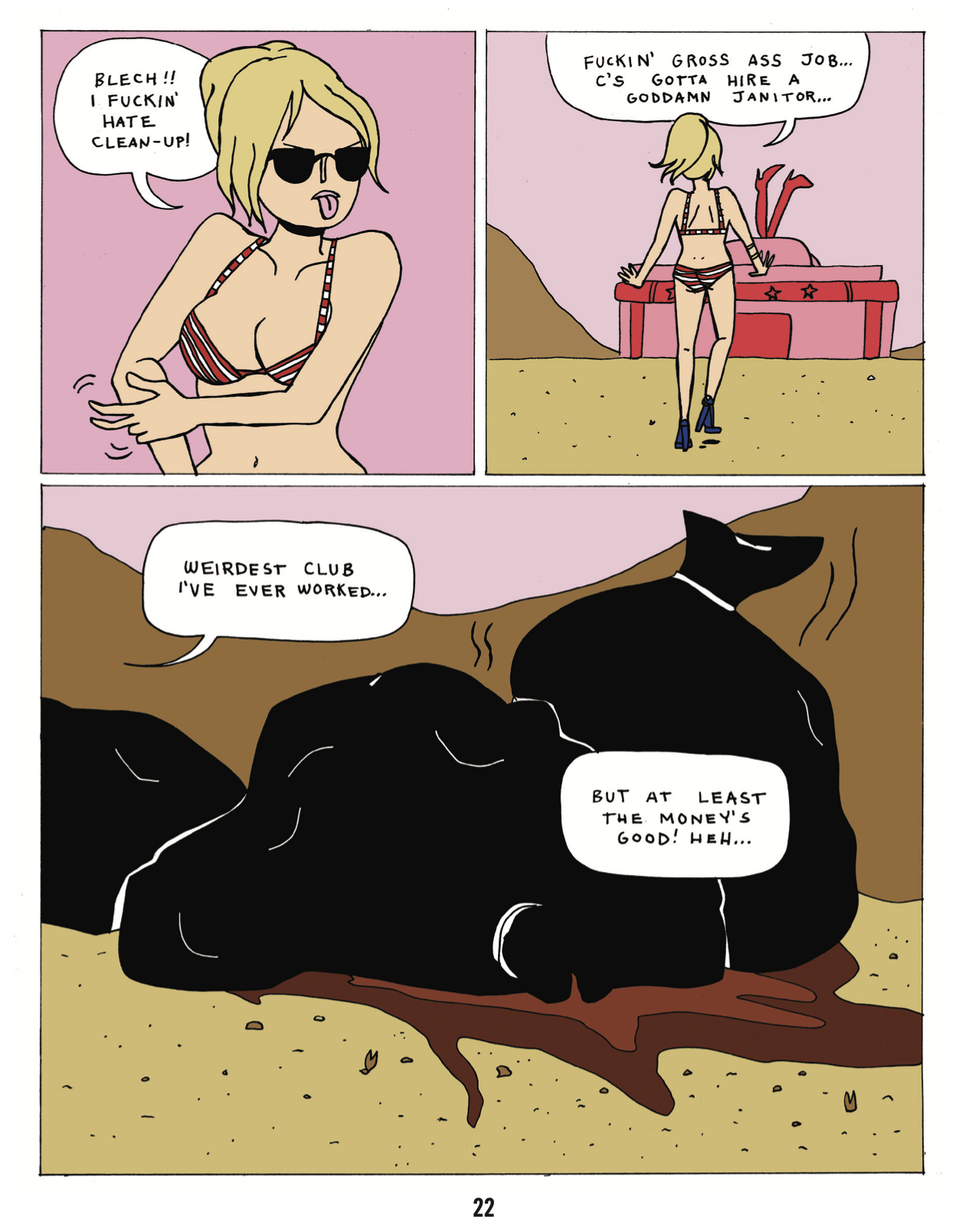
While the club is a portal for eldritch horrors, the day-to-day life of the dancers is portrayed with startling realism. Skelly leans into the "sex work is work" mantra but pushes it further. She depicts the camaraderie of labor—the "tight-yet-distant" relationships between coworkers who are united by a paycheck and a shared environment. In one scene, a dancer complains about having to haul leaking blood-filled garbage bags, not because of the horror of the contents, but because "cleanup" wasn’t in her job description. This juxtaposition of the horrific and the bureaucratic is a hallmark of Skelly’s social commentary.
Visual Contradictions
Skelly’s use of the medium relies on the "dual nature" of comics. While the text might describe a Lovecraftian ritual or a violent encounter, the images remain bright, clear, and almost inviting. This creates a cognitive dissonance in the reader, mirroring the experience of the characters who find beauty and stability in a world that society deems "grotesque."
Official Responses: Critical Reception and Comparative Analysis
Critics have long struggled to categorize Skelly’s work, often looking toward international influences to find a comparable "vibe."
The Manga and European Connection
Reviewers, including Tate McFadden of The Comics Journal, have noted that Skelly’s work shares DNA with the gekiga masters of Japan, such as Yoshihiro Tatsumi and Yoshiharu Tsuge. Like these masters, Skelly is willing to let her stories meander and refuses to provide concrete moral resolutions.
Simultaneously, her work carries the "European flavor" of artists like Milo Manara or Giulia Sagramola. This blend of regional styles allows her to maintain a concise narrative pace while exploring themes that might feel overbearing in a traditional 300-page graphic novel.
The Critique of Brevity
Despite the praise for her thematic boldness, Heaven has faced criticism regarding its length. At 107 pages, some critics feel the book is too short to fully flesh out its ambitious concept. The primary criticisms include:
- Character Depth: While Dolly is a compelling protagonist, the reader is never fully privy to why she is so desperate to leave her life. Unlike the sisters in Maids, who were fleeing overt abuse, Dolly’s motivations are more internal and opaque, making it difficult for some readers to form a strong attachment.
- Narrative Pacing: The transition from the mundane to the supernatural happens rapidly. Critics argue that the "action-driven" nature of the second half of the book comes at the expense of the atmospheric discomfiture that made Skelly’s earlier work so haunting.
- The Ending: The conclusion, described as "sweet and cute," has been called "unearned" by some, as it resolves Dolly’s internal conflict with a neatness that contradicts the messy, violent path she took to get there.
Implications: Redefining the Graphic Novella and the Indie Genre
The publication of Heaven has broader implications for the independent comics industry, particularly regarding how stories of "abject womanhood" are told.
The Power of the "Graphic Novella"
Skelly’s success with the 100-page format suggests a growing market for the "graphic novella"—works that are longer than a single-issue comic but shorter than a sprawling novel. This format allows for a focused "burst" of storytelling that suits Skelly’s minimalist style, preventing her specific brand of "weirdness" from wearing thin on the reader.
Subverting the "Tragic" Narrative
By presenting a protagonist who chooses sex work not out of poverty or coercion, but out of a desire for adventure and self-actualization, Skelly challenges the "moral tragedy" trope. Heaven suggests that the real danger to young women isn’t necessarily the "shady" industries they enter, but the "maddening mundanity" of a society that offers them no other path to excitement.
Future Directions
While Heaven may leave some readers wishing for more—more backstory, more world-building, more time with the characters—it marks a significant turning point for Katie Skelly. It demonstrates her ability to handle a direct narrative arc and her willingness to experiment with genre fiction (horror/thriller) without losing her unique artistic voice.
As the industry moves toward more diverse and nuanced portrayals of labor and gender, Heaven stands as a vibrant, if frustratingly brief, beacon. It reminds us that in the hands of a skilled artist, even the most gruesome pliers can be a tool for liberation, and even a desert strip club can be, in its own strange way, a version of heaven.