The Human Terrain: Jacob Holster and the Evolution of Painterly AI Aesthetics
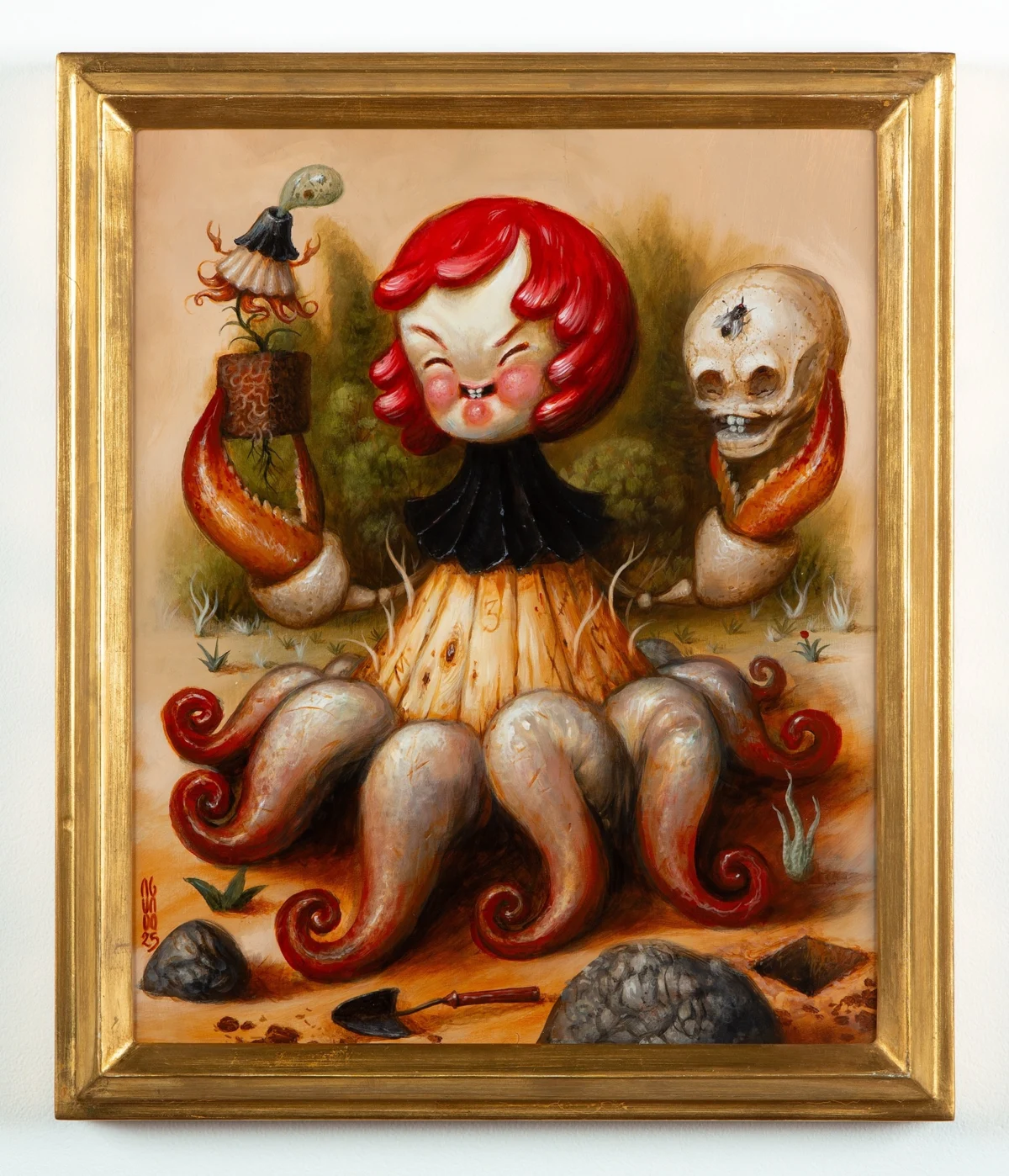
In the rapidly shifting landscape of generative media, where the prevailing trend often leans toward hyper-realistic renders and the "plastic" sheen of clinical digital imagery, a new movement is emerging that seeks to reclaim the tactile, the imperfect, and the profoundly human. At the forefront of this movement is Jacob Holster, known in the digital art world by his handle @bandyquantguy. A scholar, musician, and filmmaker, Holster is redefining the visual vernacular of artificial intelligence by bridging the gap between high-tech synthesis and the grit of traditional oil painting.
Holster’s work serves as a critical intervention in the ongoing debate regarding the soul of AI art. While many creators use artificial intelligence to simulate a camera lens, Holster uses it to simulate the brush. His portfolio, characterized by warm textures and a dreamlike, impressionistic quality, suggests that the future of generative art may not lie in its ability to mimic reality, but in its ability to evoke the sensory memory of human craftsmanship.
Main Facts: The Intersection of Academia and Artistry
Jacob Holster is not a typical digital creator. He serves as an Assistant Teaching Professor of Music Education at Penn State University, a role that provides a rigorous intellectual framework for his creative output. His academic research focuses on the convergence of artificial intelligence, pedagogy, and creative practice. This dual identity—professor and artist—allows him to approach AI not merely as a novelty tool, but as an epistemological shift in how we teach and create.

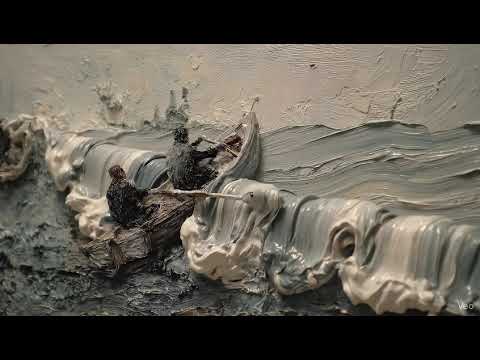
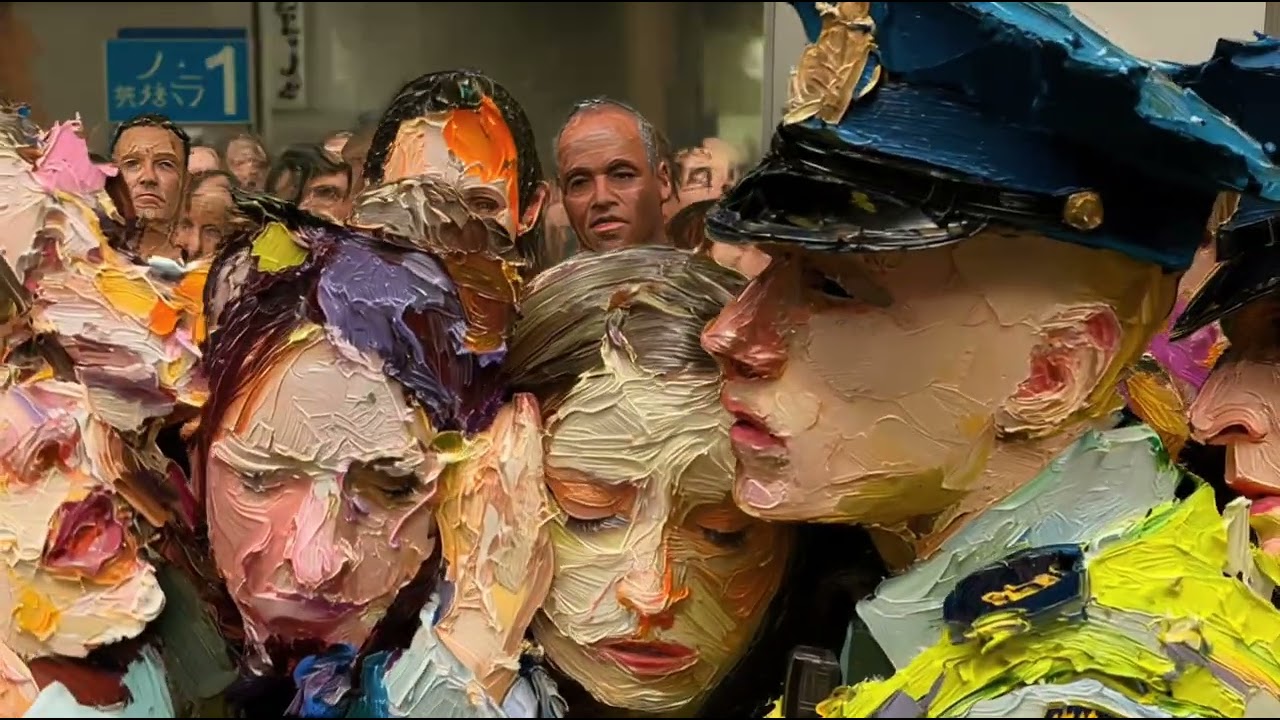
The core of Holster’s aesthetic, often referred to as "Painterly AI," moves away from the "Uncanny Valley" of hyper-realism. Instead, his work—most notably his "Paint World" series—features heavy textures, visible impasto-like strokes, and a color palette that feels organic rather than synthetic. His recent AI short film, Art Is Human Terrain, serves as a manifesto for this approach, arguing that even when generated by algorithms, art remains a fundamentally human endeavor, rooted in our history, our senses, and our terrain.
Key Artistic Pillars of Holster’s Work:
- Tactile Textures: Eschewing the smoothness of CGI for the grain of canvas and the thickness of oil.
- Humanistic Narrative: Using AI to explore themes of consciousness, memory, and the journey of the self.
- Academic Rigor: Grounding visual experiments in pedagogical theories and musicological structures.
- Auditory Synergy: Leveraging his background in music education to ensure that soundscapes and visuals move in a choreographed, rhythmic harmony.
Chronology: From Music Pedagogy to Generative Filmmaking
The evolution of Jacob Holster’s career reflects the broader transformation of the creative industries in the age of machine learning.
The Academic Foundation
Holster’s journey began in the realm of music education. At Penn State, his primary focus has been on how students learn and how technology can facilitate creative expression. This background in music is crucial; music is an abstract, temporal art form that relies on tension, release, and texture. When Holster began experimenting with visual AI, he carried these musicological principles with him. He did not see "prompts" as commands, but as compositions.
The Emergence of @bandyquantguy
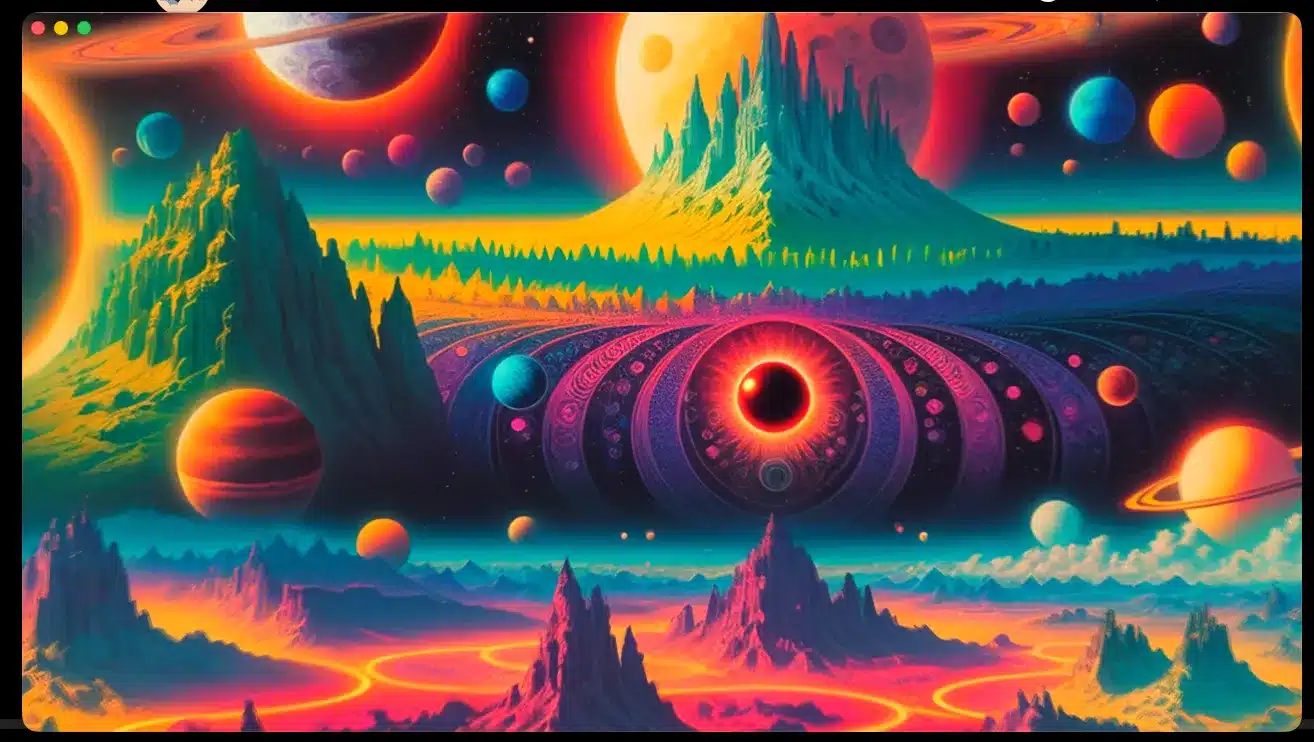
As generative tools like Midjourney, Stable Diffusion, and Runway began to mature, Holster adopted the moniker @bandyquantguy on social media. This platform became a laboratory for what he calls "visual experimentation." Unlike many AI artists who sought to create "perfect" images of celebrities or futuristic cities, Holster’s early posts showed a fascination with the "glitch" and the "grit." He sought to find the "ghost in the machine"—the moments where AI failed to be realistic and instead became accidentally expressive.
The "Paint World" Series (2023–Present)
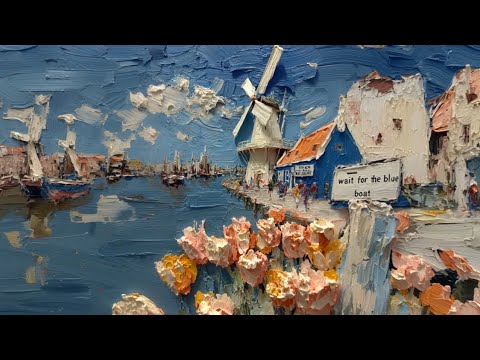
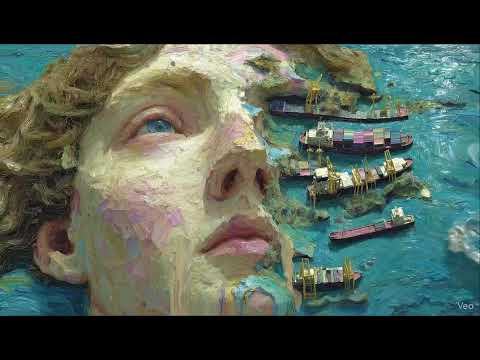
In the last year, Holster’s work has coalesced into the "Paint World" series. This ongoing project includes notable entries such as Le Voyage [Paint World 28] and Recipe for Consciousness [Paint World 38]. These works mark a shift from still images to moving paintings. By utilizing video synthesis tools, Holster created a style where the very air in the frame seems to be made of wet paint. The movement in these films is not the fluid motion of a camera, but the vibrating, shifting nature of a dream.
Supporting Data: The Technical and Aesthetic Framework
To understand why Holster’s work resonates, one must look at the technical "counter-programming" he employs. Most generative AI models are trained to reduce "noise" and "artifacts." However, in the world of fine art, "noise" is often where the character resides—the grain of the paper, the hair of the brush, the unevenness of the varnish.
The "Painterly" Methodology
Holster’s process involves a sophisticated layering of AI tools. While he has not released a specific "recipe," an analysis of his visual output suggests a workflow that prioritizes:
- Style Transfer over Simulation: Using models that emphasize the stroke patterns of Post-Impressionism and Surrealism.
- Low-Fidelity Intentionality: Purposefully avoiding high-resolution prompts that trigger the AI’s "smoothing" algorithms.
- Temporal Coherence through Texture: In films like Wait for the Blue Boat, the consistency of the piece is maintained not by the shapes of the objects, but by the consistent texture of the "paint" across frames.
Visual Analysis of Art Is Human Terrain
This film represents a pinnacle of Holster’s current style. It features a sequence of evolving landscapes that feel less like a digital animation and more like a camera moving through a gallery of wet canvases. The data supporting the success of this style is found in its engagement; Holster has built a dedicated following of traditional artists and digital creators alike, bridging a gap that is usually fraught with tension. His work is often cited by surrealist communities (such as Surrealism Today) as a prime example of how AI can honor the legacy of movements like Dada and Surrealism.
Official Responses and Academic Context
As an Assistant Teaching Professor at Penn State, Holster’s work is subject to the scrutiny of the academic community. His position allows him to advocate for a "human-first" approach to AI in education.
The Pedagogical Stance
In academic circles, there is significant concern regarding AI and the "death of the artist." Holster’s response, both in his writing and his art, suggests that AI is a "co-pilot" rather than a replacement. He argues that the pedagogical value of AI lies in its ability to allow students to iterate on complex conceptual ideas rapidly.
"His research examines the convergence of artificial intelligence, pedagogy, and creative practice," a Penn State profile notes. This academic backing provides a layer of "official" legitimacy to his work. It isn’t just "content"; it is a case study in how a human mind can direct an algorithm to achieve a specific, high-art aesthetic that the algorithm would not have chosen on its own.
The Critical Reception
Art critics have noted that Holster’s work feels "warm." In a digital age where much of what we consume is "cold"—metal, glass, blue light—Holster’s use of ochres, deep reds, and textured ambers provides a psychological comfort. His work has been highlighted by platforms dedicated to the intersection of technology and the humanities, where he is praised for his "deliberately humanistic" approach.
Implications: The Future of the "Human Terrain"
The work of Jacob Holster carries significant implications for the future of the creative arts. As AI tools become more ubiquitous, the "barrier to entry" for creating realistic imagery will vanish. When anyone can create a photo-realistic image of a mountain, the value of that image drops to zero.
The Shift to "Sensory Art"
Holster’s success suggests that the future value of art will lie in sensory specificity. We are moving into an era where the quality of the digital surface matters more than the clarity of the subject. Holster’s "Paint World" implies that digital art must develop its own "haptics"—a way for the eye to "feel" the image.
AI as a Tool for Preservation
Ironically, Holster is using the most advanced technology on earth to preserve the aesthetics of the 19th century. By training and prompting models to recognize the value of a brushstroke, he is ensuring that the visual language of traditional painting survives in the digital age. He is not replacing the painter; he is digitizing the essence of painting.
Conclusion: Technology as a Human Medium
Jacob Holster’s work under the @bandyquantguy handle serves as a reminder that technology is a neutral medium. It can be clinical and cold, or it can be warm and evocative. By grounding his work in his academic background at Penn State and his deep understanding of music and pedagogy, Holster has created a "Human Terrain" within the digital void.
His films and images stand as a testament to the idea that as long as there is a human "quant guy" behind the prompts—directing the flow, choosing the textures, and composing the narrative—the resulting art will always be a human product. In the "Paint World" of Jacob Holster, the brush may be virtual, but the soul of the work is undeniably real.