Beyond the Sands: Unveiling the Visual Genesis of Denis Villeneuve’s "Dune: Part One"
Introduction: A Tapestry of Imagination for a Cinematic Epic

Denis Villeneuve’s "Dune: Part One" (2021) stands as a monumental achievement in contemporary filmmaking, a visually stunning and thematically rich adaptation that has captivated audiences worldwide and garnered critical acclaim, including prestigious Academy Awards. While the on-screen spectacle is undeniable, the genesis of this cinematic universe lies in the fertile ground of concept art and design. A remarkable collection of these foundational works offers an unparalleled glimpse into the meticulous process of translating Frank Herbert’s dense and sprawling novel into a cohesive and awe-inspiring visual language. This extensive showcase delves into the early sketches and definitive key art that meticulously crafted the film’s distinctive aesthetic, a powerful fusion of brutalist architecture and starkly naturalistic environments. It illuminates how the production team navigated the immense scope of the source material, forging a singular visual identity that would define Arrakis and its inhabitants for a generation of filmgoers.

H2: The Architects of Arrakis: A Journey Through Early Concept Development

The creation of a world as vast and complex as "Dune" is not a singular act of inspiration, but rather a collaborative symphony of artistic vision and technical expertise. The concept art for "Dune: Part One" serves as a testament to this, revealing the iterative process by which the film’s visual identity was conceived. From the imposing fortresses of the Great Houses to the utilitarian survival gear of the Fremen, every element was carefully considered and brought to life through the initial explorations of talented artists.

H3: Establishing the Aesthetic: Brutalism Meets the Natural World
One of the most striking aspects of "Dune: Part One" is its unique visual dichotomy. The film masterfully juxtaposes the imposing, monolithic structures of brutalist architecture with the raw, untamed beauty of desert landscapes. This deliberate contrast, as evidenced in the early concept art, was crucial in establishing the film’s thematic core: the clash between industrial power and the overwhelming force of nature.

Early sketches by artists like Deak Ferrand showcase initial explorations of Arrakis’s architectural styles. Ferrand’s work on locations such as Caladan and Arrakeen demonstrates a keen understanding of how to convey power and lineage through form and material. His designs for Arrakeen, for instance, hint at the stark grandeur of the Imperial seat, while also suggesting the oppressive weight of its political machinations. The concept art for Geidi Prime, the desolate homeworld of the Harkonnens, further emphasizes this. Ferrand’s interpretations often lean into a stark, utilitarian aesthetic, hinting at the brutal efficiency and harsh realities of Harkonnen society.

Conversely, the work of Jeffrey Read on locations like Caladan offers a more organic, almost melancholic beauty. His "Caladan Graveyard Location Paintover" and "Caladan Cemetery" pieces evoke a sense of ancient history and a connection to the natural world, setting a poignant visual tone for House Atreides’ ancestral home before their fateful journey to Arrakis. This careful consideration of contrasting environments was paramount in establishing the distinct visual identities of the film’s key settings.

H3: The Power Structures Defined: House Atreides, the Fremen, and House Harkonnen
The narrative of "Dune" is driven by the intricate power dynamics between its three central factions. The concept art meticulously defines the visual language of each, ensuring their distinct identities were immediately recognizable and thematically resonant.

House Atreides, known for their nobility and strategic prowess, are often depicted with a blend of regal elegance and military preparedness. Concept art by artists such as Ed Natividad explores the weaponry and tactical gear associated with the Atreides. His "Atreites Swords Blades" pieces, for example, showcase a refined yet formidable design, reflecting the house’s martial heritage. The designs also begin to hint at the integration of their technology with their warrior ethos.

In stark contrast, the Fremen, the indigenous people of Arrakis, are represented through designs that emphasize survival, resourcefulness, and a deep connection to the harsh desert environment. Jerad S. Marantz’s explorations of the Fremen stillsuit are particularly insightful. His "Stillsuit Ortho" pieces provide detailed breakdowns of this iconic survival gear, highlighting its intricate design for water reclamation and its practical, almost organic integration with the wearer’s body. Other artists, like Joseph Cross, further develop these concepts, focusing on the functional aspects of Fremen attire and weaponry, such as the "Crysknife Blade," a symbol of their fierce independence and unique cultural heritage.

The House Harkonnen, characterized by their cruelty and industrial might, are visually represented through designs that exude menace and oppressive power. Nivanh Chanthara’s work on Vladimir Harkonnen’s armor offers a chilling glimpse into the Baron’s formidable presence. His "Vladimir Harkonnen Armor Rough" sketches reveal a design that is both menacing and imposing, reflecting the character’s monstrous nature and the overwhelming power of his house. George Hull’s concept art also contributes to this, with pieces like the "Harkonnen Harvester" and "Harvester Front High View" depicting industrial machinery that is both awe-inspiring and terrifying in its scale and design, underscoring the Harkonnens’ exploitative grip on Arrakis.

H2: A Deep Dive into World-Building: Technology, Culture, and Survival

The success of "Dune: Part One" lies not only in its compelling narrative but also in its meticulously crafted world. The concept art provides a detailed blueprint for this intricate world-building, offering technical explorations of faction-specific technology, ceremonial attire, and the specialized survival gear that allows life to persist in the unforgiving environment of Arrakis.

H3: The Machines of Power and Survival
The technology depicted in "Dune" is as diverse as its inhabitants. From the sleek ornithopters that traverse the skies to the colossal spice harvesters that dominate the desert, each machine is a character in itself, imbued with purpose and visual storytelling.

Steve Burg’s contributions are particularly notable in this regard. His "Heighliner" and "Harvester Carryall" designs capture the immense scale and functional design of the interstellar transport ships and resource extraction vehicles. The "Harvester" pieces, in particular, emphasize the brutal efficiency of the Harkonnen operation, showcasing a design that is both powerful and somewhat alien.

Kamen Anev’s concept art offers a variety of technological marvels, from the elegant "Spotter Ship" to the terrifying depiction of a "Worm." His work on Arrakeen also hints at the technological infrastructure that supports the city’s inhabitants, even in its harsh environment.

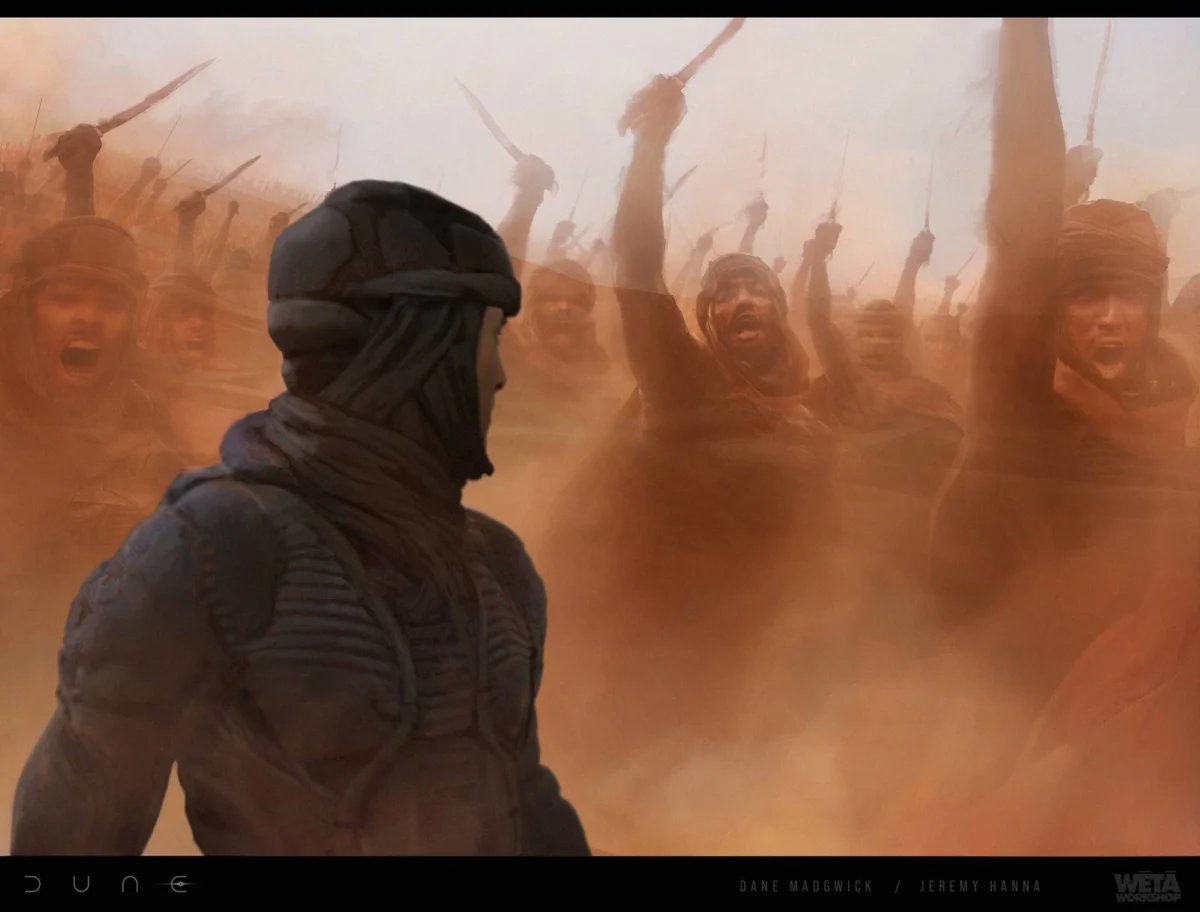
The development of the iconic ornithopters is a testament to the collaborative nature of concept art. Pieces by artists like Jeremy Hanna and Peter Popken explore different iterations of these winged vehicles, capturing their unique flight dynamics and their crucial role in reconnaissance and transport. Hanna’s "Crashed Ornithopter" pieces, for instance, powerfully convey the dangers inherent in aerial travel on Arrakis.

H3: The Threads of Culture: Attire and Ritual
Beyond mere functionality, the attire and ceremonial elements in "Dune" are deeply rooted in the cultures they represent. The concept art reveals the thoughtful design choices that imbue these elements with meaning.

Dane Madgwick’s evocative pieces, such as "Jessica in Meditation" and "Paul’s Vision," explore the spiritual and psychological dimensions of the film. While not strictly attire, these artworks often capture the characters in moments of profound introspection, suggesting a visual language that extends to their inner lives and ceremonial practices.

The Bene Gesserit, with their mystical and political influence, are also visually represented. George Hull’s "Bene Gesserit Ramp Set" offers a glimpse into their sacred spaces, hinting at the grandeur and mystery surrounding their order. Keith Christensen’s "Bene Gesserit Group" concept art further explores their visual identity, suggesting a sophisticated and perhaps ancient aesthetic.

H3: Mastering the Desert: The Ingenuity of Survival Gear
The Fremen’s mastery of Arrakis is intrinsically linked to their survival gear, most notably the stillsuit. The concept art dedicated to this essential piece of equipment underscores its importance.

Beyond Jerad S. Marantz’s and Joseph Cross’s detailed explorations, Keith Christensen’s "Fremen Stillsuit Fabrication" pieces offer a more in-depth look at the construction and design principles behind this life-sustaining suit. His "Soldier Side by Side" concepts also highlight the practical application of Fremen attire in combat and daily life.

H2: A Visual Legacy: The Art Book and Beyond

The wealth of concept art generated for "Dune: Part One" is not merely an ephemeral collection of sketches; it is a tangible testament to the immense creative effort invested in bringing this science fiction epic to life. The existence of comprehensive art books, such as "The Art and Soul of Dune," allows audiences to delve deeper into this visual genesis.

The promotional material, including the visually striking cover art for "The Art and Soul of Dune" itself, often features iconic imagery that encapsulates the film’s aesthetic. These books serve as invaluable resources for understanding the directorial vision and the artistic collaborations that shaped the final film. They provide context for the design choices, offering insights into the challenges and triumphs of translating a beloved novel into a cinematic masterpiece.

H2: The Collaborative Spirit: A Pantheon of Artistic Talent

The creation of "Dune: Part One" was a monumental undertaking that relied on the collective genius of a vast array of talented artists. The names associated with the concept art – Dane Madgwick, Deak Ferrand, Ed Natividad, George Hull, Jeffrey Read, Jerad S. Marantz, Jeremy Hanna, Joseph Cross, Kamen Anev, Keith Christensen, Nivanh Chanthara, Peter Popken, Seungjin Woo, Steve Burg, and Carlos Huante – represent a veritable who’s who of the concept art world.

Each artist, with their unique style and perspective, contributed to the rich tapestry of "Dune." From the sweeping landscapes of Caladan to the arid expanses of Arrakis, from the intricate details of Fremen stillsuits to the imposing architecture of the Harkonnen strongholds, their collective efforts coalesced to create a world that felt both alien and utterly believable.

Carlos Huante’s work on the sandworms, for instance, captures the sheer, awe-inspiring terror and majesty of these colossal creatures. His iterations of the sandworm convey a sense of raw, untamed power that is central to the planet’s ecosystem and the Fremen’s way of life.

The diversity of styles and approaches among these artists is a testament to the open and collaborative nature of Villeneuve’s production. The resulting visual language of "Dune: Part One" is a testament to their shared commitment to realizing a singular and unforgettable cinematic vision.

H2: Implications and Legacy: Shaping the Future of Sci-Fi Cinema

The success of "Dune: Part One" and the profound impact of its visual design have significant implications for the future of science fiction filmmaking. The film has set a new benchmark for world-building, demonstrating that complex, visually rich narratives can be brought to life with a thoughtful and cohesive artistic vision.

The concept art, in particular, highlights the importance of early design exploration. It underscores that the visual foundation of a film is as crucial as its screenplay or performances. The meticulous attention to detail in translating Herbert’s world into a tangible visual reality has inspired a new generation of filmmakers and artists to push the boundaries of what is possible in cinematic storytelling.

Furthermore, the availability of this concept art through publications like "The Art and Soul of Dune" democratizes the creative process, allowing audiences to engage with the film on a deeper level. It offers a window into the imagination that birthed Arrakis, fostering a greater appreciation for the artistry and dedication required to bring such ambitious projects to fruition. As "Dune: Part Two" continues to captivate audiences, the foundational visual language established in the first installment, born from the incredible talent showcased in its concept art, remains an indelible part of its enduring legacy.