The New Frontier of Digital Architecture: How VR and 3D Modeling are Redefining Sci-Fi Concept Art
In the rapidly evolving landscape of digital media, the line between imagination and realization is becoming increasingly blurred. Traditional 2D sketching, once the undisputed starting point for every concept artist, is being challenged by a more immersive, spatial approach. Recently, digital artist Juliano (known in the creative community for his intricate mechanical designs) showcased a transformative workflow that bridges the gap between virtual reality (VR) and high-end 3D rendering. By conceptualizing "town-sized" server infrastructures, Juliano’s work highlights a burgeoning trend in the industry: the use of VR as a primary ideation tool to create complex, megastructure environments.
Main Facts: A Vision of the Technological Sublime
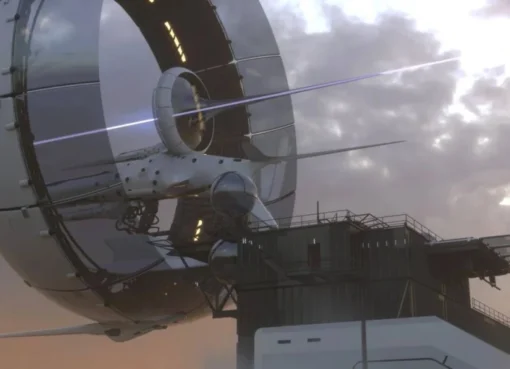
The core of this creative exploration lies in the reimagining of our digital backbone. As the world becomes increasingly reliant on cloud computing and data storage, Juliano’s work asks a poignant question: What if these invisible infrastructures were scaled to the size of metropolitan areas?
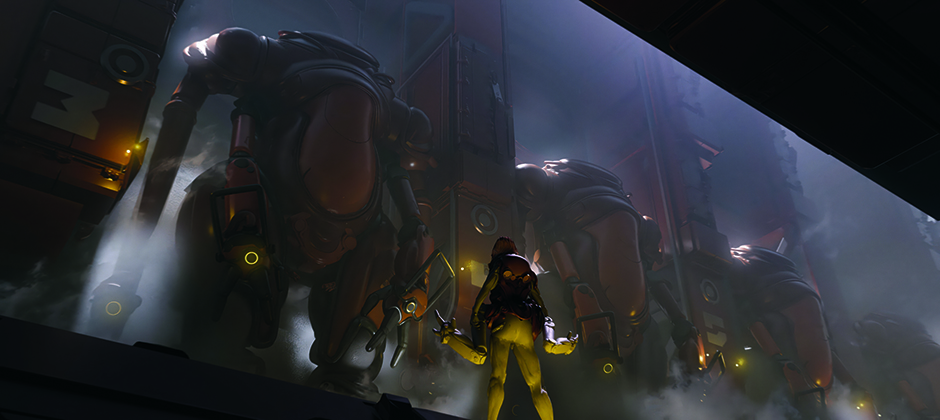
The project focuses on the creation of a "Server City"—a sterile yet awe-inspiring environment composed entirely of paneling, cables, and monolithic hardware. Unlike the typical "Cyberpunk" aesthetic, which often leans into grime, decay, and social collapse, Juliano’s vision is one of "upbeat romanticism." The environment is designed for maintenance, featuring a synergy between human engineers and functional mechs.
Key technical components of this workflow include:
- Gravity Sketch (VR): Used for initial "spatial sketching" and volumetric ideation.
- Blender: The primary hub for refining geometry and managing complex 3D scenes.
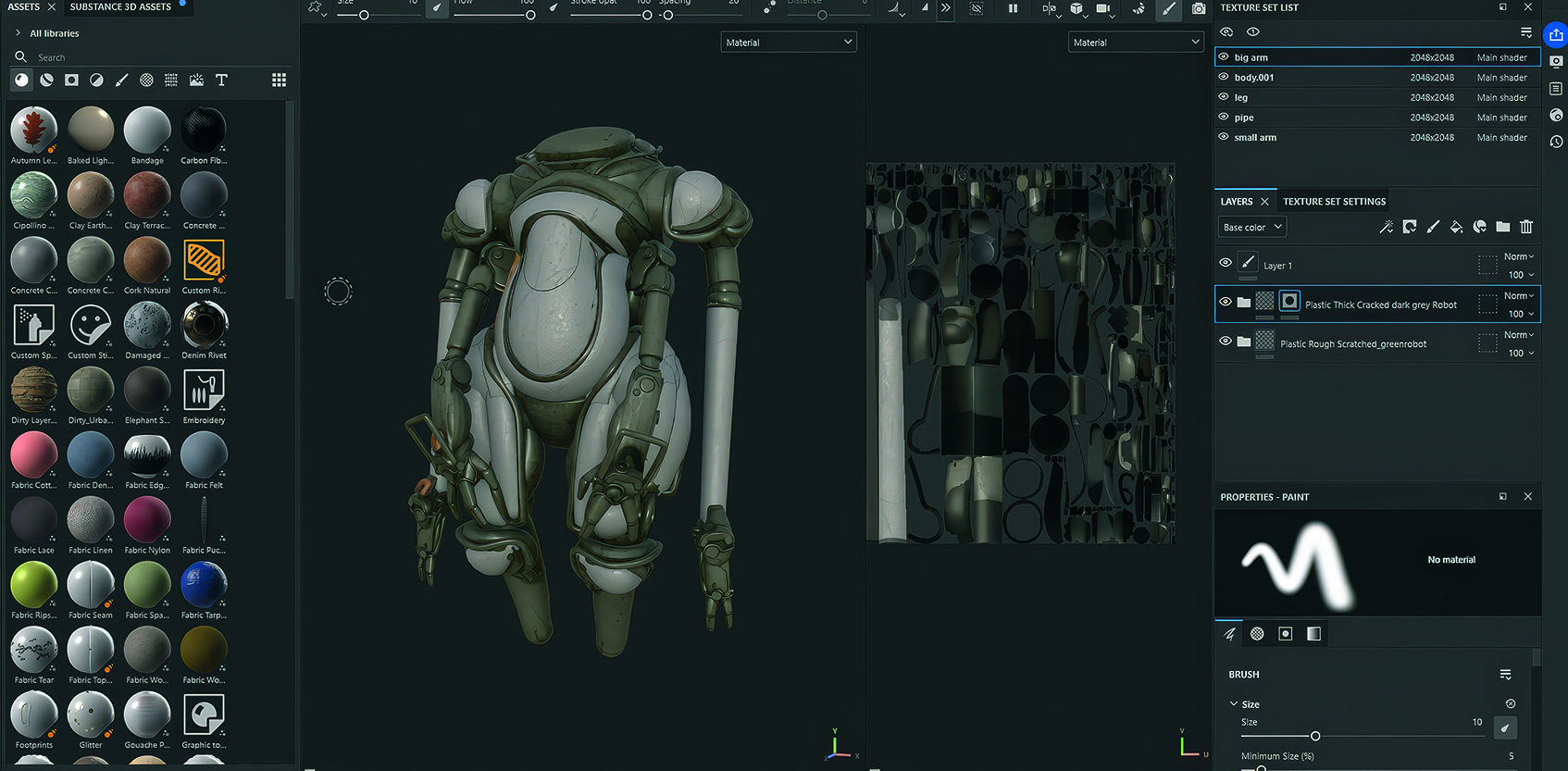
- Adobe Substance 3D Painter: The industry-standard tool for applying realistic textures and "weathering" to stylized models.
This project represents a shift in concept art philosophy, moving away from the "dark and dystopian" tropes popularized by 20th-century sci-fi and toward a more clinical, functional, and ultimately optimistic view of a high-tech future.
Chronology: From Virtual Goggles to Final Render
The development of the "Server City" concept follows a precise four-stage evolution, illustrating how modern artists are discarding linear workflows in favor of iterative, multi-platform processes.
Phase 1: Spatial Ideation in Gravity Sketch
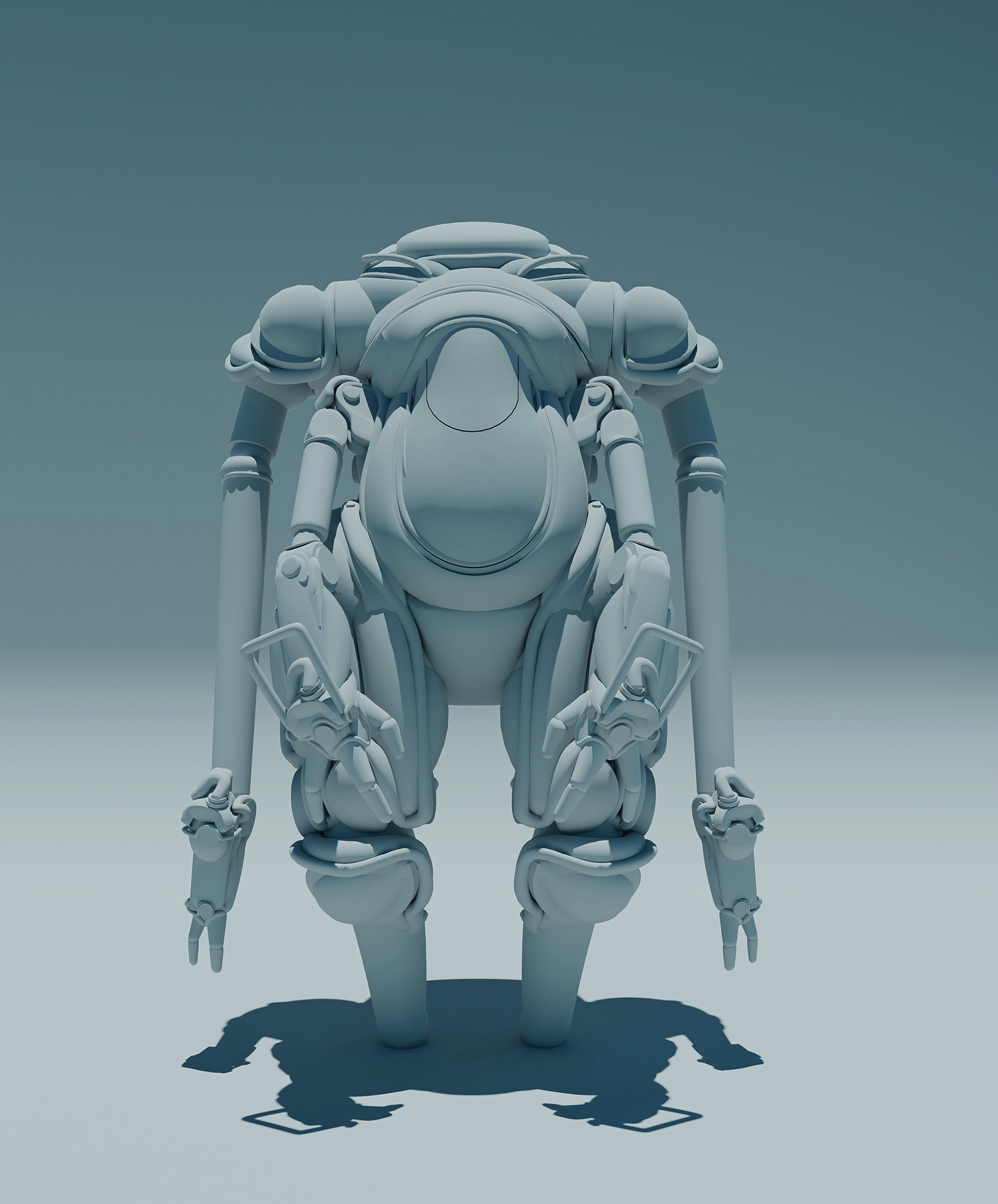
The process begins not with a pen, but with a VR headset. Juliano utilizes Gravity Sketch, a tool that allows artists to "sketch" in a 3D environment. This phase is crucial for establishing the scale of the megastructures. In a traditional 2D sketch, scale is implied; in VR, the artist can physically walk around their creation, feeling the oppressive height of a server rack or the narrowness of a maintenance crawlspace. By using primitive shapes and basic Subdivision Surface (SubD) modeling, the artist creates a "3D thumbnail" that serves as the blueprint for the entire project.
Phase 2: Refinement and Structural Integrity in Blender
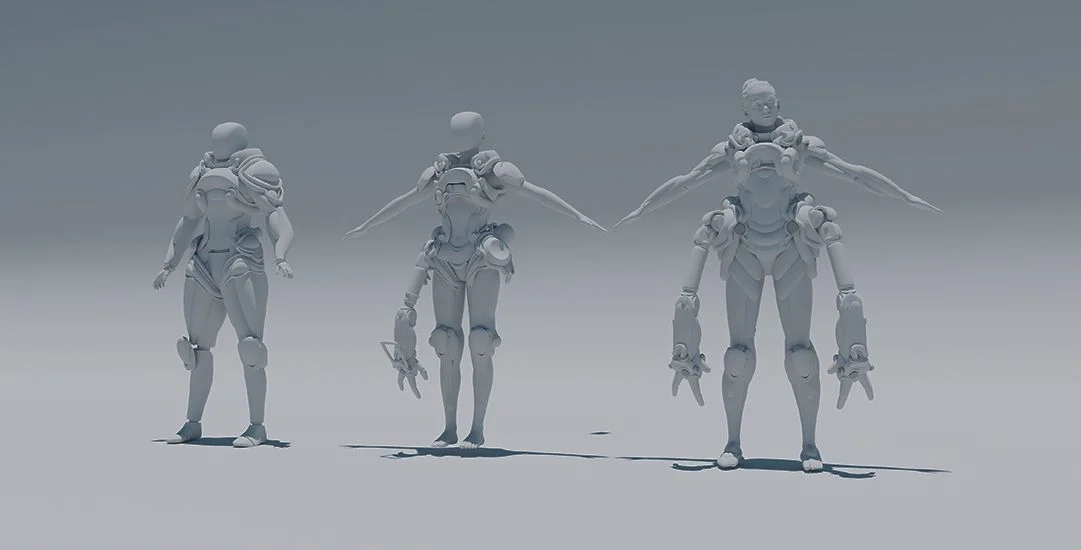
Once the "spatial sketch" is exported from the VR environment, it is brought into Blender. Here, the "simplistic shapes" are refined. While the artist chose to keep the geometry relatively simple for this specific project to maintain a stylized quality, Blender allows for the addition of technical details—the "kitbashing" of cables, ports, and structural supports—that make the environment feel functional. This stage is where the "town-sized" server room begins to take on the weight of reality.
Phase 3: The Art of Weathering in Substance 3D Painter
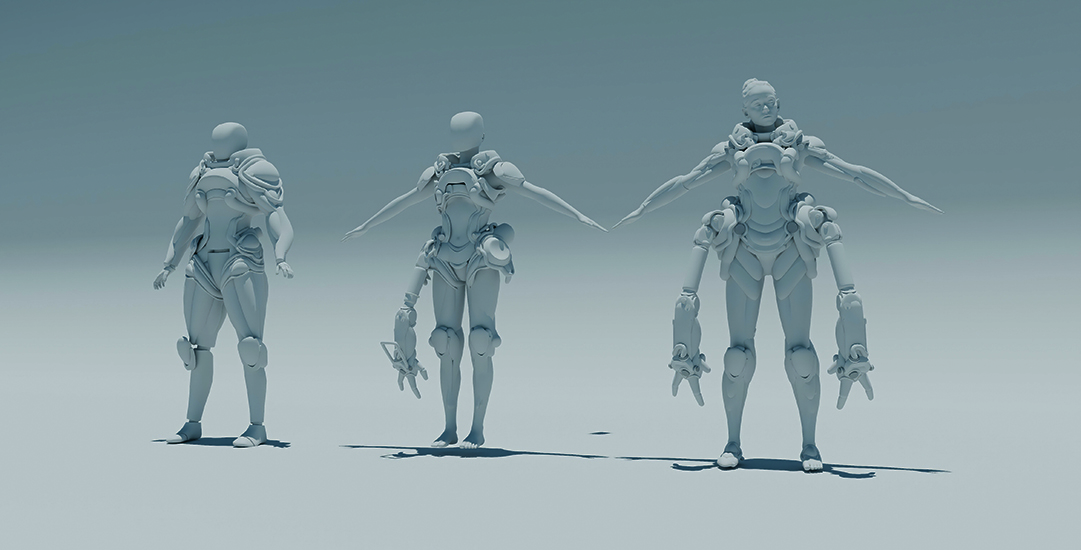
The transition from a "3D model" to a "believable object" happens in the texturing phase. Using Adobe Substance 3D Painter, Juliano applies materials that tell a story. Even in a sterile server room, machines show wear. The artist describes his approach here as "playful," experimenting with different material configurations. The goal is to balance the "stylized" nature of the shapes with "realistic texturing," creating a hybrid aesthetic that feels both modern and grounded.
Phase 4: Cinematic Presentation and Lighting
The final stage involves returning to a rendering engine to set the mood. Juliano emphasizes the importance of "dramatic lighting" to showcase the designs. By creating multiple frames—ranging from wide-angle shots of the megastructure to intimate close-ups of the mechs—the artist tests how the design holds up under different environmental conditions. This iterative presentation is then shared with the global art community via platforms like ArtStation.
Supporting Data: The Rise of the VR-to-3D Pipeline
Juliano’s workflow is not an isolated experiment; it reflects a broader statistical and professional shift in the 3D industry. According to recent industry reports, the "VR Sketching" market is expected to grow significantly as studios look for ways to reduce the "technical tax" on artists—the time spent fighting software interfaces rather than creating.
The Blender Revolution
Blender, once considered a hobbyist tool, has seen a meteoric rise in professional adoption. Its open-source nature and robust feature set have made it a favorite for artists who need a flexible bridge between VR tools and final renders. In recent surveys of the 3D modeling community, Blender consistently ranks as one of the most-used programs, often rivaling paid giants like Autodesk Maya or 3ds Max due to its rapid update cycle and community-driven plugin ecosystem.
VR in Professional Workflows
The adoption of tools like Gravity Sketch by major companies—including Ford, Adidas, and various AAA game studios—validates Juliano’s approach. Proponents of VR modeling cite a 30% to 50% reduction in ideation time. Because artists are working at a 1:1 scale in a virtual space, they make fewer errors regarding proportions and perspective, which are common pitfalls in 2D-to-3D translations.
Official Responses and Artistic Philosophy
In discussing his inspiration, Juliano points toward the legendary manga Blame! by Tsutomu Nihei. Blame! is famous for its depiction of "The City," a never-ending megastructure that has grown out of control, consuming the solar system. However, Juliano’s response to this influence is a conscious subversion of the source material.
"I’m constantly enamored with the idea of never-ending megastructures," Juliano notes. "But I wanted my take to be a little more upbeat and romantic, rather than dark and dystopian."
This perspective aligns with a growing movement in the art world known as Solarpunk or Post-Cyberpunk, where the focus shifts from "how technology destroys us" to "how we inhabit the worlds we build." By choosing to leave the concepts "simpler than usual," Juliano allows the textures and the scale to speak for themselves, focusing on the harmony between the machine and the maintainer.
Furthermore, the artist advocates for a culture of "imperfection" in the digital age. By posting experiments online even if they aren’t "perfect," he contributes to a transparent, educational environment where the process is valued as much as the final product. This philosophy is echoed by major creative publications like ImagineFX, which consistently highlight the "human element" within highly technical digital workflows.
Implications: The Future of Architectural Concept Art
The "Server City" project and the workflow used to create it have significant implications for the future of concept art, architecture, and even industrial design.
1. The Democratization of 3D Design
The combination of VR (which is becoming more affordable) and open-source software like Blender lowers the barrier to entry for aspiring artists. One no longer needs a decade of technical training to understand 3D topology if they can "sculpt" their ideas in the air using VR. This could lead to a surge in diverse architectural visions that aren’t constrained by traditional software limitations.
2. A Shift in Sci-Fi Aesthetics
As our real-world technology moves toward cleaner, more integrated designs (think of the minimalist aesthetic of modern data centers or SpaceX rockets), sci-fi art is following suit. The "Server City" suggests a future where the "Technological Sublime" is characterized by order, scale, and maintenance rather than the chaotic "junk-tech" of the 1980s.
3. VR as a Collaborative Tool
While Juliano’s project was a solo endeavor, the tools he used are increasingly collaborative. Future megastructures will likely be designed by teams of engineers and artists all standing inside the same virtual "server room," making real-time adjustments to cables and panels before a single physical brick is laid or a single final frame is rendered.
In conclusion, Juliano’s "Server City" is more than just a piece of digital art; it is a proof-of-concept for a new way of seeing. By blending the spatial freedom of VR with the precision of Blender and the tactile realism of Substance 3D, artists are now able to construct entire worlds that feel both impossibly vast and intimately habitable. As we move further into the decade, the "megastructure" will continue to be a dominant theme, reflecting our own society’s complex relationship with the massive, invisible machines that power our lives.