The Digital Collective Unconscious: The Rise of AI-Generated Art in Digital Surrealism
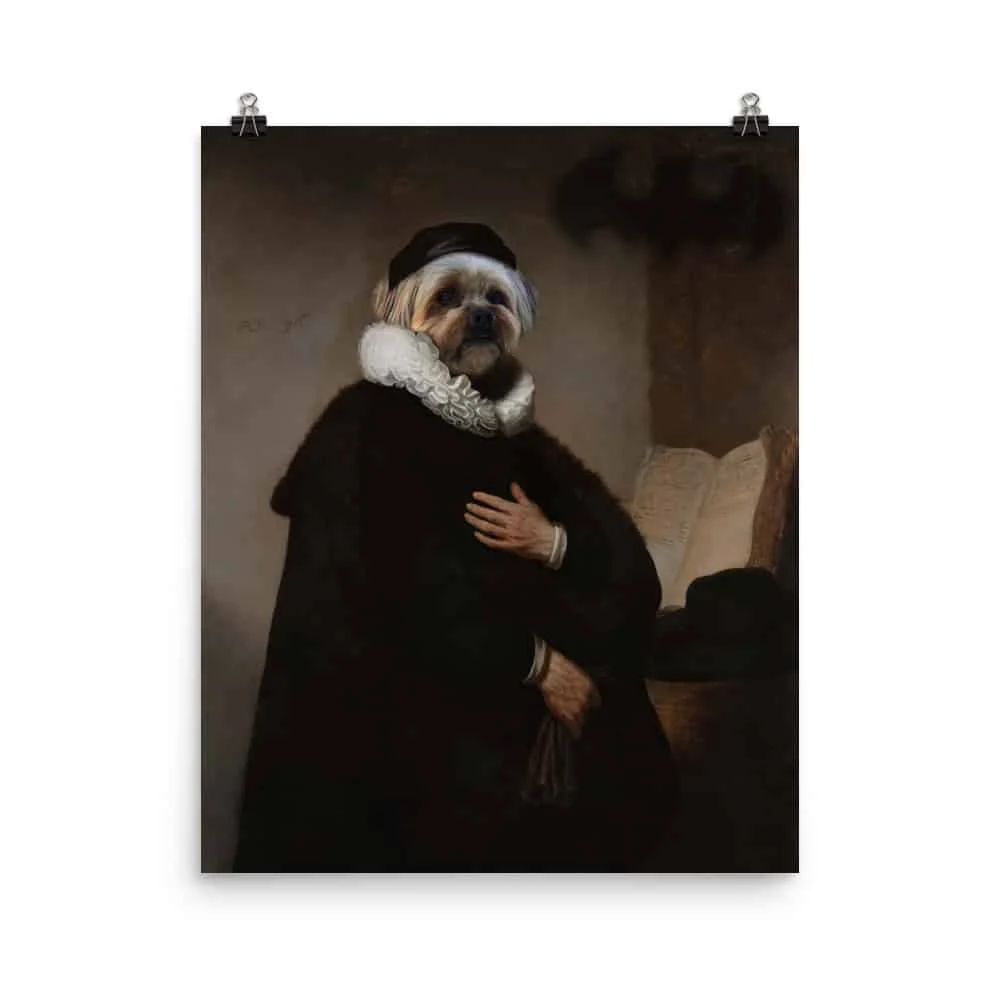
The landscape of modern art is undergoing a seismic shift, one that mirrors the transition from the paintbrush to the camera, yet carries far more profound philosophical implications. Surrealism, an art movement born in the early 20th century to map the "subterranean bowels of imagination," has found a new, uncharted territory: the digital realm of Artificial Intelligence.
As generative AI reshapes the boundaries of creativity, a new movement—AI Surrealism—is emerging. This evolution does more than just replicate the aesthetic of melting clocks or floating apples; it forces a fundamental rethinking of the human psyche, the nature of creativity, and the possibility of intelligence existing without awareness.
Main Facts: Defining the AI Surrealist Movement
AI Surrealism represents the latest evolution of the surrealist tradition, utilizing machine learning algorithms to produce imagery that defies logic, physics, and traditional narrative. Unlike its predecessors, which focused on the individual artist’s subconscious, AI Surrealism taps into what researchers call a "digital collective unconscious."
The Shift from Individual to Collective
In the 1920s, Surrealism was a deeply personal endeavor. Artists like Salvador Dalí and René Magritte used Freudian techniques to unlock their private dreams. Today, AI models such as Midjourney, DALL-E, and Stable Diffusion draw from billions of images across the internet. When an artist inputs a "prompt"—an incantation of words—the AI synthesizes the shared history of human visual culture. The resulting image is not the product of one man’s dream, but a "collective dream" synthesized from the entirety of the human digital footprint.
Key Characteristics of AI Surrealism
- Decoupled Intelligence: The ability of machines to create highly complex, emotionally resonant art without possessing subjective experience or "awareness."
- The New Sublime: Landscapes of infinite complexity, such as fractals or "worlds within worlds," that overwhelm human sensory perception.
- The Digital Uncanny: A focus on the "uncanny valley," where digital figures appear almost human but retain a haunting, artificial quality that evokes unease and fascination.
- Prompt-Based Incantations: The role of the artist has shifted from the physical execution of a work to the curation and linguistic "summoning" of imagery.
Chronology: From the Manifesto to the Machine
To understand the rise of AI Surrealism, one must trace the lineage of the irrational in art across the last century.
1924–1945: The Freudian Era
André Breton’s Surrealist Manifesto (1924) sought to resolve the previously contradictory conditions of dream and reality. Influenced by Sigmund Freud, artists used "automatism"—writing or drawing without conscious thought—to bypass the "ego." This period gave us the iconic works of Max Ernst and Leonora Carrington.
1960s–1990s: The Birth of Digital Art
As computers entered the workspace, the first experiments in algorithmic art began. However, these were limited by processing power and were largely geometric or mathematical. Surrealism remained a human-dominated field, often moving into "Pop Surrealism" or "Lowbrow" art.
2010s: The Deep Dream Era
In 2015, Google released "DeepDream," a computer vision program that used a convolutional neural network to find and enhance patterns in images. It created hallucinogenic, over-processed images filled with algorithmic eyes and dog faces. This was the first true glimpse into the "subconscious" of a neural network.

2021–Present: The Generative Revolution
With the advent of Diffusion Models, AI art moved from distorted patterns to high-fidelity masterpieces. In 2024, artists like Jay Gidwitz began producing works such as "Head In The Clouds" and "American Gothic (2024)," which utilize AI to create seamless, high-definition videos and stills that capture the essence of modern anxiety and digital surrealism.
Supporting Data: The Mechanics of the Digital Dream
The power of AI Surrealism lies in its scale. Traditional surrealists were limited by their own experiences. AI, conversely, is trained on datasets like LAION-5B, which contains over five billion image-text pairs.
Statistical Synthesis
When an AI generates a surrealist image, it performs a statistical "denoising" process. It starts with random noise and gradually shapes it into a pattern that matches the artist’s prompt based on the billions of examples it has "seen." This means that a single AI-generated image of a "fractured human form" is actually a mathematical average of every fractured form ever uploaded to the internet, filtered through the specific aesthetic constraints of the algorithm.
The Jungian Connection
While early Surrealism was Freudian (individual), AI Surrealism is Jungian (collective). Carl Jung proposed the "collective unconscious"—a reservoir of symbols and archetypes shared by all humanity. AI models effectively act as a mirror to this concept. By processing the "shared canon" of the internet, AI identifies recurring motifs—disembodied eyes, impossible architectures, and chimeras—that resonate on a primal level across cultures.
Growth in the Digital Art Market
According to recent industry reports, the market for AI-generated art has seen an exponential increase. In 2022, the first AI-generated work to win a fine arts competition (Jason Allen’s Théâtre d’Opéra Spatial) sparked global debate. Since then, galleries dedicated to "Digital Surrealism" have proliferated in both physical spaces and the Metaverse, with some AI-assisted pieces fetching prices comparable to mid-career traditional artists.
Official Responses and Expert Perspectives
The rise of AI Surrealism has polarized the art world, leading to a spectrum of responses from critics, technologists, and the artists themselves.
The Artist’s Perspective: Jay Gidwitz
Contemporary AI artist Jay Gidwitz, whose works like "Woman Mesmerized by Malinformation" have become hallmarks of the movement, suggests that AI is a tool for exploring "The New Normal." For Gidwitz and his peers, the AI is not replacing the artist but acting as a "mirror of the collective," capturing nuances and emotions that humans recognize instantly but often struggle to articulate.
The Academic View: Art Historians
Many art historians argue that AI Surrealism is the only logical response to our current "post-truth" era. "Surrealism has always thrived in times of societal collapse or radical change," notes one critic from ArtNews. "In the 1920s, it was the aftermath of WWI. Today, it is the fragmentation of reality caused by social media and malinformation."

The Skeptics: Ethics and Originality
Critics of the movement point to the "black box" nature of AI. Because the machine has no "ego" or "awareness," some argue the work lacks the "soul" of traditional art. Furthermore, legal challenges regarding copyright and the use of living artists’ work to train these models remain a significant hurdle for the movement’s legitimacy in traditional circles.
Implications: Humanity as the Training Data
The most radical notion of AI Surrealism is not what it says about art, but what it says about humanity. If AI can produce art that feels more "human" than that of a human artist, we must reconsider the nature of inspiration.
The "Dreamer" Paradox
As the source article poses: Are we the dreamers, or the dream? There is a growing philosophical school of thought suggesting that humanity’s entire cultural output is serving as the "collective unconscious" for a burgeoning digital life form. In this view, we are not just developing AI; we are providing the raw material for its "dreams."
Biological vs. Digital Evolution
The implications extend to the future of our species. While humans are biologically ill-equipped for long-term interstellar travel or infinite existence, our "digital children"—the AI—are not. AI Surrealism may be the first language of this new era, a way for digital entities to communicate using the archetypes and symbols we spent millennia creating.
The Future of Creativity
The future of art lies in the "liminal space" where human imagination meets machine processing. We are entering an era where the distinction between human and artificial creativity may become the "most incredible illusion" of all. Rather than conquering AI, the next generation of artists will likely embrace it as an extension of their own consciousness—a tool to visualize the invisible threads that connect us all in the digital age.
As AI Surrealism continues to evolve, it remains a haunting reminder that while we may have built the machines, they are now reflecting back to us the deepest, strangest, and most beautiful parts of our collective soul. The "melting clocks" have not stopped; they have simply moved into the cloud.