The Art of the Solve: How ‘Fantasketch’ is Redefining the Physics-Puzzle Genre
In the saturated landscape of indie gaming, where mobile-style "draw-to-win" advertisements often mask shallow gameplay, a new contender has emerged to reclaim the integrity of the creative puzzle genre. Fantasketch, a vibrant and mechanically dense title recently showcased at the Hyper Japan event, is drawing significant attention for its blend of tactile creativity and rigorous logic. By transforming simple sketches into living, breathing solutions, the game promises a return to the "charming" era of physics-based play, reminiscent of classics like Crayon Physics Deluxe but infused with modern elemental mechanics and resource management.
Main Facts: A Canvas of Possibility
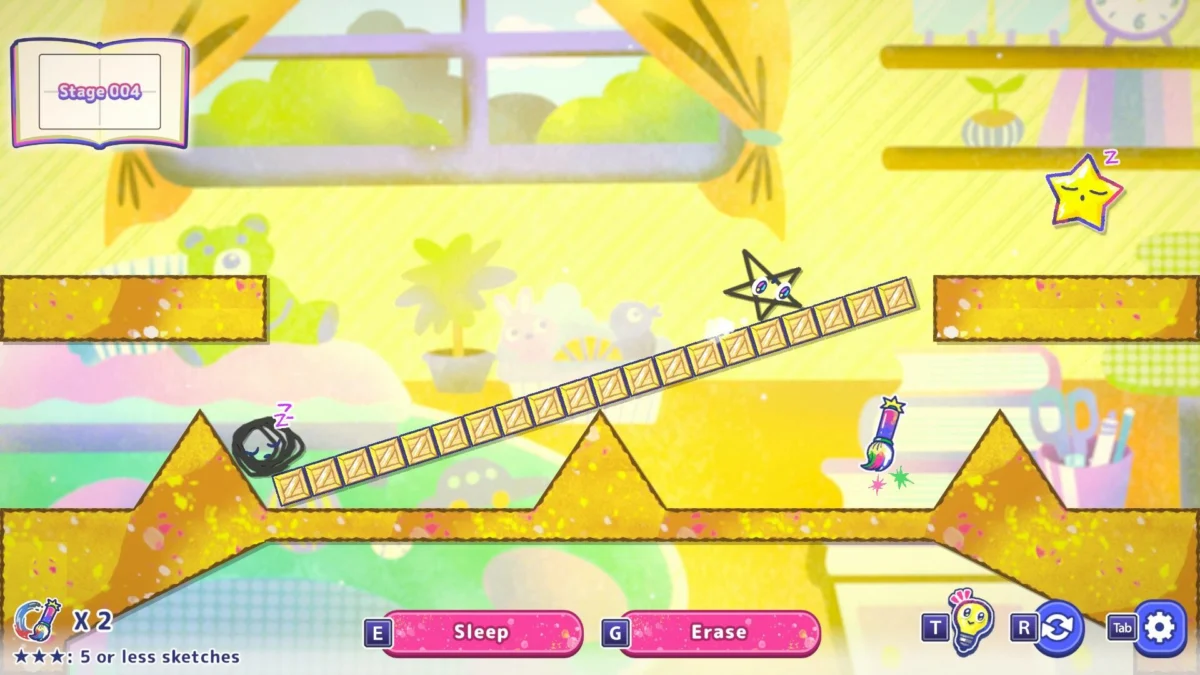
Fantasketch is an upcoming physics-based puzzle game currently in development for PC, with its primary presence established on the Steam platform. At its core, the game challenges players to navigate a series of increasingly complex environments by drawing shapes and characters that interact with the world’s physics engine. Unlike the ephemeral sketches seen in low-budget mobile titles, the creations in Fantasketch possess a dual state of existence: they can be "awake"—actively moving or utilizing special abilities—or "asleep," serving as permanent environmental fixtures such as bridges, slopes, or counterweights.
The game distinguishes itself through several key pillars:
- Creative Agency: Players are not restricted to pre-defined tools; the geometry of their solution is limited only by their imagination and the volume of their ink.
- Elemental Interactions: Different paint colors provide specific utility, such as red paint granting the ability to incinerate obstacles.
- Resource Management: Players must operate within "paint budgets," ensuring that their solutions are both creative and efficient.
- Aesthetic Charm: Moving away from sterile, minimalist puzzle designs, Fantasketch utilizes a warm, hand-drawn aesthetic that emphasizes the "fantasy" in its title.
Chronology: The Lifecycle of a Sketch
The gameplay loop of Fantasketch follows a distinct chronological progression within each level, requiring players to think several steps ahead of their current brushstroke.
The Planning Phase
Upon entering a level, players are presented with a static environment—often featuring gaps, walls, or hazardous obstacles—and a goal. During this initial phase, the player evaluates the terrain and decides on a primary strategy. Because shapes are drawn one at a time, the order of creation is paramount.
The Execution and the "Awakening"
Once a shape is drawn, it is brought to life. If the player intends for the shape to be a "character," it will attempt to navigate toward the level’s objective. However, the true depth of Fantasketch lies in the transition from active to passive states. If a player realizes a shape is not positioned correctly to reach the goal, they do not necessarily have to delete it. Instead, they can allow the shape to go to "sleep."
The Iterative Build
In this stage, "sleeping" shapes become the foundation for future attempts. A player might draw a long, rectangular block that falls into a pit. Once it settles, it becomes a bridge. A second, triangular shape might then be drawn to act as a ramp over a high wall. This iterative process turns the level into a collaborative effort between the player’s past failures and their current ideas. If timed correctly, shapes can even "stick" together as they fall asleep, allowing for the construction of complex architectural solutions.
Supporting Data: Mechanics and Resource Constraints
While the game encourages creativity, it is governed by strict mechanical data that prevents players from simply "painting over" every problem.
The Paint Budget
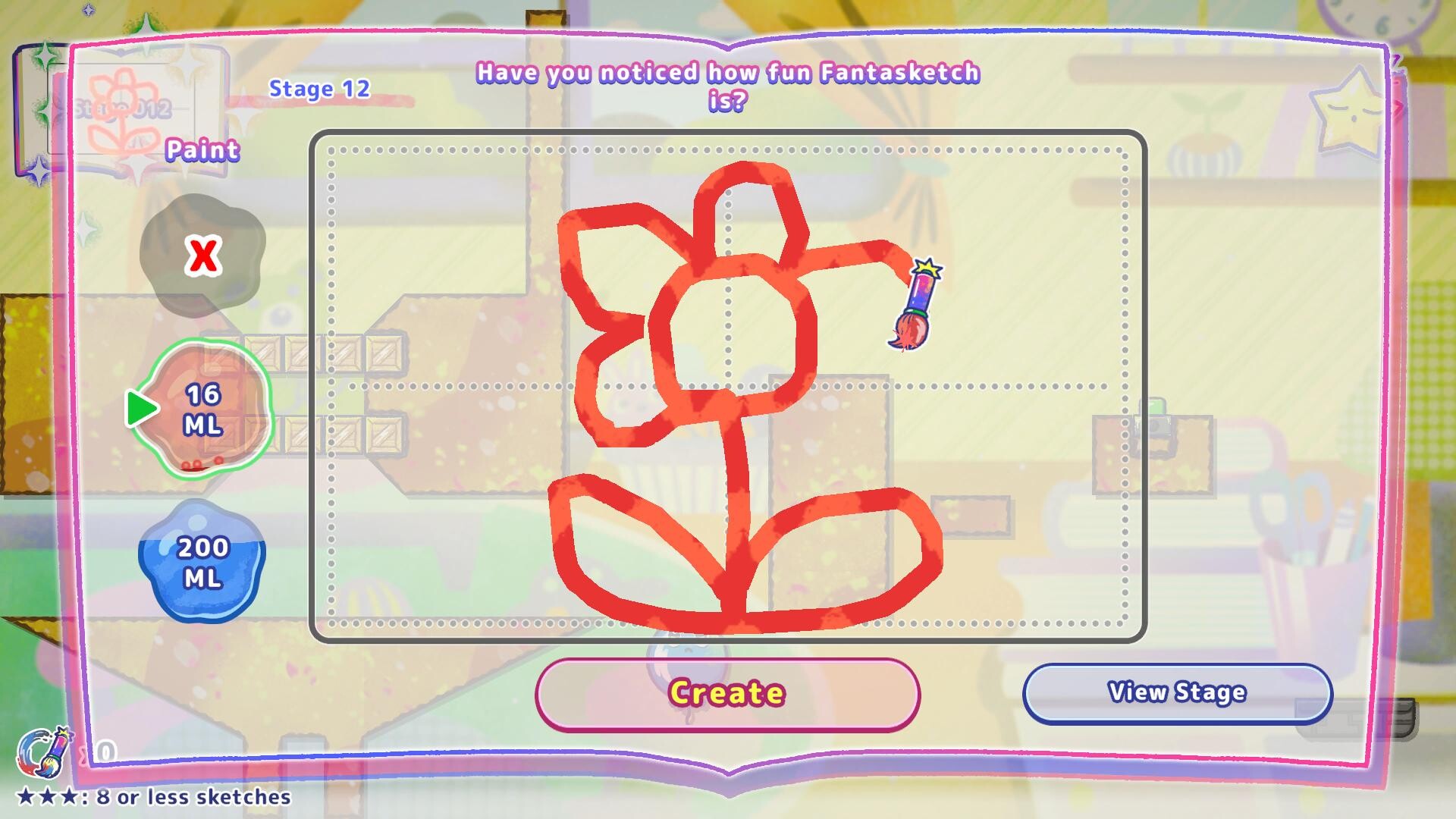
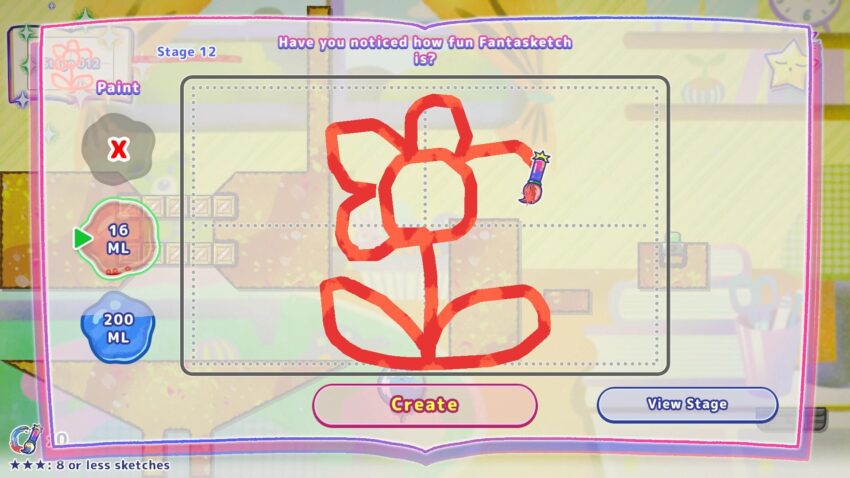
Each level provides a specific volume of paint, categorized by color. This numerical constraint is visible to the player at all times. For example, a level might grant a large reservoir of standard black ink but only a tiny portion of red "Fire Paint." This forces the player to decide whether to draw one large, powerful fire-breathing creature or several smaller, more precise tools. Once the paint for a specific color is exhausted, that ability is locked for the remainder of the attempt.
Elemental Utility
The introduction of colored paint adds a layer of "Ability-Based Puzzling."
- Red Paint (Pyrotechnics): As observed in the game’s early demonstrations, red characters have the unique property of burning through wooden boxes and other flammable obstacles.
- The "Sleep" Requirement: Interestingly, certain abilities like the "burn" effect may require the character to be in its "asleep" state to trigger the reaction, adding a layer of timing-based strategy to the physics.
Physics and Interaction
The game’s engine calculates mass, friction, and gravity. A thin bridge may snap under the weight of a heavy character, or a steep slope might prove too slippery for a character to climb. This necessitates a "trial and error" approach that is supported by a quick-reset function, though the game’s charm encourages players to work around their mistakes rather than erasing them.
Official Responses: Hyper Japan and Developer Vision
While the developer remains focused on a "when it’s ready" release philosophy, the public reception at the Hyper Japan exhibition provided the first major insight into the game’s viability. Attendees noted that the game’s "charm" was its most significant differentiator from the "bait-and-switch" advertisements common on social media platforms.
Reception at Hyper Japan
Playtesters at the event highlighted the intuitive nature of the drawing mechanics. Unlike many puzzle games that require a steep learning curve, Fantasketch allows for an immediate "pick-up-and-play" experience. The developer’s presence at the event emphasized a commitment to a "tactile" feel, ensuring that the act of drawing feels as satisfying as solving the puzzle itself.
Developer Communication
Through official Steam updates and the release of Preview Trailer 1.1, the developers have signaled that they are prioritizing polish and "soul" over a rushed release. By allowing players to wishlist the game, they are building a community of "sketchers" who value the indie spirit of the project. While an official release date has not been set, the current build demonstrated at Hyper Japan suggests a high level of stability and a clear vision for the final product.
Implications: The Future of Tactile Creativity
The emergence of Fantasketch carries broader implications for the indie gaming industry and the evolution of the puzzle genre.
Reclaiming the "Drawing" Genre
For years, the concept of "drawing your way through a game" has been diluted by low-quality mobile clones that use the mechanic as a marketing gimmick rather than a core gameplay pillar. Fantasketch represents a move toward "Prestige Physics Puzzles." By reintroducing depth, resource management, and high-quality art direction, it seeks to prove that there is still a significant market for "tactile" digital experiences on PC.
Educational and Creative Potential
The game’s mechanics—specifically the way it handles mass, gravity, and elemental reactions—offer a "stealth education" in basic physics. Much like Minecraft or Roblox, games that allow for "free-form construction" within a set of rules tend to have higher longevity and a more engaged player base. If Fantasketch eventually includes a level editor or Steam Workshop support, it could become a staple for creative expression within the gaming community.
The "Charm" Factor as a Market Strategy
In an era of hyper-realistic graphics and dark, gritty themes, Fantasketch leans heavily into "whimsy." This aesthetic choice is a calculated move to appeal to a wide demographic, from younger players who enjoy the drawing aspect to veteran puzzle enthusiasts who appreciate the complexity of the "asleep/awake" mechanic. The "charm" mentioned by early players is not just a visual trait; it is a mechanical philosophy that rewards curiosity and experimentation over rigid, "one-way-only" solutions.
Conclusion
Fantasketch is more than just a digital coloring book; it is a sophisticated physics sandbox that challenges the player to be both an artist and an engineer. By bridging the gap between the simplicity of a sketch and the complexity of a physics engine, it offers a refreshing take on a genre that was in danger of becoming a cliché. As the game moves toward its eventual release on Steam, it stands as a testament to the power of indie development: taking a familiar concept and infusing it with enough heart, color, and mechanical depth to make it feel entirely new. For now, the gaming world waits with pencils poised, ready to see what final form this ambitious project will take.