The Underground Revolution: How Kareem Rahma’s ‘SubwayTakes’ Redefined Digital Success and Captured Emmy Attention
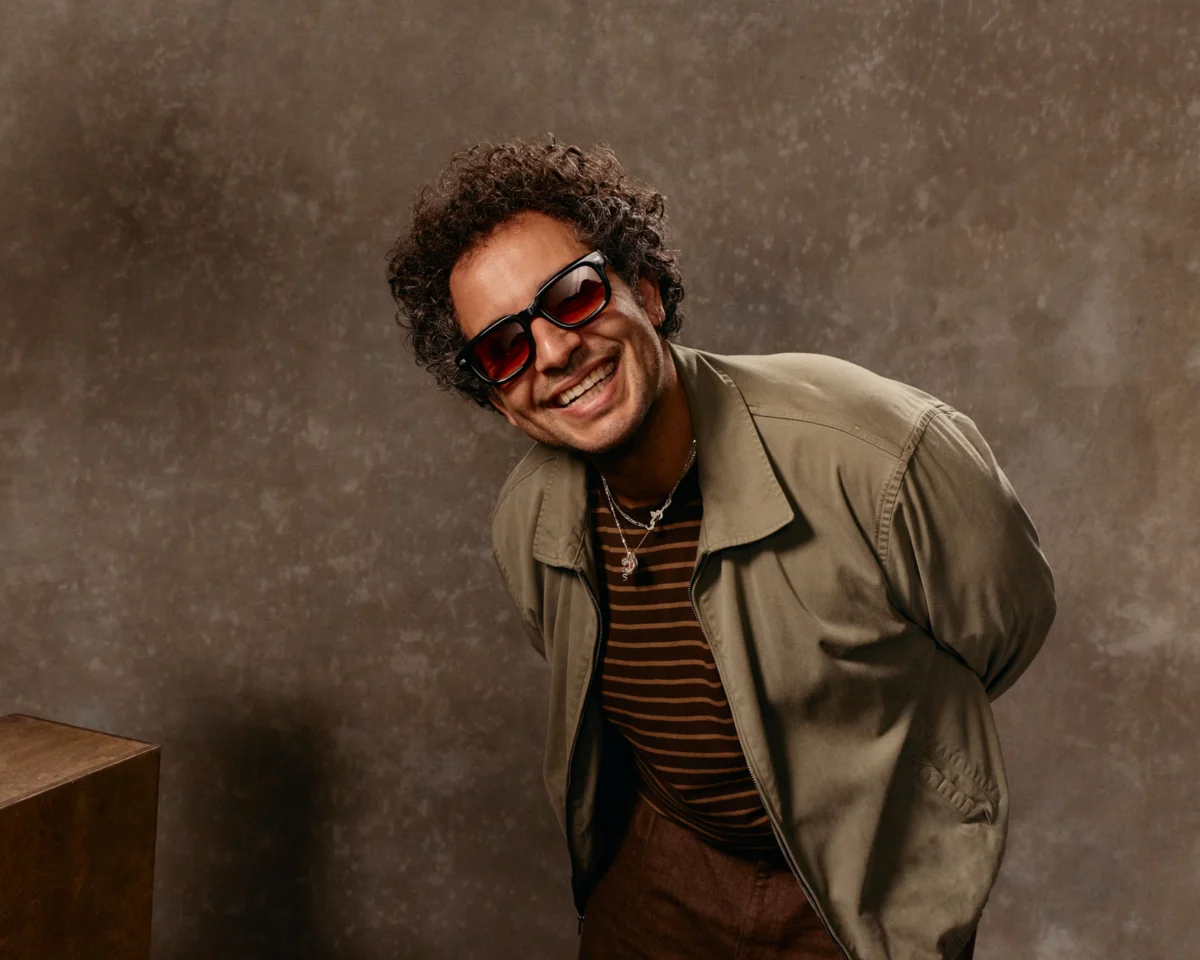
In the rapidly evolving landscape of modern media, the distance between a viral social media clip and a prestigious Emmy nomination has never been shorter. At the forefront of this digital-to-prestige pipeline is Kareem Rahma, the creator and host of SubwayTakes. What began as a pragmatic solution to production costs has blossomed into a cultural phenomenon, proving that high-concept storytelling doesn’t require a massive studio budget—just a camera, a microphone, and a seat on the New York City subway.
As part of IndieWire’s “It’s a Hit!” series, Rahma recently shared the journey of his hit show, reflecting on the moment he realized the series had broken through the noise of the internet to become a legitimate force in the entertainment industry. From interviewing anonymous commuters to hosting Oscar winners like Cate Blanchett and Javier Bardem, Rahma has navigated the complexities of short-form content with a philosophy that prioritizes the audience over the algorithm.
Main Facts: The Anatomy of a Digital Hit
SubwayTakes is a short-form unscripted series that operates on a deceptively simple premise: Rahma sits next to a stranger (or occasionally a celebrity) on the subway and asks them to present and defend a "take"—a unique, often controversial, or hyper-specific opinion. These range from the trivial, such as the quality of specific apple varieties, to the deeply personal and philosophical.
The show’s success is rooted in its economy. Unlike Rahma’s previous series, Keep the Meter Running, which involved paying taxi drivers for city tours—a venture that eventually became cost-prohibitive—SubwayTakes requires minimal overhead. A fare card, portable recording equipment, and the willingness of New Yorkers to talk are the primary ingredients.

However, the show’s most significant innovation lies in its "vertical-first" identity. Rahma is adamant that the short-form videos are not merely "clips" or "trailers" for a longer show; they are the show. This commitment to the medium has allowed the series to dominate platforms like TikTok, Instagram Reels, and YouTube Shorts, garnering millions of views per episode and eventually catching the eye of the Television Academy.
Chronology: From Taxis to Trains
The trajectory of Rahma’s career reflects the broader shifts in digital creator culture over the last five years.
The Cost of Innovation (2021–2022)
Before the subway, there was the taxi. Rahma’s initial success came with Keep the Meter Running, a series praised for its authenticity and its ability to highlight the diverse lives of New York City’s cab drivers. While the show was a critical hit, the logistical and financial burden of paying for hours of taxi fares and high-end production began to weigh on Rahma. He needed a format that was "more economical" but retained the "man-on-the-street" energy that defined his brand.
The Viral Premiere (Early 2023)
The transition to the subway was instantaneous in its impact. Rahma recalls the shock of the show’s debut: "I posted a trailer and the trailer got a million views. Trailers don’t get a million views because they’re trailers," he noted with a laugh. When the first official episode hit two to three million views shortly after, Rahma admitted to feeling a sense of "scared" nervousness. The audience was there before the production pipeline was even fully established.

The Struggle for Scale (Late 2023)
As the short-form episodes exploded, Rahma sought to expand the brand into long-form content, titled SubwayTakes Uncut. The transition was not seamless. Early attempts with celebrities like singer-songwriter Halsey were described by Rahma as a "mess." The team struggled with the logistics of shooting a continuous long-form interview on a moving train. "We’re on the subway… we have to get off the train now. Do we keep shooting? Yes, keep the cameras rolling. Then we’re crossing the street going back on the subway. It was all over the place," Rahma recalled.
The Bill Burr Breakthrough (2024)
The turning point for the long-form format came with comedian Bill Burr. After nearly shutting down Uncut due to high production costs and low engagement, the Burr episode—which Rahma initially feared was a failure—became a massive success. The lesson was clear: the audience wanted the "takes." By shifting the format to "Bill Burr discusses his five most controversial takes," the show found its long-form rhythm.
Supporting Data: Metrics of a Movement
The success of SubwayTakes is backed by more than just anecdotal viral fame; it is supported by significant engagement data and philanthropic impact.
- Viewership: Standard episodes consistently reach 2–3 million views within days of posting. High-profile celebrity "takes" often exceed these numbers significantly across multiple platforms.
- Charitable Impact: The show has leveraged its platform for social good, partnering with non-profits like Teach for America. These collaborations have raised over $30,000 to date, demonstrating the power of creator-led philanthropy.
- Guest Demographics: Despite the influx of A-list celebrities, Rahma maintains a strict editorial balance. Approximately 95% of guests are "unknowns"—independent comedians, writers, artists, and random commuters.
- Award Recognition: The series earned an Emmy nomination in the Short Form category, a milestone that Rahma says validated his decision to stay independent of traditional networks.
Official Responses: The Philosophy of a "Jester"
While many in his position would claim the title of journalist or activist, Rahma rejects these labels. "I see myself as a clown and a jester," he told IndieWire. However, this self-deprecation belies a sophisticated editorial strategy.

Rahma describes his role as the "Editor-in-Chief" of a magazine. When planning the show’s calendar, he asks: "What do we need more of? What do we need less of? What can we take a break from?" This applies to both the nature of the "takes" and the diversity of the participants—ensuring a "melting pot" of gender, religion, and industry representation.
Furthermore, Rahma maintains a strict ethical code regarding who gets a platform. "I think the internet is a cesspool of people who are wrong… I’m not booking those people," he stated. He explicitly excludes individuals who are "bigots or genocide enablers or outspoken about anti-gay rights or Islamophobic or antisemitic." For Rahma, the "undercurrent of social consciousness" is inseparable from the entertainment value of the show.
Implications: The Future of Independent Media
The success of SubwayTakes carries heavy implications for the future of the television and film industry. Rahma’s journey highlights a growing sentiment among top-tier creators: the "internet" is no longer a stepping stone to "real" TV—it is the destination.
The Death of Traditional Development
Rahma is vocal about his lack of interest in pitching his intellectual property to traditional streaming giants or networks. "The minute I let go of the idea that I’m doing this so that I can get off the internet is the minute everything became extremely fun and super successful," he said. He argues that the traditional development cycle—endless meetings, notes, and delays—is an unnecessary hurdle when a creator already possesses the skills, the team, and the audience.

Audience Over Algorithm
In a world obsessed with "gaming the algorithm," Rahma’s success with a four-and-a-half-minute clip of Javier Bardem—despite platform warnings that it was too long—suggests that high-quality content can still override automated distribution rules. "Optimizing for the algorithm is really optimizing for the audience," Rahma explained. By focusing on what people actually want to watch rather than technical hacks, he has built a loyal community that transcends platform-specific trends.
The "Larry David-ism" of Content
The cultural impact of the show lies in its celebration of the mundane. Rahma’s advice to future guests—to focus on "mundane observational takes"—taps into a universal human desire for low-stakes debate. Whether it’s Sterling K. Brown arguing against Red Delicious apples or a stranger complaining about subway etiquette, the show proves that the most "impressive" content is often the most relatable.
As SubwayTakes moves forward with live-to-tape specials and the relaunch of Keep the Meter Running, Kareem Rahma stands as a testament to the power of independence. In his own words, there is "no reason to go elsewhere." By embracing the chaos of the New York City transit system, he has found a path to the Emmys that bypasses the traditional Hollywood gatekeepers entirely. The "joke," as it turns out, is on anyone who thought short-form content couldn’t be art.