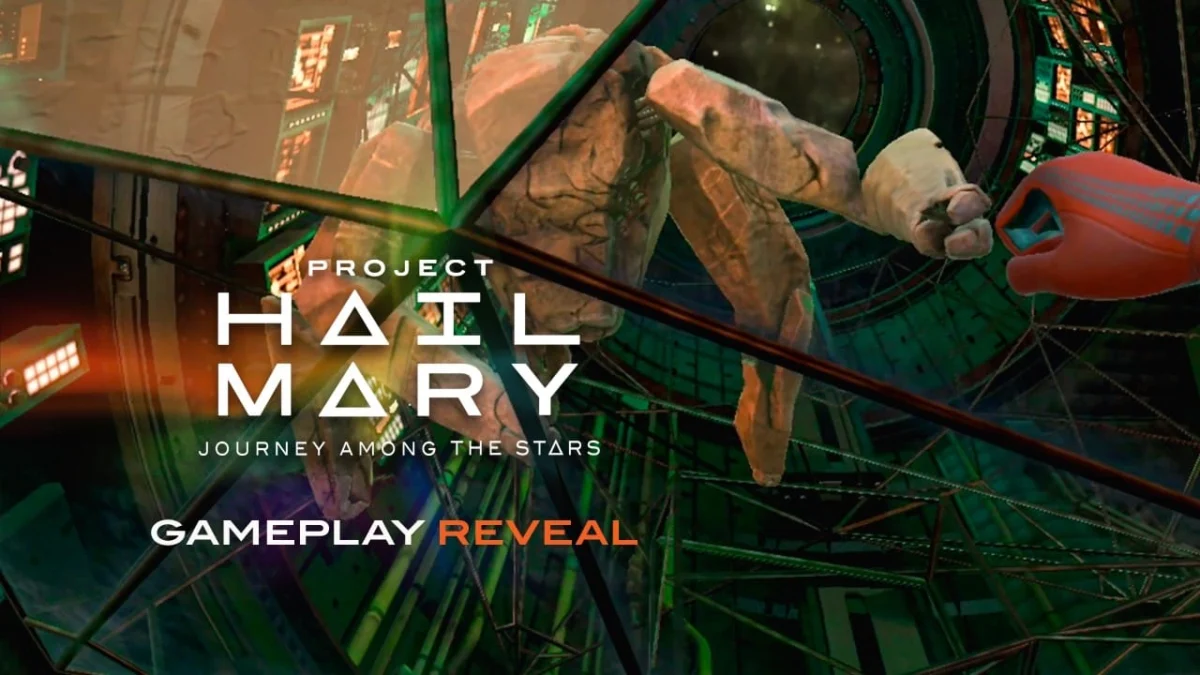
The landscape of immersive entertainment is set for a significant expansion as Maze Theory, in collaboration with best-selling author Andy Weir, officially unveils the first gameplay look at Project Hail Mary: Journey Among the Stars. This upcoming mixed reality (MR) experience, slated for a Fall 2026 release, promises to transport players from their living rooms into the high-stakes, scientifically grounded universe of the Project Hail Mary novel.
As the virtual and augmented reality industries pivot toward "spatial computing" and mixed reality, this title represents a landmark attempt to blend hard science fiction with interactive storytelling. By leveraging the latest hardware from Meta, Pico, and the burgeoning Android XR ecosystem, the game aims to provide a "new chapter" in a story that has already captivated millions of readers worldwide.
Main Facts: A New Frontier for Ryland Grace
Project Hail Mary: Journey Among the Stars is not merely a retelling of the 2021 novel; it is designed as a standalone immersive experience that fits within the existing canon. Players step into the magnetic boots of Ryland Grace, the middle-school-teacher-turned-astronaut who finds himself the sole survivor of a desperate mission to save Earth from a solar-dimming catastrophe.
Key Release Information
Developer: Maze Theory (known for Doctor Who: The Edge of Time and Peaky Blinders: The King’s Ransom).
Collaborator: Andy Weir (Author of The Martian and Project Hail Mary).
Platforms: Meta Quest (3 and Pro), Pico 4/Pico Ultra, and Android XR-supported devices.
The gameplay reveal trailer highlights the "Mixed Reality" aspect of the title. Unlike traditional VR, which fully occludes the user’s environment, Journey Among the Stars utilizes high-fidelity passthrough technology. This allows the ship’s consoles, holographic interfaces, and the alien environment of the Hail Mary to overlay onto the player’s physical space.
The central gameplay loop revolves around ship maintenance, scientific problem-solving, and—most importantly—communication with "Rocky," an alien intelligence from the 40 Eridani system. Players must use engineering skills to diagnose failing systems, synthesize solutions using chemistry and physics, and build a linguistic and emotional bond with their Eridian companion.
Chronology: From Page to Screen to Simulation
The journey of Project Hail Mary from a manuscript to a multi-platform media franchise has been rapid, reflecting the massive popularity of Andy Weir’s "competence porn" style of writing—where characters use logic and science to overcome insurmountable odds.
May 2021:Project Hail Mary is published by Ballantine Books. It immediately becomes a New York Times Best Seller and receives critical acclaim for its technical accuracy and heartwarming central friendship.
2021–2023: MGM acquires the film rights for a reported seven-figure sum. Ryan Gosling is attached to star as Ryland Grace, with Phil Lord and Christopher Miller (of The Lego Movie and Spider-Man: Into the Spider-Verse) signed on to direct.
2024: Maze Theory enters preliminary discussions with Weir to explore an interactive expansion of the universe. The studio identifies Mixed Reality as the ideal medium to simulate the claustrophobic yet awe-inspiring environment of a spaceship.
September 2026: Maze Theory releases the "Gameplay Reveal Trailer," confirming the Fall 2026 launch window and the game’s integration with the new Android XR platform.
Supporting Data: The Rise of Mixed Reality and the "Weir" Effect
The decision to focus on Mixed Reality rather than traditional Virtual Reality is backed by industry trends. According to market analysis, the MR sector is expected to grow significantly by 2026, driven by the success of the Meta Quest 3 and the entry of Google and Samsung into the XR space via Android XR.
Technical Specifications and Platform Reach
The inclusion of Android XR is a strategic move. As Google’s dedicated operating system for spatial computing, Android XR is expected to power a new generation of headsets from various manufacturers. By targeting this platform alongside Meta and Pico, Maze Theory ensures that Project Hail Mary will be accessible to a broad demographic of tech enthusiasts.
The Scientific Accuracy Benchmark
Andy Weir’s involvement is more than a branding exercise. Known for his "hard sci-fi" approach, Weir’s collaboration ensures that the puzzles within the game are grounded in real-world science.
Orbital Mechanics: Players will likely engage with navigation systems that reflect actual physics.
Linguistic Puzzles: The interaction with Rocky involves decoding tonal frequencies, a nod to the book’s detailed exploration of alien communication.
Atmospheric Pressure and Chemistry: Gameplay elements involving the "Petrova Task Force" cargo require players to manage environmental variables that mirror the scientific stakes of the novel.
Official Responses: A Collaboration of Visionaries
The announcement has been met with enthusiasm from both the developer and the author. Maze Theory has long positioned itself as a "story-living" studio, focusing on how players inhabit a narrative rather than just playing through it.
Ian Hambleton, CEO of Maze Theory, stated in a press release:
"Working with Andy Weir is a dream for any developer interested in narrative depth. With Project Hail Mary: Journey Among the Stars, we aren’t just making a game; we are inviting players to become Ryland Grace. The Mixed Reality element is crucial—it makes the Hail Mary feel like it’s docked in your own home. When Rocky reaches out to you through the passthrough screen, the emotional connection is palpable."
Andy Weir, speaking on the expansion of his universe, noted:
"I’ve always seen Ryland’s story as one of trial and error, of using the tools at hand to survive. VR and MR are the perfect tools to let fans experience that firsthand. I’ve worked closely with the team at Maze Theory to ensure the ‘science’ feels right and that this new chapter adds something meaningful to the journey toward Rocky’s home planet."
Implications: The Future of Literary Extensions in XR
The release of Project Hail Mary: Journey Among the Stars carries several significant implications for the gaming and publishing industries.
1. The "Transmedia" Evolution
Traditionally, books are adapted into films, which are then adapted into "tie-in" games that often lack depth. Maze Theory is bypassing this trope by creating a "new chapter" that exists alongside the book and the upcoming film. This creates a transmedia ecosystem where the game is an essential piece of the narrative puzzle rather than a secondary product.
2. Educational Potential through "Hard" Sci-Fi
By gamifying complex scientific concepts—such as the biology of "Astrophage" or the physics of interstellar travel—the game serves as a stealth-educational tool. Much like The Martian inspired a new generation of space enthusiasts, this MR experience could bridge the gap between entertainment and STEM (Science, Technology, Engineering, and Mathematics) education.
3. Validation of the Android XR Ecosystem
As one of the first major IP-driven titles announced for Android XR, Project Hail Mary serves as a "killer app" for the platform. It demonstrates that the Google-backed OS can support high-fidelity, narrative-heavy experiences that rival Meta’s established library.
4. Emotional Intelligence in AI Interaction
The relationship with Rocky represents a technical challenge in game design: creating an AI companion that feels truly "alien" yet deeply relatable. If Maze Theory succeeds, it could set a new standard for NPC (Non-Player Character) interactions in VR/MR, moving away from scripted dialogue trees toward more dynamic, presence-based bonding.
Conclusion: A Mission Worth Taking
Project Hail Mary: Journey Among the Stars arrives at a pivotal moment for spatial computing. By 2026, the novelty of Mixed Reality will have transitioned into a demand for high-quality, long-form content. By combining the intellectual rigor of Andy Weir’s writing with the immersive expertise of Maze Theory, this title is poised to be more than a game—it is a testament to the power of human (and Eridian) ingenuity.
As players prepare to step into the lab and save two civilizations from extinction, the message is clear: the future of storytelling is no longer confined to the page or the screen. It is happening in our rooms, through our headsets, and across the stars.
About Maze Theory:
A London-based immersive gaming studio, Maze Theory is dedicated to "story-living." They have pioneered narrative-driven VR experiences, bringing world-class IPs like Doctor Who and Peaky Blinders to life in virtual spaces.
About Andy Weir:
A former software engineer, Andy Weir rose to global fame with The Martian. His work is celebrated for its scientific accuracy, humor, and optimistic view of human capability in the face of disaster. Project Hail Mary is his third novel and is currently being adapted into a major motion picture by Amazon MGM Studios.
The virtual reality landscape is currently undergoing a significant shift toward high-fidelity, cooperative multiplayer experiences. Among the most anticipated titles in this evolution is Payday: Aces
The silicon valley "gold rush" has entered a new, more capital-intensive era. What began as a race to develop the most sophisticated Large Language Models (LLMs) has mutated into a global in
The digital landscape of PC gaming is currently centered on a single, high-stakes event: Steam Next Fest. Running from today through June 22, this week-long celebration of upcoming titles has become a