‘Half’ Review: A Grisly Indian Vampire Western Tumbles Into Excess
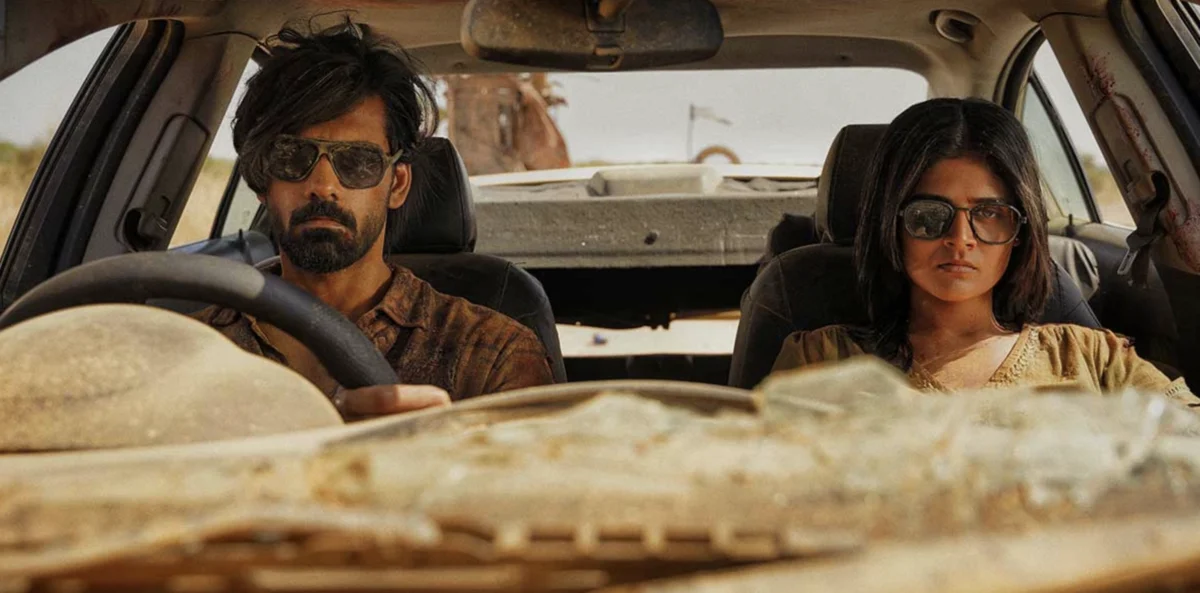
Starring Ranjith Sajeev and Aishwarya Raj as the enigmatic twins Ethan and Ivy, Half is a lean, 96-minute exercise in stylized retribution. While the film struggles with the weight of its own repetitive action beats and a narrative that occasionally thins out in its second act, it remains a landmark moment for Indian genre cinema—a brutal, socio-politically charged odyssey that marks a significant evolution in the Malayalam "New Wave."
Main Facts: A Hybrid of Horror and High-Octane Action
At its core, Half is an experimental hybrid. It discards the romanticism often associated with vampire lore, opting instead for a "threadbare" aesthetic that aligns more closely with the gritty, nihilistic landscapes of the American Western. The film follows Ethan (Sajeev) and Ivy (Raj), a pair of "hybrid" vampires who possess the regenerative abilities and strength of the undead but lack the traditional weakness to sunlight—provided they remain shielded by dark glasses.
Directed by the visionary Samjad, the production’s most notable technical asset is its action choreography. The film secured the talents of Very Tri Yulisman, the renowned choreographer behind the bone-crunching sequences of The Raid 2. This collaboration infuses the film with a kinetic, Southeast Asian martial arts sensibility that is rare in Indian productions.
The film’s narrative is deceptively simple: after being brutally attacked and humiliated by a gang of highway bandits on a desolate roadway, the twins embark on a systematic, blood-soaked mission of revenge. However, beneath the surface of its "inventive mayhem" lies a complex layer of socio-political commentary, particularly regarding India’s ongoing struggle with gender-based violence and the "machismo" prevalent in mainstream cinema.
Chronology: From Childhood Innocence to Highway Hell
The film’s structure is built on a foundation of rapid escalation. It opens with a soft, ethereal prologue set in the twins’ childhood. Their mother, a figure of maternal anxiety, provides the film’s moral compass, urging the siblings to protect one another at all costs. This brief moment of tenderness serves as the only emotional anchor before the film catapults years into the future.
The re-introduction of the adult Ethan and Ivy is a masterclass in visual storytelling. Ethan arrives at their lush, hillside estate in a sleek modern vehicle, his "pointy incisors" catching the light—a subtle nod to their predatory nature. Ivy, who is nonverbal, communicates through a sharp, assertive sign language, establishing a sibling dynamic that is both protective and fractious.
The narrative shifts gears abruptly when the setting moves to the open road. The "desert roadway" serves as the primary stage for the film’s central conflict. A gang of ruthless highway bandits—depicted as a "clockwork outfit" of pure malevolence—is introduced via a harrowing sequence where they con and murder an innocent family.

The collision between the twins and the bandits occurs shortly thereafter. The gang runs Ethan and Ivy off the road, totaling their car and subjecting them to a series of physical and emotional violations. Ethan, appearing to be on the brink of death, is forced to witness the sexual humiliation of his sister. It is this moment of profound trauma that transforms the film from a road trip into a "blistering saga of stylish reprisals."
Supporting Data: The Craft of Carnage
The middle act of Half is a relentless showcase of Yulisman’s choreography. Critics at TIFF noted that the film "hits the ground running" with action sequences that push the boundaries of the "B-movie" aesthetic. The violence is not merely frequent; it is creative to the point of being morbidly delightful.
Key sequences identified by early viewers include:
- The Scalping: A bare-handed execution that sets the tone for the film’s practical effects.
- The "Deep-Fried" Sequence: A kitchen-based skirmish that utilizes boiling oil with stomach-turning realism.
- Pro-Wrestling Infusion: In a nod to global pop culture, several fights incorporate high-impact wrestling maneuvers "out of nowhere," adding a layer of unpredictable energy to the rural landscape.
Despite the magical nature of the protagonists, Samjad ensures the stakes remain high. The bandits, realizing they are fighting something supernatural, adapt their tactics. This "cat-and-mouse" evolution keeps the first hour of the film engaging, as the villains discover that while the twins may be invulnerable, they are not immune to pain or physical restraint.
Official Responses and Creative Intent
While the film is currently seeking U.S. distribution, the reception at TIFF has been a mixture of awe and academic interest. During a post-screening Q&A, director Samjad spoke about the intention behind the film’s extreme imagery.
"We wanted to create a world where the monsters aren’t the ones with the fangs," Samjad stated. "The monsters are the men who haunt the highways. Ethan and Ivy are merely a mirror to that violence."
Lead actress Aishwarya Raj received particular praise for her nonverbal performance. "Ivy’s strength isn’t just in her ability to heal; it’s in her refusal to be silenced," Raj told reporters. However, some critics pointed out a problematic shift in the film’s final act, where Ethan begins to "take control" of Ivy’s revenge mission. This narrative choice has sparked debate regarding whether the film successfully subverts or ultimately succumbs to the "oppressive cinematic machismo" of the Indian action mainstream.
Industry analysts suggest that the film’s reliance on practical effects and its unique cultural "well" of storytelling make it a prime candidate for a cult following in the West, drawing comparisons to Panos Cosmatos’s Mandy or the works of S.S. Rajamouli, albeit on a more intimate, grittier scale.

Implications: A New Direction for Malayalam Genre Cinema
The "B-" grade assigned by many critics reflects a central tension in Half: it is a film of "bare minimums" that occasionally veers into tedium. At 96 minutes, the repetitive nature of the fight scenes—despite their technical brilliance—starts to wear on the viewer. The lack of deep character sketching beyond the "broad strokes" of their suffering prevents the film from reaching the emotional heights of contemporary "elevated horror."
However, the implications of Half for the Indian film industry are profound.
1. The "Nirbhaya" Symbolism and Social Responsibility
The film’s use of an iron rod as a weapon of trauma is a direct, "blood-boiling" reference to the 2012 Delhi gang rape (the Nirbhaya case). By weaving this into a vampire-vigilante narrative, Half forces the audience to confront real-world horrors within a fantastical framework. It uses the "righteous ass-kicking" of the twins as a cathartic, if controversial, response to rape culture.
2. Breaking the "Masala" Mold
Malayalam cinema has long been praised for its realism and literary depth. Half represents a pivot toward "unapologetic, grisly bloodshed." It proves that the regional industry can produce high-concept genre pieces that rival international standards of action choreography without losing their local identity.
3. The Future of the Vampire Genre
By stripping away the "lore" and focusing on "hybrid lineage" without over-explanation, Samjad has created a more grounded version of the vampire. These are not creatures of the night; they are creatures of the road. This "Vampire Western" subgenre offers a fresh path for a monster archetype that has become somewhat stale in Hollywood.
In conclusion, while Half may peak early and struggle with its pacing, its "visual verve" and "inventive mayhem" make it an essential watch for genre enthusiasts. It is a film that goes for the jugular, both literally and figuratively. As it seeks a wider audience beyond the festival circuit, Half stands as a testament to the raw, unfiltered potential of South Indian cinema to shock, provoke, and entertain on a global stage.