
The Haunting Legacy of Bong Joon-ho’s ‘Memories of Murder’: A Neo-Noir Masterpiece Reaches Streaming
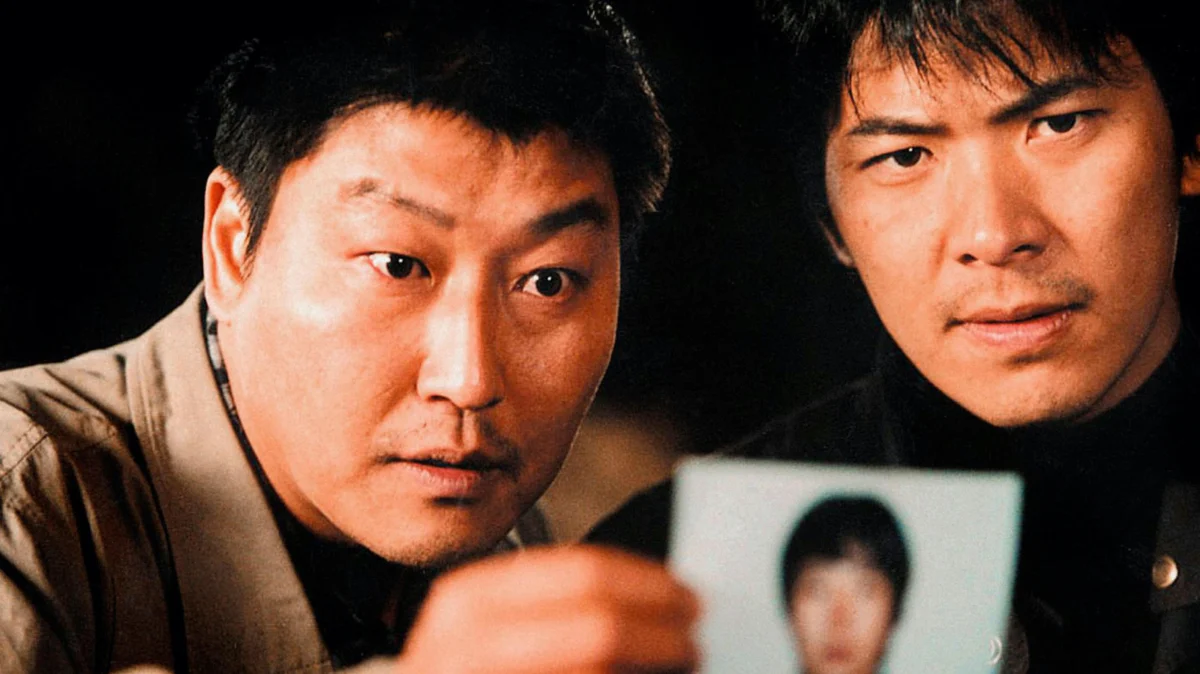
The landscape of 21st-century cinema is often defined by the "before and after" of certain pivotal works. In the realm of crime procedurals and neo-noir thrillers, that pivot point is undeniably Bong Joon-ho’s 2003 masterpiece, Memories of Murder. Recently made available for streaming on Paramount+, the film is not merely a piece of entertainment but a cultural touchstone that redefined South Korean cinema and set a high-water mark for the serial killer subgenre globally.
While Bong Joon-ho achieved ultimate international acclaim with his 2019 Best Picture winner Parasite, many cinephiles and critics argue that the true soul of his filmography resides in the rain-soaked fields of Hwaseong depicted in Memories of Murder. It is a film that balances slapstick humor with profound existential dread, anchored by the first of many legendary collaborations between Bong and actor Song Kang-ho.
Main Facts: A Revisionist Take on the Procedural
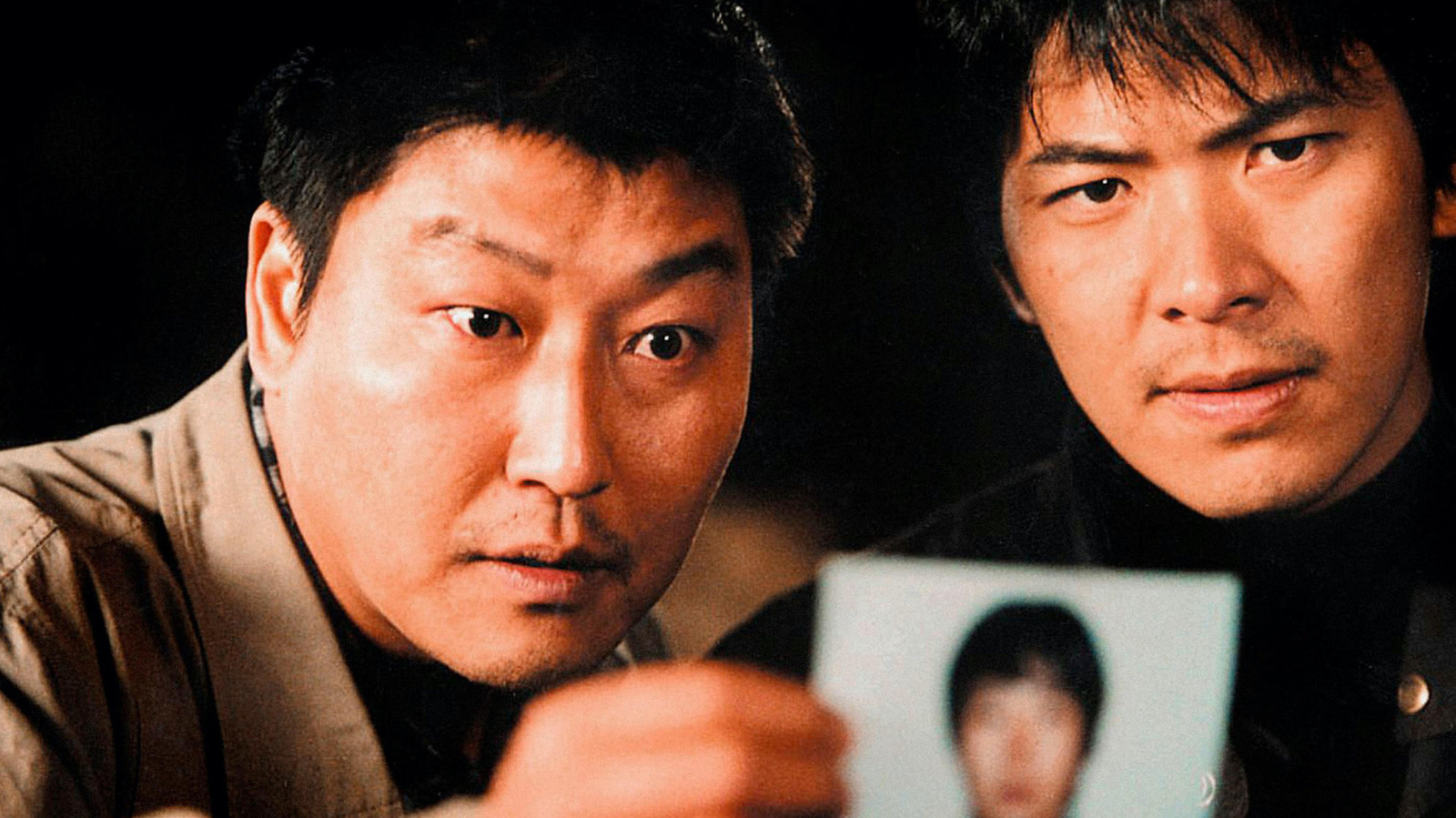
Memories of Murder is based on the true story of South Korea’s first confirmed serial killer, who terrorized the Gyeonggi Province between 1986 and 1991. The film follows two detectives with diametrically opposed philosophies: Park Doo-man (Song Kang-ho), a local detective who claims he can "see" a criminal’s guilt in their eyes, and Seo Tae-yoon (Kim Sang-kyung), a sophisticated detective from Seoul who relies on documents and forensic logic.
The film’s arrival on Paramount+ provides a new generation of viewers the opportunity to witness a work that David Fincher’s Zodiac would later be compared to—though Bong’s film preceded Fincher’s by four years. Unlike traditional Hollywood thrillers that prioritize the "catch," Memories of Murder focuses on the psychological erosion of the investigators and the systemic failures of a society in transition.
Chronology: From Real-Life Terror to Cinematic Immortality
To understand the weight of Memories of Murder, one must look at the timeline of both the real-world events and the film’s production history.
The Hwaseong Murders (1986–1991)
The real-life events occurred during a period of intense political upheaval in South Korea. The country was under a military dictatorship, and the police force was primarily trained for riot control and the suppression of political dissent rather than sophisticated criminal investigation. Between 1986 and 1991, ten women were found murdered in the rural area of Hwaseong. The brutality of the crimes shocked a nation that had never encountered a serial predator of this nature.
The Film’s Production and Release (2003)
When Bong Joon-ho began developing the film in the early 2000s, the Hwaseong case remained unsolved. The statute of limitations was fast approaching, and the case was a painful scar on the national psyche. Bong approached the material not as a documentary, but as a "country noir." Upon its release in 2003, it became a massive commercial and critical success in South Korea, signaling the birth of the "Korean New Wave" alongside Park Chan-wook’s Oldboy.
The Resolution of the Mystery (2019)
For sixteen years after the film’s release, the ending of Memories of Murder remained a haunting open question. However, in September 2019, modern DNA testing finally identified Lee Choon-jae as the killer. Lee, who was already in prison for the 1994 murder of his sister-in-law, eventually confessed to the Hwaseong murders. This real-world development added a chilling new layer of relevance to the film’s final scene.
Supporting Data: The Anatomy of a Masterpiece
The enduring power of Memories of Murder lies in its technical execution and its refusal to adhere to a single tone.
Tonal Dissonance as a Narrative Tool
Bong Joon-ho is a master of "tonal shifts." In Memories of Murder, scenes of bumbling police incompetence and physical comedy (the famous "flying dropkicks") are abruptly interrupted by moments of sheer, cold terror. This isn’t just for style; it reflects the reality of the era—a police force that was woefully unprepared and a society that didn’t know how to process such evil.
Critical and Commercial Impact
At the time of its release, Memories of Murder won Best Film at the South Korean Film Awards and the Grand Bell Awards. Internationally, it holds a rare 93% "Certified Fresh" rating on Rotten Tomatoes. Critics frequently cite the film’s cinematography, handled by Kim Hyung-koo, which utilizes a desaturated palette of greens, browns, and grays to evoke the damp, claustrophobic atmosphere of the Korean countryside in autumn.
The "Zodiac" Comparison
While David Fincher’s Zodiac (2007) is often called the American counterpart to Memories of Murder, Bong’s film is arguably more character-driven. Where Fincher focuses on the obsession with data and the passage of time, Bong focuses on the human face. The film’s climax is not a shootout or a chase, but a moment of silent realization that "the look" of a killer is indistinguishable from that of an ordinary person.
Official Responses: Bong Joon-ho on the Killer’s Identity
Throughout the years, Bong Joon-ho has been vocal about his personal obsession with the case. During the 10th-anniversary screening of the film in 2013, Bong famously stated that he had spent so much time researching the case that he felt he might actually run into the killer one day.
"I thought about the killer a lot," Bong said in a later interview. "I wondered what he looked like. I even imagined meeting him and asking him questions."
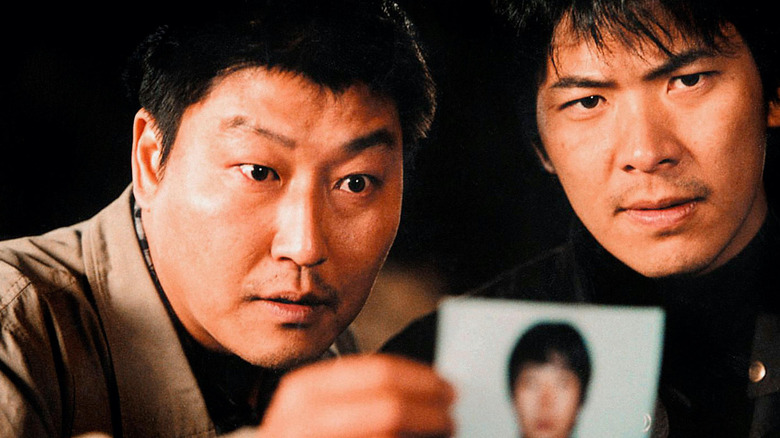
When Lee Choon-jae was finally identified in 2019, Bong expressed a sense of profound relief mixed with a lingering sadness for the victims. He noted that the police officers who had worked on the case—some of whom served as the basis for the film’s characters—had carried the guilt of their failure for decades. The identification of the killer provided a sense of closure that the film, by necessity of its 2003 release, could not provide.
Implications: The Legacy of Neo-Noir and Korean Cinema
The streaming debut of Memories of Murder on Paramount+ arrives at a time when South Korean culture is at the forefront of the global zeitgeist. However, the implications of this film extend far beyond its regional origins.
A Blueprint for Modern Thrillers
Memories of Murder dismantled the "super-detective" trope. It showed that detectives could be incompetent, violent, and deeply flawed, yet still worthy of the audience’s empathy. This "revisionist" approach paved the way for series like True Detective and films like Prisoners, which explore the moral decay inherent in the pursuit of justice.
The Power of the Final Gaze
The film is perhaps most famous for its final shot—a fourth-wall-breaking moment that remains one of the most discussed endings in cinema history. By having the protagonist stare directly into the camera, Bong Joon-ho was effectively staring at the killer himself, who Bong assumed would eventually watch the movie. In the wake of Lee Choon-jae’s 2019 capture, it was revealed that the killer had indeed watched the film in prison, but claimed he "felt nothing." This chilling fact reinforces the film’s central theme: the banality of evil.
The Paramount+ Factor
The inclusion of Memories of Murder on a major Western streaming platform like Paramount+ is a significant move for film preservation and accessibility. For years, the film was difficult to find in high definition in North America until Neon provided a 4K restoration in 2020. Its availability now ensures that Bong Joon-ho’s earlier work is seen not just as a "precursor" to Parasite, but as a standalone pillar of world cinema.
Conclusion: Why It Demands a Watch
Memories of Murder is a rare film that functions perfectly on multiple levels. It is a gripping "whodunnit," a biting social satire of 1980s South Korea, and a heartbreaking tragedy about the loss of innocence. It refuses to give the audience the catharsis of a clean ending, choosing instead to leave them with the same "memories" that haunted the investigators for thirty years.
As it streams on Paramount+, it serves as a reminder that the most terrifying monsters are not the ones that hide in the dark, but the ones who look just like everyone else, walking among us in the light of day. For fans of the genre, it is essential viewing; for students of cinema, it is a masterclass; and for the casual viewer, it is a haunting experience that lingers long after the credits roll.



Leave a Comment