
Sky Team: A Deep Dive into the Tense, Tactile Thrill of Cooperative Airliner Landing
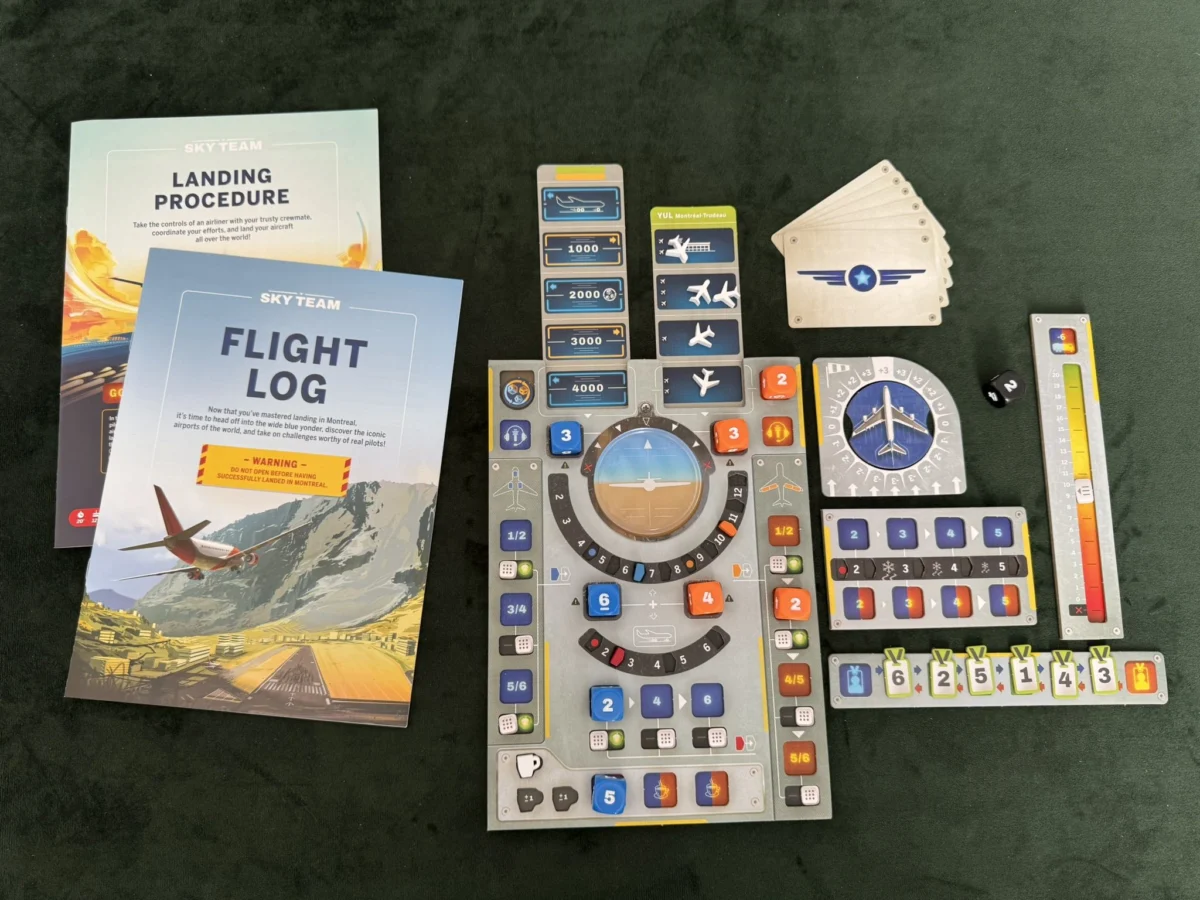
[Image: Sky Team board detail – as provided in original article]
The world of board gaming continually evolves, presenting players with innovative mechanics and immersive themes. Yet, few titles capture the sheer tension and cooperative satisfaction quite like Sky Team. This two-player cooperative game, which casts participants as a pilot and co-pilot attempting to safely land a commercial airliner, has swiftly ascended to critical acclaim, earning a reputation as a standout in its genre. Far from a mere abstract puzzle, Sky Team masterfully blends straightforward rules with a profound sense of immersion, transforming dice placement into a high-stakes dance between two minds striving for a common goal.
At its core, Sky Team is about communication – or rather, the deliberate lack thereof. Players must navigate the complexities of aviation controls, from engine thrust to wing flaps, entirely through the silent choreography of dice placement. This "brilliant trick," as many reviewers have noted, elevates the game from a simple challenge to a deeply engaging psychological exercise. The tactile satisfaction of twisting the plastic Airplane Axis dial, hearing the satisfying click of a switch, and seeing a green light illuminate, all contribute to a feeling that, despite the abstracted mechanics, players are genuinely "doing the thing" – landing a plane against formidable odds.
The game’s initial release saw it constantly sold out, a testament to its immediate popularity and the hunger for high-quality two-player cooperative experiences. With a growing pile of accolades and a firm place among top cooperative titles, Sky Team has proven itself to be more than just hype; it’s a meticulously designed experience that delivers on its promise of fast, fun, and profoundly tense gameplay.
Unveiling the Mechanics: The Silent Symphony of Flight Controls
In Sky Team, the mission is deceptively simple: land the plane safely. The journey to this objective, however, is anything but. Each round, players secretly roll four dice, which then become their limited tools to manipulate the cockpit controls. The core challenge lies in the fact that neither player knows the other’s dice values, and spoken communication is strictly forbidden. This constraint forces players to develop a shared understanding, a non-verbal language conveyed through the order and placement of their dice.
Engine and Axis Controls: The Heart of the Challenge
The most critical controls are the Engines and the Axis. Each round, both players must allocate at least one die to each of these crucial functions:
- Engines: The Engine dice dictate the aircraft’s speed. Too much speed, and you’ll overshoot the runway; too little, and you risk a stall or falling short. Striking the perfect balance is paramount, as the combined value of the Engine dice determines how quickly the plane approaches the airport. This isn’t just about managing a number; it’s about anticipating your partner’s speed contributions and adjusting your own to prevent a catastrophic miss.
- Axis: The Axis dice control the plane’s roll and steering. If the values of the two Axis dice placed by the pilot and co-pilot are disparate, the plane will roll. A slight roll might be necessary for turns, but too great a difference can send the aircraft into an uncontrollable, game-ending spin. This requires a delicate touch and an intuitive understanding of your partner’s intentions – are they trying to correct a roll, or are they setting up for a turn? The plastic Airplane Axis dial, a standout component, makes this abstract mechanic feel wonderfully tangible as players physically twist it to reflect the plane’s orientation.
Beyond the Basics: Activating Landing Systems
While Engines and Axis are constant concerns, a safe landing requires a host of other critical actions. The remaining dice rolled by each player are used to activate various landing controls:
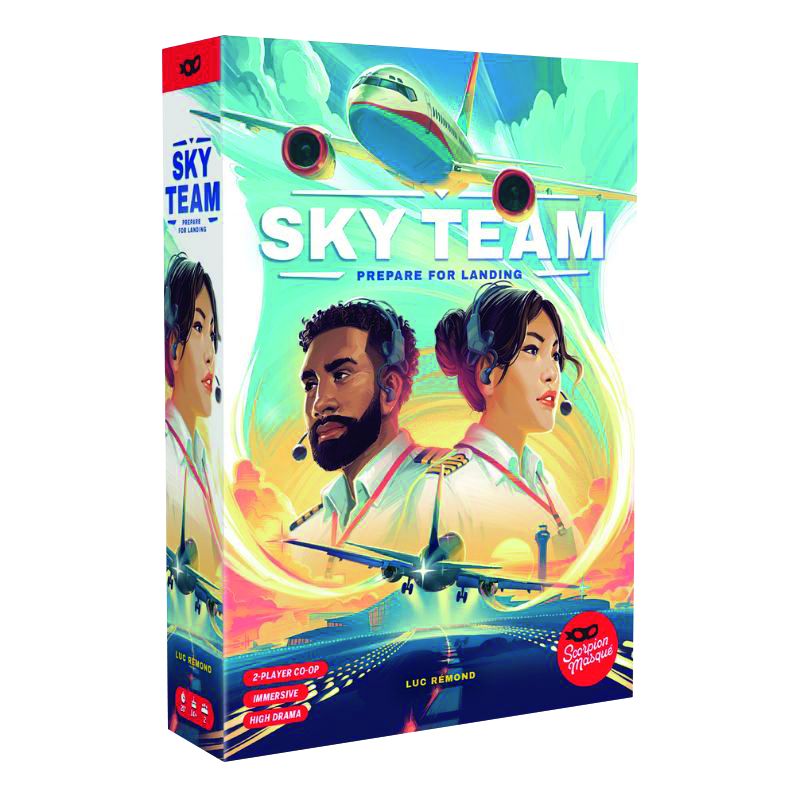
- Landing Gear: The pilot is responsible for deploying the landing gear. This often requires placing specific dice values, sometimes even in a sequential manner, adding another layer of strategic planning. Failure to deploy the gear means a crash landing, regardless of other successful maneuvers.
- Wing Flaps: The co-pilot’s domain includes activating the wing flaps, essential for increasing lift at lower speeds and slowing the aircraft for a smooth descent. Similar to the landing gear, specific dice values might be needed, sometimes sequentially, demanding careful resource management.
- Brakes: The pilot must also engage the brakes, preparing them for deployment upon touchdown. The effectiveness of the brakes, represented by a value, can be crucial. Depending on how well the pilot prepares them, the brake value could be as high as six or as low as two. Upon reaching the runway, the plane’s final speed (the sum of the two Engine dice) must be reduced to below this brake value, adding a final, heart-pounding calculation to the landing sequence.
The Descent: A Race Against Altitude and Time
Each round, the plane inexorably drops in altitude. The core challenge is to synchronize the plane’s arrival at the airport with its altitude reaching ground level, all while ensuring the landing gear and flaps are fully engaged, the plane is level, and the speed is manageable for braking. There are a finite number of turns to accomplish this complex checklist, creating an ever-present sense of urgency and escalating tension. The hidden information and limited communication are not just gimmicks; they are integral to the game’s core design, forcing players to truly embody the high-pressure environment of a cockpit where every silent gesture carries immense weight.
A Chronicle of Acclaim: Sky Team’s Journey to Prominence
Sky Team emerged onto the board gaming scene in 2023, designed by Luc Rémond and published by Le Scorpion Masqué in its original French, with English localization handled by Kosmos. From its initial announcement, the game generated considerable buzz, promising a unique take on cooperative play with its innovative communication restrictions.
Upon its release, Sky Team quickly became a phenomenon. Copies flew off shelves, testament to its immediate appeal and the pent-up demand for compelling two-player experiences. Reviewers and players alike were captivated by its elegant design, its ability to evoke a strong thematic feeling with relatively simple components, and the intense, engaging gameplay it offered.
The game’s critical reception was equally enthusiastic. Sky Team garnered a significant number of awards and nominations in its debut year, solidifying its position as a major contender in the board game landscape. Among its most notable achievements:
- Golden Geek Awards 2023: Winner for Best 2-Player Game, and nominated for Game of the Year, Best Cooperative Game, Most Innovative Game, and Best Strategy Game. This sweeping recognition from the influential BoardGameGeek community highlighted its broad appeal and innovative qualities.
- Dicebreaker Awards 2023: Winner for Best Cooperative Game, further cementing its status as a leading title in the co-op genre.
- Spiel des Jahres Recommendation (Anticipated): While not officially announced at the time of this writing, Sky Team is widely considered a strong contender for a Spiel des Jahres recommendation or even the prestigious Kennerspiel des Jahres (Expert Game of the Year) award in 2024, given its strategic depth and accessibility.
These accolades are not merely decorative; they reflect a consensus within the board gaming community that Sky Team offers a truly exceptional experience. Its rapid ascent to prominence speaks volumes about its compelling design and its ability to resonate deeply with players seeking both challenge and immersive storytelling in their cooperative games.
The Art of Immersion: Supporting Data in Design and Scenarios
The enduring appeal of Sky Team stems not only from its clever mechanics but also from the thoughtful design choices that enhance player immersion. Every element, from the physical components to the diverse scenarios, is crafted to pull players deeper into the role of pilot and co-pilot.
Tactile Components: Bridging Abstraction and Reality
One of the most praised aspects of Sky Team is its tactile nature. The game board is a stylized yet highly functional representation of a cockpit control panel. Players aren’t just placing dice on abstract spaces; they are interacting with physical elements that evoke the feeling of operating an aircraft:

- The Airplane Axis Dial: As mentioned, this plastic dial is a standout. Its physical presence and the act of twisting it provide immediate feedback for the plane’s roll, making the abstract concept of differing Axis dice values wonderfully concrete. It’s a prime example of how a simple component can elevate thematic engagement.
- Switches and Lights: The game features various little switches that players slide to activate certain functions, such as deploying landing gear or flaps. The satisfying "click" and the reveal of a green light beneath the switch when toggled correctly create a sense of accomplishment and confirm the action, mimicking the feedback pilots receive in a real cockpit.
- Detailed Board Art: The visual design of the control panel, the altimeter track, and the approach path are all clear and thematic, guiding players through the complex process with intuitive visual cues.
These components are not mere window dressing. They serve a crucial function in making the "abstracted mechanics" feel real. They provide physical anchors for the mental calculations and strategic decisions, enhancing both the tension and the satisfaction of successful maneuvers.
Scenario Diversity: Endless Approaches to Challenge
One of Sky Team‘s greatest strengths, and a significant contributor to its replayability, is the inclusion of 21 different scenarios. These aren’t just minor tweaks; they introduce escalating difficulty and entirely new mechanical twists, ensuring that no two landings feel quite the same:
- Environmental Challenges: Some scenarios introduce adverse weather conditions, such as high winds that might affect steering, or icy runways that make braking even more precarious.
- Operational Constraints: Players might face challenges like limited fuel, forcing them to optimize their approach and dice usage, or specific turns on the approach path that require precise Axis control.
- Air Traffic and Congestion: Certain scenarios simulate crowded airspace, adding external pressures and potentially altering the available landing paths.
- Real-Time Pressure: Perhaps the most intense variations are the real-time scenarios, where players must execute their dice placements and decisions under a strict time limit, pushing their silent communication and coordination to the absolute brink.
This wealth of scenarios ensures that Sky Team remains fresh and challenging over dozens of plays. Each new scenario requires players to adapt their strategies, refine their communication cues, and master new aspects of the game, providing a consistent sense of progression and discovery. It transforms the core game from a single puzzle into a comprehensive flight simulator, with each mission presenting a unique set of variables to overcome.
The "Crew" Connection: A Precedent for Silent Cooperation
For players familiar with cooperative games, the comparison to The Crew is inevitable and instructive. The Crew, another critically acclaimed cooperative title, also hinges on limited communication and imperfect information to simulate a space mission through trick-taking card mechanics.
Both games excel at creating tension and fostering a unique bond between players through their communication restrictions. However, while The Crew abstracts a space journey into a series of card-playing "missions," Sky Team provides a more direct, tactile, and spatially-oriented simulation of its theme. Fans of The Crew‘s silent strategic depth will find Sky Team‘s dice-placement and control panel interaction equally rewarding, albeit with a different set of mental challenges. The success of both games underscores the appeal of cooperative experiences that push players to communicate in novel, non-verbal ways.
Voices from the Cockpit: Official Responses and Design Philosophy
While direct quotes from designer Luc Rémond or the publishers (Le Scorpion Masqué/Kosmos) regarding specific design choices can be elusive, the game’s design philosophy shines through its execution and the widespread critical acclaim.
The core intent behind Sky Team appears to be two-fold: to create a deeply thematic experience within a cooperative framework, and to challenge players’ ability to collaborate without explicit communication. Rémond’s design elegantly marries abstract dice mechanics with a palpable sense of piloting an aircraft. The decision to make the game exclusively for two players is also deliberate, focusing the intensity and the unique communication challenge on a tightly knit partnership, mirroring the real-world pilot-co-pilot dynamic.

The publishers, Le Scorpion Masqué and Kosmos, have clearly recognized the game’s unique potential. Their commitment to high-quality components, particularly the tactile elements like the Axis dial and switches, demonstrates an understanding that player immersion is key to Sky Team‘s success. The rapid sell-out of the game and its consistent presence on "best-of" lists serve as a powerful endorsement of their belief in the design and its appeal to a broad audience.
Industry professionals and critics have echoed this sentiment. Reviewers consistently praise the game’s ability to generate genuine tension and excitement, noting how the silent communication mechanic transforms a seemingly simple dice-placement game into a rich strategic endeavor. The game’s numerous awards are the clearest "official response," signaling that Sky Team has not only met but exceeded expectations, setting a high bar for future cooperative designs.
Implications: Soaring into the Future of Cooperative Gaming
Sky Team‘s success carries significant implications for the cooperative board game genre and the broader tabletop industry.
Redefining Cooperative Communication:
The game solidifies the idea that limited or non-verbal communication can be a powerful engine for cooperative gameplay. It demonstrates that stripping away direct speech doesn’t diminish cooperation; rather, it refines it, forcing players to develop a deeper, more intuitive understanding of each other’s intentions and strategies. This approach encourages empathy and active listening (or in this case, active observation) in a way that fully open communication often doesn’t.
The Power of Tactile Immersion:
Sky Team is a testament to the impact of well-designed components on player experience. Even with abstract mechanics, the physical act of interacting with the board, turning dials, and flipping switches significantly enhances thematic immersion. This could encourage other designers to invest more in tactile elements that bridge the gap between game mechanics and narrative.
Accessibility and Depth:
One of Sky Team‘s greatest achievements is its balance of accessibility and strategic depth. The rules are straightforward enough for new players to grasp quickly, but the evolving scenarios and the nuances of silent communication offer a profound challenge for seasoned gamers. This broad appeal contributes to its commercial success and ensures its longevity. It shows that complex strategic experiences don’t need overly complicated rulebooks.
A Staple for Two-Player Gaming:
The game’s overwhelming popularity among couples and two-player groups underscores a strong market demand for high-quality, dedicated two-player experiences. Sky Team provides an intimate, shared challenge that fosters connection and shared accomplishment, making it an ideal choice for partners who enjoy gaming together. Its ability to create memorable, tense moments together without uttering a word is a unique bonding experience.
Longevity and Replayability:
With 21 distinct scenarios and the inherent replayability of dice-driven, variable setups, Sky Team offers exceptional value in a reasonably priced package. This focus on content and varied challenges ensures that the game will remain on tables for years to come, providing sustained enjoyment and cementing its legacy as a modern classic.
In conclusion, Sky Team is more than just a board game; it’s an experience. It’s a masterclass in cooperative design, demonstrating how elegant mechanics, thoughtful component design, and intelligent scenario planning can create a game that is both incredibly tense and immensely satisfying. For anyone who enjoys cooperative games, especially those who appreciate the unique challenge of silent communication, or simply craves the thrill of guiding an airliner to a safe landing, Sky Team is not just a recommendation – it’s a direct flight to an unforgettable gaming adventure. As reviewer Lyle Lowery aptly puts it, if you have a partner you like to play co-ops with, or you play a lot of two-player games, Sky Team is right up your runway.

PLAY IT?
[Image: Must-Play-logo-Tabletop-Gaming-magazine-review.jpg – as provided in original article]
It’s fast, fun and tense – with components and rules that work together to make you feel like you’re really landing a plane.
Try This if you Liked…
[Image: The-Crew-3D-box.jpg – as provided in original article]
The Crew
The Crew abstracts a space mission in a quick-to-play, cooperative game where you’re afforded limited communication and imperfect information.
[Link: Buy your copy of Sky Team on Magic Madhouse – as provided in original article]
Buy your copy of Sky Team on Magic Madhouse



Leave a Comment