
The Digital Zen of "Outside The Lines VR": A Deep Dive into Low-Friction Creative Design
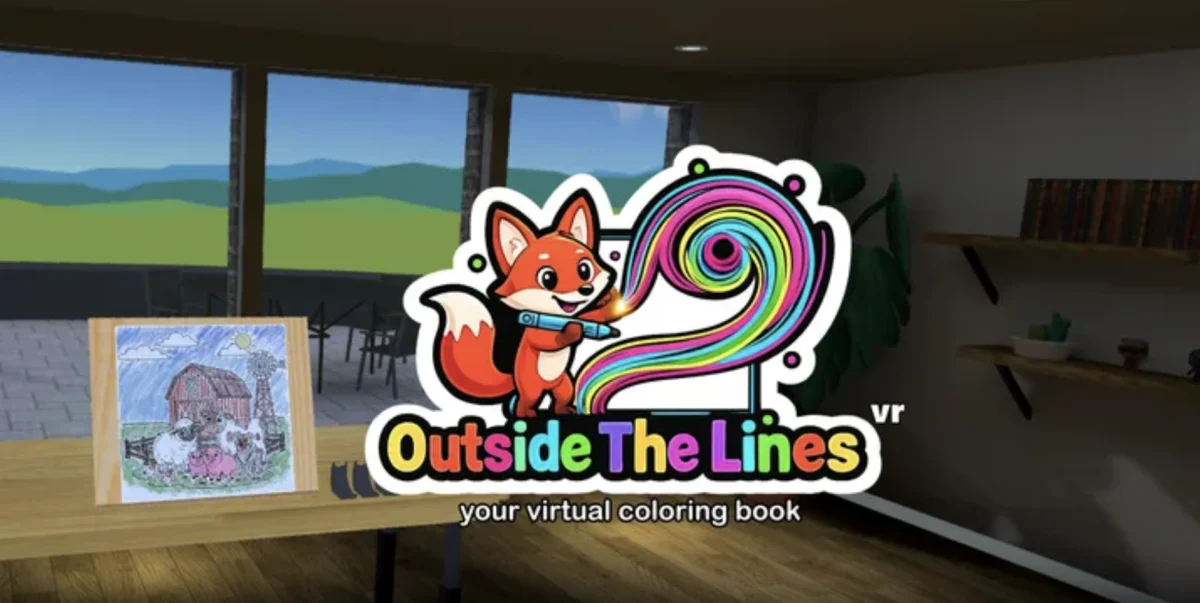
In an era where virtual reality is often synonymous with high-octane shooters, complex flight simulators, and frantic rhythm games, a new movement is beginning to take root in the Meta Quest ecosystem: "Slow VR." Leading this charge is Outside The Lines VR, a minimalist coloring application that prioritizes psychological comfort over technical complexity. Developed by Sysdia Solutions, Ltd, the app represents a significant shift in how developers approach the non-gamer demographic and the wellness sector of the XR (Extended Reality) market.
Main Facts: The Foundation of Outside The Lines VR
Before delving into the technical and philosophical nuances of the application, it is essential to establish the core parameters of the project. Unlike many high-budget studio releases, Outside The Lines VR is a focused, intentional experience designed for a specific psychological outcome: relaxation.
- Application Name: Outside The Lines VR
- Lead Developer: Harvey Ball (Sysdia Solutions, Ltd)
- Platform Availability: Meta Quest (Quest 2, Quest 3, Quest Pro)
- Official Release Date: March 30, 2026
- Price Point: $9.99 USD
- Core Mechanics: Virtual coloring on pre-designed canvases using pens, markers, and crayons.
- Key Features: Mixed Reality (MR) support, single-controller accessibility, adjustable canvas scaling, and ergonomic UI customization.
- Target Audience: Non-gamers, wellness enthusiasts, and VR users seeking low-intensity "digital detox" experiences.
Chronology: From Industry Toolkits to Solo Creative Exploration
The development of Outside The Lines VR is inextricably linked to the history of modern virtual reality development. The project is the brainchild of Harvey Ball, a name synonymous with the "first wave" of consumer VR.
The VRTK Legacy
In the mid-2010s, as the first Oculus Rift and HTC Vive headsets reached consumers, developers struggled with basic interactions—how to pick up an object, how to teleport, and how to manage physics in a 3D space. Ball was the primary force behind VRTK (Virtual Reality Toolkit), an open-source framework that became the backbone for thousands of early VR projects. This background is crucial; it explains the high level of "polish" and intuitive interaction found in Outside The Lines VR. Ball spent years solving the friction of VR interaction for other developers; now, he has applied those solutions to a consumer product.
The Reddit Feedback Loop
The project’s transition from a prototype to a commercial product was facilitated by the modern "indie" development cycle. Ball initially shared early builds on Reddit, seeking feedback from the VR community. This grassroots approach allowed for a "low-friction" design philosophy to emerge. Users didn’t want more menus; they wanted fewer. They didn’t want complex color wheels; they wanted the tactile satisfaction of picking up a crayon.
The 2026 Launch
By the time the app launched on March 30, 2026, it had evolved from a simple creative tool into a specialized wellness app. The timing coincided with an industry-wide realization that "meditative software" was a vastly underserved niche in the Meta Quest Store, which had become saturated with competitive multiplayer titles.
Supporting Data: The Mechanics of Accessibility and Comfort
What distinguishes Outside The Lines VR from a standard painting app is its commitment to "low-friction" design. In software engineering, friction refers to any obstacle that prevents a user from achieving their goal. In VR, this often manifests as complex button mappings or physical discomfort.
Ergonomic Innovation
The application is built entirely around the trigger and grip buttons. While this sounds simplistic, it is a deliberate accessibility feature. The app supports single-controller play, making it usable for individuals with limited mobility or those who simply wish to hold a drink or a physical object in their other hand while relaxing.

Furthermore, the app addresses "VR clumsiness"—the common frustration where virtual tools are dropped or lost in the environment. In Outside The Lines VR, pens do not fall to the floor. If a user releases a tool, it remains within an accessible radius or snaps back to a predetermined tray. This "safety net" design allows the user’s brain to stay in a flow state rather than shifting into "problem-solving mode."
Spatial Flexibility and Mixed Reality
One of the app’s most significant data-backed successes is its implementation of Mixed Reality (MR). According to user feedback sessions, the isolation of VR is often a barrier for parents or people in shared living spaces. Outside The Lines VR allows users to "passthrough" to their real-world environment.
- The Easel System: The virtual canvas can be detached from its digital easel and placed anywhere in the physical room—on a real desk, a lap, or even a wall.
- Scaling Dynamics: Users can scale the canvas from the size of a postage stamp to the size of a mural. Data suggests that larger scales are used for fine-detail work (allowing for broader physical arm movements), while smaller scales are used for quick color blocking.
The "Manual Labor" Philosophy
In a surprising design choice, the developer omitted a "bucket fill" or "smart fill" tool. In most digital coloring apps, one click fills an entire section. In Outside The Lines VR, you must manually color every square inch. While this might seem inefficient, it is the core of the app’s "meditative" value. The physical act of repetitive motion has been linked to lower cortisol levels and increased mindfulness, mimicking the "Adult Coloring Book" trend that exploded in the physical world a decade ago.
Official Responses: Addressing the AI Debate and Future Roadmap
As with any modern creative tool, Outside The Lines VR has faced scrutiny regarding its content and its future. Harvey Ball has been transparent regarding the current state of the app and where it is headed.

The AI Art Controversy
A significant portion of the initial artwork library in the app was generated or assisted by AI. In the current creative climate, this has been a point of contention. Critics argue that AI art lacks the "soul" and intentionality of hand-drawn illustrations.
Official Response: Ball has acknowledged these concerns directly. He stated that AI-assisted art was a necessary tool for a solo developer to provide a diverse range of content at launch. However, he has committed to a roadmap that includes collaborations with human artists. The goal is to create "Artist Packs" where users can color the line work of established illustrators, providing a more authentic and curated aesthetic experience.
Environmental Expansion
Currently, the app features a single, clean virtual studio. Users have requested more atmospheric variety.
Official Response: Sysdia Solutions has indicated that future updates will focus on "Atmospheric Anchors." This would allow users to color in diverse environments—ranging from a rain-slicked cyberpunk balcony to a quiet forest clearing. The focus remains on "unobtrusive" environments that do not distract from the canvas.
The Question of Hand Tracking
Despite the app’s focus on simplicity, it does not currently support Meta’s native hand tracking.
Official Response: The developer has noted that while hand tracking is "the dream" for a coloring app, current hardware limitations regarding precision and haptic feedback make the controller a superior "stylus." For an app that requires steady lines, the physical trigger of a controller provides a necessary tactile "click" that hand tracking currently lacks.
Implications: The Future of "Quiet VR"
The success and reception of Outside The Lines VR carry broader implications for the XR industry at large.

1. The Diversification of the VR User Base
For years, the "VR enthusiast" was stereotyped as a young, tech-savvy gamer. Apps like Outside The Lines VR prove that there is a massive, untapped market of "casual observers"—people who own a Quest 3 for fitness or media consumption but find traditional games intimidating. By lowering the barrier to entry to a single button and a familiar activity (coloring), Ball is expanding the total addressable market for VR.
2. The Solo Developer Renaissance
In a landscape dominated by Meta-funded studios and massive layoffs in the AAA sector, Outside The Lines VR highlights the viability of the "Solo Dev." By focusing on a niche, high-quality experience rather than trying to compete with Horizon Worlds or Roblox, small developers can find financial stability and critical acclaim. The $9.99 price point is positioned perfectly as an "impulse buy" that offers more value than a one-time physical coloring book.
3. VR as a Wellness Tool
As the conversation around mental health and "digital burnout" intensifies, VR is often seen as part of the problem—another screen to stare at. However, Outside The Lines VR flips this narrative. It uses the "enclosure" of VR to block out digital distractions (notifications, social media) and force a singular focus on a creative task. This "Digital Monasticism" could become a primary selling point for future headsets.
Final Verdict
Outside The Lines VR is not a technical powerhouse, nor does it attempt to be. It is a masterclass in intentional design. By stripping away the "game-ified" elements of VR—scores, timers, and complex mechanics—Harvey Ball has created a sanctuary. It is a $9.99 investment in personal quietude, proving that sometimes, the most innovative thing a developer can do in a virtual world is to simply stay inside the lines.


Leave a Comment