
The Wandering God: Unpacking the Ancient Narrative of The Marduk Prophecy
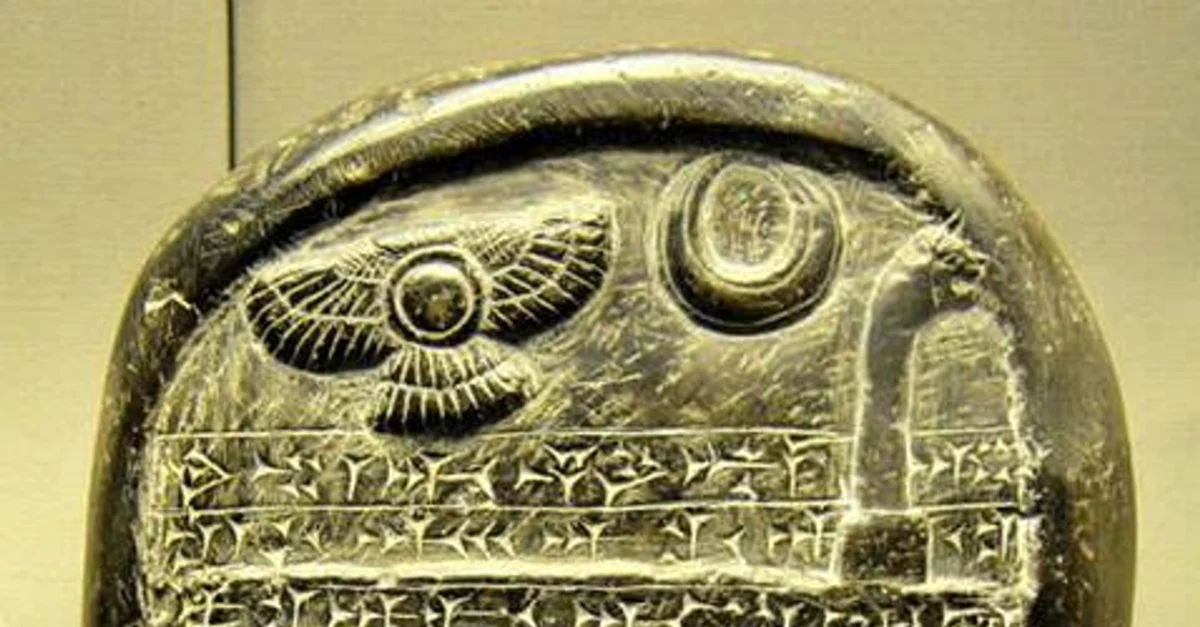
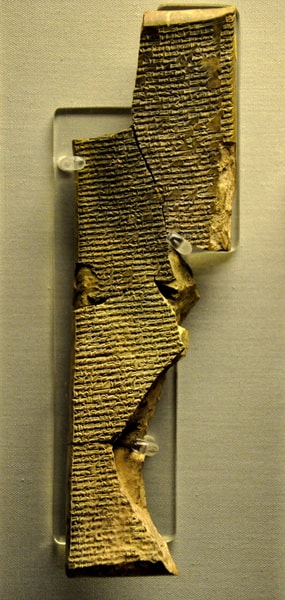
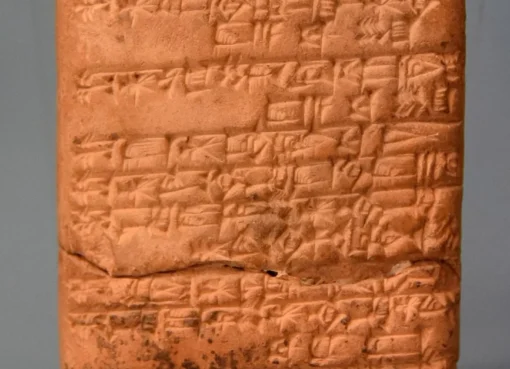
Ashur, Mesopotamia – Deep within the ancient city of Ashur, nestled beside a revered temple, archaeologists unearthed a fascinating document known as The Marduk Prophecy. Dating back to a tumultuous period between 713 and 612 BCE, this Assyrian text, discovered in a building dubbed "The House of the Exorcist," offers a unique window into the geopolitical and spiritual landscape of ancient Mesopotamia. Far from a mere historical record, it is a sophisticated narrative that intertwines myth, history, and political ambition, recounting the dramatic journeys of the statue of the revered Babylonian god, Marduk, across various kingdoms and foretelling its triumphant return under a powerful Babylonian monarch.
This pivotal document is not a straightforward chronicle but rather a carefully crafted piece of propaganda, almost certainly composed during the reign of Nebuchadnezzar I (circa 1121-1100 BCE). Its primary purpose was to glorify the king’s military prowess and divine favor, specifically celebrating his decisive victory over the Elamites and the subsequent retrieval of Marduk’s statue to its rightful home in Babylon. The text cleverly positions past events as "prophetic visions," lending an aura of destiny to Nebuchadnezzar I’s actions and reinforcing his legitimacy as a divinely appointed ruler who restored cosmic order.
Main Facts: A Deity’s Odyssey and a King’s Mandate
The Marduk Prophecy details the extraordinary travels of the cult statue of Marduk, the preeminent deity of Babylon, from its sacred dwelling in the heart of the city to the distant lands of the Hittites, Assyrians, and Elamites. These movements were not voluntary divine excursions but rather the consequence of conquest, as victorious empires routinely plundered the cult statues of defeated cities. Such an act was considered a profound humiliation and a devastating spiritual loss for the conquered populace, stripping them of their patron deity’s protection and presence.
The document’s central theme revolves around the profound responsibility of a monarch towards his patron god. By framing the statue’s absence as a period of divine displeasure and chaos, and its return as a restoration of peace and prosperity, the text subtly dictates the ideal relationship between ruler and deity. A king’s piety, demonstrated through the protection and veneration of his god, was paramount to the well-being of his city and kingdom.
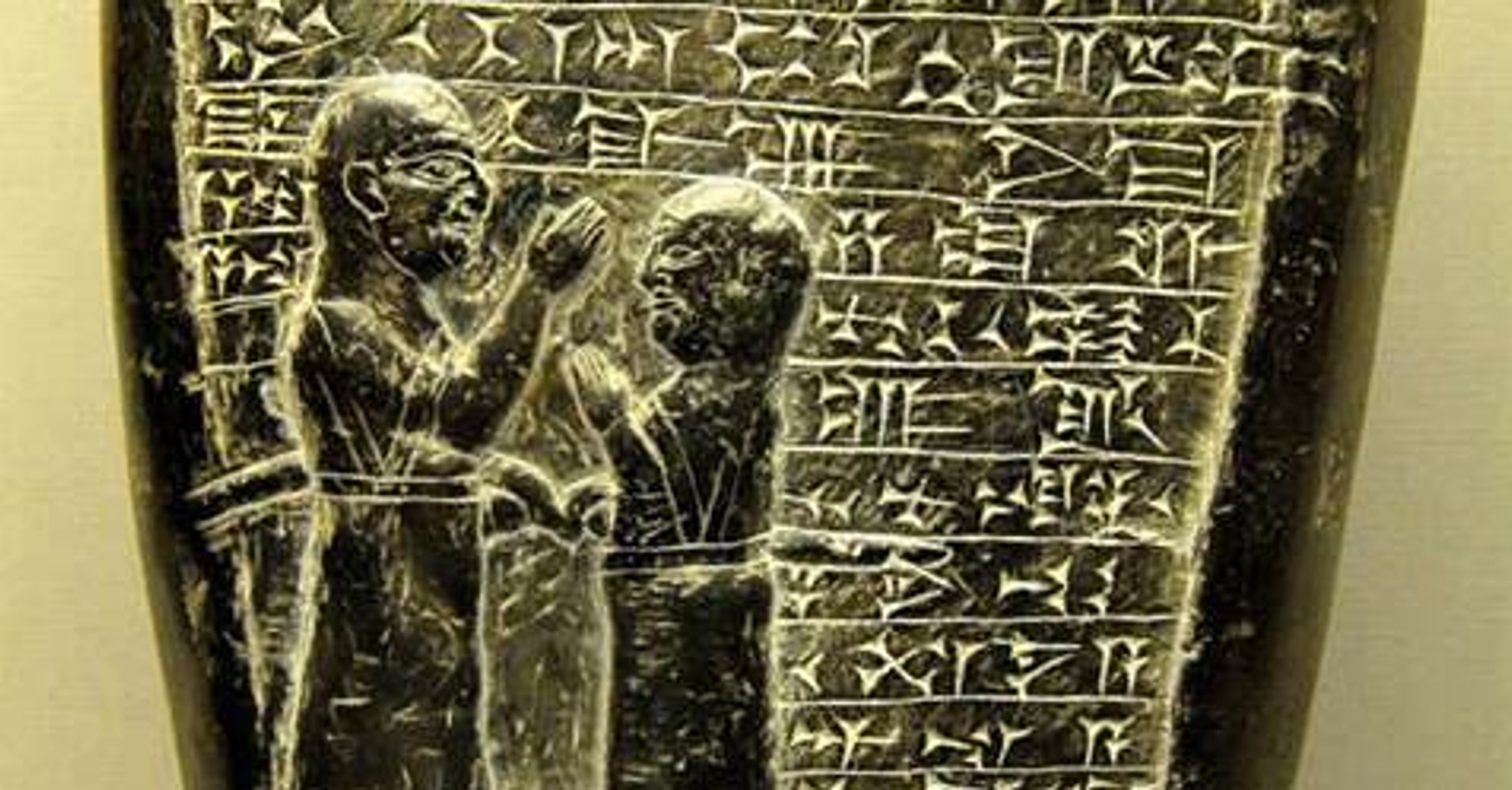
This form of narrative falls within a genre known as Mesopotamian naru literature. These literary works often took historical figures or events and infused them with poetic license, crafting didactic tales to convey moral, political, or religious messages. For instance, The Curse of Akkad portrays the historically pious king Naram-Sin (reign 2254-2218 BCE) as impious to illustrate the catastrophic consequences of offending the gods. Similarly, The Marduk Prophecy uses the statue’s travels to underscore the importance of divine favor and the king’s role in securing it. The narrative skillfully blends mythical elements—such as Marduk’s statue expressing satisfaction with allied lands like Hatti and Assyria, yet showing disdain for traditional enemies like Elam—with actual historical occurrences, creating a compelling and politically potent message.
The very act of removing a god’s statue was a potent symbol of conquest. For Babylon, and particularly for Marduk, this loss was magnified due to their elevated status in the Mesopotamian world. Marduk was not merely a local deity; he was the "King of the Gods," and Babylon was his earthly seat, a city of unparalleled reputation. The absence of his statue meant the suspension of crucial religious festivals, most notably the Akitu (New Year) Festival, which was believed to be essential for the renewal of cosmic order. This deeply personal and communal connection to the deity meant that the statue’s fate was inextricably linked to the fortunes of Babylon itself.
Chronology: Marduk’s Grand Tour of Captivity and Return
The Marduk Prophecy, while not a strict historical chronology, alludes to a series of actual historical events involving the statue’s removal and return. Other ancient sources fill in the precise timetable, revealing a tumultuous history spanning over a millennium. This chronological account underscores the statue’s immense political and religious value, making it a coveted prize for conquerors and a vital symbol for the people of Babylon.
- Circa 1595 BCE: Mursilli I, the formidable king of the Hittites, sacks Babylon and carries off Marduk’s statue to the Land of Hatti. This event marks the first documented instance of the statue’s captivity, a profound blow to Babylon’s prestige.
- Circa 1344 BCE: Hittite King Suppiluliuma I possibly returns the statue to Babylon. This return is speculative but suggests a period of diplomatic engagement or a gesture of goodwill, potentially linked to trade relations between the Hittites and Babylon.
- 1225 BCE: Tukulti-Ninurta I of Assyria conquers Babylon and transports the statue to Ashur, the Assyrian capital. This capture further highlights the statue’s status as a war prize, signifying Assyrian dominance over Babylon.
- Circa 1150 BCE: Shutruk-Nakhunte, the powerful King of Elam, acquires the statue. While the exact circumstances are debated, it is believed he seized it from Sippar, a city near Babylon where the statue may have been moved for safekeeping. Shutruk-Nakhunte’s inscriptions boast of his destruction of Sippar and the plunder of religious artifacts, including the famous stele of Naram-Sin, making the statue’s presence in Sippar plausible.
- Circa 1121-1100 BCE: The reign of Nebuchadnezzar I. This era is a turning point, as the king defeats the Elamites and triumphantly brings Marduk’s statue back to Babylon, an event that The Marduk Prophecy was almost certainly written to commemorate.
- 705-689 BCE: During the reign of Sennacherib of Assyria, the statue remains in Babylon until the Assyrian king’s devastating sack of the city in 689 BCE. Sennacherib, notorious for his scorn for Babylonian traditions, removes the statue, likely to Nineveh, further insulting the Babylonian deity and populace.
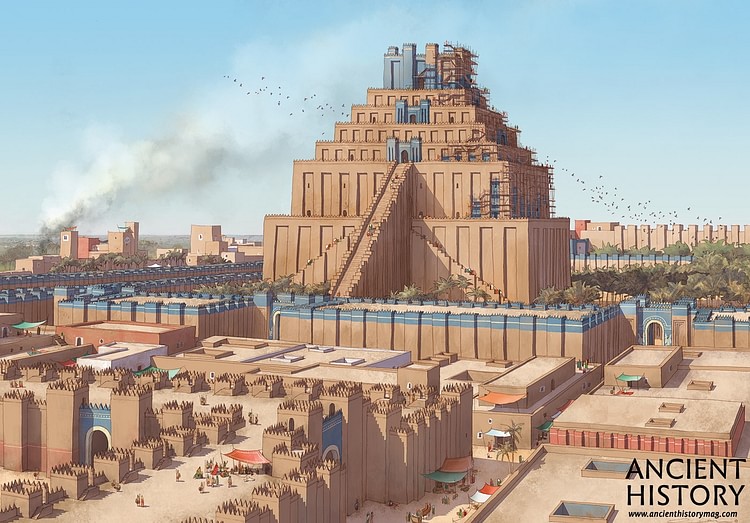
- 681-669 BCE: Esarhaddon, Sennacherib’s son and successor, embarks on a massive rebuilding program for Babylon. He orchestrates the return of Marduk’s statue and dedicates a grander temple, the Etemenanki ziggurat (the inspiration for the biblical Tower of Babel), in an effort to atone for his father’s perceived impiety and restore divine favor.
- 668-627 BCE: Under the reign of Esarhaddon’s son, Ashurbanipal, the statue remains safely in Babylon, enjoying a period of stability within its sacred precinct.
- Circa 605 to circa 562 BCE: The New Babylonian Empire flourishes under Nebuchadnezzar II. During his extensive building projects, city streets are widened to facilitate the grand processions of Marduk’s statue during festivals, especially the Akitu, when it would be paraded through the magnificent Ishtar Gate to a special house outside the city walls.
- Circa 539 BCE: Babylon falls to Cyrus the Great of Persia. Cyrus, known for his respectful approach to conquered cultures, portrays himself as chosen by Marduk to liberate Babylon from impious rulers. His famous cylinder inscription justifies his conquest by claiming Marduk’s favor, asserting that the previous Babylonian king had neglected the god.
- Circa 485 BCE: Babylon revolts against Persian rule under Xerxes I the Great. In a brutal retaliation, Xerxes destroys much of the city and, most significantly, melts down the gold statue of Marduk, marking its final and permanent destruction according to historical accounts.
Supporting Data: Mythology, Cult, and Political Utility
The profound significance of Marduk’s statue and its journeys can only be fully grasped by understanding his central role in Mesopotamian cosmology and the daily lives of Babylonians.
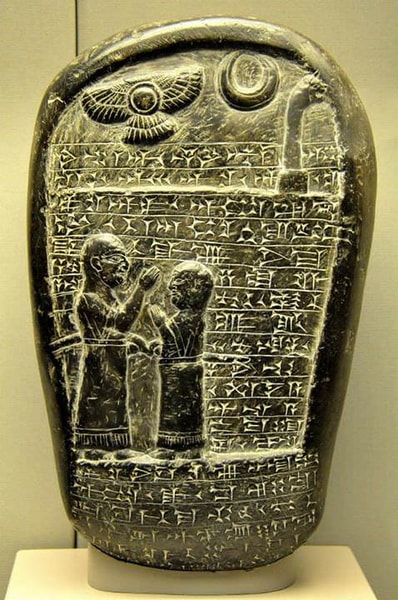
Marduk, King of the Gods: The Cosmic Architect
In Mesopotamian mythology, Marduk ascended from a relatively minor deity to the supreme position as "King of the Gods," largely due to the influence of Babylon’s rising political power. According to the Enuma Elish, the Babylonian epic of creation, Marduk was the son of Enki (Ea), the god of wisdom. The epic recounts the primordial chaos, a watery abyss divided into sweet water (Apsu, the male principle) and salt water (Tiamat, the female principle), who birthed the younger gods. When Apsu sought to destroy his boisterous offspring, Enki intervened, putting Apsu to sleep and killing him. Tiamat, enraged, raised a monstrous army led by her consort Quingu to avenge Apsu.
In this cosmic crisis, the younger gods were helpless until Marduk, demonstrating extraordinary courage and strategic genius, offered to lead them to victory on the condition that they declare him their sovereign. Upon their agreement, Marduk confronted and defeated Quingu, then slew Tiamat, splitting her colossal body to create the heavens and the earth. From the blood of Quingu, he fashioned humanity, destined to be "co-workers with the gods," maintaining order and warding off chaos. This narrative cemented Marduk’s status as the divine architect of the universe and the ultimate benefactor of humankind, making all humans his metaphorical children, bound to enact his will. This elevation was so profound that scholars like Jeremy Black have noted that "The worship of Marduk in its most extreme form has been compared with monotheism though it never led to a denial of the existence of other gods." (129)
Marduk’s Importance to Babylon: The Beating Heart of the City
Marduk’s rise to prominence coincided with the ascent of Babylon itself, particularly during the reign of Hammurabi (1792-1750 BCE). From that point until the city’s eventual destruction by Xerxes I around 485 BCE, Marduk remained the undisputed patron deity. His presence, symbolized by his cult statue, was believed to be vital for the city’s spiritual and physical well-being.
The absence of Marduk’s statue was a catastrophe. The New Year’s Akitu Festival, a critical annual ritual for renewing the world and ensuring prosperity, could not be celebrated. This suspension was not merely a logistical problem; it was understood as a profound spiritual void, signifying the actual departure of the god’s protective presence. The consequences of such an absence, vividly described in The Marduk Prophecy, paint a grim picture of societal collapse:
"People’s corpses block the gates. Brother eats brother. Friend strikes friend with a mace. Free citizens stretch out their hands to the poor to beg. The sceptre grows short. Evil lies across the land. Usurpers weaken the country. Lions block the road. Dogs go mad and bite people. Whoever they bite does not live, he dies." (Van de Mieroop, 48)
As scholar Marc van de Mieroop explains, "The absence of the patron deity from his or her city caused great disruption in the cult… The absence of the divinity was not always metaphorical but often the result of the theft of the cult statue by raiding enemies. Divine statues were commonly carried off in wars by the victors in order to weaken the power of the defeated cities." (48) The removal of the statue was thus a political weapon, a spiritual assault, and a profound cultural trauma.
Mesopotamian Naru Literature: History as Allegory
The Marduk Prophecy is an exemplary piece of naru literature, a genre that skillfully blurred the lines between history and fiction. These texts were not meant to be strictly factual chronicles but rather powerful narratives designed to convey moral lessons, legitimize rulers, or explain historical events through a divine lens. By projecting the "prophecy" into the past, the author could "predict" events that had already happened, making Nebuchadnezzar I’s actions appear divinely ordained. This allowed for a highly effective form of political communication, embedding propaganda within a seemingly timeless and sacred framework. The example of Naram-Sin, a revered king whose portrayal in The Curse of Akkad highlighted the dangers of impiety, demonstrates how historical figures could be manipulated to serve a contemporary message. The Marduk Prophecy similarly uses Marduk’s travels to articulate the ideal behavior of a king and the devastating consequences of failing to uphold one’s divine responsibilities.
Official Responses: Kings, Gods, and Political Maneuvers
The fate of Marduk’s statue and the narrative surrounding it elicited varied "official responses" from successive rulers, each reflecting their political agenda and understanding of divine legitimacy.
- Nebuchadnezzar I (1121-1100 BCE): His commissioning of The Marduk Prophecy was a direct official response to the perceived sacrilege of the Elamites and a celebration of his own rule. By defeating Elam and returning Marduk, he presented himself as the divinely chosen restorer of order, fulfilling the very prophecy he likely orchestrated. This act cemented his authority and secured the loyalty of a populace deeply attached to their god.
- Sennacherib (705-681 BCE): His actions represented a stark official defiance. When Sennacherib sacked Babylon in 689 BCE and removed Marduk’s statue, he also notably snubbed the traditional ritual of "taking the hand" of the god, a symbolic act of legitimate rule over Babylon. This was a deliberate insult, a powerful statement of Assyrian dominance that bypassed Babylonian religious legitimacy. The subsequent assassination of Sennacherib by his own sons in 681 BCE was widely interpreted by Babylonians as Marduk’s retribution, a divine "official response" to the king’s impiety.
- Esarhaddon (681-669 BCE): As Sennacherib’s son and successor, Esarhaddon’s reign was largely defined by his official response to his father’s destructive legacy. He undertook a massive rebuilding effort in Babylon, meticulously restoring its temples and, crucially, returning Marduk’s statue. His construction of an even grander Etemenanki ziggurat was a lavish act of atonement and reverence, signaling a clear shift from his father’s policies and an earnest attempt to restore divine favor and reconcile with the powerful Babylonian priesthood.
- Cyrus the Great (539 BCE): Upon conquering Babylon, Cyrus issued a calculated official response that starkly contrasted with previous conquerors. Rather than desecrating Marduk’s cult, he presented himself as Marduk’s chosen instrument, sent to liberate Babylon from an impious king (Nabonidus, who was accused of neglecting Marduk). The Cyrus Cylinder explicitly states that Marduk "searched for a righteous ruler, a man after his own heart, whom he might take by the hand. He called out his name, Cyrus, king of Anshan, and declared him to be the ruler of all the world." This strategic move ensured Babylonian cooperation and presented his conquest not as an invasion but as a divinely sanctioned restoration, a masterclass in propaganda.
- Xerxes I (circa 485 BCE): Xerxes’ official response to Babylonian rebellion was brutal and absolute. When Babylon revolted against Persian rule, Xerxes retaliated by destroying the city, desecrating its temples, and, most tellingly, melting down the gold statue of Marduk. This act was a definitive statement of Persian supremacy and a symbolic obliteration of Babylonian religious and political identity, aiming to crush any future rebellions by removing the very heart of their civic and spiritual life.
The reliability of sources, particularly the Greek historians Herodotus and Diodorus Siculus, regarding the statue’s ultimate fate, is often debated. Both are criticized for inaccuracies and anti-Persian bias. They might have exaggerated Persian brutality to further their own agendas. However, the absence of any mention of Marduk’s statue in subsequent historical records after Xerxes’ reign, and the lack of contradictory ancient accounts, lend weight to their claims of its destruction.
Implications: Legacy of a Lost God and the Power of Narrative
The Marduk Prophecy, though a work of historical fiction, provides invaluable insights into the beliefs, political strategies, and cultural values of ancient Mesopotamia. Its narrative underscores several key implications:
- The Intertwined Nature of Religion and Power: The article highlights how deeply entwined religious belief was with political legitimacy and imperial ambition. The cult statue was not merely an idol; it was the tangible presence of the divine, a source of power, protection, and identity. Its possession or desecration could legitimize or destabilize empires. Kings like Nebuchadnezzar I used its return to consolidate power, while Xerxes used its destruction to crush dissent.
- The Emotional and Spiritual Connection to Deity: Beyond political machinations, The Marduk Prophecy and related texts reveal the profound personal and communal bond between the Babylonians and Marduk. He was not a distant, abstract deity but a "close friend and neighbor," whose physical presence in the city, symbolized by his statue, was vital for daily life and cosmic order. The loss of the statue was a deeply felt, existential crisis, mirroring the distress of losing a beloved family member or protector.
- The Enduring Power of Propaganda and Narrative: The document serves as a powerful testament to the timeless art of propaganda. By shaping historical events into a "prophecy," ancient scribes crafted a compelling narrative that reinforced royal authority, instilled national pride, and provided a framework for understanding their world. This ancient form of storytelling continues to resonate, reminding us how narratives can be constructed to serve specific political or social ends, even today.
- Historical Reconstruction and Its Challenges: The journey of Marduk’s statue also illustrates the complex process of reconstructing ancient history. Relying on multiple, sometimes biased, sources (like Greek historians), and piecing together fragmented evidence is crucial. The speculative return of the statue by Suppiluliuma I or the debate around its final destruction by Xerxes demonstrate the ongoing nature of historical inquiry and the possibility of new archaeological discoveries reshaping our understanding.
- A Legacy of Resilience and Loss: The story of Marduk’s statue is one of resilience for Babylon, as its people and rulers repeatedly fought to reclaim their divine protector. Yet, it also ends in a definitive loss, marking the end of an era for a civilization that had placed its highest hopes and identity in the presence of its wandering god. Alexander the Great’s conquest of the Persian Empire in 331 BCE, and the absence of any mention of Marduk’s statue in his or subsequent accounts, reinforces the tragic finality of Xerxes’ act.
Ultimately, The Marduk Prophecy offers more than just a historical footnote. It is a profound cultural artifact that allows us to connect with the emotional and spiritual landscape of ancient Babylon, underscoring the universal human need for meaning, protection, and the powerful narratives that bind communities to their gods and their rulers.

Leave a Comment