
Unveiling Europe’s Primal Spirit: Charles Fréger’s ‘Wilder Mann’ Explores Humanity’s Wild Core
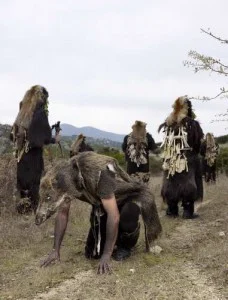
PARIS, France – In an increasingly homogenized and digitally connected world, the work of French photographer Charles Fréger stands as a powerful testament to the enduring, diverse, and often startling expressions of human identity rooted in ancient traditions. His monumental photographic series, Wilder Mann (German for "Wild Man"), has captivated audiences worldwide, offering a profound visual journey into Europe’s forgotten, or perhaps merely submerged, primal spirit. The series meticulously documents traditional, and occasionally contemporary, costumes from across the continent that transform their wearers into figures embodying folkloric half-human, half-beast entities. These aren’t merely theatrical garments; they are profound reflections on the porous boundary between humanity and the "more-than-human" world, challenging modern perceptions of identity and our relationship with nature.
Fréger’s arresting portraits, often set against stark natural backdrops of snow-dusted mountains, mist-shrouded moors, or ancient forests, possess a striking immediacy. They invite viewers to contemplate whether these elaborate disguises are anachronistic remnants of a bygone era, forced performances for the sake of spectacle, or if they tap into something fundamentally essential to the human experience – an instinctual connection to the wild that modern civilization has striven for centuries to suppress or define itself against. The series, which has been widely exhibited and published as a definitive book, serves not only as a visual archive of disappearing customs but also as a philosophical inquiry into the depths of collective memory and the persistent allure of the untamed.
A Journey Through Time and Tradition: The Chronology of ‘Wilder Mann’
Charles Fréger’s Wilder Mann project represents an extensive and meticulous ethnographic photographic endeavor, spanning several years of dedicated travel and research across Europe. The genesis of the series itself is rooted in the artist’s long-standing interest in collective identity and the uniforms that define it, a theme explored in earlier works focusing on military brigades and sports teams. However, with Wilder Mann, Fréger shifted his lens from organized, contemporary groups to the more nebulous and ancient realm of folklore and ritual.
Inception and Initial Expeditions (2010-2011)
The conceptualization of Wilder Mann began around 2010. Fréger, seeking to explore the deeper, more primal expressions of collective identity, turned his attention to European pagan and pre-Christian traditions. His initial research led him to the heart of Central Europe, particularly the Alpine regions of Austria and Switzerland, and parts of Germany. These areas are rich with winter solstice and Carnival traditions featuring figures often adorned in animal hides, horns, bells, and other natural materials, designed to embody spirits of the wilderness or to ward off evil.
The first phase of the project involved intense travel during specific periods of the year, often in harsh winter conditions, to coincide with local festivals and rituals. Fréger immersed himself in these communities, gaining trust and understanding the cultural significance of each "Wild Man" figure. His approach was not merely documentary; it was an artistic collaboration, where the participants, already deeply invested in their roles, presented themselves to his camera with a striking authenticity. This early period established the aesthetic and methodological framework for the entire series: formal, studio-like portraits taken in situ, emphasizing the costume’s detail and the wearer’s presence within the natural environment.
Expansion and Deepening the Archive (2011-2013)
Building on the success and insights from his initial travels, Fréger expanded the scope of Wilder Mann significantly between 2011 and 2013. His expeditions took him across an immense geographical and cultural spectrum, from the Iberian Peninsula to the fringes of Eastern Europe and even parts of Scandinavia. He documented a staggering array of "Wild Men" figures, each with unique names, appearances, and ritualistic functions: the formidable Krampus and Perchta of the Alpine regions, the straw-covered Zvončari of Croatia, the bell-laden Kurent of Slovenia, the bear-men of Romania, the moss-clad figures of Portugal, and the elaborate horned beasts of Sardinia, among many others.
This phase was characterized by an even greater dedication to capturing the ephemeral nature of these rituals. Fréger often had to navigate complex logistics, linguistic barriers, and the deeply ingrained local customs to secure access and permission to photograph. The sheer diversity of materials used in the costumes—raw animal skins, horns, antlers, skulls, straw, leaves, bells, chains, and wood—became a focal point, underscoring the ingenuity and resourcefulness of these ancient practices. Each portrait became a testament to the meticulous craftsmanship and the intergenerational transmission of these traditions. The culmination of this intensive photographic journey led to the production of the Wilder Mann book and its subsequent widespread exhibition.

Publication and Exhibition (2012 Onwards)
The Wilder Mann series gained significant international recognition upon its initial exhibitions and the release of its accompanying publication. The book, published by Thames & Hudson (and Actes Sud in France) in 2012, quickly became a landmark in ethnographic photography, making the comprehensive collection accessible to a global audience. Its stunning visuals and insightful accompanying texts solidified Fréger’s reputation as a master of contemporary portraiture and cultural documentation.
The series premiered in major art institutions and photographic festivals, including the prestigious Rencontres d’Arles in France, and subsequently toured numerous galleries and museums across Europe, North America, and Asia. These exhibitions allowed the large-format prints to convey their full impact, immersing viewers in the otherworldly presence of the "Wild Men." The ongoing impact of Wilder Mann continues to resonate, with the project frequently referenced in discussions about folklore, anthropology, and the intersection of art and cultural heritage.
The Fabric of Folklore: Supporting Data and Artistic Context
The power of Wilder Mann lies not just in its visual spectacle, but in the rich layers of historical, anthropological, and artistic context that underpin each photograph. Fréger’s work transcends simple documentation, offering a nuanced exploration of an enduring archetype and the unique ways it manifests across European cultures.
The Enduring Archetype of the "Wild Man"
The "Wild Man" is a recurring figure in European folklore, mythology, and art, representing a liminal being that exists on the boundary between civilization and wilderness, human and animal. Its roots are deeply embedded in pre-Christian pagan traditions, often associated with animism, fertility rites, the changing seasons, and the warding off of malevolent spirits. These figures embody both creative and destructive forces, symbolizing the untamed aspects of nature and the human psyche.
Anthropologically, the "Wild Man" serves as a cultural device to explore fundamental questions about human nature. It represents the "otherness" that society often defines itself against, yet simultaneously yearns for. Psychologically, it taps into Jungian archetypes, particularly the "shadow self" – the instinctual, uncivilized aspects of our collective unconscious. These costumes, often crafted from animal parts like fur, horns, and bones, or natural materials such as straw, moss, and wood, physically manifest this primordial connection, allowing the wearer to temporarily shed their human identity and embody a more elemental existence. The rituals associated with these figures – often involving loud noises, chaotic movements, and symbolic acts of cleansing or blessing – are believed to ensure good harvests, fertility, or protection from winter’s harshness.
Fréger’s Photographic Approach: Staging the Primal
Fréger’s artistic methodology for Wilder Mann is critical to its impact. Unlike conventional ethnographic photography, which often seeks to capture subjects candidly in their natural environment, Fréger employs a highly controlled and stylized portraiture technique. He stages his subjects, often isolating them against the very landscapes from which their traditions emerge – a snowfield, a dense forest, a rocky outcrop. This deliberate staging elevates the figures from mere participants in a local festival to iconic, almost sculptural, representations of an archetype.
His use of natural light, often diffused by fog, snow, or overcast skies, lends an ethereal quality to the images, enhancing the mystical aura of the "Wild Men." The composition is meticulous, focusing on the intricate details of the costumes while simultaneously conveying the imposing presence of the wearer. This approach creates a fascinating paradox: the images are clearly posed, yet they feel deeply authentic, capturing an essence that transcends the performative aspect of the rituals. Fréger’s background in documenting uniforms is evident here; he treats each costume with the precision of a uniform, highlighting its construction, materials, and the way it transforms the individual into a collective symbol. The vulnerability and the raw power emanating from the subjects are equally palpable, inviting viewers to question the line between human and beast, identity and disguise.

Materiality and Craftsmanship: Echoes of the Earth
A significant aspect of the Wilder Mann series is its profound emphasis on the materiality of the costumes. These are not mass-produced outfits; they are often hand-crafted, sometimes over generations, using materials directly sourced from the natural environment. Animal hides – sheep, goat, bear, wolf – are painstakingly prepared and stitched, their texture and smell forming an integral part of the experience. Horns and antlers are attached, adding a fearsome or majestic silhouette. Bells, often large and heavy, are sewn onto the garments, their clanging sound an essential element of the ritual, believed to ward off evil or announce the figure’s presence.
Straw, moss, branches, and other plant matter are woven, braided, or tied onto the bodies, creating figures that blend seamlessly with the winter landscape. Wooden masks, carved with grotesque or ancestral features, complete the transformation. The weight, the smell, the sound, and the visual impact of these costumes are all carefully considered within their respective traditions. Fréger’s photography captures these details with stunning clarity, allowing the viewer to appreciate the immense effort, skill, and cultural significance embedded in each fiber and form.
Geographic and Cultural Diversity
Fréger’s ambition for Wilder Mann was truly pan-European. His travels spanned over 19 countries, showcasing the incredible regional variations of the "Wild Man" archetype. From the deeply forested regions of Slovenia and Croatia, home to the Kurent and Zvončari, who chase away winter with their bells and intimidating masks, to the mountainous villages of Bulgaria and Romania, where bear-men dance as symbols of strength and renewal.
In the Pyrenees, figures are clad in moss and leaves, connecting to ancient forest spirits. In Sardinia, the Mamuthones and Issohadores enact solemn rituals that speak of sacrifice and fertility. The Germanic regions present the terrifying Krampus and benevolent Perchta, figures of punishment and blessing. Each culture imbues its "Wild Man" with specific local meanings, rituals, and aesthetic expressions, yet all share a common thread: the embodiment of a primal force that mediates between the human community and the untamed natural world. Fréger’s comprehensive documentation highlights this intricate tapestry of shared human experience and localized cultural adaptation.
Critical Acclaim and Scholarly Discourse: Official Responses
Upon its release and subsequent exhibition, Charles Fréger’s Wilder Mann garnered significant critical acclaim, establishing itself as a pivotal work in contemporary photography and cultural studies. The series sparked extensive discussion across artistic, anthropological, and journalistic spheres, demonstrating its profound impact and scholarly relevance.
Artistic Reception
Art critics universally lauded Wilder Mann for its striking visual aesthetic, Fréger’s masterful command of portraiture, and the ambitious scope of the project. Reviewers in prestigious publications like The New York Times, The Guardian, Le Monde, and various art and photography journals praised the series for its originality, its ability to evoke a sense of timelessness, and its powerful narrative. Fréger was commended for his unique blend of documentary rigor and artistic vision, creating images that are both ethnographically informative and aesthetically compelling.
The large-format prints, often displayed in stark, minimalist gallery settings, allowed the intricate details of the costumes and the dramatic presence of the subjects to command attention. Critics highlighted the tension within the photographs – the solemnity of the ritual contrasted with the often humorous or unsettling appearance of the figures; the stark natural settings juxtaposed with the highly constructed costumes. The series was recognized for its ability to transport viewers into unfamiliar cultural landscapes while simultaneously provoking universal questions about human identity and nature.

Anthropological and Cultural Commentary
Beyond the art world, Wilder Mann resonated deeply within anthropological and folkloric circles. Scholars and researchers engaged with the series as a valuable visual archive, documenting traditions that are, in some cases, at risk of fading or are undergoing significant transformation due to modernization and global influences. The work sparked academic discussions on the resilience of oral traditions, the role of ritual in contemporary society, and the dynamics of cultural preservation versus adaptation.
The central questions posed by Fréger – concerning the authenticity and contemporary relevance of these rituals – became a focal point of discussion. Are these practices merely theatrical reenactments for tourists, or do they still hold profound meaning for the communities that sustain them? Many anthropologists argued that Fréger’s work underscored the vital, living nature of these traditions, demonstrating their capacity to evolve while retaining their core significance. The series offered a contemporary lens through which to examine how ancient archetypes continue to manifest and provide a sense of identity and continuity in an increasingly globalized world.
Institutional Endorsement
The significance of Wilder Mann was further solidified by its institutional endorsement. Works from the series have been acquired by major museums and cultural institutions globally, including the Musée du Quai Branly – Jacques Chirac in Paris, known for its extensive collection of indigenous arts and cultures, and other prominent European and international galleries. This acquisition by leading cultural bodies speaks to the recognition of Wilder Mann not only as a significant artistic achievement but also as an important ethnographic document.
The inclusion of the series in numerous international photographic festivals, biennials, and curated exhibitions further cemented its status as a landmark project. These platforms provided wider exposure and facilitated deeper engagement with the themes presented by Fréger, fostering dialogue among diverse audiences, from art enthusiasts to cultural historians. The project’s widespread recognition attests to its profound ability to bridge the gap between art, anthropology, and public consciousness.
Echoes of the Wilderness: Broader Implications of ‘Wilder Mann’
The profound impact of Charles Fréger’s Wilder Mann extends far beyond its immediate artistic and documentary merits. The series functions as a potent cultural mirror, reflecting back to us fundamental questions about our identity, our relationship with the natural world, and the enduring power of tradition in an age of rapid change.
Reconnecting with the Primal Self
Perhaps the most significant implication of Wilder Mann is its ability to challenge the modern human’s perceived separation from nature. For centuries, Western thought has largely sought to define humanity in opposition to "nature," emphasizing rationality and control over instinct and wilderness. Fréger’s work vividly reminds us of a time, still present in pockets of Europe, when humanity saw itself as inextricably linked to the natural world – drawing power, identity, and meaning from it.
The "Wild Men" embody this symbiotic relationship. By donning animal skins, horns, and natural elements, the wearers symbolically, and perhaps even spiritually, merge with the untamed forces of the environment. The series suggests that within each of us lies a "wilder self" – an instinctual, elemental core that yearns for connection to something ancient and untamed. In an era grappling with ecological crises and a pervasive sense of disconnect, Wilder Mann serves as a poignant reminder of what we may have lost, or suppressed, in our relentless quest for modernity and technological advancement. It encourages us to reconsider our place within the ecosystem, not just as masters, but as participants.

The Resilience of Tradition in a Modern World
Wilder Mann offers compelling evidence of the incredible resilience of ancient traditions in the face of globalization and cultural erosion. Despite centuries of societal evolution, industrialization, and the pervasive influence of mass media, these unique rituals and their elaborate costumes have persisted, passed down through generations. The series documents not just static historical artifacts, but living, breathing traditions that continue to hold deep cultural significance for the communities that practice them.
This persistence highlights the inherent human need for ritual, community, and a connection to one’s heritage. In a world often characterized by transient trends, these enduring practices provide a sense of stability, identity, and collective memory. Fréger’s photographs are a powerful counter-narrative to the idea of a monolithic global culture, celebrating the rich tapestry of local identities that continue to thrive. They prompt contemplation on how communities adapt, preserve, and reinterpret their heritage in contemporary contexts, ensuring that these echoes of the past continue to resonate in the present.
Artistic Innovation and Ethnographic Photography
Artistically, Wilder Mann pushes the boundaries of ethnographic photography, demonstrating how the genre can evolve beyond mere documentation to become a powerful vehicle for artistic expression and philosophical inquiry. Fréger’s highly aestheticized, studio-like portraits elevate his subjects beyond mere anthropological specimens, presenting them as figures of myth and profound symbolic weight. This approach bridges the gap between art and science, making complex cultural phenomena accessible and engaging to a broader audience.
The series redefines contemporary portraiture by focusing not just on the individual, but on the individual as a vessel for collective identity and ancient archetypes. It challenges viewers to look beyond the surface of the costume and consider the deeper meanings embedded within the ritual, the community, and the human psyche. Fréger’s innovative methodology has inspired a new generation of photographers to explore cultural heritage with both documentary rigor and artistic sensitivity.
A Call to Reflection
Ultimately, Wilder Mann is an invitation to profound reflection. It asks us to confront the questions that lie at the heart of the human condition: What does it mean to be human? How do we define ourselves in relation to the natural world? What have we gained, and what have we irrevocably lost, in our journey from wilderness to civilization? Are these "Wild Men" figures merely theatrical and anachronistic, or do they embody a forgotten truth about humanity’s essential connection to the wild, a truth that we might do well to rediscover?
Through the stunning visual narratives of Wilder Mann, Charles Fréger not only preserves the image of these fascinating folkloric figures but also ignites a crucial dialogue about identity, heritage, and the enduring, mysterious power of the wild within us all. It is a series that continues to move, challenge, and inspire, reminding us that the answers to our modern dilemmas might just lie in the echoes of our primal past.


Leave a Comment