
Unearthing the Ancient Blueprint: Shan Winn’s "Heaven, Heroes, and Happiness" Reveals Enduring Indo-European Legacy
FOR IMMEDIATE RELEASE
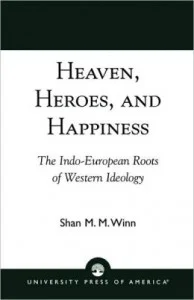
LONDON, UK – [Current Date] – In a world grappling with identity and the roots of its societal structures, Shan Winn’s seminal work, Heaven, Heroes, and Happiness: The Indo-European Roots of Western Ideology, offers a compelling journey into the profound and often overlooked continuities between modern Western thought and the ancient worldviews of pre-Christian Europeans. Far from being a mere historical footnote, the Proto-Indo-Europeans, a people or group of peoples who flourished during the Bronze Age, are revealed as the foundational architects of ideologies that continue to shape contemporary society, language, and even spiritual perspectives.
The book, which has garnered significant attention within academic circles and among enthusiasts of ancient history, challenges the notion that our modern consciousness is entirely distinct from that of our distant ancestors. Instead, Winn meticulously argues that the ideological bedrock of Western civilization, encompassing everything from social stratification to religious archetypes, can be traced directly back to these nomadic pastoralists who originated in the Pontic-Caspian steppe.
Main Facts: The Unseen Threads of Continuity
Shan Winn’s Heaven, Heroes, and Happiness posits that while the overt manifestations of ancient European cultures may seem vastly different from our own, a deep structural and ideological continuity persists, rooted in the Proto-Indo-European (PIE) worldview. The central thesis is that the PIEs bequeathed to their descendants – including the Celts, Slavs, Greeks, Romans, Germanics, and Indo-Iranians – far more than just a common linguistic heritage; they instilled a fundamental template for societal organization, cosmological understanding, and even ethical frameworks.
The book’s most compelling argument revolves around the concept of a tripartite hierarchical structure. Winn demonstrates that virtually all Indo-European societies, from ancient India to Iron Age Europe, organized themselves into three distinct functions:
- Sovereignty/Priesthood: Comprising rulers, priests, and lawgivers, responsible for sacred and secular authority.
- Warrior Class: Dedicated to defense, conquest, and the maintenance of order through force.
- Producer/Commoner Class: Encompassing farmers, merchants, and craftspeople, who formed the economic backbone of society.
This tripartite division was not merely a pragmatic social arrangement but was deeply interwoven with a corresponding tripartite cosmology, where the divine realm mirrored human society. Gods and goddesses were often associated with specific functions, reinforcing the perceived naturalness and divine sanction of this structure. Winn argues that while modern Western societies have evolved significantly, this ancient blueprint remains a subconscious "primary reference point" around which our institutions and collective understanding of societal roles are still ordered, albeit in more diffuse forms.
Beyond social structure, Winn explores the enduring impact on religious thought. The book highlights the figure of Zarathustra, the Iranian prophet of the second millennium BCE, whose teachings profoundly influenced later monotheistic religions, particularly Christianity. Winn illustrates how Zarathustra, himself a priest within an Indo-European society, drew upon existing Indo-European mythical themes and concepts, even as he radically reinterpreted them. This suggests a deep, underlying continuity of symbolic language and philosophical concerns that transcend overt religious shifts.
The scholarly foundation of Winn’s work is largely built upon the contributions of two titans in Indo-European studies: Georges Dumézil and Marija Gimbutas. While Dumézil’s structural analysis of tripartism is largely embraced by Winn and the broader academic community, Gimbutas’s theories regarding "Old Europe" and the nature of Indo-European expansion receive a more nuanced, and at times critical, examination from the reviewer of the book, highlighting areas of ongoing academic debate.
Chronology: Tracing the Indo-European Journey
The story of the Proto-Indo-Europeans is one of profound cultural diffusion and transformation, spanning millennia and shaping the demographic and linguistic landscape of Eurasia.
The Bronze Age Origins (c. 4500-2500 BCE): The narrative begins in the Pontic-Caspian steppe, a vast grassland stretching across parts of modern-day Ukraine, Russia, and Kazakhstan. Here, the Proto-Indo-Europeans emerged as nomadic or semi-nomadic pastoralists. Their lifestyle was defined by their mastery of animal husbandry, particularly the domestication of horses, which provided unprecedented mobility and a significant military advantage. The invention and widespread adoption of wheeled carts further revolutionized transportation and trade, allowing for the efficient movement of goods and people across vast distances. These technological innovations were crucial enablers of their subsequent expansion.
Waves of Expansion and Cultural Diffusion (c. 3000-1000 BCE): Over several millennia, the PIE peoples began to expand outwards from their homeland. This expansion, often associated with Marija Gimbutas’s "Kurgan hypothesis," involved successive waves of migration and cultural influence. They moved westward into Europe, southward into Anatolia and the Iranian plateau, and eastward into Central Asia and parts of India. Rather than uniform conquest, this process involved a complex interplay of migration, cultural assimilation, and linguistic dominance.
As the PIEs settled in new regions, their language and cultural traits profoundly shaped the indigenous populations. This resulted in the emergence of distinct daughter cultures:
- Western Europe: The ancestors of the Celts and Germanics.
- Southern Europe: The Greeks and Romans, who would later build vast empires.
- Eastern Europe: The Slavs and Balts.
- Anatolia: The Hittites, one of the earliest attested Indo-European groups, whose empire rivaled Egypt.
- Iranian Plateau and Indian Subcontinent: The Indo-Iranians, who gave rise to Persian and Indic civilizations.
The most enduring legacy of this expansion is the Indo-European language family, which today includes nearly half of the world’s population, encompassing most European languages (with notable exceptions like Basque, Finnish, and Hungarian), as well as languages spoken across Iran, Afghanistan, Pakistan, and Northern India. This linguistic continuity is a testament to the profound and widespread impact of the PIEs.
The Evolution of Tripartism in Daughter Cultures: As these daughter cultures developed, the tripartite structure identified by Dumézil and elaborated by Winn manifested in diverse yet recognizable forms. In ancient Rome, society was divided into priests (Flamines, Pontifices), warriors (the legions, represented by Mars), and commoners (Quirites, farmers). In ancient India, the Vedic varnas – Brahmins (priests), Kshatriyas (warriors), Vaishyas (merchants/farmers), and Shudras (laborers) – clearly reflect this tripartite division, with an added fourth function for subjugated peoples. Even in Norse mythology, the pantheon often aligns with these functions: Odin and Tyr embodying sovereignty/law, Thor representing the warrior class, and the Vanir gods (Freyja, Freyr) associated with fertility and prosperity. Winn’s work meticulously traces these patterns, revealing a deeply ingrained structural logic that transcended geographical and temporal boundaries.
Religious and Mythological Development: The PIEs possessed a rich, polytheistic religion, often centered around a "Sky Father" deity (e.g., Dyeus Pater, reflected in Zeus, Jupiter, Dyaus Pitar), a storm god, and divine twins. As their descendants spread, these core mythical themes and deities underwent transformations, leading to the diverse pantheons of the Greeks, Romans, Norse, Celts, and Indians.
The case of Zarathustra (c. 1500-1000 BCE) is particularly illustrative. As an Iranian priest, he inherited a rich Indo-Iranian religious tradition. While his reforms introduced radical concepts like a supreme benevolent deity (Ahura Mazda), a cosmic struggle between good and evil, and individual moral responsibility, Winn highlights how he nevertheless utilized existing Indo-European mythical raw materials. Zarathustra’s dualism, eschatology (ideas about the end times), and emphasis on divine judgment profoundly influenced later Abrahamic religions, demonstrating a deep, cross-cultural flow of ideas rooted in ancient Indo-European frameworks. This connection underscores the argument that the PIEs did not just lay the groundwork for social order, but also for fundamental spiritual and philosophical concepts that continue to resonate.
Supporting Data: Evidence for a Shared Legacy
Winn’s arguments are bolstered by a wealth of interdisciplinary evidence, drawing from linguistics, archaeology, and comparative mythology.
Linguistic Evidence: Comparative linguistics remains the cornerstone of Indo-European studies. Scholars reconstruct the Proto-Indo-European language by identifying cognates (words with a common origin) across its daughter languages. This reconstruction reveals a shared vocabulary not just for basic nouns and verbs, but also for sophisticated concepts related to social structure, religious practice, and governance. For instance, cognates exist for terms like "king," "law," "god," "priest," "horse," and "wheel," indicating that these concepts were integral to the PIE worldview. The very existence of a common term for "heavenly father" (e.g., Dyeus Pater) points to a shared divine concept.
Archaeological Evidence: While language provides the framework, archaeology offers tangible proof of PIE movements and cultural traits. The Kurgan mounds, characteristic burial sites found across the Pontic-Caspian steppe and later in regions of PIE expansion, provide evidence of their mobile lifestyle and distinct funerary practices. Artifacts such as battle axes, pottery styles, and the remains of domesticated horses and wheeled vehicles further corroborate the archaeological signature of these peoples. The spread of these material cultures across Eurasia aligns with the linguistic and genetic evidence of PIE migrations.
Mythological Parallels and Structuralism: Beyond social structures, Winn, following Dumézil, explores recurring mythological motifs and archetypes across diverse Indo-European traditions. These parallels are too numerous and specific to be coincidental. Examples include:
- The Divine Twins: Often associated with horses and healing (e.g., the Ashvins in Vedic India, the Dioscuri in Greece, the Sons of the Sun in Baltic mythology).
- The Sky Father and Earth Mother: A ubiquitous pairing representing cosmic creation and fertility.
- The Dragon/Serpent Slayer Myth: A heroic figure (e.g., Indra, Thor, Apollo, St. George) confronting a monstrous serpent, symbolizing the triumph of order over chaos.
- Flood Narratives: While not unique to Indo-European cultures, distinct versions exist within their mythologies.
These shared narratives are not merely stories; they reflect a common underlying cosmology, a way of understanding the forces of nature, the roles of gods, and the place of humanity in the cosmos. The recurrence of the number three in sacred contexts, beyond just social functions, further underscores this shared symbolic system.
Official Responses: Scholarly Perspectives and Debates
Winn’s engagement with the foundational scholarship of Indo-European studies brings to the forefront the enduring debates that characterize the field.
Georges Dumézil (1898-1986): The Architect of Tripartism: Dumézil’s work is central to Winn’s analysis, and its soundness is largely accepted by the reviewer. A French comparative mythologist and philologist, Dumézil systematically analyzed the mythologies and social structures of Indo-European peoples, identifying the consistent presence of the "three functions" (sovereignty/religion, warfare, and fertility/production). He demonstrated how these functions were not only reflected in social classes but also in the pantheons of gods, where specific deities embodied these roles. His structuralist approach revolutionized the understanding of Indo-European thought, moving beyond mere lexical comparisons to reveal deep structural parallels. Dumézil’s influence is immense, and his tripartite model remains a highly influential, if sometimes debated, framework for understanding Indo-European societies.
Marija Gimbutas (1921-1994): The "Old Europe" Hypothesis and its Controversies: Winn draws significantly from Marija Gimbutas, a Lithuanian-American archaeologist, particularly her "Old Europe" hypothesis. Gimbutas proposed that prior to the arrival of the-Indo-Europeans, Europe was inhabited by "Old European" cultures (c. 7000-3500 BCE) characterized by:
- Peacefulness and Egalitarianism: Societies with little evidence of warfare or social hierarchy.
- Matriarchy or Matrilineality: A social system where women held significant power or lineage was traced through the mother.
- Great Goddess Worship: A focus on a singular, powerful female deity associated with fertility, life, and death.
- Agrarian Lifestyle: Stable, settled farming communities with a high value placed on art and craft.
Gimbutas argued that the arrival of the Proto-Indo-Europeans (her "Kurgans") represented a violent invasion, a "patriarchal conquest" that subjugated Old Europe, replacing its peaceful, goddess-centered culture with a hierarchical, warrior-dominated, sky-god-worshipping ideology.
Critique and Nuance: While Gimbutas’s work brought valuable attention to pre-Indo-European cultures and her "Kurgan hypothesis" for PIE expansion is broadly accepted in modified forms, her interpretations of Old Europe have been heavily scrutinized. The reviewer of Winn’s book, reflecting a common academic stance, finds Gimbutas’s portrayal to be an overstatement, creating an "unrealistically stark dichotomy." Critics argue that:
- Oversimplification: The idea of uniformly peaceful, matriarchal societies across a vast continent for millennia lacks robust archaeological support. Evidence for warfare, hierarchy, and male deities in pre-Indo-European Europe does exist.
- Romanticization: Gimbutas’s vision is seen by some as a romanticized ideal, appealing to certain modern socio-political movements (feminism, eco-spiritualism) seeking a utopian historical model. This "played directly into the unrealized hopes and dreams of mid-to-late-twentieth-century liberalism/progressivism," as the reviewer aptly puts it.
- Lack of Evidence for Matriarchy: While powerful female deities were undoubtedly worshipped, conclusive evidence for widespread societal matriarchy, as opposed to matrilineal descent or simply a high status for women, remains elusive.
The reviewer also points out Winn’s "annoying habit of assuming that Indo-European goddesses could only be holdovers from Gimbutas’s Old Europe." This critique highlights a crucial point: it implies that Indo-European societies were "cartoonishly patriarchal" and incapable of developing their own complex pantheons, including powerful, original female deities. This overlooks the rich tapestry of goddesses within Indo-European mythologies (e.g., Freyja, Athena, Hera, Lakshmi, Durga) who embody sovereignty, wisdom, warfare, and fertility within distinct Indo-European contexts, not solely as borrowed elements. Winn’s passing reference to the "obvious, almost Zoroastrian dualism inherent in Gimbutas’s vision" is a notable self-correction, acknowledging the stark good-vs-evil narrative in Gimbutas’s historical reconstruction.
Implications: The Enduring Echoes in Modernity
The legacy of the Proto-Indo-Europeans, as elucidated by Shan Winn, extends far beyond ancient history, offering profound insights into the foundations of modern Western thought and society.
The Persistence of Tripartism: While no modern Western nation rigidly adheres to a caste system or overt tripartite social division, the underlying structure continues to resonate. We see echoes in:
- Governmental Branches: The separation of powers into executive, legislative, and judicial branches mirrors the ancient division of authority, law-making, and judgment.
- Economic Sectors: The primary (agriculture/resource extraction), secondary (industry), and tertiary (services) sectors can be loosely aligned with the producer function, albeit in a highly industrialized context.
- Social Roles: The ongoing societal emphasis on leadership (political, religious), defense (military, law enforcement), and economic contribution (diverse professions) reflects, in a highly evolved manner, the ancient functional divisions.
- Values: The enduring Western admiration for leadership, heroism, and economic prosperity can be seen as continuations of values associated with the first, second, and third functions respectively.
Influence on Western Thought and Values: The Indo-European emphasis on individual agency, heroism, legal codes, and a hierarchical yet ordered cosmos has deeply permeated Western philosophy and ethics. Concepts of justice, divine judgment, and the struggle between order and chaos, often attributed solely to later developments, find their prefigurations in Indo-Indo-European myth and philosophy, particularly through figures like Zarathustra. This challenges a purely Enlightenment-centric view of Western intellectual history, revealing much deeper roots.
Cultural Identity and Heritage: Understanding the Indo-European legacy is crucial for comprehending the shared cultural heritage of a vast swathe of humanity, particularly in Europe and parts of Asia. It fosters a deeper appreciation for the interconnectedness of seemingly disparate cultures and languages. However, this knowledge also carries a responsibility. The history of Indo-European studies has, at times, been misused for ideological purposes, including nationalism and racial theories. Winn’s work, by focusing on structural and ideological continuities rather than racial purity, helps to navigate these complex waters responsibly.
The Value of "Heaven, Heroes, and Happiness": Shan Winn’s Heaven, Heroes, and Happiness stands as an accessible and thought-provoking introduction to a complex and often esoteric field. It masterfully bridges the gap between specialist scholarship and a broader audience, making the profound insights of Indo-European studies comprehensible. By focusing on the "continuity" between ancient and modern worldviews, it compels readers to re-evaluate their understanding of how deeply embedded historical patterns influence contemporary life. Despite some debatable interpretations, particularly regarding Gimbutas’s work, the book’s overall contribution to highlighting the enduring influence of Proto-Indo-Europeans on Western ideology is invaluable.
Ultimately, Winn’s book is a powerful reminder that the foundations of our present are deeply rooted in a distant past, a past that continues to shape our languages, our societies, and even our most fundamental aspirations for heaven, heroes, and happiness. It is a highly recommended read for anyone seeking to understand the deep history of Western thought and the subtle yet profound ways in which ancient blueprints continue to guide our modern world.
Click here to view or buy Heaven, Heroes, and Happiness at Amazon.com.


Leave a Comment