
From 2015’s Future to Horror’s Cutting Edge: The Cinematic Evolution of Elijah Wood
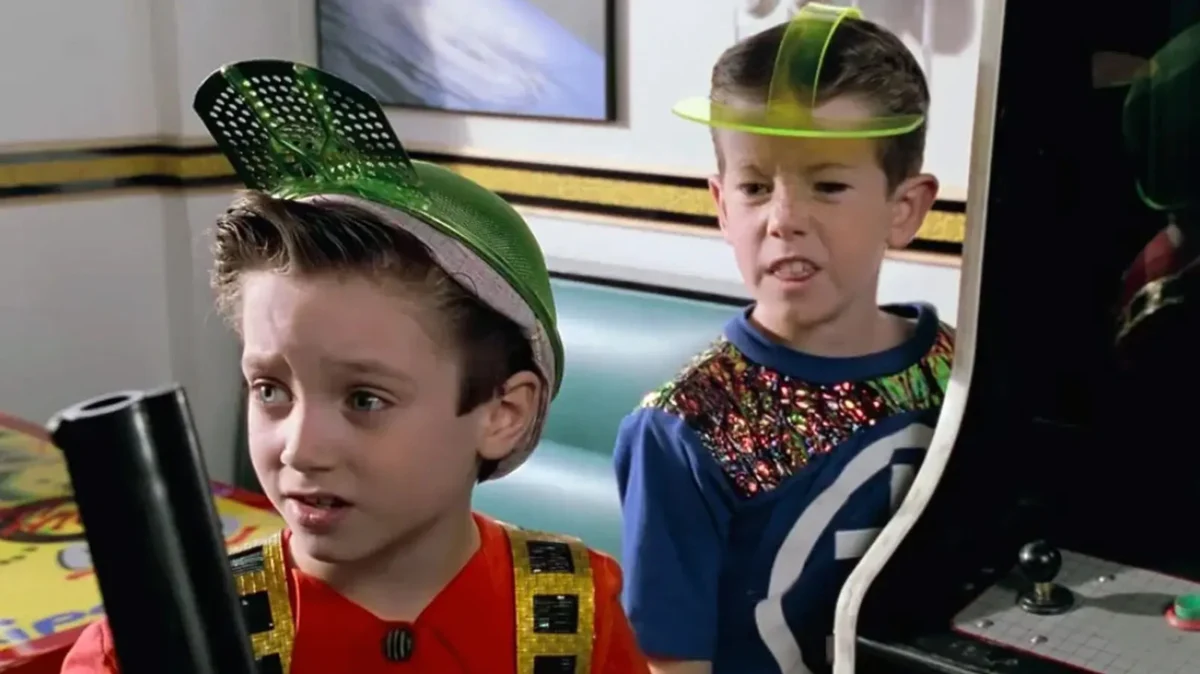
In the annals of Hollywood history, few debuts are as ironically prophetic as that of Elijah Wood. Long before he became the face of a billion-dollar fantasy franchise or a titan of independent horror production, Wood was simply a seven-year-old boy in a colander-like hat, standing in a fictionalized "Cafe ‘80s" and insulting a cinematic icon. His appearance in Robert Zemeckis’ 1989 sequel, Back to the Future Part II, lasted mere seconds, yet it served as the starting gun for one of the most versatile and enduring careers in modern film.
Main Facts: The "Video Game Boy" and the 2015 That Never Was
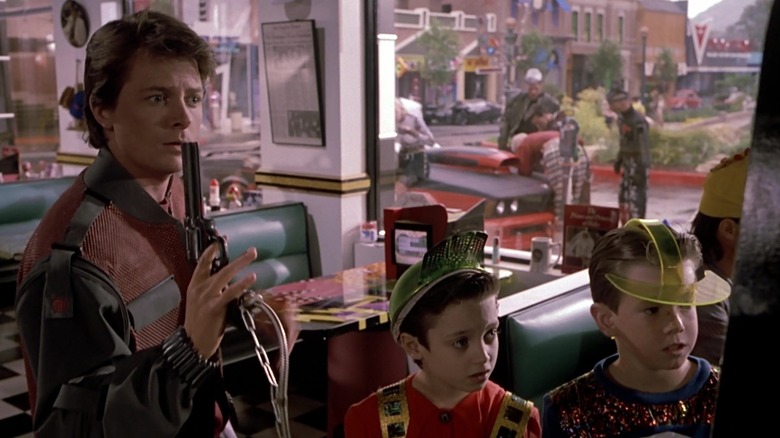
The scene in question occurs during the first act of Back to the Future Part II. The year is 2015—a "far-flung future" from the perspective of 1989—and Marty McFly (Michael J. Fox) has just arrived in Hill Valley to save his future children from a series of life-altering mistakes. In an effort to find a familiar environment, Marty ducks into the Cafe ‘80s, a retro-themed diner where "nostalgia is the order of the day."
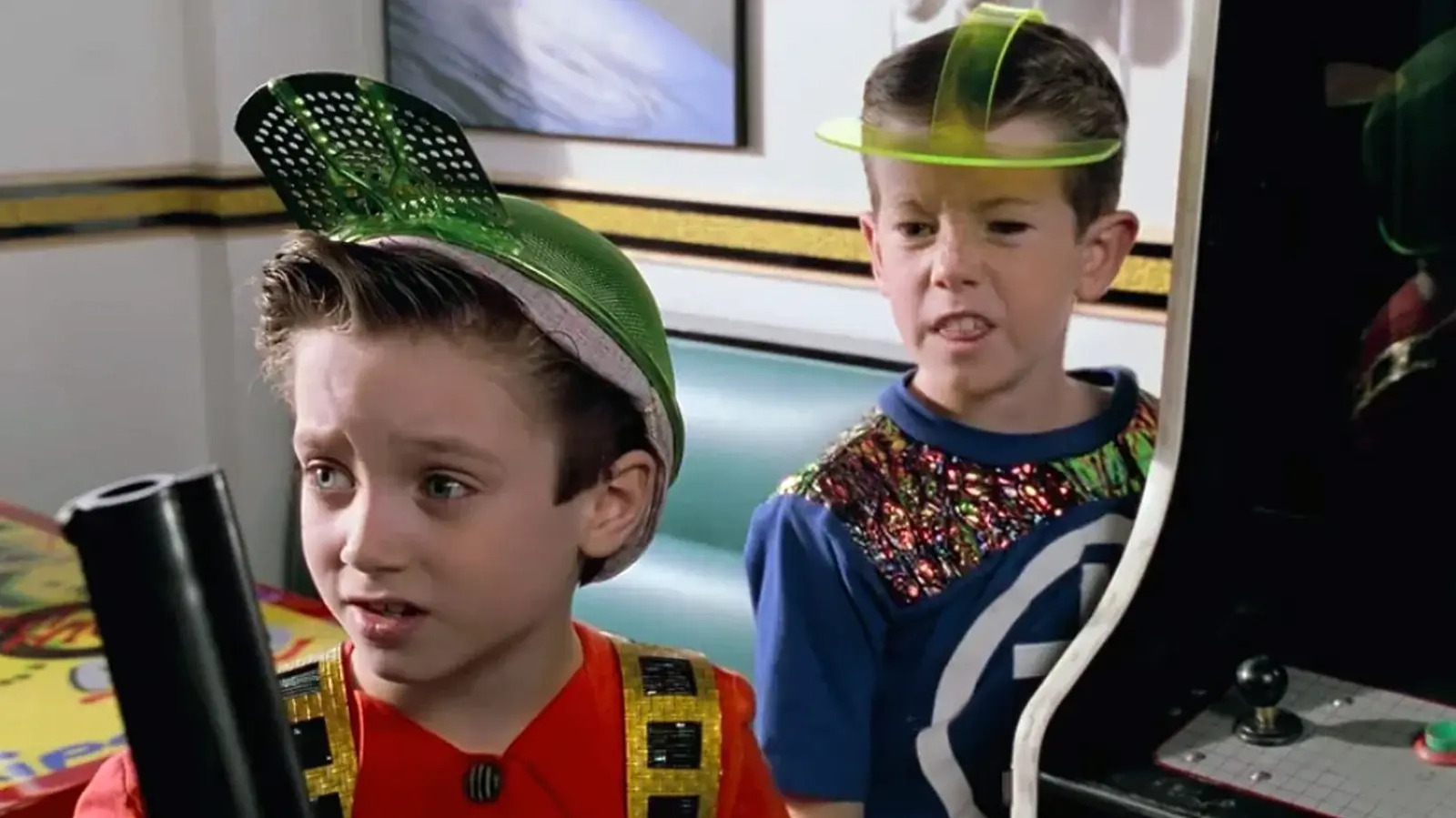
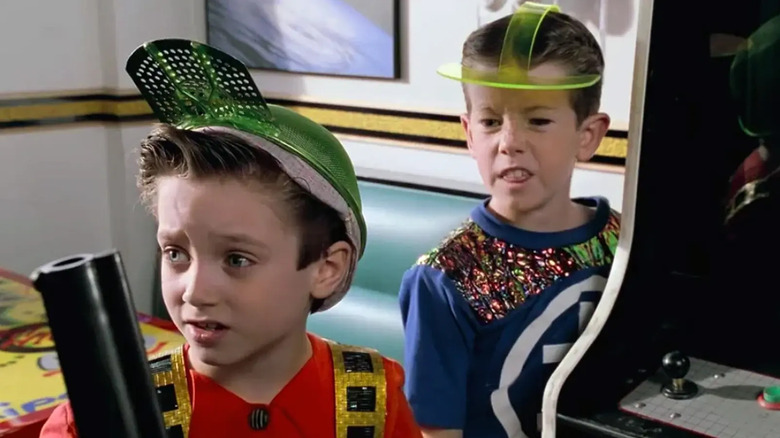
Among the neon lights and robotic waiters, Marty discovers a vintage arcade cabinet of Wild Gunman, a game he mastered during his actual youth in the 1980s. As he prepares to show off his skills, he is approached by two young boys, one of whom is Elijah Wood. After Marty expertly dispatches the digital outlaws using the plastic light gun, the boys don’t react with awe. Instead, they look at the machine with a mixture of confusion and disdain.
"You mean you have to use your hands?" Wood’s character asks with a look of pure incredulity. "That’s like a baby’s toy!"
This moment was intended by Zemeckis to be a humorous nod to the inevitable march of technology, suggesting a future where motion controls or neural links would make physical controllers obsolete. For Wood, however, it was the beginning of a professional journey that would see him move from being a face in the crowd to a leading man, and eventually, a visionary producer.
Chronology: A Trajectory of Transformation
To understand Elijah Wood’s impact on the industry, one must trace the chronological steps from that 1989 cameo to his current status as a genre luminary.
The Child Prodigy Years (1989–1999)
Following his brief stint in Hill Valley, Wood’s career accelerated at a rate rarely seen among child actors. His "It" factor was immediate. In 1990 alone, he appeared in Mike Figgis’ Internal Affairs and Barry Levinson’s critically acclaimed Avalon. By the early 90s, he was working alongside the industry’s biggest names: Mel Gibson in Forever Young (1992) and Melanie Griffith in Paradise (1991).
The year 1993 marked a significant turning point. At just 12 years old, Wood demonstrated a remarkable range by playing the heroic lead in The Adventures of Huck Finn while simultaneously starring as the moral compass opposite Macaulay Culkin in the psychological thriller The Good Son. It was here that Wood began to flirt with darker themes, a precursor to his later fascination with the macabre.
The Middle-earth Phenomenon (2001–2003)
The early 2000s redefined Wood’s public persona entirely. Cast as Frodo Baggins in Peter Jackson’s The Lord of the Rings trilogy, Wood became the emotional anchor of one of the most successful film franchises in history. The sheer scale of the production and its global cultural impact could have easily pigeonholed him as a permanent "fantasy hero." However, Wood used the financial and professional security granted by The Lord of the Rings to pivot toward more eccentric, character-driven roles.
The SpectreVision Era and the Weird (2010–Present)
In 2010, Wood made a move that would fundamentally alter the landscape of independent horror. He founded a production company, initially called The Woodshed and later rebranded as SpectreVision. Alongside partners Daniel Noah and Josh C. Waller, Wood sought to produce films that were "off-kilter" and "marvelously bizarre."
Since its inception, SpectreVision has become a gold standard for "elevated genre" films. The company was responsible for the neon-soaked revenge epic Mandy (2018), the Iranian vampire Western A Girl Walks Home Alone at Night (2014), and the surreal The Greasy Strangler (2016).
Supporting Data: Technical Inaccuracies and Cultural Context
The Back to the Future Part II scene remains a point of fascination for film historians and video game purists alike. While the film is celebrated for its imaginative world-building, the Wild Gunman cabinet itself is a fascinating historical anomaly.
Technically, the version of Wild Gunman Marty plays in the film was never a standalone arcade cabinet in the 1980s. It was a port for the Nintendo Entertainment System (NES). The original Wild Gunman was a 1974 electro-mechanical arcade game that used 16mm film projection to display live-action cowboys. The 1989 film used the 8-bit digital sprites from the NES version but housed them in a custom-built cabinet. Furthermore, the light gun used by Marty was a black, revolver-style peripheral, whereas the actual Nintendo "Zapper" was famously gray (and later neon orange) to comply with toy safety laws.
Despite these inaccuracies, the scene’s core message—the rapid obsolescence of technology—resonated. Wood’s character represented the "new generation," and ironically, Wood would grow up to be an actor who deeply values the "tactile" and "analog" nature of filmmaking, often opting for practical effects and independent productions over the CGI-heavy blockbusters that defined his early twenties.
Official Responses and Industry Perspectives
While Elijah Wood has often looked back on his Back to the Future debut with a sense of humor, his later career choices reflect a deliberate philosophy. In various industry panels and interviews, Wood has expressed that his goal with SpectreVision was never to chase the "mainstream," but rather to support voices that the traditional studio system might overlook.
Industry analysts have noted that Wood’s transition from child star to blockbuster lead to indie mogul is a rare "triple threat" trajectory. Most child stars either fade away or remain trapped in the shadow of their most famous roles. Wood, however, has been described by peers as "one of cinema’s preeminent ‘Weird Little Guys’"—a term of endearment in the modern film community for actors who use their fame to champion bizarre, high-art projects.
Directors who have worked with Wood in his later years, such as Panos Cosmatos (Mandy), have praised his "fearlessness." Wood doesn’t just fund these projects; he often takes supporting roles in them, lending his name to ensure that challenging, non-linear stories get told.
Implications: The Legacy of a "Video Game Boy"
Elijah Wood’s journey from insulting a time-traveler to becoming a guardian of independent cinema has several broader implications for the film industry:
- The Evolution of the Child Star Archetype: Wood provides a blueprint for how young actors can navigate the transition to adulthood without succumbing to the "curse" of child stardom. By diversifying his interests early—moving from acting into production and music—he avoided becoming a relic of 80s and 90s nostalgia.
- The Rise of Genre Prestige: Through SpectreVision, Wood has helped legitimize horror and sci-fi as "prestige" genres. Films like A Girl Walks Home Alone at Night proved that horror could be as aesthetically and intellectually rigorous as any traditional drama.
- The Power of Personal Brand in the Streaming Age: In an era where "content" is often mass-produced, Wood has cultivated a brand of "curated weirdness." Audiences now see his name attached to a project—whether as an actor in the upcoming The Toxic Avenger remake or as a producer—and know they are in for something unique.
In 2024 and beyond, Wood’s schedule remains packed with projects that defy easy categorization. From his recent work in the human-hunting thriller Ready or Not 2: Here I Come to his involvement in the adaptation of Stephen King’s The Monkey, Wood continues to push boundaries.
Ultimately, the small boy in the Cafe ‘80s was right about one thing: the future is always changing. However, he was wrong about the "toys." For Elijah Wood, the "toys" of filmmaking—the cameras, the practical gore, the scripts, and even the "hands-on" work of producing—have become the foundation of a legendary career. He didn’t just witness the future of cinema; he helped build it.

Leave a Comment