
Southern Poverty Law Center Indicted on Federal Charges, Accused of Funneling Donor Funds to Extremist Groups
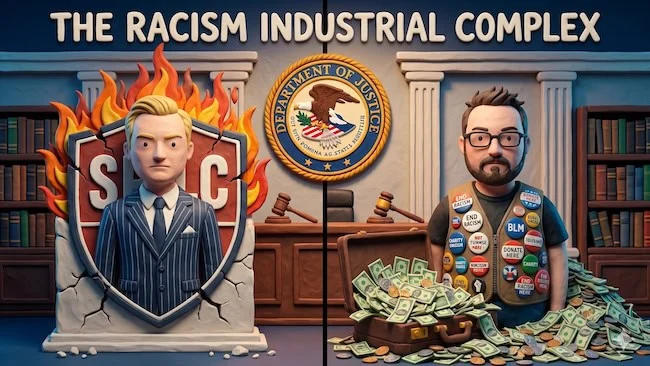
MONTGOMERY, AL – April 21, 2026 – A federal grand jury in Montgomery, Alabama, has returned an 11-count indictment against the Southern Poverty Law Center (SPLC), a prominent civil rights organization. The charges, unsealed today by the United States Department of Justice, include six counts of wire fraud, four counts of false statements to a federally insured bank, and one count of conspiracy to commit concealment money laundering.
The indictment alleges a disturbing pattern of financial misconduct, asserting that the SPLC, between 2014 and 2023, secretly channeled over three million dollars in donor funds to individuals associated with violent extremist groups. These groups reportedly include the Ku Klux Klan, Aryan Nations, the National Socialist Party of America, and entities linked to the "Unite the Right" movement. Prosecutors claim the SPLC utilized shell corporations, such as "Center Investigative Agency" and "Fox Photography," to obscure these payments, a stark contrast to the organization’s public denouncements of these same groups on its widely recognized "hate map" and in its fundraising appeals.
Acting Attorney General Todd Blanche, in a press conference alongside FBI Director Kash Patel, detailed the allegations. Blanche stated, "The Southern Poverty Law Center has allegedly manufactured racism to justify its existence. Using donor money to profit off Klansmen cannot go unchecked." Director Patel echoed these sentiments, adding that the organization purportedly misled its donors, claiming to be dismantling violent extremist movements while simultaneously paying their leaders. The indictment further alleges that this scheme had roots dating back to the 1980s, involving a clandestine network of informants known internally as "the Fs." One informant, allegedly a leader within the neo-Nazi National Alliance, is reported to have received over one million dollars.
The SPLC has vehemently denied the charges, labeling the indictment as a politically motivated attack orchestrated by the Trump administration and vowing to vigorously contest the allegations in court. In response, several civil rights organizations, including the National Urban League, have condemned the indictment, characterizing it as an assault on the broader civil rights movement. However, some former federal prosecutors, speaking anonymously to CBS News, have suggested that the indictment may contain legal vulnerabilities that could lead to its dismissal.
The Fallout and Implications: A Shifting Landscape for Authors and Public Discourse
The implications of this indictment extend far beyond the legal arena, potentially reshaping public discourse and influencing industries that have long relied on the SPLC’s designations. For authors, the organization’s "hate group" labels have historically served as a powerful gatekeeper, influencing publishing decisions, book tours, and advertising opportunities. Editors, platforms, and retailers have frequently cited SPLC lists when distancing themselves from writers deemed racist or extremist.
This indictment, therefore, presents a significant new narrative for skeptics, offering purported evidence that the organization may have financially supported the very extremists it claimed to combat. This revelation arrives amidst a noticeable cultural shift. Accusations of racism, while still potent, appear to carry less immediate weight than in previous years. Authors are observing a decrease in reflexive "cancellations" when their work questions progressive orthodoxies on race, immigration, or identity. Increasingly, readers and reviewers are demanding concrete evidence rather than accepting charges at face value. This evolving environment suggests a more conducive atmosphere for authors to explore challenging topics without the specter of automatic career repercussions.
While this shift does not diminish the reality of genuine bigotry, it may weaken the effectiveness of weaponizing the term "racist," particularly when organizations that have historically wielded this accusation now face their own credibility crisis. Authors who previously practiced self-censorship to avoid backlash potentially linked to SPLC-related scrutiny may now feel empowered to write with greater confidence. Publishers, in turn, may reassess their risk assessments when established gatekeepers appear compromised. Although the Department of Justice case is in its nascent stages and its ultimate outcome remains uncertain, the immediate impact appears to be a fracturing of the perceived cultural monopoly on accusations of racism.
The "Alex Jones Was Right" Phenomenon and the Alleged SPLC Scheme
Commentary surrounding the indictment has drawn parallels to past assertions. One perspective suggests that claims made by figures like Alex Jones, who reportedly alleged in 2017 that the Charlottesville rally was funded by the SPLC, are now being re-examined. The core of the SPLC’s defense, that payments were made to informants, is being scrutinized. Critics argue that the allegations extend beyond paying individuals embedded within extremist groups, suggesting instead that the organization may have provided financial support to those leading these organizations. The argument posits that if the SPLC’s stated mission is to eradicate racism, then gaining financial control over a hate group leader would logically lead to its dissolution. Instead, the indictment alleges the SPLC was actively involved in perpetuating the very problem it claimed to address.
The Nonprofit Incentive Problem: A Business Model Built on Perpetual Crisis
Delving into the operational dynamics of non-profit organizations reveals a potential underlying incentive structure that may have contributed to the alleged SPLC scheme. Non-profits, unlike businesses with tangible products, often derive their existence and funding from identifying and addressing societal problems. When an organization’s mission is to "fight racism," for example, its continued relevance and financial viability can be tied to the perceived persistence and severity of that problem.
This dynamic can create a situation where a decrease in the problem could inadvertently threaten the organization’s funding and, by extension, its very reason for being. Consequently, there may be an inherent pressure to maintain a heightened sense of urgency or to "manufacture" the problem to ensure a consistent flow of donations. This applies to various causes, from combating racism to addressing other social issues, where sustained public engagement and concern are critical for financial support.
Manufacturing Problems for Profit: Historical Precedents and Corporate Strategies
The alleged SPLC strategy of perpetuating a problem for financial gain is not an isolated phenomenon and can be viewed through a broader lens of historical and corporate practices. Anecdotal evidence suggests instances where industries have allegedly funded or supported movements that demonized their own products, often as a prelude to introducing newer, patented alternatives. A hypothetical example could involve a company facing patent expiration on a profitable product. By supporting advocacy groups that highlight the supposed dangers or environmental impact of the expiring product, the company could create market conditions that favor its next-generation offering, thereby mitigating the impact of generic competition.
This pattern has been observed in various industries, where the perceived safety or necessity of a product can shift dramatically once its patent protection lapses. Furthermore, the nature of protests, especially those occurring during standard business hours, often involves paid participants. This suggests that many public demonstrations may not solely reflect spontaneous grassroots activism but can also be strategic public relations efforts with carefully calculated objectives.
This phenomenon extends to regulatory landscapes. In heavily regulated industries, established large corporations often advocate for and benefit from stringent regulations. While seemingly counterintuitive, these regulations can create significant barriers to entry for smaller competitors, who lack the resources to navigate complex compliance requirements. This effectively allows larger, incumbent businesses to maintain their market dominance by stifling potential rivals. The argument is that these companies actively push for regulations that they can more easily afford to comply with, thereby consolidating their position.
Manufactured Conflict as a Strategic Tool: Beyond Financial Gain
The concept of manufactured conflict as a strategic tool is not confined to financial or corporate interests; it can also manifest in contexts involving national security and political maneuvering. In warfare, for instance, extremist groups have been accused of deliberately placing military assets, such as weapons caches or operational targets, in close proximity to civilian infrastructure like schools and hospitals. The rationale behind such tactics is not solely operational but also deeply rooted in public relations.
When these sites are subsequently targeted, the resulting civilian casualties and destruction generate significant international media attention. Terrorist organizations, in this view, can capitalize on this collateral damage. The casualties become martyrs, fueling the narrative of victimhood and garnering sympathy, which in turn can translate into increased donations and support for their cause. By strategically leveraging sympathetic media systems, these groups can sustain their operations and propagate their ideologies, creating a self-perpetuating cycle of conflict. This strategy highlights how manufactured conflict can be used to generate resources and maintain momentum, even at the cost of civilian lives.
The Anticipated Ripple Effect: A Wave of Indictments and Erosion of Trust
The indictment of the SPLC is predicted by some to be the harbinger of similar legal actions against organizations operating within what is termed the "racism industrial complex." The argument is that the demand for content and action related to combating racism has outstripped the available supply, creating a powerful incentive to generate or amplify instances of racism to justify the substantial financial resources being channeled into anti-racism initiatives.
This perspective suggests that a series of indictments, potentially released in staggered intervals of two to six weeks, could be employed as a strategic public relations tactic. This "trimming the puppy’s tail" approach, where negative news is released incrementally, allows the subject to partially recover before the next wave of damaging information. Such a strategy aims to control the narrative and prevent a single, overwhelming blow to an organization’s reputation.

This wave of potential legal challenges is also being viewed through the lens of political motivations, particularly in the context of an upcoming election. Some analysts suggest that a presidential candidate might seek to dismantle institutions perceived as adversarial, especially if there is a genuine belief that certain electoral processes were compromised. This aligns with broader narratives about challenging established institutions and those perceived as opposing a particular political agenda.
The Power and Authority of the SPLC: A Historical Perspective
The Southern Poverty Law Center has historically wielded significant influence, operating as a powerful arbiter in public discourse and civil rights matters. Its ability to designate organizations as "hate groups" has had tangible consequences, leading to actions such as the deplatforming of individuals and groups by financial institutions like PayPal, and the closure of bank accounts based on SPLC reports. The organization has consistently attracted substantial donations, often in the hundreds of millions of dollars, underscoring its considerable financial reach and public trust.
For observers outside the United States, the significance of this indictment lies in the potential erosion of the SPLC’s credibility. The organization’s core mission has been to solicit funds for the fight against racism. The allegations of funneling money to groups like the Ku Klux Klan and neo-Nazis strike at the very heart of this mission. This is not being characterized as a minor corruption scandal involving a few rogue individuals. Instead, the accusation is that the organization, as a whole, allegedly engaged in activities diametrically opposed to its stated purpose. The analogy drawn is to an environmental group that is accused of actively harming the very whales it pledged to protect, illustrating the profound nature of the alleged betrayal of its mission.
The Erosion of Identity Shields: Challenging the Deflection of Criticism
A significant cultural implication of the SPLC indictment is its potential to dismantle the "identity shields" that have, in recent years, protected individuals and groups from criticism. For a considerable period, membership in certain identity groups has served as a form of armor, where any critique could be easily deflected as racist, homophobic, transphobic, or otherwise discriminatory.
The revelation that the SPLC, a prominent advocate for marginalized groups, may have engaged in deceptive practices and potentially funded extremist organizations, could undermine the effectiveness of these identity-based defenses. If a leading organization that champions these causes is accused of such misconduct, it may weaken the automatic assumption that any criticism directed at individuals or groups associated with these identities is inherently malicious or prejudiced. This could lead to a more nuanced public discourse where behavior is judged on its own merits, rather than being shielded by identity affiliations.
This erosion of identity shields may accelerate a broader cultural shift that has been gaining momentum. For the past decade, the accusation of racism has been an extraordinarily potent weapon in social and political discourse, capable of derailing careers and silencing dissent. The power of this accusation appears to be waning. Evidence of this shift is observable globally, with a growing number of individuals, particularly younger generations in countries like the UK and Europe, openly embracing nationalist identities in ways that were virtually unthinkable a decade ago.
It is crucial to emphasize that this development is not about condoning or celebrating racism. Rather, the beneficial shift lies in the potential for individuals to call out corrupt or harmful behavior without facing an immediate and automatic defense based on identity. This "identity shield" has, for some time, provided protection for actors whose actions might otherwise be subject to legitimate scrutiny.
Collapsing Trust in Charities: A Broader Trend of Skepticism
The SPLC scandal is unfolding against a backdrop of declining public trust in charitable organizations more broadly. This erosion of confidence has been a gradual but persistent trend, fueled by numerous concerns. Questions about the efficacy of major non-profits, such as the Red Cross, and their allocation of funds to disaster victims, have become increasingly common. Similarly, the significant expenditure on homelessness in major cities, coupled with a persistent and growing homeless population, has led to public skepticism about the impact and efficiency of these initiatives.
A growing sentiment suggests that bypassing traditional non-profits and providing direct aid might be more effective. During recent natural disasters, advice has sometimes been to identify a random church in the affected area, with the rationale being that they might allocate resources more effectively than larger, established non-profits.
The SPLC situation represents an extreme manifestation of this problem, where the organization is alleged to have acted in direct opposition to its stated mission. However, it is part of a larger pattern of non-profits where a significant portion of donations is reportedly consumed by executive salaries, consulting fees, and administrative overhead, rather than being directly applied to their stated causes.
A fundamental conflict of interest arises when an organization is funded specifically to eradicate a particular issue. If the organization achieves its goal, its mission is accomplished, and its reason for existence, and the livelihoods of its staff, are jeopardized. This creates an incentive, however unintentional, to perpetuate the problem rather than to solve it. The adage that "it’s impossible to educate someone about something when their livelihood depends on them not understanding it" encapsulates this dynamic.
Lessons for Authors and the Future of Mission-Driven Endeavors
For authors, particularly those engaged in mission-based fiction, the SPLC indictment offers critical lessons. Authenticity in writing and communication is paramount. The advice is to avoid sounding corporate or emulating the perceived tone of organizations like the SPLC. Furthermore, relying on AI for communication risks stripping away personality and leading to overly standardized content. Genuine connection with an audience often stems from genuine, even provocative, expression that AI might be programmed to avoid.
The prevailing trend suggests a potential shift away from traditional donation-based non-profit models toward more direct, transactional, and mission-driven for-profit structures. For individuals looking to establish mission-oriented initiatives, such as alternative libraries or community projects, structuring them as for-profit businesses, like LLCs, might offer greater transparency and accountability. In such models, subscription fees or direct payments create a clear exchange, fostering more honest relationships than donation-based systems, which can be susceptible to the very issues exemplified by the SPLC allegations.
This approach allows for the promotion of specific values and content, such as "good, wholesome books" or a focus on "the good, the true, and the beautiful," distinguishing them from publicly funded institutions that may cater to different audiences or agendas. The idea is that transactional relationships, when driven by a clear mission, can be inherently more honest and less prone to the conflicts of interest that plague some non-profit models.
Historically, figures like Paul in the New Testament are cited as examples of individuals who prioritized financial independence to maintain the integrity of their mission. By engaging in tent-making to support himself, Paul avoided becoming a financial burden on the churches he established, thereby mitigating potential accusations of profiting from his religious endeavors. This principle of financial independence and transparency is seen as a valuable consideration for anyone structuring a mission or business.
Ultimately, the shift toward for-profit models with clear missions acknowledges that profit is not inherently negative. When a for-profit entity is transparent about its objectives and operations, it can operate with greater public trust than organizations that claim altruistic motives while allegedly engaging in questionable practices. This era may favor businesses that are upfront about their goals and revenue models, fostering a more honest and accountable approach to mission-driven work.




Leave a Comment