
Byron Leavitt Unleashes Cosmic Dread and Wonder in "The Fish in Jonah’s Puddle" – A New Era for Portal Fantasy
FOR IMMEDIATE RELEASE
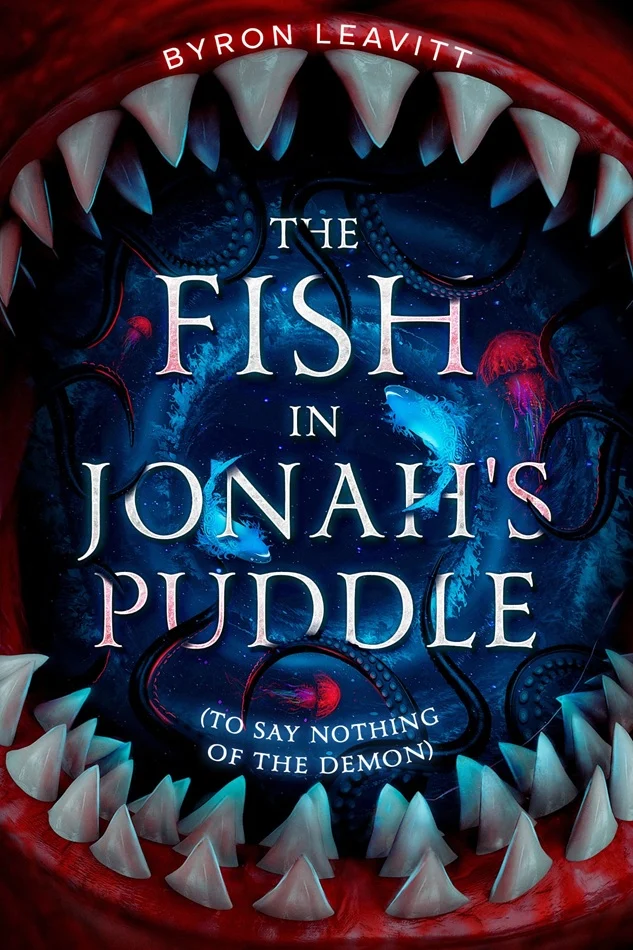
[City, State] – [Date of Publication, e.g., May 15, 2026] – Prepare to revisit the enchanting, yet often perilous, realms beyond our own, but with a profoundly unsettling twist. Acclaimed horror writer Byron Leavitt, best known for his work on the chilling Deep Madness and Dawn of Madness board games, is set to redefine young-adult portal fantasy with his upcoming novel, The Fish in Jonah’s Puddle (To Say Nothing of the Demon). Slated for release in 2026 by Brain Waves Press, with a striking cover by Miblart and interior illustrations by the author himself, this book promises a contemporary, cosmic-horror take on a beloved sub-genre, blending childlike wonder with existential dread.
Leavitt’s foray into YA literature marks a significant evolution in his storytelling, offering a narrative that, while accessible to younger audiences, doesn’t shy away from the unsettling and the bizarre. Far from the whimsical journeys of yesteryear, The Fish in Jonah’s Puddle invites readers into a world where imagination is a dangerous currency and the fabric of reality is disconcertingly thin.
The Genesis of a Cosmic Puddle: Main Facts and Premise
The Fish in Jonah’s Puddle (To Say Nothing of the Demon) introduces readers to Jonah Hutchins, a boy whose backyard puddles aren’t just remnants of rain, but clandestine portals to other dimensions. This extraordinary premise is quickly complicated by the mundane-turned-mythical inhabitants of his world: a dapper troll in the basement, a snarky harpy nesting in the trees, and, most crucially, a talking salmon named Stuart. Stuart, the titular fish, reveals the puddles’ true nature, but also the horrifying truth of a demon lurking within one, a creature that has consumed Jonah’s parents whole.
Driven by a fierce refusal to become orphans, Jonah and his sister Debbie embark on a perilous rescue mission. Their journey, aided by an increasingly strange fellowship of friends and allies, takes them through these puddle-portals into wondrous, yet terrifying, "worlds beyond." Leavitt’s narrative cleverly juxtaposes the familiar tropes of portal fantasy – unlikely heroes, magical realms, and quirky companions – with an underlying current of cosmic horror, where threats are not just evil, but fundamentally alien and incomprehensible.
The novel is positioned as a direct descendent of the portal fantasies that shaped generations of readers, from L. Frank Baum’s The Wizard of Oz (1900) and Lewis Carroll’s Alice’s Adventures in Wonderland (1865) to C.S. Lewis’s The Lion, the Witch and the Wardrobe (1950), Norton Juster’s The Phantom Tollbooth (1961), and Madeleine L’Engle’s A Wrinkle in Time (1962). These classics, cherished by both young adults and their adult counterparts, shared common threads: children transported to magical realms, often reflecting their innocent perspectives, encountering talking animals, whimsical landscapes, and facing off against clear-cut evil. Leavitt acknowledges these foundational works while subverting their expectations, offering a story that combines "the awestruck adventure of Impossible Creatures with the dark, hungry dread of Coraline."
Chronology and Supporting Data: A Journey Years in the Making
The concept for The Fish in Jonah’s Puddle is not a recent revelation but a creative seed planted decades ago. Byron Leavitt revealed in a recent interview that the core idea for the book emerged during his teenage years. This initial spark evolved into a novelette, which, in a fascinating full-circle moment, was submitted to Black Gate magazine years ago when it was still a print publication. While it didn’t fit the magazine’s specific needs at the time due to its length and thematic divergence, the story remained a persistent presence in Leavitt’s imagination. "The story sat for years after that. But I always wanted to turn it into a book," Leavitt shared, adding a touch of personal history, "Jonah’s dad had mentioned there were no trolls in the basement or harpies in the trees, so I knew there had to be." This long gestation period underscores the depth and thoughtfulness invested in crafting Jonah’s world.
Leavitt’s background as a horror writer for Diemension Games’ critically acclaimed Deep Madness and Dawn of Madness – including the Deep Madness: Shattered Seas spin-off novel – provides crucial context for understanding the cosmic horror elements woven into his YA portal fantasy. His previous works are known for their terrifying Eldritch entities and mind-bending scenarios, preparing readers for the unsettling depths found in Jonah’s journey. The blend of his horror sensibilities with the traditionally fantastical elements of portal fiction promises a narrative that is both imaginative and genuinely chilling.
The book’s back cover blurb tantalizingly summarizes the core conflict and the scope of the adventure:
"The demon ate their parents. They intend to get them back.
Jonah Hutchins didn’t think twice about finding a salmon in a puddle in his backyard. He already had a dapper troll lurking in his basement and a snarky harpy roosting in the trees out front, after all. He didn’t even flinch when the fish named Stuart announced that several nearby puddles were portals to other dimensions.
But a demon also lurked in Stuart’s puddle – and it swallowed Jonah’s parents whole.
Jonah and his sister Debbie refuse to let the demon make them orphans. So they gather Jonah’s strange friends and plunge through the puddles into the worlds beyond on a wild rescue mission.
They discover wondrous places like a cardboard kingdom where spilled water could end everything and a crumbling world full of ghosts and mouths. They meet weird new allies, including a massive plastic dragon and an octopus-headed prophetess. But the demon is still hungry, and it won’t stop until it devours them all.
This book combines the awestruck adventure of Impossible Creatures with the dark, hungry dread of Coraline. It is a celebration of the imagination’s power and a whirlwind ride you won’t soon forget.
Welcome to The Fish in Jonah’s Puddle. Are you ready?"
This blurb not only sets the stage for a high-stakes adventure but also hints at the unique blend of the whimsical and the horrifying that defines Leavitt’s style. The mention of "a cardboard kingdom where spilled water could end everything" and "a crumbling world full of ghosts and mouths" evokes vivid, yet unsettling, imagery, promising truly original and memorable settings.
A Deep Dive into Leavitt’s Worlds: Themes, Art, and Excerpts
Leavitt’s narrative prowess shines through in the thematic depth and rich sensory experiences offered within The Fish in Jonah’s Puddle. The book explores the profound power of imagination, the nature of reality, and the enduring bond of family against impossible odds.
Imagination as a Double-Edged Sword
A central theme explored by Leavitt is the idea that creativity isn’t just a mental exercise, but a force capable of shaping reality. The excerpt titled "Creativity Actually Creates!" highlights this startling concept:
“I wonder if your mind can sometimes access them. Which would make the division between your world and others thinner near you.”
“Huh,” Jonah said. “Care to elaborate?”
“What were you thinking about when Humphrey appeared?”
“I…” Jonah’s gaze darted around, and he winced. “It was a long time ago, and I was young, okay? But… I was pretending that I was a knight who had just discovered a massive troll. And then we teamed up and conquered an evil king.”
…
“Oh, man,” Debbie said. “Does that work for anyone? If so, I would bring my Flufferblooms to play with me. That would be incredible!”
…
“Flufferblooms?” Calisto asked. “What are those?”
“They’re the flower people I draw.”
Calisto guffawed. “And you call them… Flufferblooms?”
This exchange suggests a world where the boundary between thought and existence is permeable, particularly for children. While this concept offers incredible possibilities – imagine your imaginary friends becoming real! – it also carries a terrifying implication: what if negative thoughts, fears, or even the very concept of a demon, could manifest? This twist elevates the traditional portal fantasy trope of "imaginary worlds" into something far more potent and dangerous, aligning perfectly with the cosmic horror sensibility.
Sensory Overload and Existential Dread
Leavitt expertly crafts moments of intense sensory experience that underscore both the wonder and the horror of the alternate dimensions. The excerpt "Consuming Wonder Bread" exemplifies this:
[Debbie] picked up Jonah’s slice of wonder and shoved it into his mouth. Jonah’s senses erupted. It wasn’t that new colors appeared. Instead, those already present became so vivid they almost burst with brilliance. The world seemed so alive— so vibrant. Sounds and melodies filled the air, shimmering with details Jonah had never noticed before. The taste, too, was an explosion of flavors that danced across his tongue like a parade of sweet, sour, salty, and tangy. These sensations were unlike anything he had experienced before.
This passage describes an almost hallucinatory sensory explosion, evoking the kind of awe and heightened reality often found in classic portal stories. It’s a taste of pure, unfiltered wonder. However, Leavitt balances this with moments of profound cosmic dread, as evidenced by "The Maw":
The meaty flooring soon formed an uneven shelf that stretched as far as Jonah could see in either direction. Then, it curved upward before him into a gooey, living wall. Jonah’s gaze traveled up the surface and finally landed on the mouth that pierced it. The Maw was big enough to devour buildings. Its needle teeth were more like swords, and it had so many. Maybe a dozen tentacles slithered out like tongues from inside it, wriggling as they quested across the shelf below. The mouth ate greedily. However, it didn’t consume meat, bone, or any physical matter. Instead, it devoured light and chewed on souls.
"The Maw" is a terrifying vision of an entity that defies conventional understanding, embodying the core principles of cosmic horror: immense, incomprehensible, and utterly devastating. It doesn’t just threaten physical harm; it preys on fundamental aspects of existence like light and souls, creating a sense of existential terror that resonates deeply. The juxtaposition of "wonder bread" and "The Maw" perfectly encapsulates the book’s dual nature.
Visualizing the Unseen: The Author’s Art
Adding another layer of immersion to the narrative, The Fish in Jonah’s Puddle features approximately ten original drawings by Byron Leavitt himself. These interior illustrations are not merely decorative; they serve to visualize the unique and often unsettling characters and environments Leavitt has conceived. Notably, some of these illustrations, such as those depicting Ms. Finch and David, were previewed by Black Gate in a 2021 interview with Leavitt, where he discussed his "non-writing muses." The inclusion of these drawings, now joined by new art featuring characters like Humphry and Calistro, offers readers a direct glimpse into the author’s creative mind, enhancing the sense of wonder and weirdness that pervades the story. This direct artistic contribution from the author deepens the personal connection readers will feel to Jonah’s world.
The Author’s Vision: Beyond the Puddle – Official Responses and Insights
Byron Leavitt’s perspective on his craft and the genesis of The Fish in Jonah’s Puddle offers invaluable insight into the unique blend of horror, fantasy, and personal philosophy that defines his work. A recent "reconnect" interview with Leavitt revealed fascinating arcana about his inspirations and the long journey of this book.
The Long Road to Publication: A Black Gate Connection
As previously mentioned, the story’s journey began with a novelette submitted to Black Gate years ago. Leavitt reflected on this experience: "In the end it was just a little too long and a little too different from the other stuff Black Gate was publishing to make it fit. So having the book reviewed in Black Gate is kind of a full-circle moment." This history not only highlights the author’s long-standing connection to the fantasy community but also underscores the enduring nature of his creative ideas. The book’s eventual publication, after years of development, speaks to Leavitt’s dedication to bringing this particular vision to fruition.
Pet Jellyfish and Philosophical Musings
When questioned about his connection to the book’s titular fish, Leavitt provided a wonderfully idiosyncratic response: "Actually, we eat salmon a lot, though our kids protested a bit after I first read the book to them. Ha! My kids have had pet fish. I’m not sure if I ever had one, but I had many pet crayfish—including one who had babies and then ate them. Her sole surviving offspring was an albino named Little Squirt who became translucent whenever he molted. He was a great crayfish. I’ve also had several pet jellyfish, one of which was named Peanut Butter the jelly. The other jellies died, but Peanut Butter lived on. Then, before her death, she gifted me with dozens (maybe more) of asexually produced baby jellyfish, which have clung to the sides of their aquarium in polyp form ever since. I was told jellyfish never have babies in home aquariums, particularly when there’s only one. But at one point in her life, Peanut Butter had five stomachs instead of the usual four, so she was never completely normal."
This anecdote not only provides a charming glimpse into Leavitt’s personal life but also subtly reveals his fascination with the strange, the unusual, and the resilient aspects of nature – a sensibility that clearly permeates his fictional worlds. The existence of Peanut Butter, a jellyfish with five stomachs defying biological norms, feels like something that could easily exist in one of Jonah’s puddle-portals.
Regarding potential "Easter eggs" or crossovers from his previous horror works, Leavitt confirmed, "I don’t think there are any connections with Deep or Dawn in this book. (I’ve saved those for a forthcoming novel called Under the Iridescent Sea.)" This clarification assures fans that The Fish in Jonah’s Puddle stands as its own distinct creation, while also exciting them about future projects.
Weaving Subtlety: Biblical Echoes and Agnostic Narratives
The title itself, featuring "Jonah" and a "fish," immediately evokes biblical imagery, specifically the Old Testament account of Jonah being swallowed by a "great fish." While the book features a boy named Jonah guided by a salmon named Stuart to strange realms, Leavitt consciously steers clear of overt religious allegories. He acknowledges the potential for such connections but emphasizes a different approach: "Byron Leavitt steers clear of overt religious allegories (i.e., I recall feeling hoodwinked as a youth when I learned about Aslan being more than a lion in C.S. Lewis’s Narnia)."
This stance aligns with Leavitt’s previously articulated philosophy regarding faith and horror. In a 2021 interview with Black Gate, he discussed how he reconciles his "weird art" with perspectives on God, addressing questions like "DO YOU THINK GOD ENJOYS HORROR?" and "RELIGION IN WEIRD ART." His stories, while perhaps drawing inspiration from a reverence for a higher power, are crafted to feel "pleasantly agnostic," allowing readers to engage with the narrative without confronting explicit religious messaging. This subtle approach ensures that the cosmic horror and fantastical elements stand on their own merits, inviting a broader audience to explore the profound questions his work raises without predetermined answers.
Implications and Anticipation: A New Chapter for Portal Fantasy
The Fish in Jonah’s Puddle (To Say Nothing of the Demon) is poised to make a significant impact on the young-adult fantasy landscape. By consciously infusing the familiar tropes of portal fantasy with the unsettling and mind-bending elements of cosmic horror, Byron Leavitt is forging a new path for the genre. This approach offers several exciting implications:
- Elevating YA Fiction: The book challenges the perception that YA fantasy must always be lighthearted or overtly moralistic. By introducing nuanced cosmic horror, Leavitt invites younger readers to grapple with complex themes of existential dread, unknown forces, and the fragility of reality, fostering a more sophisticated reading experience.
- Expanding Cosmic Horror: For fans of cosmic horror, this book provides an accessible entry point into the genre, demonstrating that its terrifying principles can be effectively explored within a YA framework. It proves that the "dark, hungry dread" can be just as compelling for a wider audience.
- Celebrating Imagination with a Warning: While celebrating the boundless power of imagination, the book also subtly cautions against its unbridled force. The idea that thoughts can manifest portals or even creatures adds a layer of responsibility and danger to creativity, a unique take on a common fantasy theme.
- Authorial Versatility: This novel showcases Leavitt’s impressive versatility as a writer, seamlessly transitioning from intense horror games to a nuanced YA novel without sacrificing his distinctive voice or thematic depth. It solidifies his reputation as a master of the weird and the wonderful.
As readers eagerly await the 2026 release, The Fish in Jonah’s Puddle (To Say Nothing of the Demon) stands as a testament to the enduring power of storytelling to explore the boundaries of imagination, fear, and wonder. It promises a whirlwind ride through worlds both marvelous and terrifying, cementing Byron Leavitt’s place as an innovative voice in contemporary fantasy. Prepare to dive into a puddle and discover that some doorways lead not just to magic, but to the very edges of existence.



Leave a Comment