
The Unseen Unlocked: "Backrooms" Delivers a Masterclass in Liminal Horror
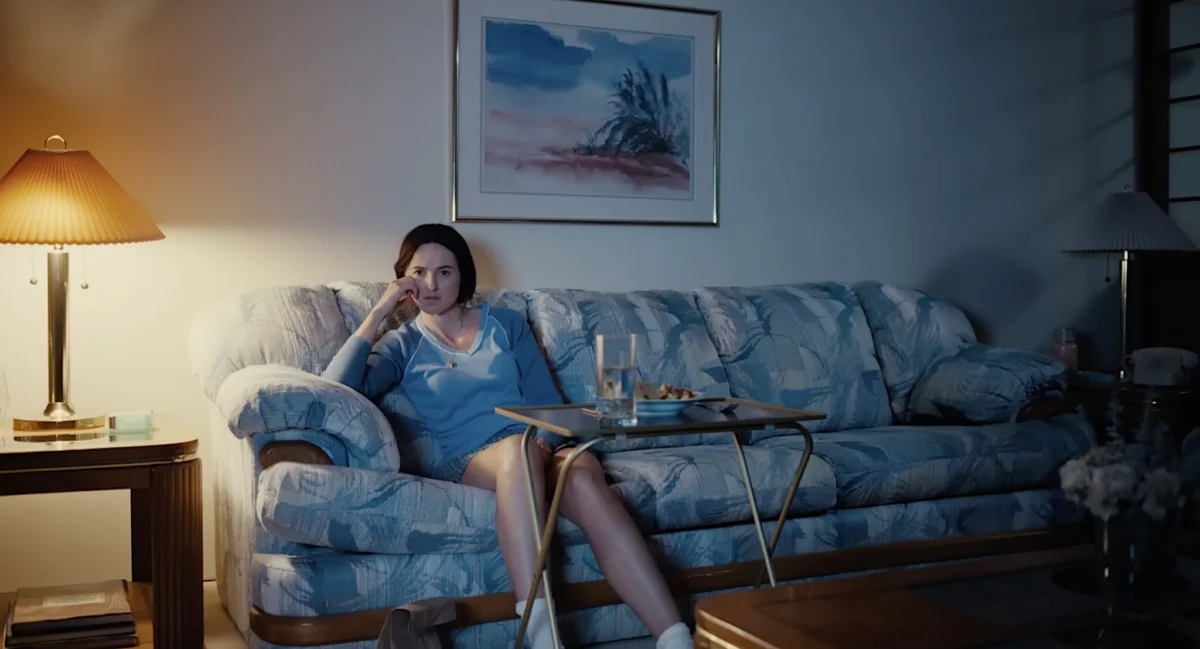
The highly anticipated feature film Backrooms has finally materialized, emerging as if it had always been there, lurking in the periphery, a sickly fluorescent light flickering behind a door that remained inexplicably locked until today. This cinematic adaptation of the pervasive internet creepypasta has opened a portal to a new dimension of dread, captivating audiences and critics alike with its unsettling premise and masterful execution.
In an era saturated with jump scares and overt monstrous threats, Backrooms distinguishes itself by weaponizing the very environment itself, transforming innocuous spaces into a psychological labyrinth. This review will first provide a non-spoiler overview of the film’s core appeal, followed by an exploration of its journey from internet phenomenon to feature film, its artistic merits, and its profound thematic undercurrents. A section delving into some light thematic spoilers will be clearly marked for those who wish to avoid any foreknowledge.
The Architecture of Fear: An Enduring Creepypasta Brought to Life
Backrooms is a triumph of atmospheric horror, delivering on the promise of its viral source material while forging its own terrifying path. It is a film that expertly balances the familiar and the bizarre, rooted just enough in tangible reality – at least initially – to allow its inherent creepiness and weirdness to metastasize organically. The fundamental premise remains true to the creepypasta that has haunted online forums and image boards for years: an unsuspecting individual stumbles into a seemingly infinite, secret realm of empty, unsettling rooms.
These "Backrooms" defy architectural logic. Some are barren, others are cluttered with forgotten furniture, while many feature staircases leading nowhere or doors that refuse to open. Once discovered, this bizarre dimension exerts an almost mystical, inescapable pull on those who enter. They feel compelled to explore its endless corridors, even as the encroaching realization of its profound danger becomes undeniably clear.
Liminal spaces, by their very nature, are fertile ground for horror. They are transitional areas, thresholds that evoke a sense of unease dueof their in-between state. However, Backrooms elevates this concept by making the liminal space the horror itself. The pervasive sense of dread, bordering on terror, is generated by the environment. The sheer emptiness, the inherent "wrongness" of these spaces, seeps into the viewer’s psyche long before any overt threat manifests. It’s a primal fear, an existential unease that resonates deeply. Fans of the original creepypasta will undoubtedly find much to appreciate, but the film also stands as a formidable work of modern horror in its own right, requiring no prior knowledge of its extensive online lore to be fully impactful.
From Digital Myth to Disquieting Cinematic Reality
The journey of Backrooms from an anonymous internet image to a full-fledged feature film is a testament to the power of collective imagination and the compelling nature of its central concept. Originating as a single eerie photograph depicting a vast, monotonous yellow room with flickering fluorescent lights, the "Backrooms" rapidly evolved into a sprawling online mythos. Users across platforms contributed to its lore, detailing different "levels," entities, and survival strategies, creating a communal narrative tapestry that captured the zeitgeist of digital folklore.
Director Kane Parsons, alongside writer Will Soodik, has expertly translated this amorphous online phenomenon into a cohesive and chilling cinematic experience. Their vision takes the premise in a multitude of captivating directions, ensuring genuine tension, profound scares, and an almost unbearable sense of the uncanny. Each time the narrative seems to have reached its depth, Parsons and Soodik uncover a new, more unsettling layer to the labyrinth.
The casting decisions further amplify the film’s isolated horror. The ensemble is deliberately small, intensifying the sense of entrapment within the yellow-lit rooms and their nonsensical furnishings. Chiwetel Ejiofor delivers a poignant performance as Clark, a melancholic furniture store owner whose accidental stumble into a liminal space gradually consumes his entire being. Renate Reinsve portrays Dr. Mary Kline, a successful self-help author whose professional understanding of the human psyche is tested against the irrationality of the Backrooms. Lukita Maxwell as Kat, Clark’s employee, and Finn Bennett as Bobby, her boyfriend who carries a video camera, represent the younger, perhaps more vulnerable, generation encountering this inexplicable terror. Mark Duplass, in a tiny but pivotal role as Phil, adds another layer of intrigue to the unfolding mystery.

Masterful Craftsmanship: Weaving the Fabric of Dread
The technical artistry behind Backrooms is integral to its immersive and terrifying atmosphere. Cinematographer Jeremy Cox’s work is nothing short of superb. Rather than resorting to overt, disorienting Dutch angles, Cox subtly manipulates the visual field, ensuring that nothing ever feels quite stable. The footage often appears grainy and nauseating, even when no explicit "wrongness" is occurring on screen, creating a persistent sense of unease. This visual style perfectly complements the unsettling nature of the Backrooms themselves, where the mundane becomes menacing.
Equally critical is the film’s meticulous sound design. The carpeting in the endless rooms dulls ambient noise, yet the inherent emptiness causes every sound – a footstep, a distant creak, a whispered breath – to echo with unnerving clarity. This auditory landscape amplifies the isolation and magnifies every potential threat, whether real or imagined. The cumulative effect of these sensory details is a film that bypasses conventional horror tropes to embed itself directly into the viewer’s subconscious. It’s the kind of movie that lingers, infiltrating dreams long after the credits roll, even if it doesn’t induce outright screams during its runtime – though the latter is highly probable. The sense of dread is immediate and palpable, meticulously built through clever camerawork and atmospheric tension, rather than relying on cheap jump scares. While jump scares are present, they are deployed sparingly and effectively, serving to punctuate the sustained psychological horror rather than define it.
Beyond the technical brilliance, the film’s narrative incorporates moments of dark humor and meta-references that resonate beautifully, preventing the relentless dread from becoming overwhelming. Like much of the most impactful modern horror, Backrooms is not merely a scare-fest; it has something profound to say. It delves into themes of trauma, though not in an easily digestible or simplistic manner. More profoundly, it is a meditation on loneliness, prompting the chilling existential question: Are there people out there who deserve to be alone? This thematic depth elevates Backrooms beyond genre fare, positioning it as a significant work that explores the darker recesses of the human condition.
[WARNING: VERY LIGHT THEMATIC SPOILERS AHEAD. If you wish to experience the film with absolutely no foreknowledge, please skip to the "Critical Acclaim and Audience Resonance" section.]
A Deep Dive into the Labyrinth: Themes of Trauma and Isolation
The Analog Advantage: Setting the Stage in 1990
One of the most inspired creative choices made by Parsons and Soodik is the film’s deliberate setting in 1990. This temporal placement, which subtly reveals itself within the first few minutes, is not merely an aesthetic flourish but a crucial narrative device. The cars, the furniture, the clothing, the hairstyles – every detail meticulously captures the essence of the era, lending an authentic, almost nostalgic, quality to the initial scenes. For those who remember the period, the film’s accuracy is striking, grounding the unfolding strangeness in a tangible past.
Crucially, setting Backrooms in 1990 effectively removes modern communication and information technologies from the narrative. Cellphones, social media platforms like Facebook, Twitter, TikTok, Instagram, Snapchat, and YouTube – all the ubiquitous tools ordinary people would use today to document and share experiences of the Backrooms – are still at least 15 years in the future. This technological void amplifies the characters’ isolation. If one were to try and describe the Backrooms to someone in 1990, they would undoubtedly sound mentally disturbed. To record the spaces, one must resort to the cumbersome video cameras of the era, far less sleek and portable than even the devices used by the Blair Witch kids. This enforced technological primitivism is brilliant, ensuring that the horror remains an intensely personal and unshareable nightmare.
Vaporwave Echoes and Dream Logic
The 1990 setting also forges a direct, albeit anachronistic, link to the "A E S T H E T I C" movement of Vaporwave, which emerged roughly 15 years later. This amorphous cultural phenomenon, often created by those who didn’t experience the 80s or 90s firsthand, gleefully mashed up the visual and auditory detritus of those decades into a nostalgic, often melancholic, pastiche. Backrooms taps into this sensibility, with moments where characters stumble into rooms that evoke abandoned, flooded malls or derelict gym pools, forgotten beach cabanas, or homes spanning various socioeconomic strata.
Throughout, the film operates with an increasing sense of dream logic. While watching, every moment feels coherent, yet the further one steps away from the experience, the more the images bubble up, striking a nauseating chord. This dreamlike quality is one of the film’s most potent weapons, creating an impression of truth that resonates like a half-forgotten childhood nightmare. Even moments that initially seem to veer off course are skillfully redirected, restoring trust in the film’s uncanny internal consistency.

Liminality Defined: Beyond the Internet’s Edge
The concept of "liminality" itself is explored both implicitly and explicitly within the film’s framework. In anthropology and the study of religion, a liminal period denotes the transitional phase within a rite of passage – an in-between state. A young person undergoing an ordeal to achieve adulthood, a child studying for a religious ceremony, or a couple on their wedding day are all in liminal states. These are times of transformation, where old rules fade and new ones are yet to fully form, creating inherent tension and potential vulnerability.
On the internet, the term "liminal space" evolved to describe physical locations – empty rooms, hallways, or storage facilities – that evoke an uncanny feeling due to their unsettling normalcy, architectural oddities, or sense of abandonment. They can range from a simple, windowless room to M.C. Escher or Piranesi-esque architectural impossibilities.
By setting Backrooms in 1990, prior to the widespread advent of "the internet" as we know it, the film cleverly sidesteps the accumulated "creepypasta clutter." There is no winking at the audience, no self-aware references to internet lore. The characters, like Clark, cannot simply hop onto TikTok or consult Discord chats to understand their predicament. They have never heard the term "the Backrooms" and possess no pre-existing knowledge to serve as a shield. They are forced to confront an alien reality without a framework, thinking they understand reality only to discover they profoundly don’t. This stripped-down approach is the essence of true horror.
The Power of the Unexplained
Perhaps the most crucial decision Parsons and Soodik make, and a significant key to the film’s profound success, is their steadfast refusal to explain anything. The audience is offered no rationale for the Backrooms’ existence, no origin story, no quantification of their scale or the number of people who might be aware of them. The Backrooms simply are – a self-contained nightmare operating by its own inscrutable rules. The choice is stark: survive or perish. This commitment to the unknown is vital, preserving the inherent terror and mystery. As the franchise potentially expands, maintaining this enigmatic quality will be paramount to its enduring power.
[END OF LIGHT THEMATIC SPOILERS. You can return to reading now.]
Critical Acclaim and Audience Resonance
Upon its release, Backrooms was met with a chorus of critical acclaim, solidifying its place within the pantheon of contemporary horror. Distributed by A24, a studio renowned for its discerning taste in elevated, thought-provoking genre films, Backrooms further cemented A24’s reputation as a purveyor of intelligent and impactful horror.
Critics lauded the film’s innovative approach to horror, praising its psychological depth over gratuitous gore, and its ability to conjure profound unease from seemingly innocuous settings. Reviewers highlighted its artistic integrity, citing Kane Parsons’ visionary direction, Will Soodik’s taut and thematically rich script, and Jeremy Cox’s unnerving cinematography as key elements of its success. The performances of the small, focused cast, particularly Chiwetel Ejiofor and Renate Reinsve, were frequently commended for anchoring the film’s abstract terror in relatable human vulnerability and despair.
Audience response echoed this critical enthusiasm, with many describing the film as a uniquely unsettling experience that defied expectations. Social media buzzed with discussions about the film’s lingering impact, its dreamlike qualities, and its success in translating internet folklore into a compelling big-screen narrative. Backrooms quickly became a benchmark for how to adapt online myths respectfully and effectively, proving that viral sensations, when handled with artistic integrity, can transcend their digital origins to become significant cultural touchstones. Its ability to tap into universal anxieties about loneliness, forgotten spaces, and the fragility of reality resonated deeply, solidifying its status as a must-see horror event.

The Enduring Echo: Implications for Horror’s Future
The success of Backrooms carries significant implications for the future of the horror genre and the ongoing trend of adapting internet-born narratives. Firstly, it champions a return to atmospheric and psychological horror, demonstrating that sustained dread and existential unease can be far more potent than cheap scares or explicit violence. This aligns with a broader movement in contemporary horror that prioritizes thematic depth and emotional resonance.
Secondly, Backrooms sets a high bar for future adaptations of creepypastas and other internet lore. By respecting the source material’s core appeal while bravely carving its own artistic path, it proves that such stories can be elevated beyond niche fan service into mainstream critical and commercial success. Its commitment to not explaining the inexplicable also serves as a crucial lesson: preserving mystery often enhances terror, allowing the audience’s imagination to fill the void with their deepest fears.
Culturally, Backrooms taps into a collective unconscious fear of forgotten, abandoned, and liminal spaces that resonates deeply with modern anxieties. In an increasingly hyper-connected world, the terror of profound isolation and the unsettling familiarity of spaces that feel "off" strikes a chord. The film profoundly explores the idea that horror can be found not just in monsters, but in the very fabric of our perceived reality – in the subtle tilt of a wall, the echoing silence of an empty room, or the flickering of a fluorescent light.
The film’s exploration of loneliness and trauma, rather than being a superficial overlay, is woven into the very structure of the Backrooms themselves. The endless, featureless corridors become a metaphor for psychological states of being lost, isolated, and unable to connect. This ability to embody complex emotional landscapes through environmental horror ensures that Backrooms will endure as more than just a scary movie; it will be remembered as a chilling meditation on the human condition in an increasingly uncanny world.
The whispers of future installments are already circulating, and the hope is that they will continue to honor the film’s core principles: the power of the unexplained, the terror of isolation, and the profound, haunting beauty of liminality.
Conclusion
Backrooms is a rare cinematic achievement, a film that not only lives up to the immense hype generated by its internet origins but surpasses it. It is a meticulously crafted, genuinely unsettling, and deeply thematic horror experience that will undoubtedly leave an indelible mark on its viewers. By transforming the mundane into the monstrous and the familiar into the profoundly alien, Kane Parsons and Will Soodik have created a film that is both a thrilling genre piece and a resonant work of art. It is a stark reminder that sometimes, the greatest horrors are not external entities, but the very spaces we inhabit, or perhaps, the spaces that inhabit us. So, if you dare, step through that seemingly normal-looking door. Just be warned: once you enter the Backrooms, they may never truly let you go.



Leave a Comment