A Republic Divided: Unpacking James Islington’s Epic Romanesque Fantasy Series
AUDI. VIDE. TACE. (Listen. See. Be Silent.)
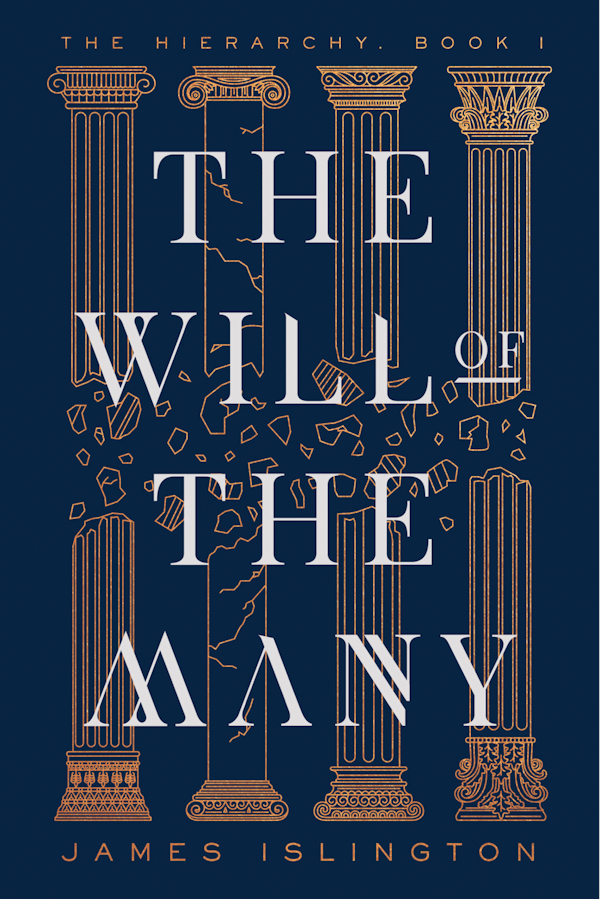
In the bustling landscape of contemporary fantasy, a new series has emerged, drawing readers into a meticulously crafted world reminiscent of ancient Rome, yet imbued with a unique, insidious magic system. James Islington’s The Will of the Many and its equally compelling sequel, The Strength of the Few, have rapidly distinguished themselves as standout entries in the genre, offering a sophisticated blend of academy fantasy, political intrigue, and profound mystery. These novels transcend typical young adult conventions, delivering a mature narrative woven with intricate world-building and morally complex characters that resonate long after the final page is turned.
At their core, Islington’s works present a chilling vision of power dynamics within the Catenan Republic, an empire known as the Hierarchy, where individual "Will"—strength, drive, and focus—is systematically siphoned from the populace to empower the ruling elite. This oppressive system forms the backdrop for the journey of Vis Telimus, a young man whose true identity and intentions are shrouded in a web of deceit and revenge.
The Genesis of Rebellion: An Introduction to the Catenan Hierarchy
The series introduces us to the Catenan Republic, a dominant force that ostensibly rules the known world. Their authority is absolute, predicated on a unique societal structure where the "Will" of millions is harvested and concentrated among the privileged few. This power, manifested as superhuman strength and telekinetic abilities, solidifies the Hierarchy’s control, creating a stark divide between the empowered and the subjugated.
Our protagonist, Vis Telimus, is a master of deception, presenting himself as a fortunate orphan who has miraculously gained entry into the Hierarchy’s most prestigious academy. His fabricated backstory—a tragic accident three years prior, followed by an unlikely ascent—is meticulously crafted to gain acceptance. He outwardly conforms to the societal expectation of willingly ceding his "Will" upon graduation, a fate shared by millions. Yet, beneath this carefully constructed facade lies a simmering rebellion, a deep-seated commitment to never surrender his true essence to the empire that brutally extinguished his family.
Vis’s admission to the Academy is not a stroke of luck but a calculated maneuver. He arrives with a secret agenda: to unearth the truth behind a heinous murder, locate an ancient, formidable weapon, and expose secrets capable of shattering the Republic’s very foundations. His survival hinges on his ability to blend in, excel, and ultimately "win" within the Academy’s cutthroat environment. Failure is not an option, as powerful, unseen forces are aware of his true identity and hold his life in the balance. Should the Hierarchy uncover his deception, his fate is sealed.
Chronological Unfolding: From Orphanage to Imperial Academy
The narrative of The Will of the Many begins with Vis as a late-teen orphan, bearing the physical and emotional scars of a harsh upbringing. His eventual rise through the world’s rigid hierarchical class system reveals his true lineage: he is the lost prince of a nation ruthlessly overthrown by the Hierarchy. His twelve years of privileged education and training before his family’s downfall grant him an immense, hidden advantage. This deep well of knowledge and skill allows him to appear as an exceptionally quick study, impressing powerful figures like politician Magnus Quintus Ulciscor, who subsequently adopts him.
Ulciscor’s motivations are intertwined with Vis’s own; he seeks to uncover the secrets of the prestigious Catenan Academy, specifically the mysterious death of his brother, Caeror. This alliance thrusts Vis into the heart of the Hierarchy’s elite institutions, where he must navigate complex political landscapes, academic rivalries, and dangerous conspiracies.
Supporting Data: Deep Dive into Worldbuilding, Characters, and Magic
Islington’s series excels in its intricate construction, offering readers a rich tapestry of world-building, character depth, and a subtly integrated magic system.
The Romanesque Setting and Its Brutal Hierarchy
The classical Romanesque aesthetic pervades the Catenan Republic, influencing its architecture, societal norms, and political structure. This evocative setting grounds the fantasy elements in a familiar yet distinct historical framework, adding layers of gravitas and believability. The Hierarchy itself is structured into three somewhat adversarial pyramids: government, military, and religion. This tripartite division introduces inherent tensions and power struggles, complicating Vis’s already precarious position.
The "Will" system is central to the Hierarchy’s control and the series’ unique magic. It is a catch-all term for both the energy leeched from the masses and the resulting superhuman strength and telekinetic abilities granted to those at the top. In The Will of the Many, the use of "Will" is largely peripheral and forbidden within the Academy, serving primarily to escalate stakes in climactic confrontations. This deliberate restraint amplifies its impact when it is finally unleashed.
Vis Telimus: The Master of Deception and Resourcefulness
A major appeal of the series lies in Vis’s multifaceted identity. The satisfaction of being privy to his secret—that he is far more capable and knowledgeable than he lets on—creates an engaging dynamic for the reader. Vis operates much like a strategic mastermind, meticulously prepared and highly trained, often leading him to victory. However, it is his capacity for improvisation in sudden, dire circumstances that truly defines him. Forced to abandon rules and resort to unconventional, sometimes ruthless, tactics, Vis reveals his true genius: unparalleled resourcefulness. These moments, while often leading to victory, frequently come at a significant personal cost, deepening his character and highlighting the brutal realities of his mission.
The Cataclysm: A World-Ending Mystery
Central to the world’s lore is the Cataclysm, a devastating event three hundred years prior that decimated the global population and regressed technology. The cause remains shrouded in mystery, and the ever-present threat of its recurrence hangs heavy over the narrative. This ancient catastrophe provides a powerful backdrop for the Academy’s deeper secrets, particularly those involving Principalis Veridius and his unsettling experiments. Vis’s quest to unravel the murder of Caeror and access the Academy’s highest echelons (Class Three) inevitably leads him closer to understanding Veridius’s tomb-like secrets and their connection to this world-ending trope.
Authorial Craft and Thematic Nuances: Beyond the Academy Trope
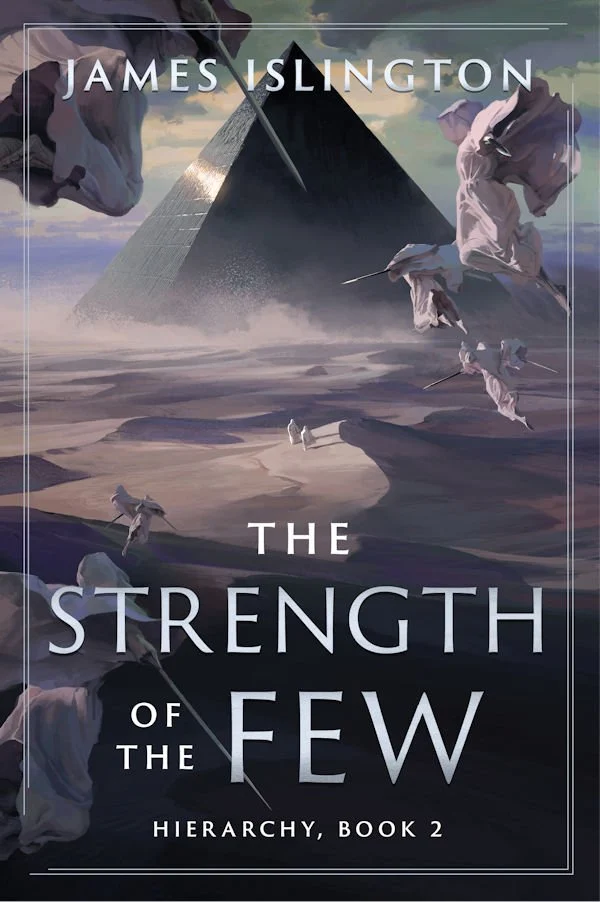
The Will of the Many successfully employs the familiar young adult academy fantasy formula but elevates it with superior writing and a compelling Roman-style flavor. The narrative is taut, the pacing precise, and the mysteries genuinely intriguing. However, the true genius of Islington’s vision truly blossoms in its sequel, The Strength of the Few, which dramatically expands the scope and stakes of the series.
[SPOILER WARNING]: The following section contains significant spoilers for the ending of The Will of the Many and details from The Strength of the Few. Proceed with caution if you have not finished the first book.
Spoilers for The Will of the Many and the Unveiling of The Strength of the Few
Omne trium perfectum. (Everything in threes is perfect.)
The Strength of the Few picks up immediately after the shocking climax of the first book, revealing that Caeror, far from dead, is alive in another world. This pivotal twist introduces a radical expansion of the narrative: Vis has been replicated across three distinct realities—Obiteum, Luceum, and Res—each a different version of himself inhabiting wildly divergent settings.
This multi-world concept, initially overwhelming, quickly becomes a masterful stroke of storytelling. Islington thrusts the reader into a new, barbarian-dominated world, complete with unique cultures, languages, and shamanic practices. The sheer volume of new information is immense, but by the halfway point, the narrative finds its rhythm. The parallel storylines, each featuring a different Vis, coalesce through intense confrontations, profound revelations, and gripping cliffhangers.
Synchronicity: A New Dimension of Power
The replication grants Vis a set of new abilities collectively termed "synchronicity." These powers include heightened awareness of Will users, the capacity to absorb others’ Will, rapid healing, and even a form of subtle mental manipulation. While these abilities make Vis formidable, he struggles to fully comprehend and control them until later in the second book.
Islington deftly handles the potential "deus ex machina" concern arising from these newfound powers. By having different versions of Vis discover and master synchronicity at varying rates, the author creates a clever narrative loophole. When one Vis miraculously utilizes an ability in a desperate situation, it doesn’t feel entirely unearned because another Vis might have learned it earlier, thereby "lampshading" its existence. While some applications might stretch credulity, they serve the greater purpose of enabling Vis to overcome seemingly insurmountable odds against genuinely cruel antagonists. The alternative—the main character dying in three parallel realities—would obviously halt the series in its tracks.
The Nuance of Revenge: A Deconstructed Trope
A standout thematic element in The Strength of the Few is its sophisticated exploration of revenge. Through flashbacks in the first book, readers are given compelling reasons why revenge is not Vis’s primary driving force, despite his family’s execution. This groundwork pays off powerfully in the sequel when Vis is presented with an opportunity for retribution. Rather than delivering a cathartic release, the act of revenge is depicted as a costly, worst-case scenario with severe, unforeseen consequences. Islington skillfully demonstrates the destructive nature of vengeance without resorting to didacticism, offering a refreshing counter-narrative to a commonly oversimplified motivation in fantasy literature.
Implications and Future Prospects: A Series to Watch
James Islington’s series is more than just an entertaining read; it’s a significant contribution to the fantasy genre. It takes established tropes—the academy setting, the hidden prince, the quest for vengeance—and infuses them with fresh perspectives and narrative complexity. The world-building is expansive without being unwieldy, the characters are deeply flawed yet immensely compelling, and the plot twists are genuinely surprising, keeping readers on the edge of their seats.
The audacious multi-world twist in The Strength of the Few elevates the series from a strong individual story to an epic saga with immense potential. It showcases Islington’s willingness to take risks and challenge narrative conventions, pushing the boundaries of what readers might expect from a fantasy series. The intricate plotting, the evolving magic system, and the profound exploration of identity and consequence suggest a master storyteller at work.
As the series progresses, the looming threat of a second Cataclysm, coupled with Vis’s unique position across multiple realities, promises a thrilling and potentially devastating conclusion. The meticulous setup of mysteries, character arcs, and thematic threads across both books indicates a carefully planned trajectory for the entire series. Readers are left eagerly anticipating the next installment, not just for the resolution of the immediate conflicts, but to witness how Islington will "land" this ambitious and captivating narrative. The Will of the Many and The Strength of the Few are not merely good books; they are foundational pillars for what promises to be one of the most memorable fantasy epics of our time.