Assur: The Shifting Sands of Divinity in Ancient Assyria
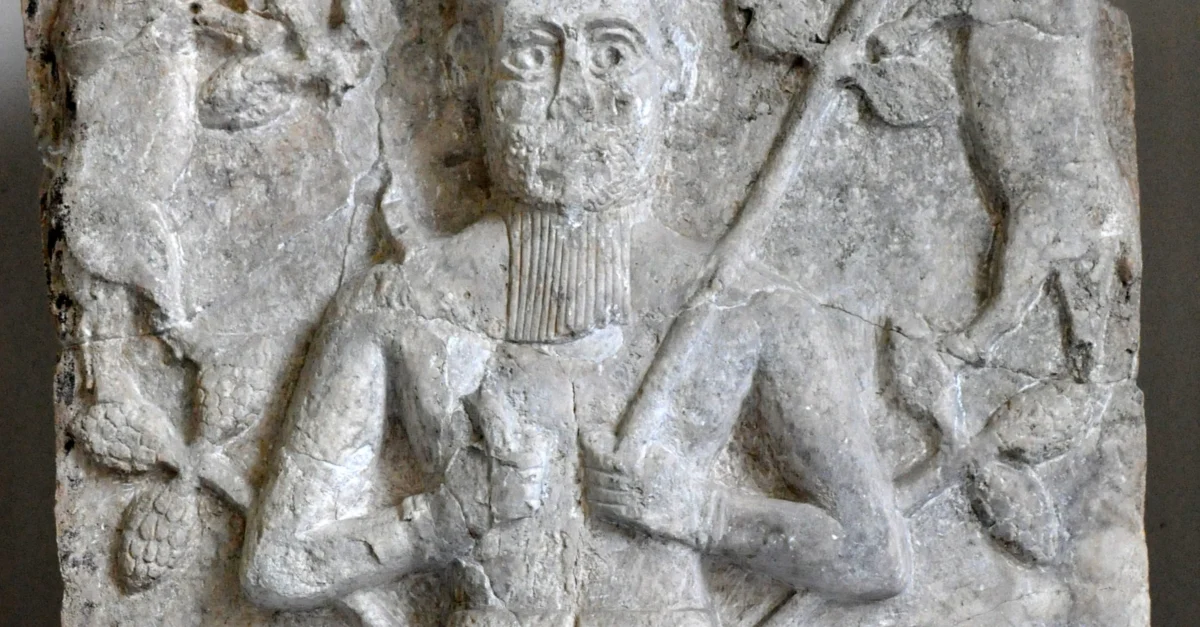
BAGHDAD, IRAQ – In the annals of ancient Mesopotamian civilization, few deities embody the dynamic evolution of religious thought and imperial ambition as profoundly as Assur. From his humble beginnings as a localized patron spirit of a single city, Assur ascended to become the supreme god of the mighty Assyrian Empire, a cosmic sovereign whose attributes were meticulously crafted from the rich tapestry of earlier Sumerian and Babylonian pantheons. This syncretic deity, at once a formidable god of war, a fount of wisdom, an arbiter of justice, a patron of agriculture, and the divine guarantor of kingship, stands as a testament to Assyria’s remarkable talent for cultural assimilation and political innovation.
Assur’s journey from an obscure local spirit to an almost monotheistic focus of worship is not merely a tale of religious development; it is an intimate chronicle of the Assyrian state itself. His character, though often described as "indistinct" by modern scholars, was nevertheless a powerful unifying force, shaping imperial policy, military strategy, and societal norms across a vast and diverse empire. His eventual decline mirrored the catastrophic collapse of that empire, yet echoes of his influence persisted, even paving the way for future religious shifts in the region.
A Deity Forged in Time: The Chronology of Assur’s Ascent
Assur’s historical trajectory is inextricably linked to the fortunes of the city that bore his name and, subsequently, the empire it spawned. His rise was a gradual process, marked by strategic adaptations and theological appropriations that solidified his position at the apex of the Assyrian cosmos.
From Local Patron to Imperial Deity
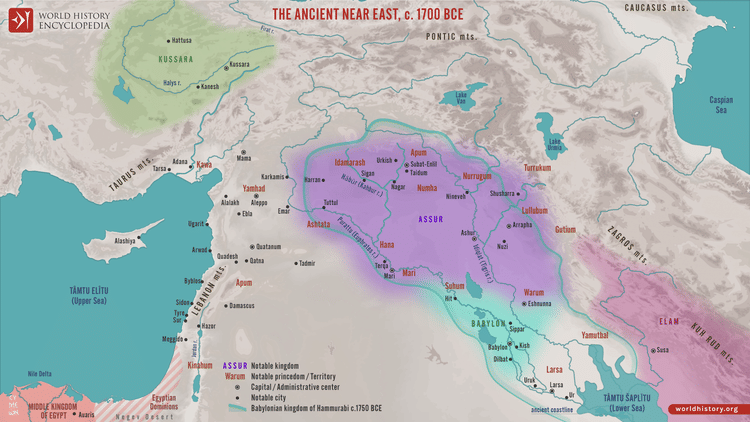
The earliest positive attestations of Assur emerge from the Ur III period (circa 2112 to circa 2004 BCE) in Mesopotamian history. By approximately 1900 BCE, he was firmly identified as the patron god of the city of Ashur, the nascent heartland of what would become a formidable empire. In these primordial stages, Assur was likely an agricultural deity, a spirit intrinsically tied to the land and the well-being of the city’s inhabitants. He personified the very essence of Ashur, a small trading center that grew from an earlier community established by Sargon of Akkad (reigned 2334-2279 BCE). This city flourished through extensive trade networks stretching from Anatolia to other regions of Mesopotamia, eventually becoming the capital of Assyria under King Shamashi Adad I (1813-1791 BCE).
Shamashi Adad I, a pivotal figure in early Assyrian history, invoked Assur’s name in his campaigns to expel the Amorites and secure the kingdom’s borders. However, even at this stage, Assur’s domain remained circumscribed. His worship was largely confined to the city of Ashur and its immediate surroundings. The broader Mesopotamian religious landscape was then dominated by Marduk of Babylon, particularly after Hammurabi’s (reigned 1792-1750 BCE) conquests. Marduk’s ascendancy meant that the Babylonian epic Enuma Elish, glorifying Marduk’s creation myth, held authoritative sway.
The Dawn of a Supreme Being
The death of Hammurabi plunged Mesopotamia into a period of flux, with various regional powers — the Mitanni and the Hittites among them — vying for control. Ashur and the surrounding Assyrian territories often found themselves as vassal states. This changed dramatically with the reign of Adad Nirari I (1307-1275 BCE), who successfully united the disparate lands under the first semblance of an Assyrian Empire. Adad Nirari I unequivocally credited Assur with his victories, marking a significant turning point in the deity’s elevation.

Yet, a fundamental challenge remained: Assur lacked a developed mythology of his own, unlike the rich narratives surrounding Sumerian and Babylonian gods. This theological void necessitated creative solutions. As scholar Jeremy Black notes, with the growth of Assyria and increased cultural exchange, "there was a tendency to assimilate Assur to certain of the major deities of the Sumerian and Babylonian pantheons." Around 1300 BCE, efforts began to identify Assur with the Sumerian god Enlil, casting him as the chief of the gods. Later, under Sargon II of Assyria (reigned 722-705 BCE), Assur was further identified with Anshar, the primordial father of Anu in the Babylonian Epic of Creation. This strategic assimilation effectively provided Assur with a venerable lineage, portraying him as a deity "present from the creation of the universe."
This process culminated in a remarkable theological coup: the Enuma Elish was subtly rewritten, replacing Marduk with Assur (under the name Anshar) as the heroic protagonist of creation. This narrative manipulation was not merely symbolic; it underpinned the growing imperial ideology. Tiglath-Pileser I (reigned 1115-1076 BCE) consistently invoked Assur as the divine power behind the empire’s military might, crediting him with leading armies to victory and even dictating the very laws of the empire. Adad Nirari II (reigned 912-891 BCE) further expanded the empire, with Assur firmly established as his personal patron and the divine architect of Assyrian destiny. Everywhere the Assyrian army marched, Assur’s worship spread, overshadowing the older gods of the conquered regions. As E.A. Wallis Budge succinctly put it, "As the power of Marduk became predominant when Babylon grew into a great city, so the power of Assur waxed great when the Assyrians became a strong and warlike nation." To the victorious Assyrians and their vanquished foes alike, Assur was undeniably a god of immense power and worthy of fervent devotion.
Supporting Data: The Theological Evolution and Societal Impact of Assur
The transformation of Assur was not merely political; it involved a profound theological redefinition that impacted every facet of Assyrian society, from religious practices to gender roles.
A God of Many Faces: Attributes and Iconography
Assur’s unique nature stemmed from his composite character. He borrowed extensively from his predecessors, resulting in a multifaceted divine persona. He embodied the fierce martial prowess of a god of war, the sagacity of a god of wisdom, the impartiality of a god of justice, the fertility-bringing aspects of an agricultural deity, and the divine legitimacy of kingship. This amalgamation, while granting him broad authority, also led to a certain ambiguity. As Jeremy Black observes, "In spite of (or possibly because of) the tendencies to transfer to him the attributes and mythology of other gods, Assur remains an indistinct deity with no clear character or tradition (or iconography) of his own."
His iconography reflected this borrowed nature. Often depicted with a crown or a crown upon a throne, echoing the Sumerian god An/Anu, he was just as frequently portrayed as a formidable warrior-god. This martial aspect typically showed him wearing a horned helmet, symbolizing divinity and power, and carrying a bow and a quiver of arrows, ready for battle. He sported a short skirt of feathers, a distinctive feature. Perhaps his most iconic, though debated, representation is within a winged disk, a symbol often associated with solar deities. While some scholars, including Jeremy Black, contest Assur’s direct association with the solar disk, its prevalence in Assyrian art suggests a powerful connection in the popular imagination. Another borrowed image depicted Assur standing triumphantly on a snake-dragon, an iconography directly appropriated from the Babylonian Marduk, signifying his supremacy over chaos.
The Mechanics of Worship and Royal Authority
Worship of Assur, like other Mesopotamian deities, centered around the temple and the care of his divine statue. The king of Assyria held the paramount position as Assur’s chief priest, a direct conduit between the god and humanity. Lesser priests managed the daily duties of the temple complexes, ensuring the god’s needs were met through offerings and rituals. Unlike modern religious services, there were no public congregational gatherings. Private devotion might have involved personal prayers or requests for divine assistance, but the institutional worship was highly formalized and priestly-driven.
The reverence for Assur permeated the highest echelons of power. Assyrian kings frequently incorporated Assur’s name into their own, a profound act of devotion and a declaration of divine favor. Names like Ashurbanipal ("Assur is creator of a son"), Ashurnasirpal I, and Ashurnasirpal II ("Assur is guardian of the heir") underscored the god’s central role in the legitimacy and identity of the monarchy.
Theology of Empire: From Immanence to Transcendence
Assur’s ascendancy reached new heights during the Neo-Assyrian Empire. When Ashurnasirpal II (reigned 884-859 BCE) moved the capital from Ashur to Kalhu (Nimrud), it was not a sign of the god’s waning influence. On the contrary, Ashurnasirpal’s own name proclaimed Assur’s guardianship. The move was likely driven by political considerations, perhaps to establish a new administrative center free from the entrenched loyalties and proud populace of the old capital.
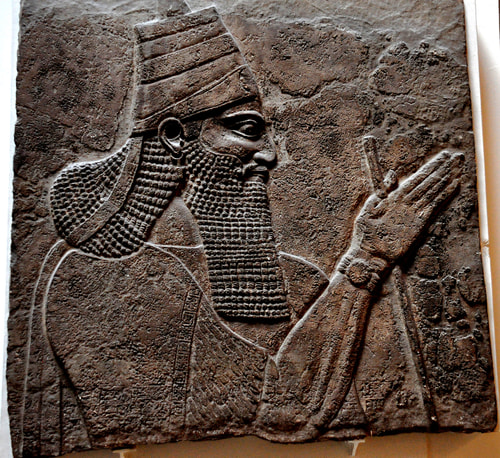
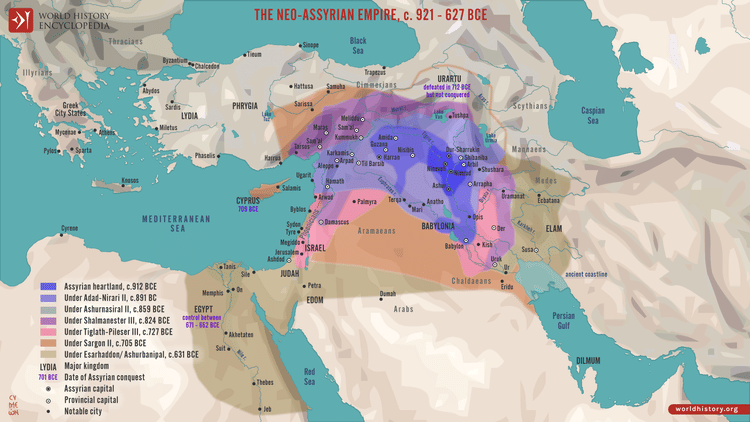
The military innovations of Tiglath-Pileser III (reigned 745-727 BCE), who forged the world’s first professional army armed with iron weapons and advanced siege engines, were attributed directly to Assur’s divine guidance. As Assyrian armies campaigned across vast territories, Assur was universally credited with their relentless victories. This expansion, however, necessitated a fundamental shift in the nature of Assur’s worship. Traditionally, he was tied to his temple in the city of Ashur. But with an empire stretching across Mesopotamia, a new, more expansive understanding of the deity was required.
Scholar Paul Kriwaczek elaborates on this crucial theological evolution: "One might pray to Assur not only in his own temple in his own city, but anywhere. As the Assyrian empire expanded its borders, Assur was encountered in even the most distant places." This concept of an omnipresent god naturally led to belief in a single, universal deity. Kriwaczek continues, "From faith in an omnipresent god to belief in a single god is not a long step. Since He was everywhere, people came to understand that, in some sense, local divinities were just different manifestations of the same Assur."
This sophisticated theological framework allowed for the seamless absorption of the conquered peoples’ diverse religious practices. Their local gods were not necessarily discarded but reinterpreted as different facets or names for the one true, universal Assur. This "unity of vision" profoundly contributed to the ideological cohesion of the empire.
Kriwaczek further posits that this belief in Assur’s transcendence – his existence "outside and above nature" – had far-reaching philosophical consequences, leading to a "desacralization" of the natural world. If the gods were separate from nature, humanity, created in the divine likeness and as servants to the gods, must also be superior to and rulers over nature. This concept, strikingly prefiguring the dominion mandate in Genesis 1:26, positioned humanity as masters of the earth.
Official Responses: Societal and Cultural Ramifications
The rise of Assur as the transcendent, supreme god had significant, and often detrimental, impacts on various segments of society within the Assyrian Empire.
Impact on Women’s Status
One of the most notable consequences of Assur’s elevated status was the further erosion of women’s rights. Historically, women in Mesopotamia had enjoyed considerable civil rights. However, with the rise of male supreme deities like Marduk in Babylon, female deities began to lose prominence, and women’s societal standing began to decline. Under the Assyrian Empire, with Assur firmly established as the singular, transcendent male deity, this trend accelerated.
Kriwaczek provocatively links the concept of a transcendent male deity to the subjugation of women: "While males can delude themselves and each other that they are outside, above, and superior to nature, women cannot so distance themselves, for their physiology makes them clearly and obviously part of the natural world… It is no accident that even today those religions that put most emphasis on God’s utter transcendence and the impossibility even to imagine His reality should relegate women to a lower rung of existence, their participation in public religious worship only grudgingly permitted, if at all." This observation suggests a profound, systemic shift where women, intrinsically linked to the natural cycles of birth and life, were deemed less capable of embodying the "transcendence" now associated with the divine. Cultures like the Phoenicians, who traditionally accorded women significant respect, were compelled to adopt the conquerors’ patriarchal customs and beliefs.
Imperial Cohesion and Its Discontents
The new understanding of Assur as a universal, transcendent deity, coupled with the assimilation of conquered populations, fostered an increasingly cohesive Assyrian culture. Kings like Shalmaneser III (reigned 859-824 BCE) expanded the empire along the Mediterranean coast, extracting tribute from wealthy Phoenician city-states like Tyre and Sidon. Assur was no longer just the god of the Assyrians; he was, by imperial decree and theological adaptation, the supreme god of all peoples under Assyrian rule.
This ideological unity was, of course, viewed as ideal by the Assyrians. However, for the conquered nations, it was often a source of deep resentment. Their indigenous gods and traditions were either suppressed or subsumed, fueling a simmering frustration that would eventually erupt in dramatic fashion. The imposition of Assur’s supremacy, while strengthening the imperial core, simultaneously sowed the seeds of widespread discontent among the subjugated.
Implications: Legacy and Enduring Influence
The Neo-Assyrian Empire (912-612 BCE) represents the zenith of Assyrian power and the era most familiar to students of ancient history, frequently referenced in the Bible. It is also the period that indelibly stamped Assyria with a reputation for ruthlessness and cruelty.
The Fall of a God and an Empire
Historian Paul Kriwaczek acknowledges this notorious image: "Assyria must surely have among the worst press notices of any state in history. Babylon may be a byname for corruption, decadence, and sin but the Assyrians and their famous rulers, with terrifying names like Shalmaneser, Tiglath-Pileser, Sennacherib, Esarhaddon, and Ashurbanipal, rate in the popular imagination just below Adolf Hitler and Genghis Khan for cruelty, violence, and sheer murderous savagery." While Assyrian military tactics were undeniably brutal, involving forced deportations and displays of power, they were not necessarily more barbaric than other ancient civilizations. Their defining characteristic was their exceptional efficiency in conquest and administration, a ruthlessness honed in the name of Assur.
However, for the conquered, Assyrians were indeed hated overlords. The empire’s last great king, Ashurbanipal (reigned 668-627 BCE), presided over its final golden age. After his death, the empire, having grown too vast and unwieldy, began to fragment. As the central government’s control weakened, various territories seized the opportunity to revolt.
The end came decisively in 612 BCE. A powerful coalition of Babylonians, Medes, Persians, and other disgruntled groups converged on the Assyrian heartland. They systematically destroyed the great Assyrian cities, including the venerable city of Ashur and its sacred temple dedicated to the supreme god. The destruction of Assur’s temples and statues elsewhere was not merely an act of war; it was a deliberate and symbolic annihilation of the deity who had come to personify Assyrian military might and political dominance. The physical obliteration of Assur’s cult sites was paramount to dismantling the very ideological foundation of the empire.
A Fading Echo: Assur’s Post-Imperial Presence
Despite the catastrophic collapse of the empire and the systematic destruction of his temples, worship of Assur did not entirely vanish. It continued in fragmented Assyrian communities, though no longer widespread or officially sanctioned. Interestingly, Assur’s theological evolution towards a more transcendent and singular deity proved advantageous for later religious movements. In the early Christian era, the residual understanding of Assur as an omnipotent, supreme god resonated with early Christian missionaries, who found Assyrian communities receptive to the message of a single, universal God and the concept of His son’s incarnation for humanity’s benefit.
While Assur’s son, Nabu, the god of wisdom and writing, never underwent an incarnation or self-sacrifice, he was revered for bestowing the gift of the written word upon humanity. Nabu’s veneration persisted even after the empire’s fall, showcasing the enduring power of specific divine attributes. Although Assur himself declined significantly in stature, his memory endured. The name "Ashur" (an alternate spelling of Assur) continues to be present today as a personal and family name among modern Assyrians, a subtle but potent echo of a god who once commanded an empire and reshaped the religious landscape of the ancient Near East.
In conclusion, Assur’s story is a compelling narrative of theological innovation intertwined with imperial ambition. His journey from a localized agrarian deity to a transcendent, syncretic supreme god reflects the Assyrians’ unique ability to absorb, adapt, and project power. While his cult ultimately succumbed with the empire that championed him, Assur’s legacy, both in his enduring name and in the theological shifts he inspired, remains a fascinating chapter in the complex religious history of Mesopotamia.