"Fascinating Folklore": A Groundbreaking Compendium Unveils Ancient Tales Through Modern Artistry
FOR IMMEDIATE RELEASE
LONDON, UK – [Insert Date of Publication Here] – A new literary and artistic endeavor, "Fascinating Folklore," is poised to captivate audiences worldwide, offering an unparalleled journey into the rich tapestry of global myths and legends. Crafted by the esteemed minds of comic world luminaries John Reppion and PJ Holden, this extraordinary compendium transcends traditional storytelling, blending meticulous scholarly essays with breathtaking graphic novel illustrations to bring ancient lore vividly to life.
The project, which began as a creative pact ignited by the popular social media hashtag #FolkloreThursday, has blossomed into a comprehensive and deeply engaging exploration of the magical, the mythical, and the mysterious. Published by Liminal 11, "Fascinating Folklore" promises to leave readers spellbound, providing a sensory feast and an accessible pathway into enchanting realms previously confined to academic texts or niche publications.
The Genesis of a Modern Mythos: From Hashtag to Masterpiece
The journey of "Fascinating Folklore" commenced not in dusty archives or hushed libraries, but within the vibrant, interactive digital space of #FolkloreThursday. This widely embraced social media phenomenon has cultivated a global community passionate about sharing and discussing folk tales, myths, and legends from every corner of the earth. It was within this fertile ground of shared cultural heritage that the initial spark for Reppion and Holden’s collaboration was ignited.
John Reppion, renowned for his evocative storytelling and deep dives into esoteric subjects, and PJ Holden, celebrated for his dynamic and atmospheric artwork, recognized the immense potential in translating the ephemeral discussions of #FolkloreThursday into a tangible, enduring work. Their creative pact was born from a shared vision: to create a book that not only documented these fascinating stories but also reimagined them for a contemporary audience, making them feel as fresh and relevant today as they were millennia ago.
The evolution from a spontaneous online hashtag to a meticulously crafted compendium was a testament to their dedication. What began as a series of conversations and preliminary sketches gradually coalesced into a structured project, with each tale carefully selected for its cultural significance, narrative power, and artistic potential. The collaboration was symbiotic, with Reppion’s insightful prose providing the historical and contextual backbone, while Holden’s illustrative prowess imbued each narrative with visual drama and emotional resonance. The result is a book that doesn’t just tell stories but allows readers to immerse themselves fully in the worlds it describes, making ancient wisdom and fantastical beings feel remarkably present. The book is now available for order, marking the culmination of this ambitious creative journey.
Unveiling Ancient Narratives: A Deep Dive into Featured Lore
"Fascinating Folklore" distinguishes itself by offering a diverse array of narratives, spanning legendary figures, mystical plantlore, and haunting supernatural entities. The compendium meticulously details figures like the fierce Celtic warrior Queen Boudicca and the epic Anglo-Saxon hero Beowulf, alongside more esoteric subjects such as the enthralling world of plantlore, where the secrets of Mandrake, Willow, and Yedua whisper tales of ancient wisdom. However, it is in its detailed exploration of specific, often lesser-known, legends that the book truly shines, providing rich context and stunning visuals for each entry.
The Aspidochelone: The Deceptive Island Monster
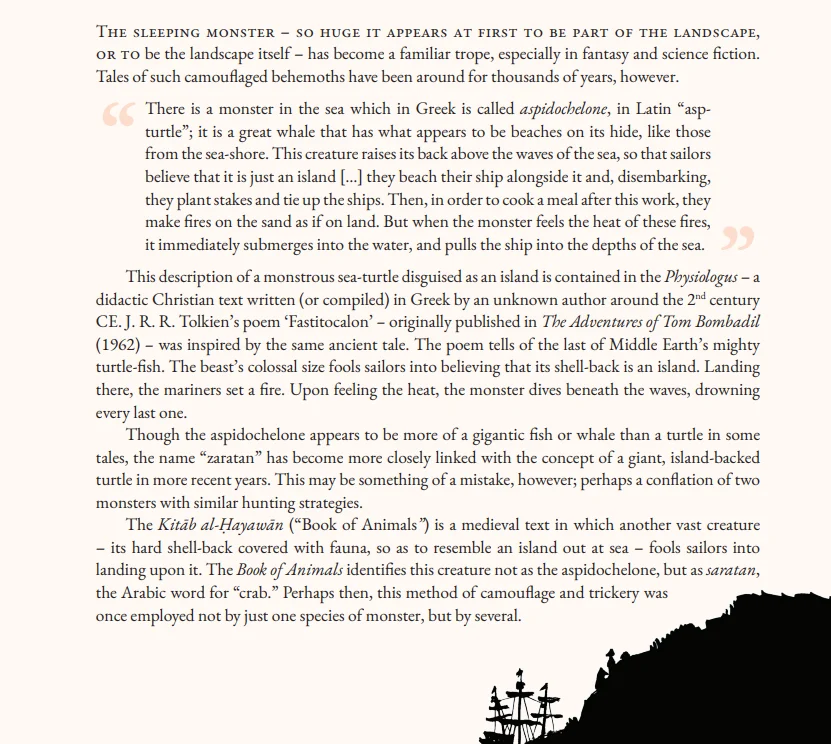
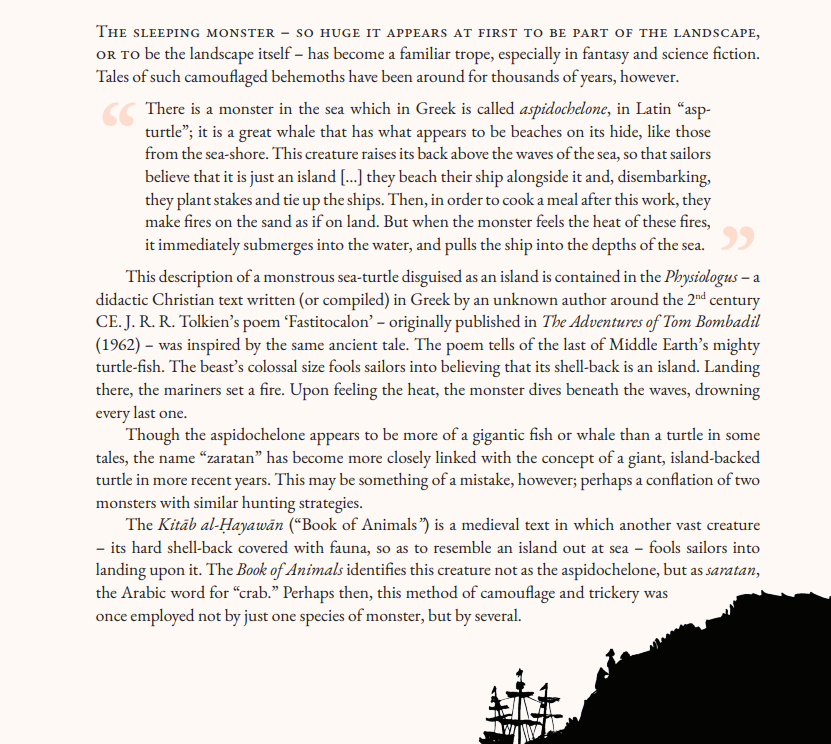
Among the most captivating tales revisited is that of the aspidochelone, a monstrous sea creature whose deception has ensnared countless mariners across centuries. In Greek, it is known as "aspidochelone," while in Latin, it translates to "asp-turtle." This colossal whale-like beast possesses a hide so vast and textured that it appears to sailors as a tranquil island, complete with what seem to be sandy beaches.
The legend describes how this creature raises its back above the ocean waves, inviting weary seafarers to mistake it for solid ground. Lured by the promise of respite, sailors would beach their vessels alongside its immense form, disembarking to plant stakes and secure their ships. In their naive assumption of safety, they would then kindle fires on its "sandy" surface to cook a meal. The moment the aspidochelone feels the searing heat of these fires, however, its deceptive calm shatters. It immediately submerges into the water, dragging the unsuspecting ships and their crews into the dark, unforgiving depths of the sea.
This chilling description originates from the Physiologus, a didactic Christian text written or compiled by an unknown Greek author around the 2nd century CE. The tale’s enduring power is evidenced by its influence on later literature, notably J.R.R. Tolkien’s poem "Fastitocalon," published in The Adventures of Tom Bombadil (1962). Tolkien’s poem vividly recounts the story of the last of Middle-earth’s mighty turtle-fish, whose colossal size similarly tricks mariners into believing its shell-back is an island, leading to their tragic demise when the beast dives.
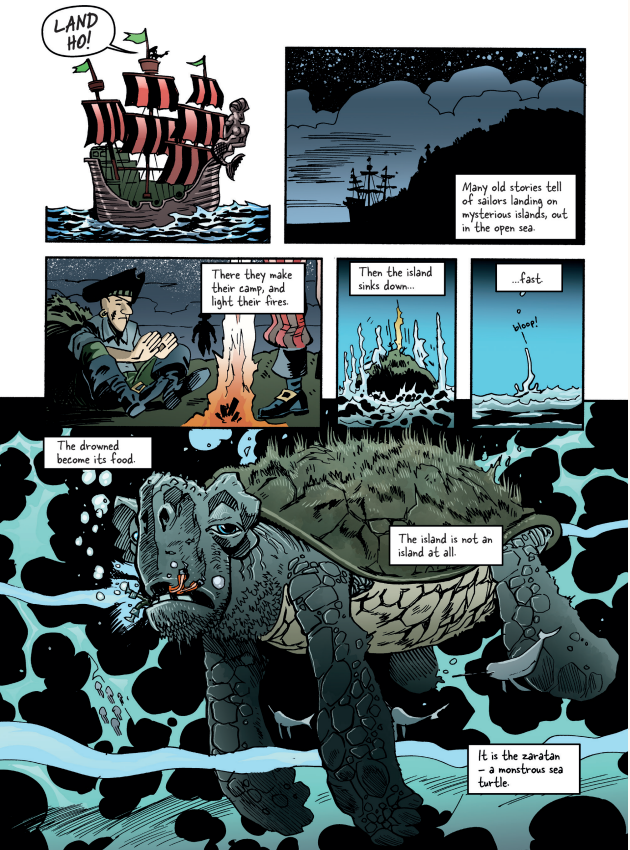
The compendium further delves into the nuances of this creature, addressing the potential conflation with the "zaratan." While "zaratan" has become popularly linked with giant, island-backed turtles in recent years, the book suggests this might be a misinterpretation. The Kitāb al-Ḥayawān ("Book of Animals"), a medieval Arabic text, identifies a similar camouflaged creature not as an aspidochelone, but as "saratan," the Arabic word for "crab." This raises the intriguing possibility that such methods of oceanic camouflage and trickery were not exclusive to a single monstrous species but employed by several, underscoring the widespread ancient fear of the unknown perils lurking beneath the waves. The enduring trope of the sleeping monster, so vast it is mistaken for the landscape itself, continues to resonate in fantasy and science fiction, a testament to the primal power of this ancient myth.
Anteros: The Unsung God of Requited Love
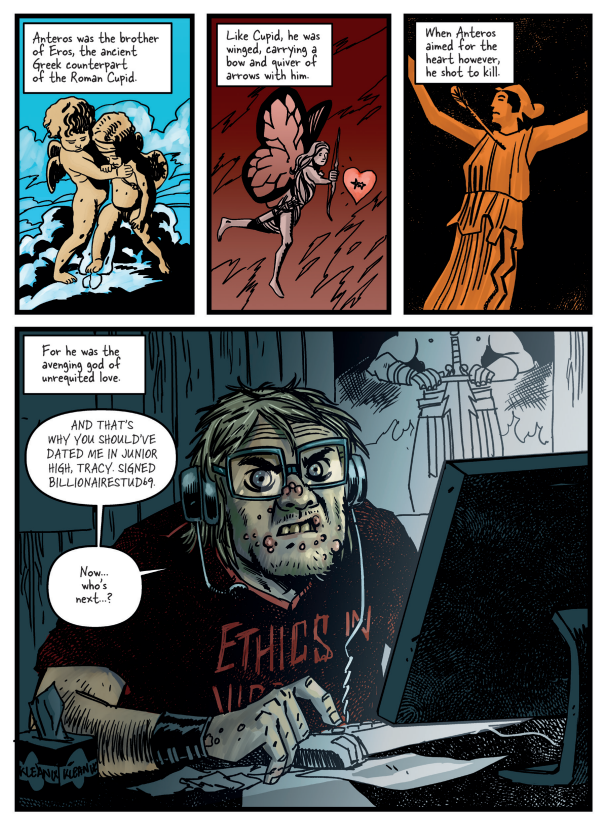
While most are familiar with Eros, the winged god of desire who evolved into the cherubic Cupid of Valentine’s cards, his brother, Anteros, remains significantly less known. "Fascinating Folklore" brings this often-overlooked deity into the spotlight, revealing his crucial role in the ancient Greek pantheon.
Anteros’s name, meaning "love returned," directly reflects his primary charge: to punish those who failed to reciprocate the affections of another. Born of Aphrodite, the goddess of love, beauty, and pleasure, and Ares, the god of war, Anteros was one of the Erotes, a group of winged deities who assisted their mother in her earthly duties. While Eros embodied love and sex, his brothers had more specific roles: Hedylogos (sweet talk), Pothos (longing), Hymenaeus (weddings), and Hermaphroditus (fertility). Anteros stood as the divine enforcer of reciprocal love, a stark contrast to Eros’s sometimes indiscriminate arrows.
Thomas Swinburne Carr’s A Manual of Classical Mythology, published in 1846, offers a detailed entry on Anteros, describing him as the "Deity who avenges slighted love (Deus ultor)." This text highlights his representation in the palaestra at Elis, depicted as contending with Eros, symbolizing the dynamic interplay between giving and receiving love. The fable suggests that Cupid’s strength and wings enlarged only when Anteros was present, shrinking when his brother was absent, signifying that true love flourishes in reciprocity. As the avenger of unrequited love, Anteros was often armed with lead arrows or a formidable club of solid gold, reflecting the weight and severity of his divine justice.
The compendium also points out a fascinating modern misidentification: the iconic statue atop the Shaftesbury Memorial Fountain in Piccadilly Circus, London, widely believed to be Eros, is in fact Anteros. Cast in aluminum in 1892, this figure was chosen to represent "love given blindly, or without expectation of return," as a metaphor for the profound philanthropy of Lord Shaftesbury. This detail not only enriches our understanding of Anteros but also reveals how classical mythology subtly permeates contemporary public spaces, often without our conscious awareness.

Okiku: The Haunting Vengeance of Himeji Castle
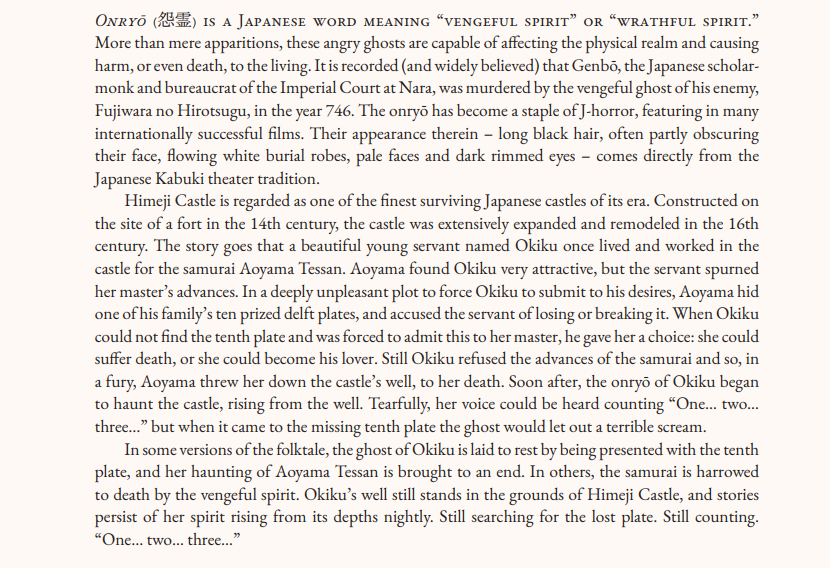
From the shores of ancient Greece, the compendium transports readers to feudal Japan, delving into the chilling legend of Okiku, an onryō (vengeful spirit) whose tale is deeply woven into the stones of Himeji Castle. Onryō are a distinct category of Japanese ghosts, more than mere apparitions; they are wrathful spirits capable of affecting the physical realm, causing harm, and even death to the living. The earliest recorded instance of such a spirit’s destructive power dates back to 746 CE, when Genbō, a Japanese scholar-monk, was allegedly murdered by the vengeful ghost of his enemy, Fujiwara no Hirotsugu.
The aesthetic of the onryō – long black hair often obscuring the face, flowing white burial robes, pale complexion, and dark-rimmed eyes – has become a staple of J-horror cinema, influencing internationally successful films. This iconic imagery is directly derived from the rich tradition of Japanese Kabuki theater.
The tragic story of Okiku unfolds within the majestic walls of Himeji Castle, one of Japan’s finest surviving historical structures. Okiku, a beautiful young servant, worked for the samurai Aoyama Tessan, who became infatuated with her. When Okiku repeatedly spurned his advances, Aoyama devised a cruel plot to force her submission. He hid one of his family’s ten prized delft plates and then accused Okiku of losing or breaking it. Facing a choice between death and becoming his lover, Okiku steadfastly refused Aoyama’s demands. In a fit of rage, the samurai threw her down the castle’s well, condemning her to a watery grave.
Soon after, the onryō of Okiku began to haunt the castle. Her mournful voice could be heard rising from the well each night, tearfully counting the plates: "One… two… three…" but when she reached the missing tenth plate, her lament would transform into a terrifying scream. "Fascinating Folklore" explores the variations of this popular folktale. In some versions, Okiku’s haunting ceases when the tenth plate is finally presented to her, granting her spirit peace. In others, the samurai Aoyama Tessan is relentlessly tormented by her vengeful spirit until his own death. To this day, Okiku’s well stands within the grounds of Himeji Castle, and stories persist of her spirit rising nightly, perpetually searching for the lost plate, forever counting. This tale serves as a powerful reminder of injustice, the consequences of cruelty, and the enduring power of a wronged spirit.
Other Illuminating Narratives
Beyond these detailed explorations, "Fascinating Folklore" offers a glimpse into other compelling narratives. Readers will learn about the strategic brilliance and defiance of Boudicca, the Iceni queen who led a fierce rebellion against Roman rule, and the legendary feats of Beowulf, whose battles against Grendel and his mother embody epic heroism. The segment on plantlore delves into the mysterious properties attributed to Mandrake, a root often associated with human-like screams and potent magic; the Willow, a tree symbolizing sadness and enchantment; and the intriguing Yedua, a lesser-known plant whose folkloric significance is brought to light. The book also touches upon the ancient Wandjing spirits of Western Australia, acknowledging the rich and profound spiritual traditions of Indigenous Australian cultures and their deep connection to the land. This breadth of content ensures a truly global and comprehensive folkloric experience.
Official Acclaim and Endorsement
The publication of "Fascinating Folklore" has been met with significant enthusiasm from its creators and publisher. John Reppion and PJ Holden express immense satisfaction in bringing their shared vision to fruition. "This project was born from a genuine love for these stories and a desire to present them in a way that feels both respectful of their origins and exciting for a modern audience," Reppion stated, reflecting on the journey from the #FolkloreThursday hashtag. Holden added, "The synergy between the written word and the visual narrative allowed us to delve deeper into the emotional and atmospheric aspects of each legend. It’s an honor to contribute to the preservation and reimagining of such powerful tales."
Liminal 11, known for its unique and visually driven publications, hails "Fascinating Folklore" as a flagship release. "We believe this compendium sets a new standard for how folklore can be presented," commented a spokesperson for Liminal 11. "The combination of scholarly depth and stunning comic art makes it incredibly accessible and profoundly engaging. It’s a testament to the enduring power of storytelling and the collaborative genius of John and PJ. We anticipate it will become a cherished volume for enthusiasts and newcomers alike." Early feedback from preview readers and critics has lauded the book’s innovative format and the meticulous research underpinning each entry, confirming its potential to become a significant work in both literary and comic circles.
Implications: Revitalizing Ancient Narratives for the Modern Age
"Fascinating Folklore" carries profound implications for the preservation, understanding, and continued relevance of ancient narratives in the 21st century.
Revitalizing Folklore for a New Audience
The most immediate implication of this compendium is its success in revitalizing folklore for a contemporary audience. By merging rich, informative essays with dynamic comic art, Reppion and Holden have created a medium that is both intellectually stimulating and visually captivating. This innovative format breaks down barriers often associated with academic texts, making complex historical and cultural narratives accessible and appealing to readers of all ages and backgrounds. It demonstrates how traditional stories, far from being relics of the past, can be powerfully reinterpreted and celebrated through modern artistic expression, ensuring their survival and continued resonance.
The Power of Collaborative Storytelling
The origin of "Fascinating Folklore" from the #FolkloreThursday hashtag underscores the power of community-driven creative projects. It highlights how collective passion and digital connectivity can foster unique collaborations that transcend geographical boundaries and traditional publishing models. The synergy between Reppion’s narrative expertise and Holden’s artistic vision exemplifies the strength found in interdisciplinary approaches, proving that when diverse talents converge, the resulting work can achieve a depth and breadth unattainable through individual efforts. This collaborative spirit not only enriches the content but also inspires future creative endeavors within the folklore community.
Cultural Preservation and Global Understanding
By showcasing a diverse array of folklore from across the globe – from Greek sea monsters and Japanese vengeful spirits to British legends and Australian Indigenous lore – "Fascinating Folklore" plays a crucial role in cultural preservation. It provides a platform for these stories to be remembered, appreciated, and understood in their broader cultural contexts. In an increasingly interconnected world, such works foster cross-cultural appreciation and empathy, allowing readers to explore shared human experiences, fears, and aspirations reflected in the myths of disparate societies. The compendium serves as a vital reminder of the universal threads that connect humanity through storytelling.
Impact on the Comic and Literary Worlds
"Fascinating Folklore" makes a unique and significant contribution to both the graphic literature and non-fiction sectors. It challenges conventional notions of genre, blurring the lines between educational text and visual narrative entertainment. This blend of scholarly rigor and artistic flair sets a new benchmark for how complex cultural material can be presented, potentially inspiring a new wave of hybrid literary works. The success of this compendium could pave the way for more experimental and accessible forms of non-fiction, demonstrating that serious academic content can be delivered in engaging, visually rich formats that appeal to a broader readership, ultimately expanding the horizons of both the comic and literary worlds.
In essence, "Fascinating Folklore" is more than just a book; it is a cultural artifact that celebrates the timeless power of storytelling, proving that the magic of ancient myths continues to illuminate and inspire us today. Its release marks a significant moment for folklore enthusiasts and newcomers alike, offering an invitation to explore the captivating depths of human imagination and collective memory.
Ordering Information
Readers eager to embark on this extraordinary journey into the heart of folklore can order their copy of "Fascinating Folklore" directly from Liminal 11’s website.
[END]