"Grief Eater": Emma Osborne’s Visceral Novella Explores Trauma, Identity, and the Undead Through a Queer Lens
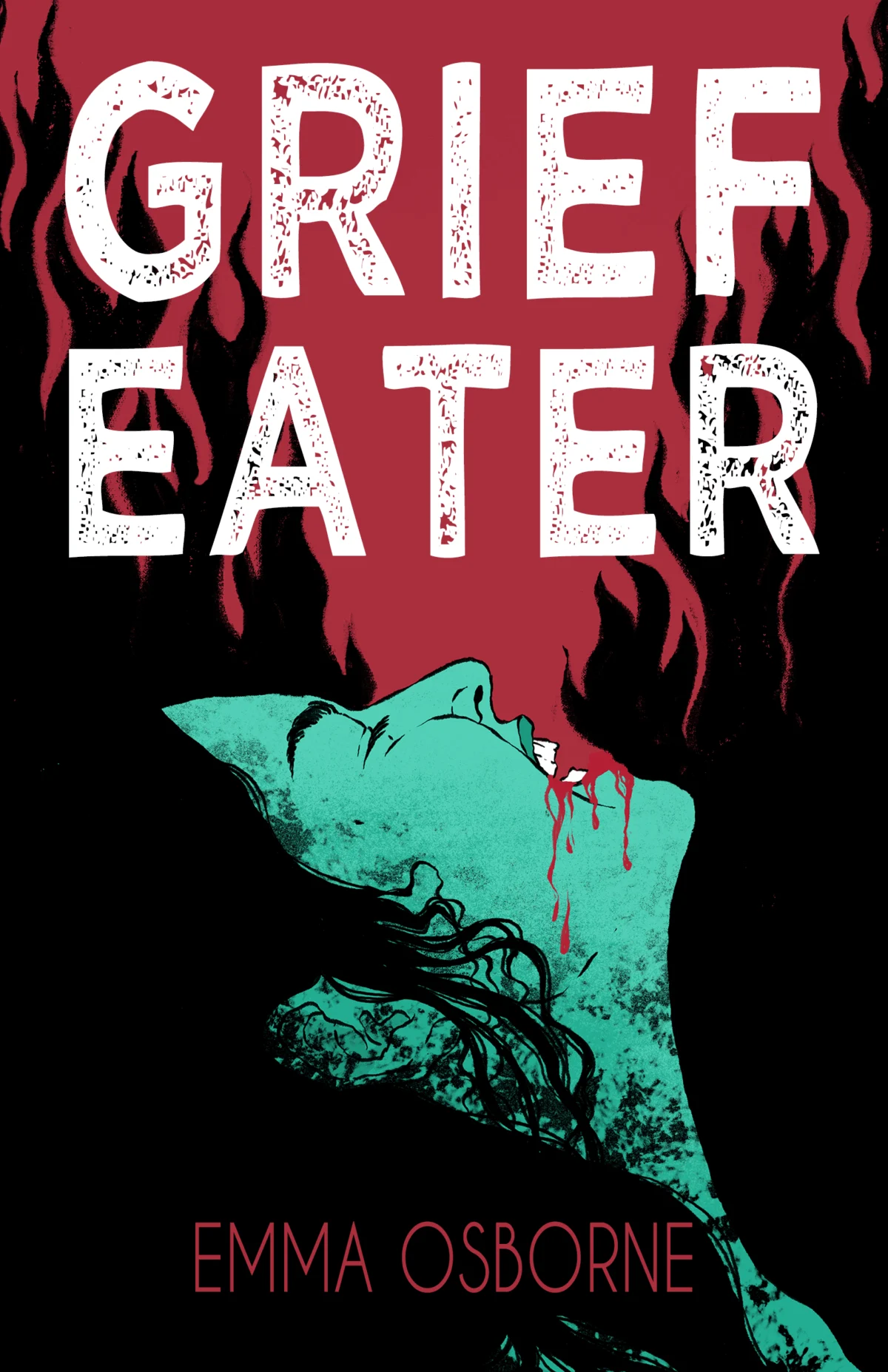
Melbourne, Australia – June 2, 2026 – Author Emma Osborne’s debut novella, "Grief Eater," is poised to make a significant impact on the literary landscape, offering a transgressive and unflinching exploration of grief, trauma, queer identity, and the concept of found family. The visceral narrative, set against the stark beauty of the Australian bush, redefines the zombie genre by imbuing it with potent emotional resonance and a fierce, unapologetic perspective.
The novella centers on Kristina, a woman resurrected from a violent death, not as the fragile figure her family abandoned, but as a being consumed by rage and a primal hunger. Her journey is one of vengeance, a blood-soaked pilgrimage across a desolate Australia towards the very family who cast her out. As her undead form deteriorates and her sanity fractures, Kristina grapples with a fundamental question: is she driven by a need for forgiveness or an insatiable urge to feed?
"Grief Eater" is more than just a horror story; it’s a searing examination of what it means to be devoured by grief and the transformative power of forging one’s own identity and support systems. Osborne, a queer writer from Naarm Melbourne, draws heavily on personal experiences and the lived realities of the LGBTIQA+ community to craft a narrative that is both deeply personal and universally resonant.
The Genesis of a Monster: Crafting Kristina’s Revenge
The creation of "Grief Eater" was not a straightforward path. Osborne, a graduate of the prestigious Clarion West Writers Workshop, reflects on the foundational advice received: "Stay in the present moment." While acknowledging the wisdom in maintaining narrative momentum, Osborne found that Kristina’s story demanded a different approach.
"Kristina dies in the opening chapter and is turned into a zombie," Osborne explains. "Her story, which becomes a revenge narrative, needed to have context if it was going to hit with any emotional weight. I suppose I could have started the story earlier and showed the reader selected scenes from her childhood and young adulthood, but that didn’t feel right. I wanted to drop you into the action, so you learn about her past while she stalks her way into her future, her teeth and fingers sharp."
This deliberate choice to integrate flashbacks, while acknowledged by some early reviewers as potentially disruptive, is central to the novella’s emotional core. Osborne argues that flashbacks can be a powerful tool when used intentionally, providing the necessary depth to a character’s motivations and the impact of their past trauma.
From Short Story Seed to Novella Bloom: The Evolution of a Narrative
The universe of "Grief Eater" has its roots in an earlier short story by Osborne, "Don’t Pack Hope." This foundational work introduced a character named Josh, who would later evolve into Kristina’s best friend, and hinted at the dark realities of the world they inhabited.
"For me, the Grief Eater world began with the protagonist of my short story ‘Don’t Pack Hope,’ who would later be named Josh," Osborne shares. "I put several fragments of my heart into that story and was delighted when it was picked up by Nightmare Magazine, and then reprinted in Wastelands 3: The New Apocalypse edited by John Joseph Adams. Still, I knew I wasn’t done with that world. I knew that Kristy, Josh’s best friend, who became Kristina, had her own story. And I knew that, unlike beautiful Josh, Kristina didn’t make it out of the city alive."
This process of story expansion, where a successful short story serves as a springboard for a longer work, is a well-established practice in literature. Notable examples include Seth Dickinson’s "The Traitor Baru Cormorant, Her Field-General and Their Wounds" evolving into the novel "The Traitor Baru Cormorant," and N.K. Jemisin’s "The City Born Great" blossoming into "The City We Became." Osborne’s journey with "Grief Eater" exemplifies this creative evolution, demonstrating a commitment to exploring characters and worlds that resonate deeply.
The "Lightning Bolt" Moment: Shifting from Passive to Active
A pivotal moment in the creation of "Grief Eater" involved a fundamental shift in the protagonist’s driving force. Initially, Kristina was envisioned as being passively drawn to her family by an invisible compulsion. However, this conception lacked the visceral power Osborne sought.
"Grief Eater is a revenge story, but it didn’t start that way," Osborne reveals. "No, the first draft had my protagonist, Kristina, being pulled towards her terrible family by an invisible compulsion, a need to find them, to stand before them, to find herself seen. It wasn’t a particularly bad book, but I knew that something wasn’t quite right with it."
The breakthrough occurred during a moment of quiet contemplation. "As I usually do, I let the idea roll around in my head for a while. The narrative made itself comfortable in my lizard-brain until one day in the shower, it hit me. Kristina shouldn’t be pulled. She should hunt." This epiphany, described as a "lightning bolt moment," infused the narrative with the raw, active energy that defines Kristina’s undead quest. This experience serves as a potent reminder for Osborne to ensure her protagonists are always strong and actively pursuing their desires.
The Soundtrack of Savagery: Music as a Creative Catalyst
The sonic landscape of "Grief Eater" played a crucial role in shaping its tone and intensity. Osborne, who typically favors instrumental music while writing, recognized the need for something more primal for this particular narrative.
"I generally listen to instrumental music (usually Zoe Keating, Explosions in the Sky or various video game soundtracks) when I write," Osborne explains. "For Grief Eater, I knew that I needed to play something savage while I wrote. I needed something heavy, something post-rock."
The choice fell upon the post-rock band Godspeed You! Black Emperor, specifically their twenty-minute epic "Mladic" from the album "ALLELUJAH! DON’T BEND! ASCEND!" Osborne describes this piece as the novella’s "theme song," noting its evolving structure and raw power. "It genuinely helped me to take the story to darker and more intense places," they state. This deliberate pairing of music and narrative underscores the profound connection between artistic mediums and their ability to unlock emotional depth and creative potential.
The Unflinching Portrayal of Villainy: Truth in Trauma
The antagonists of "Grief Eater" are Kristina’s parents and older brother, whose actions are characterized by violence, neglect, and homophobia. Osborne and her editor, Holly, engaged in a significant discussion about whether to temper these elements. Ultimately, they decided to preserve the characters’ unflinching portrayal, a decision Osborne now champions.
"I can appreciate that such horrible characters may seem a tad unrealistic, but also, people like that, unfortunately, absolutely exist," Osborne asserts. "Indeed, the sins of Kristina’s family have all been pulled from situations I have personally experienced (not the homophobia, thank god!) or that my younger brother experienced, or that have been experienced by friends of mine who are also in the LGBTIQA+ community."
Osborne highlights the reality of queer and trans individuals facing violence and homelessness due to familial expulsion, emphasizing the vital role of chosen families in providing support. She draws a parallel to Tim O’Brien’s concept of "story truth" in "The Things They Carried," where the emotional truth of an experience, even if unbelievable, requires narrative exploration to be fully understood.
"Trauma and villainy are like that sometimes," Osborne concludes. While the novella delves into the depths of familial cruelty, it is tempered by the presence of Kristina’s supportive best friend, Josh, and her Aunt Jill, ensuring that even within its darkness, "Grief Eater" offers glimmers of hope and the enduring strength of chosen connections.
About the Author
Emma Osborne (they/them) is a queer fiction writer and poet hailing from Naarm Melbourne, Australia. Their work has graced the pages of esteemed publications such as Uncanny Magazine, Nightmare Magazine, Shock Totem: Tales of the Macabre and Twisted, Apex Magazine, Queers Destroy Science Fiction, Pseudopod, Podcastle, the Review of Australian Fiction, the Year’s Best Australian Fantasy and Horror, GlitterShip, Kaleidotrope, and WASTELANDS 3. A graduate of the 2016 Clarion West Writers Workshop, "Grief Eater" marks their debut novella. Osborne currently resides in Sunbury with their girlfriend and three beloved cats.
Connect with Emma Osborne:
- Bluesky: https://bsky.app/profile/redscribe.bsky.social
- Instagram: https://www.instagram.com/redscribed/
Find "Grief Eater":
- Bookshop.org: https://bookshop.org/a/6810/9781953736598
- Amazon: https://www.amazon.com/s?k=Grief+Eater+Emma+Osborne (Note: A direct Amazon link to the specific book is not provided in the original article, so a general search link is used.)